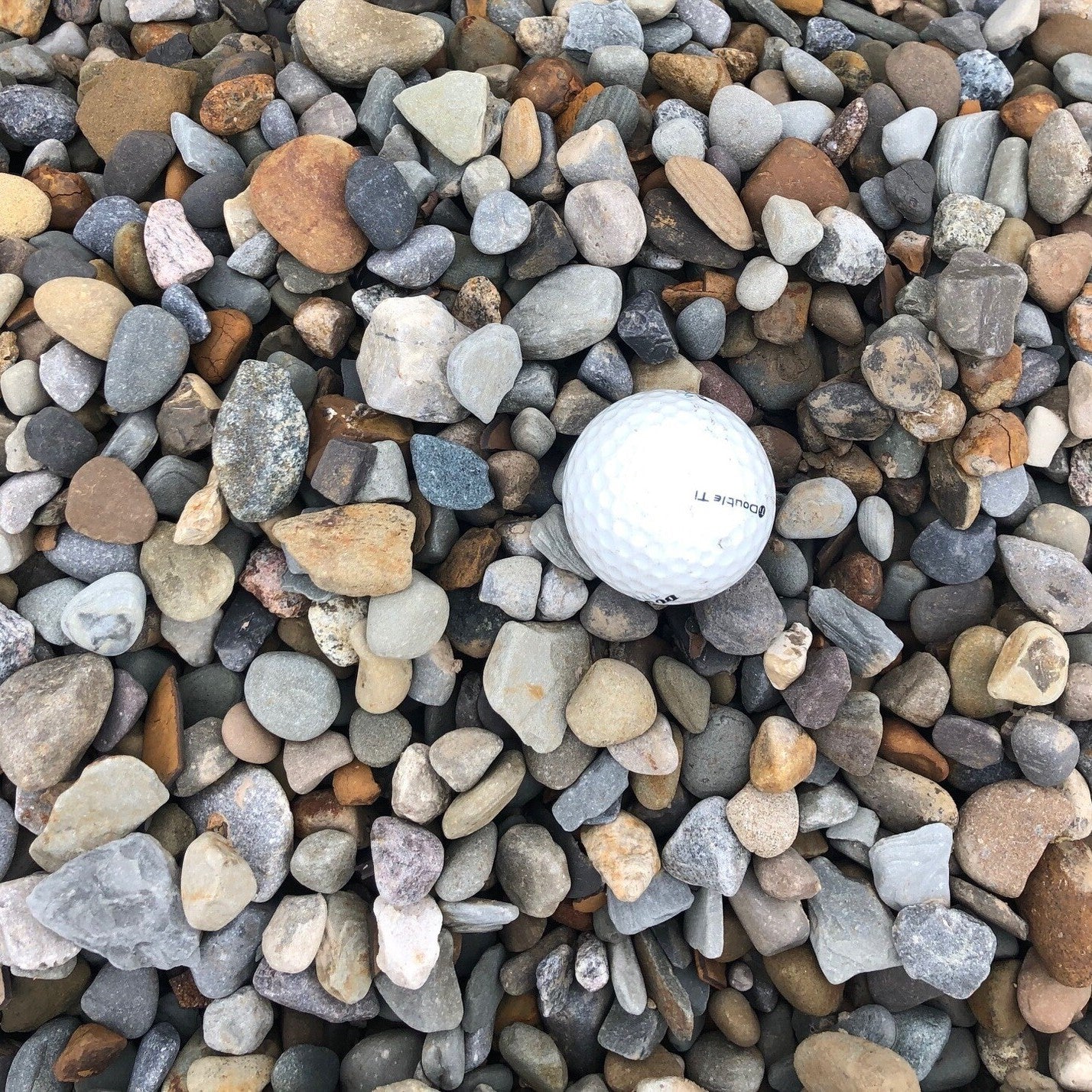
Number 57 crushed stone, angular limestone graded to about three quarters of an inch. The standard driveway, base and drainage gravel, it locks together under traffic and drains fast.
I used Mulch Mound to have 3 cubic yards of garden soil delivered. The process was easy and I love that I didn't have to call anyone. I placed my order online, picked my delivery date, laid out my tarp and the dirt was delivered. My delivery had to be pushed back, but I was ke...
Tell us what you're looking for
Thanks! We received your request.
Something went wrong. Please try again.
How Much Material Do I Need?
For decomposed granite pathways and xeriscape coverage in San Diego yards, a compacted depth of two to three inches provides a stable, finished surface. Decorative river rock or cobblestone groundcover looks most natural and provides good weed suppression at a depth of three to four inches.
Use our free gravel calculator
What is a Yard?
A yard is approximately 27 cubic feet. As a general guideline, one yard of material can cover an area of about 100-160 square feet at a 2-3 inch depth.
We can't take orders for this right now. Tell us what you need and we'll get back to you.
What do you need?
Thanks! We received your request.
Something went wrong. Please try again.
Hand-picked local yards
4,000+ regional deliveries
Dedicated support
Why order through Mulch Mound
The best local , without the guesswork.
We hand-pick and partner with the best yards in your region, keep only the ones our buyers rate well, and back each load with our guarantee.
Mulch Mound Guarantee
If your isn't the quantity or quality you ordered, we'll make it right.
About this stone
Number 57 crushed stone, angular limestone graded to about three quarters of an inch. The standard driveway, base and drainage gravel, it locks together under traffic and drains fast.
I used Mulch Mound to have 3 cubic yards of garden soil delivered. The process was easy and I love that I didn't have to call anyone. I placed my order online, picked my delivery date, laid out my tarp and the dirt was delivered. My delivery had to be pushed back, but I was ke...
How Much Material Do I Need?
For decomposed granite pathways and xeriscape coverage in San Diego yards, a compacted depth of two to three inches provides a stable, finished surface. Decorative river rock or cobblestone groundcover looks most natural and provides good weed suppression at a depth of three to four inches.
Use our free gravel calculator
What is a Yard?
A yard is approximately 27 cubic feet. As a general guideline, one yard of material can cover an area of about 100-160 square feet at a 2-3 inch depth.
I used Mulch Mound to have 3 cubic yards of garden soil delivered. The process was easy and I love that I didn't have to call anyone. I placed my o...
Read full review
I used Mulch Mound to have 3 cubic yards of garden soil delivered. The process was easy and I love that I didn't have to call anyone. I placed my order online, picked my delivery date, laid out my tarp and the dirt was delivered. My delivery had to be pushed back, but I was kept informed via text, which was great. So why not 5 stars? The description of garden soil on the website is "A balanced mix of topsoil and organic amendments ready for raised beds, flower gardens, and new planting areas. Good drainage, solid nutrients, easy to work with." What I got was more like fill dirt. It had a lot of gravel, a lot of clay, and random trash mixed in. I didn't test the soil to see if it actually had "amendments" because I already have compost and alpaca manure ready to add, but if I'd known the quality of the dirt was going to be the same as the bagged dirt I bought last year, I probably would have gotten 2 yards of top soil and a yard of leaf compost for better quality, especially since the leaf compost is cheaper. Photo of my mountain of dirt and just some of the trash I found in it.
Measuring accurately before ordering bulk stone saves you money and prevents a second delivery trip. Walk each area you plan to cover with a measuring tape and note the square footage of each zone separately, since you may want different stone types in different areas of your San Diego yard. Stone settles after installation, especially after the first rain, so ordering five to ten percent more than your exact calculation ensures complete, even coverage.
Complete Your Outdoor Stone Project
Pair your stone order with a bulk soil blend if you are incorporating native plants or drought-tolerant shrubs into your xeriscape design alongside the stone. A quality mulch around plant crowns within a stone landscape helps transition between the two materials while protecting root zones from San Diego's intense surface heat.
San Diego homeowners converting lawn to stone landscapes often underestimate how important edging is to the long-term look of the project. Without a firm edge barrier, decomposed granite and small gravel gradually migrate onto sidewalks, driveways, and neighboring turf areas over time. Install a metal, composite, or concrete bender board border before laying your stone, and make sure it extends at least three inches into the ground. This single step keeps your stone landscape looking crisp and defined through years of use and through San Diego's occasional wind events.
Mulch Mound Pro Tip
The color of stone you choose matters more in San Diego than in many other climates because our abundant sunshine puts landscape materials on full visual display nearly every day of the year. Warm buff and golden tones in decomposed granite complement the terracotta, cream, and beige tones common in San Diego's Mediterranean and Spanish Colonial architecture. Cooler gray gravel and dark river rock tend to suit the more modern coastal aesthetic seen in areas like Del Mar and Encinitas. Hold stone samples against your home's exterior in full sun before ordering to see the true color effect in Southern California's bright light.
Mulch Mound Pro Tip
If you live in a San Diego hillside community or have any slope in your yard, erosion control is an important consideration when installing stone. Bare slopes with only stone cover can develop rills and channels during the occasional but intense winter rain events that hit San Diego. A combination of larger river rock or boulders on slopes, paired with deeply rooted native plants, is far more effective at holding soil than stone alone. For steeper grades, consider a terrace design with stacked dry-set stone walls that create level planting areas and dramatically reduce the erosion risk that comes with San Diego's periods of concentrated rainfall.
The Unique Landscape of San Diego
In a city that receives only 10 inches of rain per year and enforces some of the most stringent water use standards in California, decorative stone has become a defining feature of San Diego landscape design. Unlike organic ground covers that require replenishment and irrigation to look their best, stone products are permanent, drought-proof, and require virtually no maintenance once installed. San Diego's virtually frost-free climate means stone never experiences the heaving and cracking that plague hardscape in colder regions, making it an especially durable long-term investment for local homeowners. The region's strong Mediterranean aesthetic, seen in communities from La Jolla to Rancho Santa Fe, pairs naturally with warm-toned decomposed granite, river rock, and crushed stone that complement stucco homes and native plant gardens. As more San Diego homeowners convert water-thirsty lawns to xeriscape designs in response to drought restrictions, bulk stone has become one of the most requested landscape materials in the county. Whether you are creating a dry creek bed, a flagstone path, or a low-maintenance front yard transformation, the right stone material dramatically improves curb appeal while reducing your water footprint.
Frequently Asked Questions
Click a question to see the answer
Answer
What is the best type of stone for a low-water front yard in San Diego?
Decomposed granite is by far the most popular choice for San Diego xeriscape conversions because it compacts firmly into a stable walking surface, pairs beautifully with native plants, and has a warm golden tone that complements the stucco and tile architecture common throughout the region. For a more decorative look, a layer of river rock or polished pea gravel over a weed barrier works well and reflects the coastal California aesthetic that many San Diego homeowners prefer. Both options require virtually zero water and look good year-round without seasonal replanting.
Answer
I want to build a dry creek bed in my yard to handle runoff from the rare heavy rains we get. What size rock should I use?
Dry creek beds in San Diego are both functional and beautiful, channeling the intense but infrequent rainfall we receive during winter storms away from foundations and low spots in the yard. For the creek channel itself, use a mix of medium to large river rock in the three to five inch range to mimic a natural streambed. Line the edges with larger boulders or cobblestones for stability, and fill in with smaller pea gravel between rocks for a naturalistic look. A landscape fabric base under the rock prevents weed intrusion and keeps the channel defined over time.
Answer
Will decomposed granite wash away when it rains in San Diego?
Loose decomposed granite can migrate during heavy downpours, which in San Diego are rare but sometimes intense when they do occur in winter. If washout is a concern, using a stabilized decomposed granite product that includes a natural binder keeps the surface intact much better during rain events. You can also add a gentle border of bender board or stone edging around DG pathways and yard areas to contain the material. Properly installed DG with stabilizer holds up very well in San Diego's climate and typically only needs minor refreshing every few years.
Answer
My HOA in Carlsbad requires at least 50 percent of my front yard to be drought tolerant. Does stone count toward that requirement?
In most San Diego area HOA and city guidelines, inorganic ground covers including decomposed granite, gravel, river rock, and crushed stone count toward drought-tolerant or water-wise landscaping requirements. That said, HOA rules vary significantly between communities, and some require a minimum percentage of living plants alongside hardscape materials. We recommend confirming with your specific HOA before finalizing your design, but in general, stone ground covers are a well-accepted component of California-compliant landscaping throughout the county.
Answer
How do I keep weeds from growing through my decorative stone?
San Diego's mild year-round climate means weeds can germinate in any month, which makes weed prevention especially important in stone landscapes here compared to colder regions. The most effective approach is to install a high-quality woven landscape fabric before laying your stone. Avoid plastic sheeting, which degrades quickly under San Diego's UV exposure and can cause drainage issues. A pre-emergent herbicide applied beneath and around the fabric edge adds another layer of protection. Even with these measures, some wind-deposited weed seeds will find their way into crevices, so an occasional walk-through with an organic spot spray or hand weeding keeps things tidy.
Answer
What stone works best around a pool in my San Diego backyard?
Pool surrounds in San Diego need a surface that stays cool underfoot, is slip-resistant when wet, and looks attractive in a Southern California outdoor living context. Smaller river rock and smooth pebble groundcover work well in planting areas around the pool perimeter, while decomposed granite is better kept away from pool edges to prevent it from washing into the water. Larger flagstone or stepping stones create defined pathways around pool areas without the scatter issues of smaller loose material. Light-toned stone also reflects heat better than dark stone, which is worth considering given San Diego's intense summer sun.
Answer
How much stone do I need to cover my front yard if I am removing my lawn?
Start by measuring your front yard area in square feet, then decide on your desired depth. For decomposed granite pathways and general coverage, two to three inches is standard. For decorative river rock or cobblestone groundcover, three to four inches gives full, lush coverage with no bare spots. Divide your square footage by 324 for a one-inch depth in cubic yards, then multiply by your desired depth in inches. Ordering a small buffer above your calculated amount is wise since stone settles and compacts slightly after installation and following the first rain event.
Answer
Is there a stone yard near San Diego?
Swapping a thirsty lawn for a drought proof xeriscape bed in San Diego usually means hauling in several yards of rock. With Mulch Mound, crushed stone is delivered by the cubic yard and dumped right in your driveway, so there is no trip to a stone yard or a quarry. You order online and skip the loading and the drive.