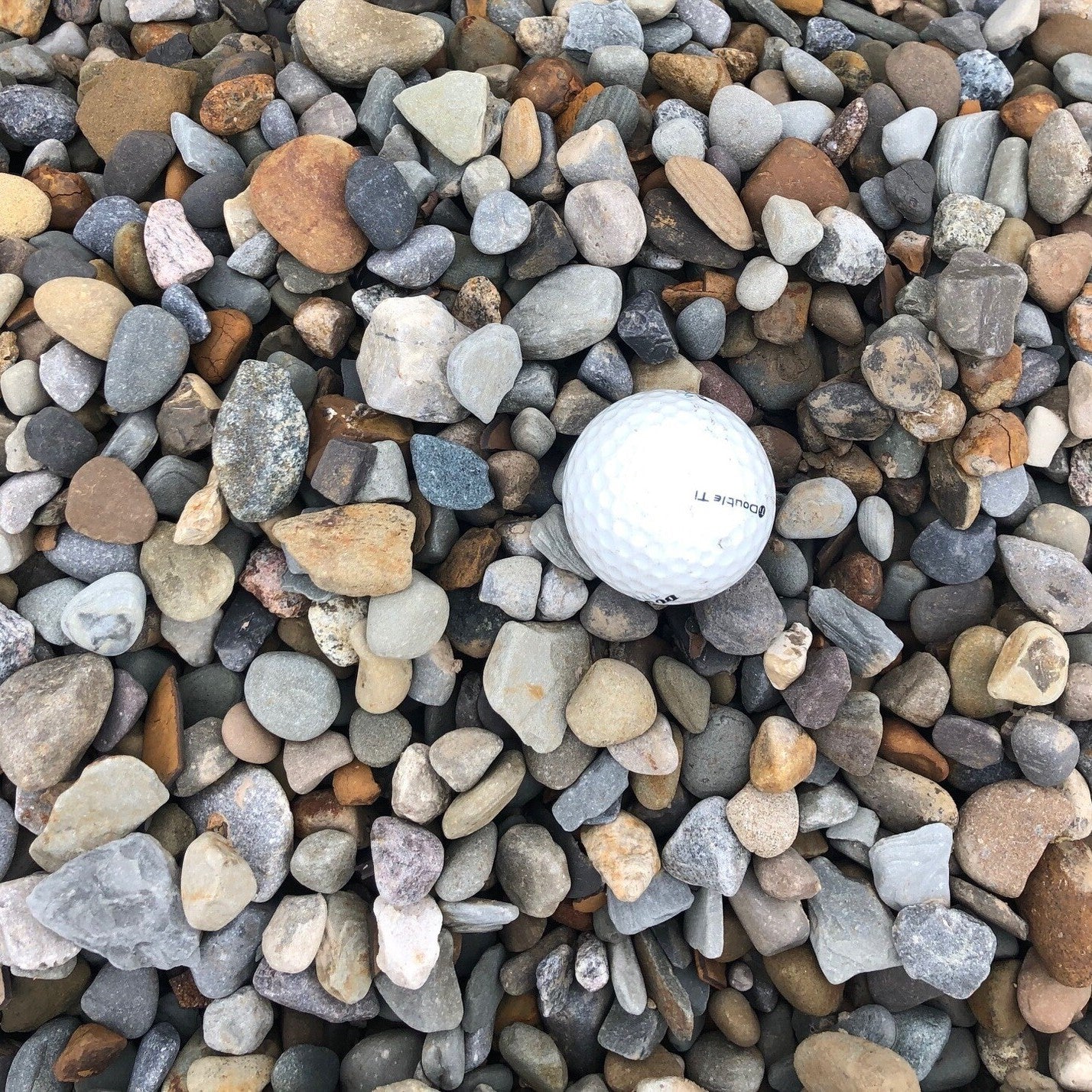
Number 57 crushed stone, angular limestone graded to about three quarters of an inch. The standard driveway, base and drainage gravel, it locks together under traffic and drains fast.
Mulch Mound delivered a yard of pea gravel to us. Delivery was on time, driver was friendly and hit a bullseye on the “tarp target”. We used the pea gravel (which was diameter as specified) to fill several muskrat holes around our pond. I would definitely recommend Mulch Mo...
Tell us what you're looking for
Thanks! We received your request.
Something went wrong. Please try again.
How Much Material Do I Need?
For decorative beds and low-maintenance ground cover in Sandusky, a 2 to 3 inch depth of stone provides solid coverage and suppresses weed growth effectively over the fabric below. Pathways and high-traffic areas benefit from 3 to 4 inches of depth to stay stable through Sandusky's wet springs and freeze-thaw winter conditions.
Use our free gravel calculator
What is a yard?
A yard is approximately 27 cubic feet. As a general guideline, one yard of material can cover an area of about 100-160 square feet at a 2-3 inch depth.
We can't take orders for this right now. Tell us what you need and we'll get back to you.
What do you need?
Thanks! We received your request.
Something went wrong. Please try again.
Hand-picked local yards
4,000+ regional deliveries
Dedicated support
Why order through Mulch Mound
The best local stone, without the guesswork.
We hand-pick and partner with the best yards in your region, keep only the ones our buyers rate well, and back each load with our guarantee.
Mulch Mound Guarantee
If your stone isn't the quantity or quality you ordered, we'll make it right.
About this stone
Number 57 crushed stone, angular limestone graded to about three quarters of an inch. The standard driveway, base and drainage gravel, it locks together under traffic and drains fast.
Mulch Mound delivered a yard of pea gravel to us. Delivery was on time, driver was friendly and hit a bullseye on the “tarp target”. We used the pea gravel (which was diameter as specified) to fill several muskrat holes around our pond. I would definitely recommend Mulch Mo...
How Much Material Do I Need?
For decorative beds and low-maintenance ground cover in Sandusky, a 2 to 3 inch depth of stone provides solid coverage and suppresses weed growth effectively over the fabric below. Pathways and high-traffic areas benefit from 3 to 4 inches of depth to stay stable through Sandusky's wet springs and freeze-thaw winter conditions.
Use our free gravel calculator
What is a yard?
A yard is approximately 27 cubic feet. As a general guideline, one yard of material can cover an area of about 100-160 square feet at a 2-3 inch depth.
Mulch Mound delivered a yard of pea gravel to us. Delivery was on time, driver was friendly and hit a bullseye on the “tarp target”. We used the ...
Read full review
Mulch Mound delivered a yard of pea gravel to us. Delivery was on time, driver was friendly and hit a bullseye on the “tarp target”. We used the pea gravel (which was diameter as specified) to fill several muskrat holes around our pond. I would definitely recommend Mulch Mound to a friend!
To calculate stone coverage, multiply your area's length by width in feet, then by your desired depth in feet (2 inches equals roughly 0.17 feet, 3 inches equals 0.25 feet), and divide by 27 for cubic yards. In Sandusky, where silt loam can shift and settle under heavy spring rainfall, adding a 5 to 10 percent overage to your order is a good practice to ensure full, consistent coverage after the first season's natural settling.
Stone Types We Deliver in Sandusky
Mulch Mound delivers bulk stone by the cubic yard to your door, making it simple to tackle any landscape project without hauling material yourself. Whether you are searching for bulk gravel by the yard in Sandusky or just want a clean, low maintenance ground cover, we stock the stone sizes that local homeowners depend on most. Our drivers load and deliver fresh stone so your project can get started right away.
Pea Gravel
Pea gravel is one of the most requested stones for local properties, valued for its smooth, rounded surface and warm earth tones. It works well along walkways, around garden beds, and in drainage channels where the heavy clay soil common to this part of Ohio tends to hold water.
1-2" River Stone
This smooth, larger river stone brings a polished, natural look to decorative ground cover, dry creek beds, and feature landscaping around the home. Its heavier weight keeps it in place through the freeze and thaw cycles that are common to northwest Ohio winters, making it both attractive and low maintenance.
Complete Your Outdoor Stone Project
Pairing stone installations with mulched planting beds nearby creates a layered, low-maintenance landscape that handles Sandusky's rainfall and freeze-thaw cycles with minimal seasonal upkeep. Adding bulk topsoil or garden soil to any adjacent planting areas before installation gives your ornamentals and shrubs the best possible foundation alongside your new stone features.
Before installing any stone bed in Sandusky, invest in a quality woven geotextile landscape fabric. Sandusky's silt loam is extremely fine-particled, and without a barrier it will migrate upward into your stone layer within one or two seasons, creating a weedy, muddy appearance that defeats the purpose of the installation. Overlap fabric sections by at least 6 inches and pin or tuck edges firmly under stone borders so that spring rain and frost heave do not displace it over time.
Mulch Mound Pro Tip
If you are installing a stone pathway in Sandusky, consider building a slight crown or center-high profile into your base layer. Sandusky's flat terrain near Lake Erie means water does not always shed quickly on its own, and a pathway that sits perfectly flat can hold water and create an icy hazard in late fall when overnight temperatures drop below freezing in October. Even a half-inch crown across the width of a path encourages water to drain to the sides rather than pool in the walking surface.
Mulch Mound Pro Tip
Stone around foundation borders is one of the most practical applications of bulk material for Sandusky homes. The city's 37 inches of annual rainfall hits foundation edges consistently, and bare silt loam around a home's perimeter tends to erode and splash soil onto siding and brick over time. A 12 to 18 inch band of decorative stone around the foundation perimeter absorbs rainfall energy, protects the soil grade from washing, and keeps foundation walls cleaner and drier through every season of the year.
The Unique Landscape of Sandusky
Stone is one of the most practical and durable landscaping investments a Sandusky homeowner can make, particularly given the challenges of maintaining traditional planted areas in this climate. Silt loam soil erodes easily on slopes and around foundation edges when exposed to the 37 inches of annual rainfall Sandusky receives, and stone provides a permanent erosion barrier that never needs replacing. Zone 6b winters put planted ground covers through significant stress with hard freezes and freeze-thaw cycling, while stone pathways and borders stay functional and attractive year-round without any seasonal maintenance. The humid conditions near Lake Erie create a perfect environment for weed growth in open areas, and stone beds installed over landscape fabric dramatically reduce that ongoing maintenance burden. From dry creek bed drainage solutions to decorative pathway installations, stone gives Sandusky landscapes both function and year-round visual interest. Low-lying properties near the lake especially benefit from strategic stone placement that redirects water away from foundation areas and chronically wet spots.
Frequently Asked Questions
Click a question to see the answer
Answer
What size stone works best for a backyard walkway here in Sandusky?
For walkable pathways in Sandusky, pea gravel at 3/8 inch or a 3/4 inch crushed limestone are the most popular choices. Pea gravel stays comfortable underfoot and drains extremely well, which is important given Sandusky's 37 inches of annual rainfall. Crushed limestone compacts slightly over time, giving a firmer surface that is easier to walk on with wet shoes. Either option holds up well through Zone 6b winters without heaving or cracking the way concrete and pavers sometimes do.
Answer
Can I use stone to fix the drainage problem I have in my Sandusky backyard every spring?
Dry creek beds filled with river rock or 1 to 2 inch washed stone are one of the most effective drainage solutions for Sandusky properties. Because the area's silt loam does not absorb heavy rainfall quickly, surface water needs somewhere to go, and a strategically placed stone channel can redirect flow away from foundations and low spots. Dig a gradual slope toward the drainage outlet, line it with landscape fabric, and fill with 2 to 4 inch river rock to handle the intense spring rain events and snowmelt runoff that Sandusky regularly sees in March and April.
Answer
Will stone borders around my garden beds actually keep mulch from washing away?
Yes, stone edging is one of the most practical investments for Sandusky beds. With 37 inches of annual rain and spring months that can deliver several inches of precipitation in a short period, mulch in unbordered beds regularly migrates onto sidewalks and lawns. A row of 4 to 6 inch landscape stones or a border of decorative cobble keeps mulch contained while also giving beds a crisp edge that stays defined through the growing season without requiring seasonal re-edging.
Answer
What stone is best for a low-maintenance area where I want to replace struggling grass near Lake Erie?
River rock in the 1 to 3 inch range is an excellent choice for low-maintenance ground coverage in Sandusky, particularly for areas near the lakeshore where wind, variable moisture, and salt air make grass difficult to maintain. Install a quality woven landscape fabric beneath the stone layer to prevent Sandusky's fine silt loam from migrating up into the rock over time, which is a common problem with this soil type. A 3 to 4 inch depth of river rock gives you full weed suppression and a clean appearance year-round.
Answer
How does decorative stone hold up through Sandusky winters compared to mulch or wood chip ground covers?
Stone is easily the most winter-durable ground cover for Sandusky landscapes. Unlike organic mulches, stone does not decompose, compact under snow loads, or wash away during the freeze-thaw cycles that Zone 6b winters bring. It does not need seasonal refreshing and it will not mold or harbor pests under snow cover. For high-traffic areas like side yard paths or utility zones, stone provides reliable footing even in icy conditions, which is a meaningful safety benefit during Sandusky's cold winters.
Answer
How do I figure out how much stone I need for a bed or pathway project?
For a decorative bed, plan on 2 to 3 inches of stone depth for good coverage and weed suppression. For a pathway, 3 to 4 inches gives you enough depth to walk comfortably without the stone dispersing underfoot. Measure your area in square feet, multiply by your depth in feet (3 inches equals 0.25 feet), and divide by 27 for cubic yards. In Sandusky, it is smart to order slightly more than your calculation suggests since stone settles and compacts a bit after the first round of heavy rain.
Answer
Can crushed stone help with the soft, muddy soil I deal with in my Sandusky backyard every spring?
Crushed stone is an excellent solution for chronically wet backyard areas in Sandusky. Because silt loam drains slowly and the area gets generous rainfall in March through May, low spots stay soft and muddy well into the planting season. Installing a 4 to 6 inch base of crushed limestone or 3/4 inch clean stone in problem areas creates a stable, permeable surface that sheds standing water quickly. This is particularly useful in high-traffic side yards or around outdoor entertaining areas where muddy ground is a recurring seasonal frustration.