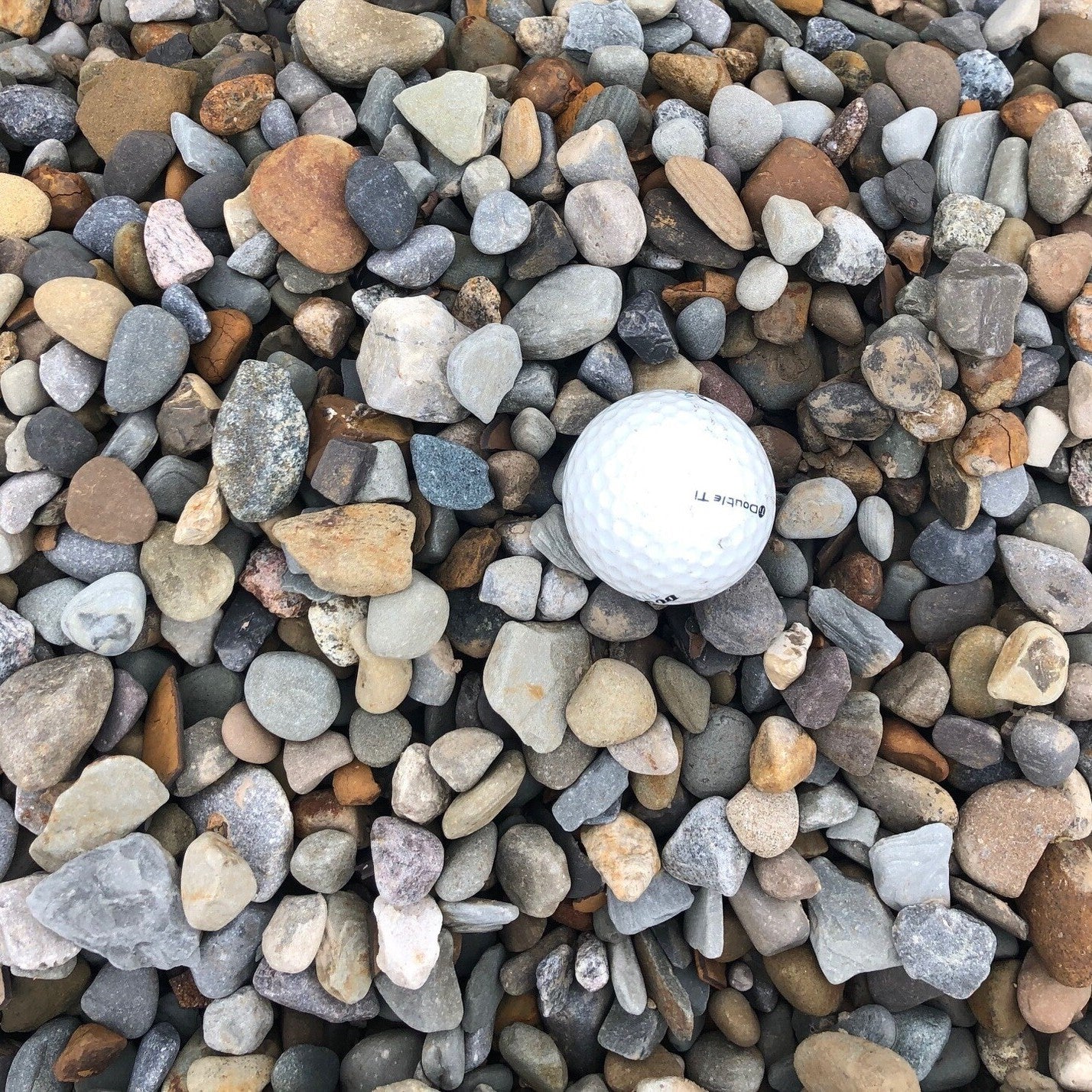
Number 57 crushed stone, angular limestone graded to about three quarters of an inch. The standard driveway, base and drainage gravel, it locks together under traffic and drains fast.
My experience with Mulch Mound was great and super easy. I ordered two yards of screened topsoil and was able to get it delivered within 2 days. They came in my requested time frame (afternoon) and dropped it off where I asked on my driveway. The topsoil was exactly what was a...
Tell us what you're looking for
Thanks! We received your request.
Something went wrong. Please try again.
How Much Material Do I Need?
Use two to three inches for decorative stone beds and four inches or more for driveways, paths, and drainage channels handling Sandy Springs runoff. A cubic yard covers about 160 square feet at two inches or 80 square feet at four inches.
Use our free gravel calculator
What is a Yard?
A yard is approximately 27 cubic feet. As a general guideline, one yard of material can cover an area of about 100-160 square feet at a 2-3 inch depth.
We can't take orders for this right now. Tell us what you need and we'll get back to you.
What do you need?
Thanks! We received your request.
Something went wrong. Please try again.
Hand-picked local yards
4,000+ regional deliveries
Dedicated support
Why order through Mulch Mound
The best local , without the guesswork.
We hand-pick and partner with the best yards in your region, keep only the ones our buyers rate well, and back each load with our guarantee.
Mulch Mound Guarantee
If your isn't the quantity or quality you ordered, we'll make it right.
About this stone
Number 57 crushed stone, angular limestone graded to about three quarters of an inch. The standard driveway, base and drainage gravel, it locks together under traffic and drains fast.
My experience with Mulch Mound was great and super easy. I ordered two yards of screened topsoil and was able to get it delivered within 2 days. They came in my requested time frame (afternoon) and dropped it off where I asked on my driveway. The topsoil was exactly what was a...
How Much Material Do I Need?
Use two to three inches for decorative stone beds and four inches or more for driveways, paths, and drainage channels handling Sandy Springs runoff. A cubic yard covers about 160 square feet at two inches or 80 square feet at four inches.
Use our free gravel calculator
What is a Yard?
A yard is approximately 27 cubic feet. As a general guideline, one yard of material can cover an area of about 100-160 square feet at a 2-3 inch depth.
My experience with Mulch Mound was great and super easy. I ordered two yards of screened topsoil and was able to get it delivered within 2 days. Th...
Read full review
My experience with Mulch Mound was great and super easy. I ordered two yards of screened topsoil and was able to get it delivered within 2 days. They came in my requested time frame (afternoon) and dropped it off where I asked on my driveway. The topsoil was exactly what was advertised, clean with no rocks or other debris. The price was reasonable. I plan to use them again in a couple weeks to order compost for my garden beds.
Stone is sold by weight as well as volume, so know that a cubic yard of granite runs roughly 1.3 to 1.5 tons, which matters for planning wheelbarrow trips across a Sandy Springs yard. Measure your area in feet, decide on depth, and remember that drainage applications need more depth than decorative ones. Round up, since spreading thin defeats the purpose.
Complete Your Outdoor Stone Project
Add geotextile fabric to keep stone from migrating into red clay, plus steel or paver edging to hold the stone line crisp along walks and beds.
Always install woven landscape fabric under stone on Sandy Springs clay. Clay behaves almost like a liquid when fully saturated after a 53 inch rainfall year, and stone laid directly on it slowly disappears. Woven fabric handles traffic and weight far better than the thin nonwoven rolls sold for weed control. Overlap seams by at least six inches and pin them, especially on any slope, before the first stone goes down.
Mulch Mound Pro Tip
Match stone shape to the job. Angular crushed granite locks together and stays put on the grades common in Sandy Springs, making it right for driveways, paths, and steep beds. Smooth river rock rolls underfoot and migrates downhill, so save it for flat decorative areas and dry creek beds where the rounded look matters. Choosing rounded stone for a sloped walkway is the mistake homeowners regret most.
Mulch Mound Pro Tip
Think about where the water goes before you place stone. Sandy Springs sits on rolling terrain that drains toward the Chattahoochee, and redirecting runoff carelessly can push water into a neighbor's yard or against your own foundation. Walk the property during a rain and note the actual flow paths. Then use stone to reinforce those routes rather than fighting them, which is cheaper and far more durable than trying to reroute water uphill.
The Unique Landscape of Sandy Springs
Sandy Springs receives about 53 inches of rain each year, and on clay soil that water does not soak in, it runs, which is why gravel and stone are workhorses on local properties. Decorative stone holds its ground in beds where mulch would float away during a heavy August thunderstorm, and river rock lined swales carry runoff away from foundations built into our rolling terrain. Crushed granite is the regional standard for driveways and paths here because it locks together over clay and resists rutting through wet winters. Stone also stays put on the steep side yards and creek edges common throughout the area. Because it does not decompose, stone is a one time investment in places where annual mulch replacement is a chore.
Frequently Asked Questions
Click a question to see the answer
Answer
What size gravel works best for a driveway on Georgia clay?
Most Sandy Springs driveways do well with a compacted base of crusher run topped with 57 granite. Crusher run contains fines that bind and lock into the clay, while 57 gives a clean driving surface that drains during our heavy rains. Skipping the base layer is the usual mistake, and the result is stone slowly disappearing into soft clay after the first wet winter.
Answer
How do I stop stone from sinking into my red clay?
Lay a woven geotextile fabric between the clay and the stone. Sandy Springs clay softens dramatically when saturated, and without a barrier the stone works downward every time the ground gets wet and traffic passes over. Fabric plus a properly compacted base will keep a driveway or path intact for many years. For decorative beds, fabric also blocks the Bermuda grass that pushes up through gravel.
Answer
Is stone a good alternative to mulch in Sandy Springs beds?
In the right spots, yes. Stone is excellent along downspout outlets, on erosion prone slopes, and in narrow side yards where mulch washes out every season. It is a poor choice around azaleas, hydrangeas, and other acid loving shrubs common here, because stone radiates heat in our Zone 8a summers and adds no organic matter to the clay. Use stone where water moves and mulch where plants grow.
Answer
How much river rock do I need for a dry creek bed?
For a typical Sandy Springs dry creek running 30 feet long and 3 feet wide at four inches deep, plan on about 1.1 cubic yards. Most homeowners here go deeper in the channel center, closer to six inches, to handle the volume our storms produce. Mix sizes, with larger stone along the edges and smaller washed rock in the flow line, for a natural look and better stability.
Answer
Will gravel help with the drainage problems in my backyard?
It helps when it is part of a designed system rather than a standalone fix. A French drain wrapped in fabric and backfilled with 57 stone is the standard solution for soggy Sandy Springs backyards where clay holds water at the surface. Simply spreading gravel over a wet area masks the problem without moving the water. Identify where the water needs to go first, then use stone to get it there.
Answer
Does stone get too hot next to my house in summer?
Light colored stone in full southern exposure can radiate significant heat during our July and August stretches, which stresses foundation plantings and warms the wall behind them. On a shaded north or east side of a Sandy Springs home, stone is comfortable and looks clean year round. If you want stone in a hot exposure, choose darker granite or river rock and keep it away from tender plant material.
Answer
How do I keep leaves and pine straw out of my gravel?
This is a real issue in Sandy Springs given our heavy oak, hickory, and pine canopy. Use a leaf blower on a low setting rather than raking, which pulls stone along with the debris. Larger stone sizes trap less material than pea gravel does. Plan a cleanout each November after the first frost, when most of the leaf drop has finished, to keep the gravel from silting in with organic matter.
Answer
Is crush and run the same as crusher run?
Crush and run refers to crushed stone blended with stone dust that compacts into a dense, solid base, the kind of material used under driveways and pavers. With Sandy Springs averaging 53 inches of rain a year on clay soil that sheds water rather than absorbing it, our Crushed Stone #57 is what we deliver here, offering clean drainage that keeps water moving away from foundations instead of pooling.
Answer
Is there a stone yard near Sandy Springs?
Lining a driveway or path with crushed stone in Sandy Springs usually means either hauling it home from a stone yard yourself or ordering it online and having it dropped right where you need it. We handle the second option, sending crushed stone by the cubic yard straight to your property, with no quarry run required.