


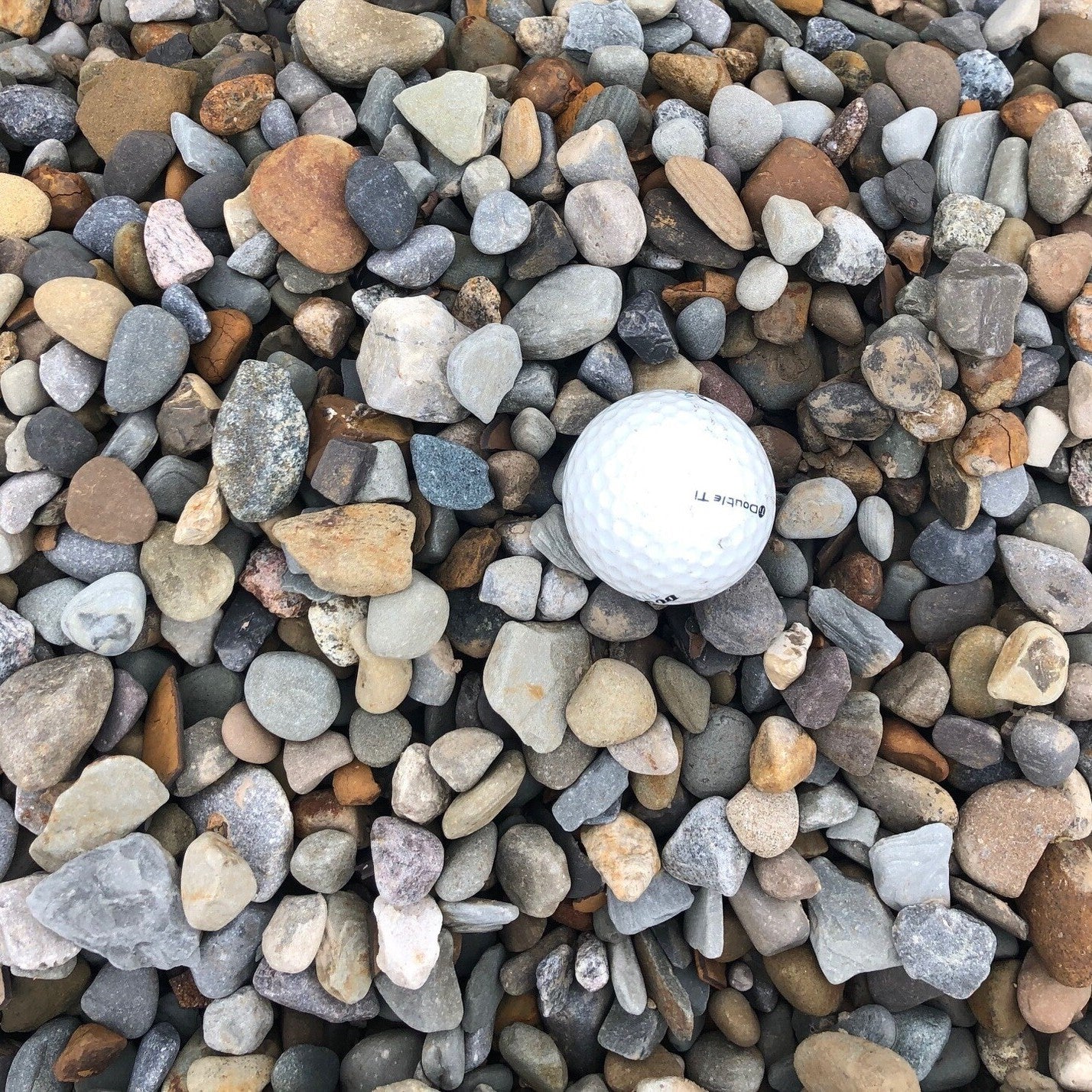

The driver nailed it on putting the gravel I ordered in front of my trailer and between the sidewalk. Very satisfied with how my flowerbeds look now.
About this stone
Number 57 crushed stone, angular limestone graded to about three quarters of an inch. The standard driveway, base and drainage gravel, it locks together under traffic and drains fast.
The driver nailed it on putting the gravel I ordered in front of my trailer and between the sidewalk. Very satisfied with how my flowerbeds look now.
Tell us what you're looking for
Thanks! We received your request.
Something went wrong. Please try again.
How Much Material Do I Need?
How Much Material Do I Need?
For decorative stone beds and borders in Sheboygan, two to three inches of coverage provides solid weed suppression and a clean finished appearance year-round. For drainage applications over clay loam soil, increase depth to four to six inches to ensure adequate water movement through the full stone layer, especially in low-lying areas that collect runoff during Sheboygan's wetter spring months.
Use our free gravel calculator
What is a yard?
What is a yard?
FAQs
FAQs
Sheboygan Gravel Delivery
Sheboygan Gravel Delivery
Regular price
$133.00
per
yard
Regular price
Sale price
$133.00
Unit price
per
Shipping calculated at checkout.
Minimum of 3 yard
Couldn't load pickup availability
Not currently available
We can't take orders for this right now. Tell us what you need and we'll get back to you.
Hand-picked local yards
4,000+ regional deliveries
Dedicated support
Why order through Mulch Mound
The best local stone, without the guesswork.
We hand-pick and partner with the best yards in your region, keep only the ones our buyers rate well, and back each load with our guarantee.
Mulch Mound Guarantee
If your stone isn't the quantity or quality you ordered, we'll make it right.
About this stone
Number 57 crushed stone, angular limestone graded to about three quarters of an inch. The standard driveway, base and drainage gravel, it locks together under traffic and drains fast.
The driver nailed it on putting the gravel I ordered in front of my trailer and between the sidewalk. Very satisfied with how my flowerbeds look now.
How Much Material Do I Need?
How Much Material Do I Need?
For decorative stone beds and borders in Sheboygan, two to three inches of coverage provides solid weed suppression and a clean finished appearance year-round. For drainage applications over clay loam soil, increase depth to four to six inches to ensure adequate water movement through the full stone layer, especially in low-lying areas that collect runoff during Sheboygan's wetter spring months.
Use our free gravel calculator
What is a yard?
What is a yard?
FAQs
FAQs
Tell us what you're looking for
Thanks! We received your request.
Something went wrong. Please try again.
How It Works
Getting started is easy — just follow these simple steps
1
Choose your stone
Make sure you adjust the quantity to your home's needs. You can use our calculator to estimate how much you'll need.
2
Select your delivery date
Select a delivery date you'd like for the product to be dropped off at your home
3
Sit back and wait
Sit back, wait, and let us work our magic to make sure the highest quality product is delivered to your driveway.

Placing an order online was so easy. Delivery was on time. When the driver realized we had a newly poured driveway they erred on the side of cautio...
Read full review
Placing an order online was so easy. Delivery was on time. When the driver realized we had a newly poured driveway they erred on the side of caution and opted not ti drive in it. The company even sent me a message explaining that call. Would recommend!

Online ordering was really simple and I liked the transparent pricing.
Need Help Calculating How Much Gravel You Need?
Use our NEW Trace from Satellite tool to get an estimate for your project based on an aerial view of your property
Try Our CalculatorMeasure the length and width of your stone project area in feet and multiply to find square footage, then use our calculator to find the cubic yards needed at your desired depth. For Sheboygan drainage projects over clay loam, deeper stone layers of four to six inches perform significantly better than thin decorative coverage and are worth the extra material cost. Always round up on your estimate since stone settles into clay loam over time and a little extra ensures your finished depth stays consistent through the first full season.
Stone Types We Deliver in Sheboygan
Mulch Mound brings bulk stone delivery straight to Sheboygan homeowners and landscapers, measured by the cubic yard and dropped right where you need it. Whether you are searching for bulk gravel by the yard in Sheboygan or planning a larger outdoor project, we make ordering simple and straightforward. Wisconsin's freeze-thaw cycles and heavy clay soils make choosing the right stone important, and we are here to help you get it right.
Pea Gravel
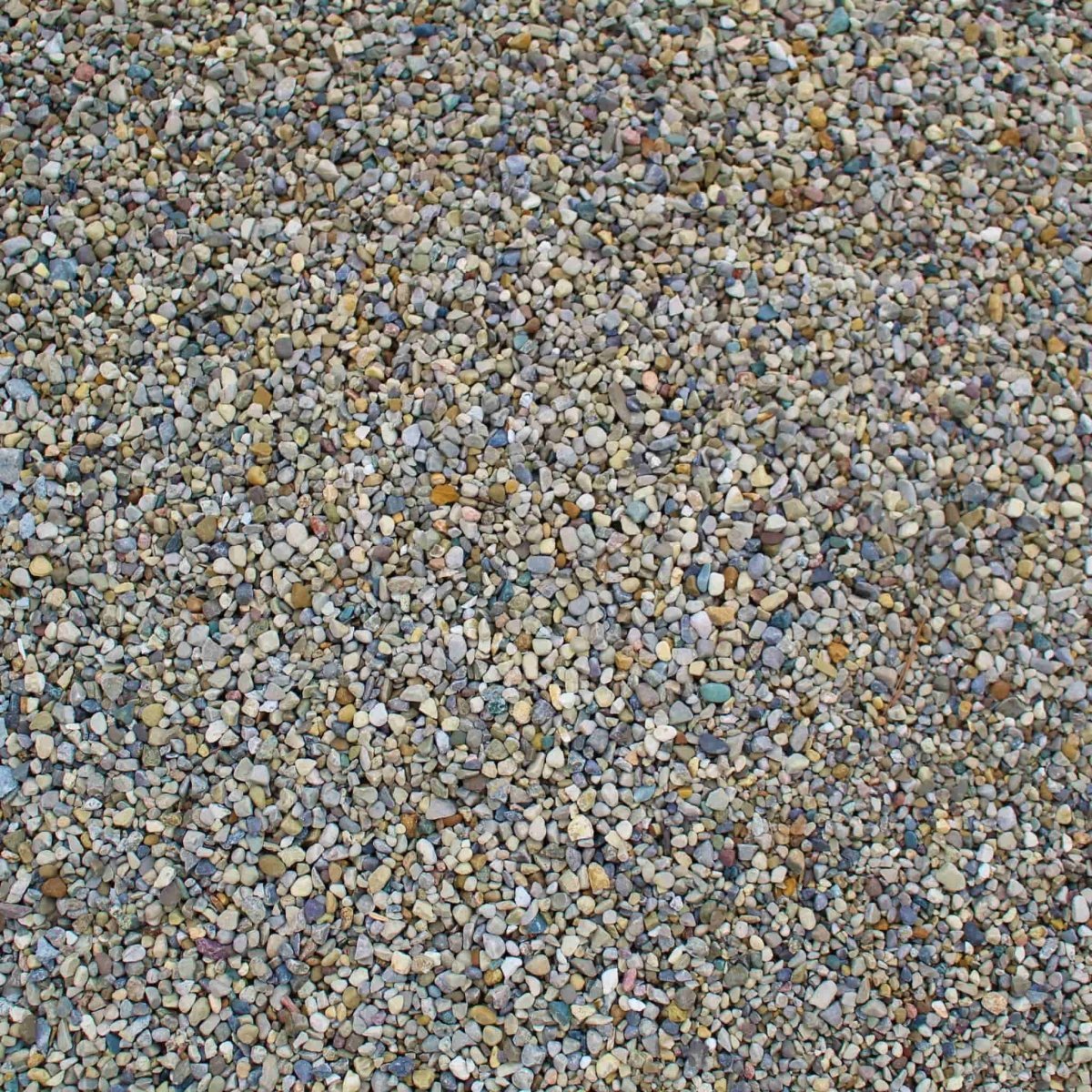
Smooth and rounded with warm earth tones, pea gravel is a popular choice for Sheboygan yards where drainage matters and aesthetics count. It settles comfortably along walkways, patios, and garden beds, and its rounded texture is gentle underfoot. It drains well through the region's heavy soils and holds its look season after season.
Complete Your Outdoor Stone Project
Combine your stone order with bulk topsoil to grade areas properly before laying stone paths or borders, and add mulch to adjacent planting beds to create a clean contrast between soft landscape zones and hardscape areas. Sheboygan yards designed with all three materials handle freeze-thaw cycles and heavy spring rains much better than those relying on any single material alone.



Service area
Areas we deliver stone and gravel in Sheboygan, Wisconsin
Mulch Mound Pro Tip
In Sheboygan, where clay loam expands and contracts with seasonal moisture changes, placing a layer of landscape fabric beneath any stone installation dramatically extends how long the project stays level and weed-free. The fabric prevents clay from working up into the stone layer during wet periods while still allowing water to drain through. Secure the edges with heavy-duty staples before adding stone so the fabric does not shift during the first hard winter freeze.
Mulch Mound Pro Tip
Sheboygan's winters can leave gravel paths and stone areas scattered by snowplow activity or heavy foot traffic during icy conditions. Choose a slightly larger stone, at least three quarters of an inch in diameter, for any area near a driveway or high-traffic zone. Larger stone resists displacement better than pea gravel and is far easier to rake back into place after a rough winter without losing material into surrounding lawn edges.
Mulch Mound Pro Tip
Sheboygan receives 33 inches of rain annually and much of it arrives in heavy spring events that can overwhelm clay loam soil drainage quickly. Installing a stone-filled French drain or a decorative dry creek bed on the low side of your yard gives that water a managed path to follow rather than pooling near your foundation or washing through your lawn. Even a shallow trench filled with clean angular stone and topped with larger river rock creates a functional and attractive drainage feature that pays off reliably year after year.
The Unique Landscape of Sheboygan
Decorative and functional stone is one of the most durable investments a Sheboygan homeowner can make in a low-maintenance landscape that looks good all year. Because Sheboygan's clay loam soil does not drain quickly, stone pathways and borders can redirect surface water and reduce erosion without requiring ongoing seasonal upkeep. Zone 5b winters bring hard freezes that shift paving and crack rigid concrete, but gravel and loose stone adapt naturally to frost heave without breaking or becoming a safety hazard. With a growing season of only 167 days between May 6 and October 20, Sheboygan homeowners benefit from landscape features like stone that look great year-round without replanting or seasonal replacement. Whether it is a gravel path, a drainage swale filled with river rock, or a decorative planting bed border, stone anchors the landscape through all of Sheboygan's seasonal extremes.