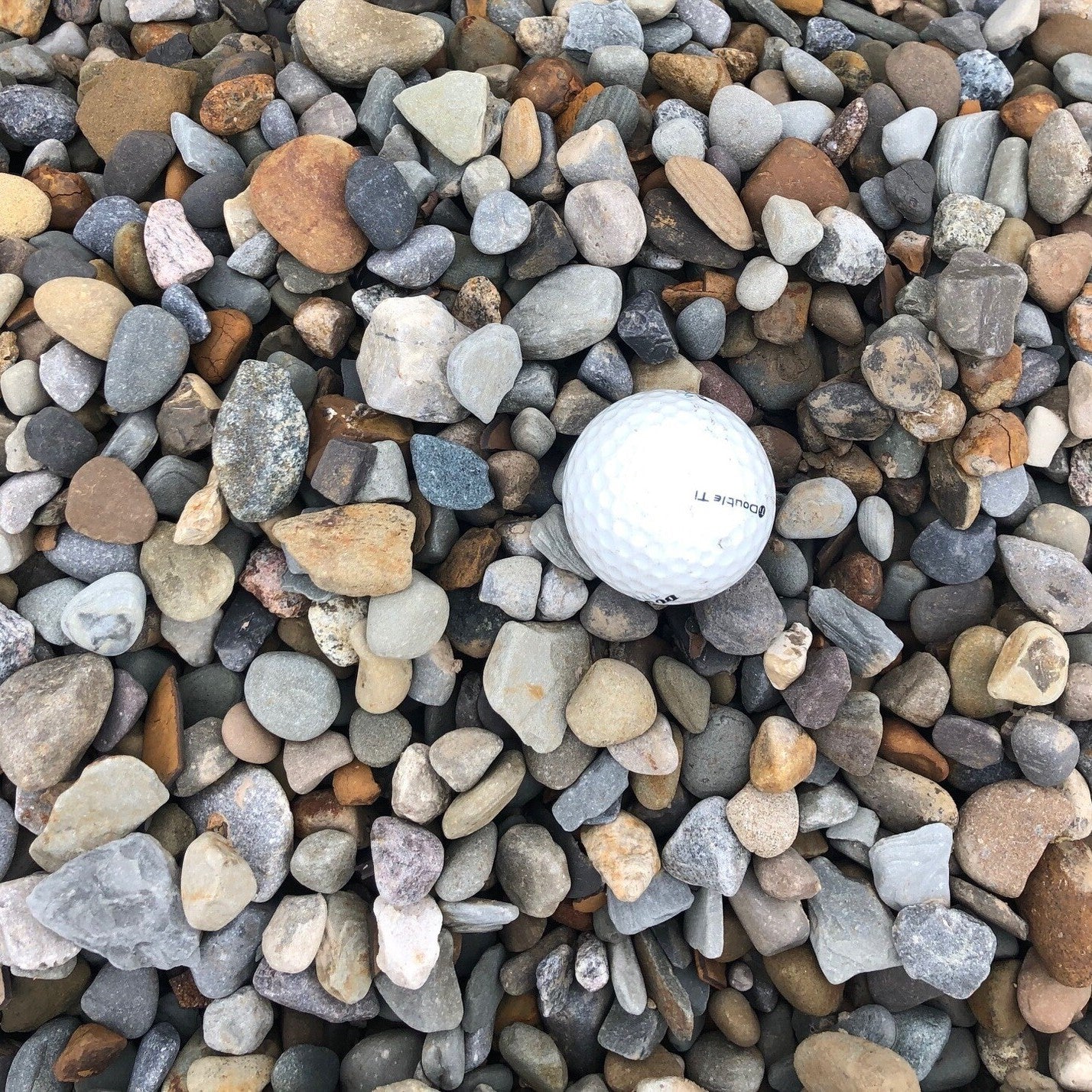
Number 57 crushed stone, angular limestone graded to about three quarters of an inch. The standard driveway, base and drainage gravel, it locks together under traffic and drains fast.
Mulch Mound delivered a yard of pea gravel to us. Delivery was on time, driver was friendly and hit a bullseye on the “tarp target”. We used the pea gravel (which was diameter as specified) to fill several muskrat holes around our pond. I would definitely recommend Mulch Mo...
Tell us what you're looking for
Thanks! We received your request.
Something went wrong. Please try again.
How Much Material Do I Need?
For decorative ground cover applications in South Yarmouth, 2 to 3 inches of stone depth provides full coverage and effective weed suppression over landscape fabric. Drainage and pathway projects may require a deeper base layer of 4 to 6 inches to achieve the structural stability that sandy outwash alone cannot provide.
Use our free gravel calculator
What is a yard?
A yard is approximately 27 cubic feet. As a general guideline, one yard of material can cover an area of about 100-160 square feet at a 2-3 inch depth.
We can't take orders for this right now. Tell us what you need and we'll get back to you.
What do you need?
Thanks! We received your request.
Something went wrong. Please try again.
Hand-picked local yards
4,000+ regional deliveries
Dedicated support
Why order through Mulch Mound
The best local stone, without the guesswork.
We hand-pick and partner with the best yards in your region, keep only the ones our buyers rate well, and back each load with our guarantee.
Mulch Mound Guarantee
If your stone isn't the quantity or quality you ordered, we'll make it right.
About this stone
Number 57 crushed stone, angular limestone graded to about three quarters of an inch. The standard driveway, base and drainage gravel, it locks together under traffic and drains fast.
Mulch Mound delivered a yard of pea gravel to us. Delivery was on time, driver was friendly and hit a bullseye on the “tarp target”. We used the pea gravel (which was diameter as specified) to fill several muskrat holes around our pond. I would definitely recommend Mulch Mo...
How Much Material Do I Need?
For decorative ground cover applications in South Yarmouth, 2 to 3 inches of stone depth provides full coverage and effective weed suppression over landscape fabric. Drainage and pathway projects may require a deeper base layer of 4 to 6 inches to achieve the structural stability that sandy outwash alone cannot provide.
Use our free gravel calculator
What is a yard?
A yard is approximately 27 cubic feet. As a general guideline, one yard of material can cover an area of about 100-160 square feet at a 2-3 inch depth.
Mulch Mound delivered a yard of pea gravel to us. Delivery was on time, driver was friendly and hit a bullseye on the “tarp target”. We used the ...
Read full review
Mulch Mound delivered a yard of pea gravel to us. Delivery was on time, driver was friendly and hit a bullseye on the “tarp target”. We used the pea gravel (which was diameter as specified) to fill several muskrat holes around our pond. I would definitely recommend Mulch Mound to a friend!
Stone coverage varies by product size, but as a general guide, one cubic yard covers approximately 100 square feet at a 3-inch depth. Measure your project area carefully and add 10 percent to your calculated total to account for uneven spreading and settling on South Yarmouth's sandy outwash base. For drainage trench applications, calculating by linear foot of trench at your planned fill depth will give you a more accurate estimate than surface area measurements.
Stone Types We Deliver in South Yarmouth
When you need bulk gravel by the yard in South Yarmouth, we make it straightforward to get quality stone delivered directly to your property. Our team supplies cubic yard loads suited to residential yards, garden beds, and drainage projects throughout the area. Cape Cod's sandy, fast-draining soil pairs well with the right stone, and we are here to help you choose and receive it without hassle.
Pea Gravel
Pea Gravel is a popular choice for homeowners across South Yarmouth who want a low-maintenance, attractive ground cover. Its smooth, rounded edges feel comfortable underfoot on garden paths and patios, and its warm earth tones suit the relaxed, cottage-influenced landscape styles common in this part of Cape Cod.
Complete Your Outdoor Stone Project
Pairing stone borders with a layer of hardwood mulch in the planting beds they surround keeps South Yarmouth yards looking cohesive and well-maintained throughout the growing season. If your stone project involves grade work or raised edging, our topsoil and garden blend products can help you build up the adjacent soil areas to the right level before finishing with stone.
In South Yarmouth, stone beds near the coastline are exposed to salt spray and wind that would break down organic ground covers quickly through the season. Stone is inherently resistant to both, making it a particularly smart choice for front yard beds and foundation borders within a mile or two of the water. Rinsing decorative stone with fresh water once or twice a season keeps salt residue from dulling the surface appearance and maintains the clean look that makes stone such a popular choice in coastal Cape Cod neighborhoods.
Mulch Mound Pro Tip
South Yarmouth's sandy outwash soil is naturally acidic, and some stone types, particularly limestone-based products, can gradually raise soil pH around adjacent planting beds as rain moves through them. If you have acid-loving plants like blueberries, azaleas, or rhododendrons planted near stone borders, test your soil pH annually to make sure the stone is not pushing conditions outside the range your plants prefer. Granite and quartzite-based stones are chemically inert and do not affect soil pH, making them a safer choice near sensitive ornamental plantings.
Mulch Mound Pro Tip
For South Yarmouth homeowners who want to reduce lawn area and the maintenance that comes with it, a well-planned stone pathway or patio project can eliminate the most difficult-to-mow sections of sandy turf that tend to thin out during dry summers anyway. Sandy outwash lawns in Zone 7a often require more irrigation, fertilization, and overseeding than homeowners anticipate when they first move to the Cape, and replacing high-maintenance turf patches with stone hardscape is a practical long-term trade. Focus stone conversions on the areas that face the most sun and heat stress, where grass struggles most against the droughty native soil.
The Unique Landscape of South Yarmouth
Stone is one of the most practical landscaping materials available to South Yarmouth homeowners, precisely because it solves problems that the area's sandy outwash soil tends to create. Sandy ground shifts and erodes easily, and unprotected soil surfaces along walkways, driveways, and slopes can move noticeably after the Cape's heavier rain events. A layer of crushed stone or decorative gravel stabilizes those surfaces and provides a durable, low-maintenance alternative to organic ground covers that require regular seasonal replacement. Stone also excels at managing drainage around foundation borders and in low-lying areas of the yard, where the flat topography common at South Yarmouth's 20-foot elevation can slow water movement after sustained rainfall. With no frost concerns until November 7 and a long active outdoor season through Zone 7a, stone pathways and borders stay usable and attractive all the way through late fall without any additional care. For homeowners looking to reduce maintenance while improving curb appeal, stone delivers results that South Yarmouth's local climate and sandy soil make difficult to achieve with plants or organic materials alone.
Frequently Asked Questions
Click a question to see the answer
Answer
What type of stone works best for a backyard pathway in South Yarmouth?
Pea gravel and crushed stone in the three-quarter-inch range are the most popular pathway choices in South Yarmouth for good reason. Both compact reasonably well on the sandy outwash base that most Cape Cod yards sit on, and they drain almost instantly, which means no puddles forming on path surfaces after rain. Pea gravel gives a softer, more decorative appearance while crushed stone provides slightly more stability underfoot. For a firmer surface that does not shift as much underfoot, a compacted base layer of processed gravel topped with a finer decorative surface stone is the most durable combination.
Answer
Will stone help with the drainage problems I have in a low spot in my South Yarmouth yard?
Stone is excellent for managing standing water in low areas, and South Yarmouth's flat terrain near the 20-foot elevation mark can make those low spots persistent after a significant rain event. A French drain or dry creek bed filled with drainage stone channels water away from the problem area and allows it to percolate into the sandy outwash below at a rate the ground can handle. This approach works especially well here because the native sandy soil already drains fast once water reaches it. The stone simply moves surface water to where the soil can do its natural job.
Answer
How do I keep stone from slowly sinking into South Yarmouth's sandy soil over time?
The main strategy for preventing stone from disappearing into sandy outwash is to install a layer of quality landscape fabric beneath the stone before you spread it. The fabric acts as a separation barrier that keeps stone above the sand while still allowing water to pass through freely. For pathway projects, a compacted base of two to three inches of processed stone beneath the decorative surface stone adds both stability and a physical barrier from the native sandy substrate. Without some form of separator, fine sand will gradually migrate upward and stone will work its way down, especially in high-traffic areas.
Answer
Can I use stone around my home's foundation to help with water management?
Absolutely, and foundation borders with stone are particularly practical in South Yarmouth where the combination of coastal rainfall and relatively flat topography can direct water toward house foundations. A 12 to 18 inch band of crushed stone graded slightly away from the foundation creates a fast-draining buffer that moves surface water away from the structure before it can pool against the foundation wall. River stone or washed gravel in this application also stays clean-looking through the season without the annual replacement that mulch requires in the same location.
Answer
How much stone do I need for a decorative ground cover bed in front of my house?
For a decorative ground cover application, plan for about 2 to 3 inches of stone depth, which is enough to cover the soil surface fully, suppress most weeds, and provide a finished appearance. Calculate your square footage, multiply by your depth in inches, and divide by 12 to get cubic feet, then divide by 27 for cubic yards. A common mistake South Yarmouth homeowners make is ordering too little material, which leaves sandy soil visible between stones and allows weeds to establish more easily than a properly deep application would permit.
Answer
Is stone a good solution for areas of my yard where nothing seems to grow well in the sandy soil?
Stone is often the ideal answer for those frustrating spots in South Yarmouth yards where the sandy outwash is too lean, too shaded, or too dry for plants to thrive. Instead of fighting the conditions with repeated planting attempts, replacing those areas with decorative stone eliminates the maintenance cycle and gives you a clean, permanent ground cover that requires almost no seasonal attention. Pairing stone with a few drought-tolerant accent plants at the edges can keep the area looking intentional and designed rather than simply abandoned.
Answer
What stone size is best for preventing erosion on a sloped area of my South Yarmouth yard?
For erosion control on slopes, larger angular stone in the 1.5 to 3 inch range performs best because the irregular shapes lock together and resist movement during rain events. Smooth round stones like river rock are attractive but can roll on slopes when water moves across them, which can actually worsen erosion in some situations. South Yarmouth's sandy outwash means any unprotected slope will erode gradually over time regardless of how much annual rainfall actually falls, so sizing up on stone for sloped applications is always the right call. Steep slopes may also benefit from buried edging placed at intervals to create a low terraced effect that keeps stone in position.
Answer
What is stone dust used for?
Setting pavers or flagstone on a firm, level bed is the classic job for stone dust, the fine crushed screenings that pack tight but shed water once compacted. Because South Yarmouth's sandy outwash soil needs stabilization rather than a dense packed surface, our Crushed Stone #57 is the better choice here, offering the free drainage that a compactable screening layer cannot provide.
More delivery around South Yarmouth, Massachusetts