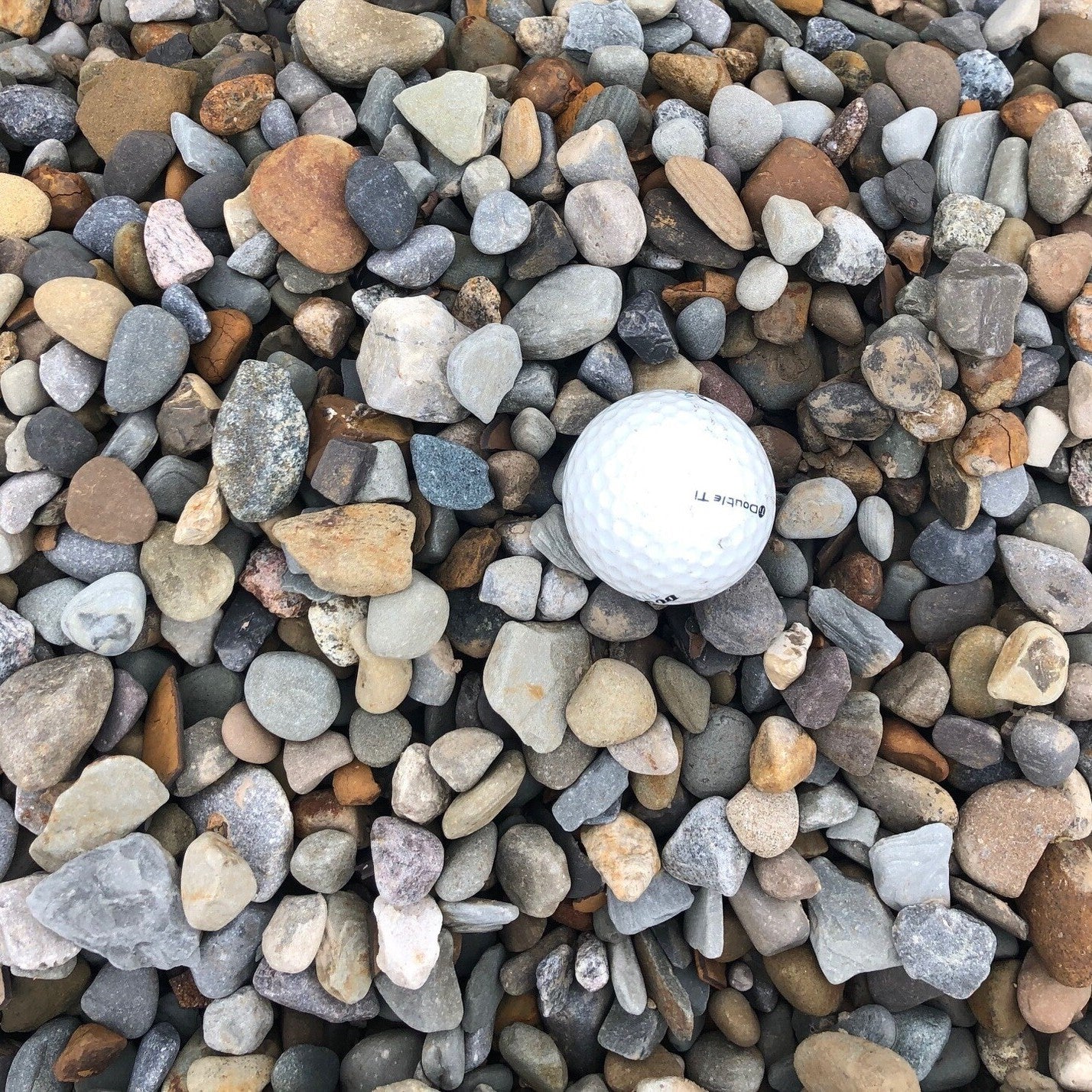
Number 57 crushed stone, angular limestone graded to about three quarters of an inch. The standard driveway, base and drainage gravel, it locks together under traffic and drains fast.
Mulch Mound delivered a yard of pea gravel to us. Delivery was on time, driver was friendly and hit a bullseye on the “tarp target”. We used the pea gravel (which was diameter as specified) to fill several muskrat holes around our pond. I would definitely recommend Mulch Mo...
Tell us what you're looking for
Thanks! We received your request.
Something went wrong. Please try again.
How Much Material Do I Need?
For a 3-inch decorative stone layer over a flat bed, plan on approximately 1 cubic yard per 100 square feet. In St. Cloud, where glacial till creates subtle grade changes across most properties, budget for a 4-inch depth on sloped areas to ensure consistent coverage after the material settles through the first freeze-thaw cycle.
Use our free gravel calculator
What is a ton?
A ton is approximately 2,000 pounds. Coverage varies by stone type and depth, but as a general guideline, one ton covers roughly 80-100 square feet at 2 inches deep.
We can't take orders for this right now. Tell us what you need and we'll get back to you.
What do you need?
Thanks! We received your request.
Something went wrong. Please try again.
Hand-picked local yards
4,000+ regional deliveries
Dedicated support
Why order through Mulch Mound
The best local stone, without the guesswork.
We hand-pick and partner with the best yards in your region, keep only the ones our buyers rate well, and back each load with our guarantee.
Mulch Mound Guarantee
If your stone isn't the quantity or quality you ordered, we'll make it right.
About this stone
Number 57 crushed stone, angular limestone graded to about three quarters of an inch. The standard driveway, base and drainage gravel, it locks together under traffic and drains fast.
Mulch Mound delivered a yard of pea gravel to us. Delivery was on time, driver was friendly and hit a bullseye on the “tarp target”. We used the pea gravel (which was diameter as specified) to fill several muskrat holes around our pond. I would definitely recommend Mulch Mo...
How Much Material Do I Need?
For a 3-inch decorative stone layer over a flat bed, plan on approximately 1 cubic yard per 100 square feet. In St. Cloud, where glacial till creates subtle grade changes across most properties, budget for a 4-inch depth on sloped areas to ensure consistent coverage after the material settles through the first freeze-thaw cycle.
Use our free gravel calculator
What is a ton?
A ton is approximately 2,000 pounds. Coverage varies by stone type and depth, but as a general guideline, one ton covers roughly 80-100 square feet at 2 inches deep.
Mulch Mound delivered a yard of pea gravel to us. Delivery was on time, driver was friendly and hit a bullseye on the “tarp target”. We used the ...
Read full review
Mulch Mound delivered a yard of pea gravel to us. Delivery was on time, driver was friendly and hit a bullseye on the “tarp target”. We used the pea gravel (which was diameter as specified) to fill several muskrat holes around our pond. I would definitely recommend Mulch Mound to a friend!
Placing an order online was so easy. Delivery was on time. When the driver realized we had a newly poured driveway they erred on the side of cautio...
Read full review
Placing an order online was so easy. Delivery was on time. When the driver realized we had a newly poured driveway they erred on the side of caution and opted not ti drive in it. The company even sent me a message explaining that call. Would recommend!
To estimate stone for your St. Cloud project, measure the length and width of the area in feet, multiply for square footage, and multiply by your desired depth in feet, then divide by 27 to get cubic yards. For pathway and driveway apron projects in St. Cloud, we recommend a minimum 3-inch depth to account for the freeze-thaw settling that occurs in glacial till soil over the first winter. Measure twice and add 10 percent for uneven terrain, which is common on properties with the rolling glacial topography typical of the St. Cloud area.
Stone Types We Deliver in St. Cloud
Mulch Mound makes it easy to get bulk gravel by the yard in St. Cloud, delivering smooth river stones and clean sand straight to your property by the cubic yard. Minnesota's clay-heavy soils and hard winters make the right stone essential for lasting drainage, decorative ground cover, and stable hardscape bases.
3/4" River Stone
The 3/4" size is one of the most popular bulk stone choices for Central Minnesota yards. Its smooth, rounded profile moves water through heavy clay soil and creates clean, attractive borders around beds. Homeowners use it along walkways and in planting areas for a neat, low-maintenance finish.
1-2" River Stone
These larger smooth river rocks add bold texture and stand up to Minnesota winters without shifting or fading. Use them in dry creek beds or as dramatic feature borders to bring a natural, rugged character to any yard.
3/8" River Stone
This small, smooth river stone fills decorative ground cover and garden accent areas with a refined, consistent look. Its compact size resists washout better than mulch in low-lying yards that collect runoff after spring thaws and summer storms.
Washed Sand
Clean washed sand provides a reliable base for paver installations, flagstone leveling, and concrete mixes. In Minnesota where frost heave shifts surfaces each winter, a well-packed sand bed helps keep patios and walkways stable through the seasons.
Complete Your Outdoor Stone Project
Pair your stone order with bulk topsoil to build up planting beds adjacent to your stone areas and create the grade separation that makes stone borders look intentional, and add a layer of mulch in planted areas next to stone pathways to tie the landscape together through St. Cloud's long growing season.
In St. Cloud, always install landscape fabric beneath decorative stone areas to prevent the stone from gradually sinking into the glacial till soil below. Without a barrier, freeze-thaw cycles work stone downward into the soft till layer over two to three winters, thinning your coverage and allowing weeds to push through. Use a heavy-duty woven fabric rated for landscape use rather than thin plastic sheeting, which tears during installation and degrades quickly under St. Cloud's summer UV exposure.
Mulch Mound Pro Tip
For stone pathways in St. Cloud, create a slight crown in the center of the path so water sheds to either side rather than pooling on the surface and freezing. Standing water on a stone path freezes into a glaze during the multiple freeze-thaw cycles that Central Minnesota sees from November through March, creating a slip hazard right outside your door. A 1 to 2-inch crown across a 3-foot-wide path is barely noticeable visually but dramatically improves drainage and winter safety.
Mulch Mound Pro Tip
When using stone for erosion control on slopes in the St. Cloud area, size matters more than most homeowners realize. Stone that is too small, such as pea gravel on a grade, will migrate downhill during spring snowmelt events when large volumes of water move quickly across frozen ground. Choose stone that is at least 2 to 4 inches in diameter for any sloped application, and set the first course slightly into the soil surface so the layer has a mechanical anchor against moving water.
The Unique Landscape of St. Cloud
Decorative and functional stone is one of the best long-term investments St. Cloud homeowners can make because it performs year after year without the annual maintenance that mulch or planted areas require. The region's freeze-thaw cycles, which can repeat dozens of times between November and March at 1,030 feet of elevation, make stone a more durable choice than many organic materials for pathways, borders, and drainage swales. St. Cloud's glacial till soil base is naturally stony, so the landscape already has a relationship with rock, and using stone strategically in the design complements both the native character and the practical drainage challenges of the region. With only 28 inches of annual rainfall to work with, stone used around foundation plantings and in low-traffic areas conserves moisture while eliminating weeding entirely. From limestone screenings for pathway bases to river rock for drainage channels, stone solutions can be tailored to the specific grade and drainage patterns of your St. Cloud property.
Frequently Asked Questions
Click a question to see the answer
Answer
What type of stone works best for a pathway in my St. Cloud yard?
For St. Cloud pathways, crushed granite or limestone screenings compacted into a 4-inch base layer provide a firm, stable surface that handles freeze-thaw heaving better than larger loose stone. Zone 4b winters cause significant ground movement, and a well-compacted finer stone base shifts and resettles more uniformly than large individual stones that can tip and become trip hazards. Topping the base with a 1 to 2-inch layer of pea gravel or decorative stone gives the finished pathway the look you want while the base does the structural work.
Answer
Will decorative stone around my foundation plants replace the need for mulch?
Stone around foundation plantings in St. Cloud offers real advantages over wood mulch, particularly for homeowners who want a low-maintenance solution that does not need annual replacement. However, stone does not add organic matter to St. Cloud's already nutrient-poor glacial till soil the way wood mulch does, so it works best around established shrubs that are not heavily dependent on soil improvement. For new plantings or perennial beds where soil building matters, wood mulch is the better choice, and stone can be reserved for the border or edging areas.
Answer
How do I stop erosion on a slope in my St. Cloud yard?
Slopes in St. Cloud are particularly vulnerable to erosion during spring snowmelt and the heavy rain events that come through Central Minnesota in April and May. For moderate slopes, a layer of river rock or rip rap placed over landscape fabric slows water velocity and holds soil in place without washing away the way organic material can. For steeper grades, a dry-laid stone retaining wall or step-down rock terracing can permanently solve the erosion problem and add visual structure to the landscape.
Answer
How much stone do I need for a 10-by-20-foot gravel area?
A 10-by-20-foot area at a 3-inch depth requires approximately 1.85 cubic yards of stone. For St. Cloud projects, we recommend rounding up to 2 cubic yards to account for the uneven surface of glacial till soil, which often has subtle dips and high spots that consume more material than a flat calculation suggests. If you are installing over landscape fabric on a slope, add another 10 to 15 percent to ensure full coverage after the stone settles.
Answer
Does stone hold up better than mulch through a Minnesota winter?
Stone outlasts organic mulch significantly in St. Cloud's climate because it does not decompose, compact from snowmelt, or break down under the weight of ice and heavy snowfall. While mulch needs refreshing every one to two years in this climate, a properly installed stone area can go five or more years before needing a minor top-dress to replace material displaced by heavy rain or foot traffic. For long-term landscaping in St. Cloud, stone areas near driveways, foundations, and high-traffic zones are a smart investment.
Answer
Can I use river rock to improve drainage in my St. Cloud yard?
Yes, river rock is one of the most effective materials for creating dry creek beds and drainage swales in St. Cloud yards where glacial till soil causes water to run off rather than absorb. A properly sloped channel lined with river rock directs water from low spots, downspouts, and saturated areas toward a yard edge or storm drain without eroding the surrounding soil. This approach works especially well in St. Cloud properties where spring snowmelt creates temporary flooding that the existing soil simply cannot absorb quickly enough.
Answer
What stone size should I use for a decorative border around my garden beds?
For garden bed borders in St. Cloud, a medium river rock in the 2 to 3-inch diameter range is the most popular choice because it is heavy enough to stay in place through snowmelt runoff and lawn mowing but light enough to adjust or realign as needed. Smaller pea gravel tends to scatter into lawn areas when hit by mower discharge or during heavy rain events, which is a common complaint among St. Cloud homeowners. A single layer of medium river rock or tumbled limestone set along a defined edge creates a clean, low-maintenance border that handles the Zone 4b climate well.
Answer
What is Class 5 gravel?
Contractors use Class 5 gravel as a MnDOT crushed aggregate base that packs tight under driveways and paver patios. It is not what we deliver in St Cloud. For pathways and drainage swales that face our region's repeated freeze-thaw cycles, our Crushed Stone #57 holds up without the compaction that Class 5 relies on.