


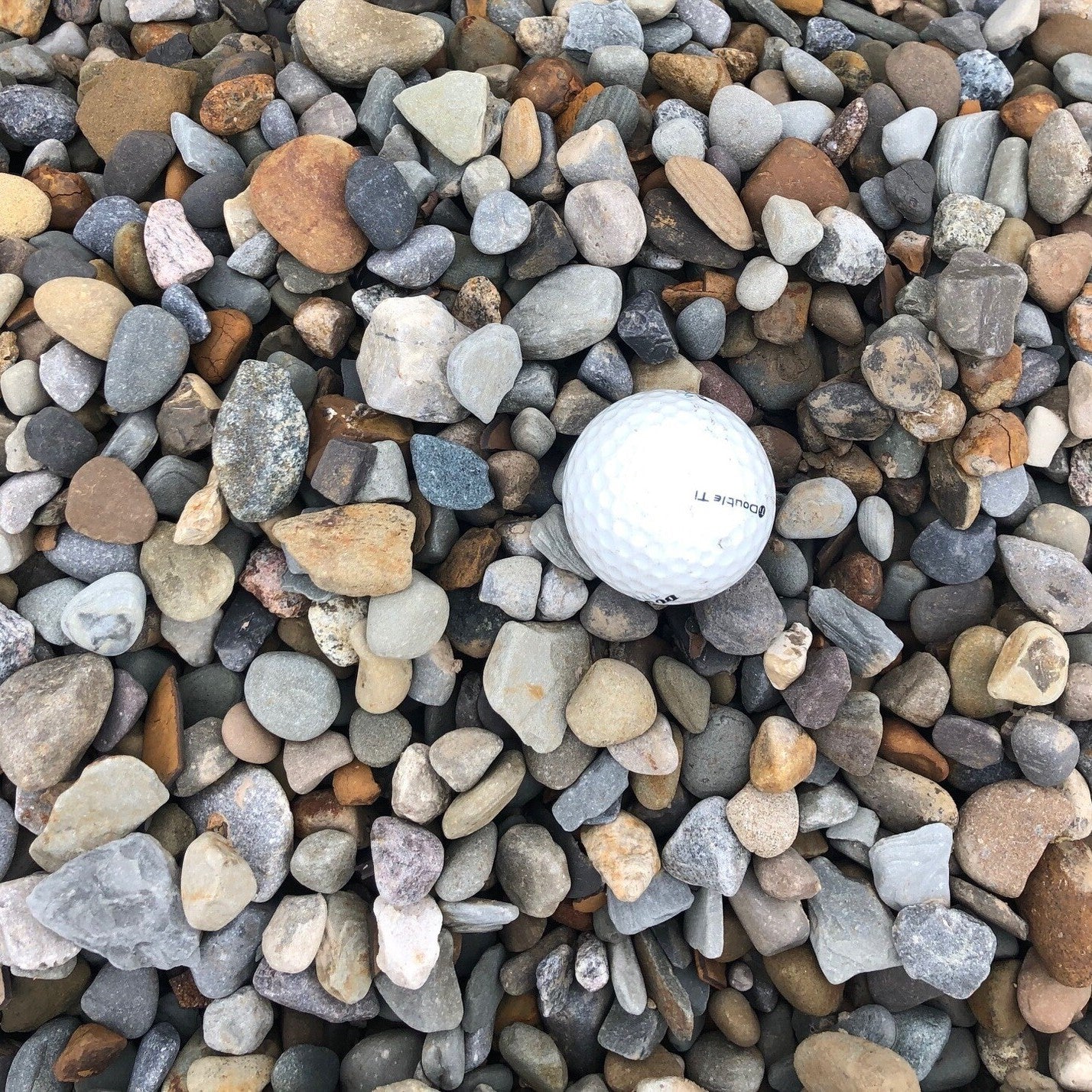

The driver nailed it on putting the gravel I ordered in front of my trailer and between the sidewalk. Very satisfied with how my flowerbeds look now.
About this stone
Number 57 crushed stone, angular limestone graded to about three quarters of an inch. The standard driveway, base and drainage gravel, it locks together under traffic and drains fast.
The driver nailed it on putting the gravel I ordered in front of my trailer and between the sidewalk. Very satisfied with how my flowerbeds look now.
Tell us what you're looking for
Thanks! We received your request.
Something went wrong. Please try again.
How Much Material Do I Need?
How Much Material Do I Need?
For decorative and xeriscape ground cover in St. George, plan on 3 to 4 inches of stone depth installed over a weed barrier, and increase that to 4 to 6 inches for driveways, pathways, or any area that needs to hold up under vehicle or heavy foot traffic.
Use our free gravel calculator
What is a yard?
What is a yard?
FAQs
FAQs
St. George Gravel Delivery
St. George Gravel Delivery
Regular price
$133.00
per
yard
Regular price
Sale price
$133.00
Unit price
per
Shipping calculated at checkout.
Minimum of 3 yard
Couldn't load pickup availability
Not currently available
We can't take orders for this right now. Tell us what you need and we'll get back to you.
Hand-picked local yards
4,000+ regional deliveries
Dedicated support
Why order through Mulch Mound
The best local stone, without the guesswork.
We hand-pick and partner with the best yards in your region, keep only the ones our buyers rate well, and back each load with our guarantee.
Mulch Mound Guarantee
If your stone isn't the quantity or quality you ordered, we'll make it right.
About this stone
Number 57 crushed stone, angular limestone graded to about three quarters of an inch. The standard driveway, base and drainage gravel, it locks together under traffic and drains fast.
The driver nailed it on putting the gravel I ordered in front of my trailer and between the sidewalk. Very satisfied with how my flowerbeds look now.
How Much Material Do I Need?
How Much Material Do I Need?
For decorative and xeriscape ground cover in St. George, plan on 3 to 4 inches of stone depth installed over a weed barrier, and increase that to 4 to 6 inches for driveways, pathways, or any area that needs to hold up under vehicle or heavy foot traffic.
Use our free gravel calculator
What is a yard?
What is a yard?
FAQs
FAQs
Tell us what you're looking for
Thanks! We received your request.
Something went wrong. Please try again.
How It Works
Getting started is easy — just follow these simple steps
1
Choose your stone
Make sure you adjust the quantity to your home's needs. You can use our calculator to estimate how much you'll need.
2
Select your delivery date
Select a delivery date you'd like for the product to be dropped off at your home
3
Sit back and wait
Sit back, wait, and let us work our magic to make sure the highest quality product is delivered to your driveway.


Need Help Calculating How Much Gravel You Need?
Use our NEW Trace from Satellite tool to get an estimate for your project based on an aerial view of your property
Try Our CalculatorMeasure the square footage of the area you plan to cover, then decide on your stone layer depth, typically 3 to 4 inches for decorative xeriscape beds or 4 to 6 inches for driveways and high-traffic zones. Divide your depth in inches by 12 to get feet, multiply by the area in square feet, then divide by 27 to get cubic yards. In St. George, where sandy loam is soft and stone settles slightly over time, adding 10 to 15 percent to your order ensures you maintain a full and even layer after initial settling.
Stone Types We Deliver in St. George
Mulch Mound delivers bulk stone by the cubic yard to homes and properties across southern Utah, making it easy to get the right material without hauling it yourself. If you have been looking for bulk gravel by the yard in St. George, we drop the load right at your driveway. Our stone options are chosen to work with the sandy desert soil and the sun-drenched outdoor spaces that define this region.
Pea Gravel
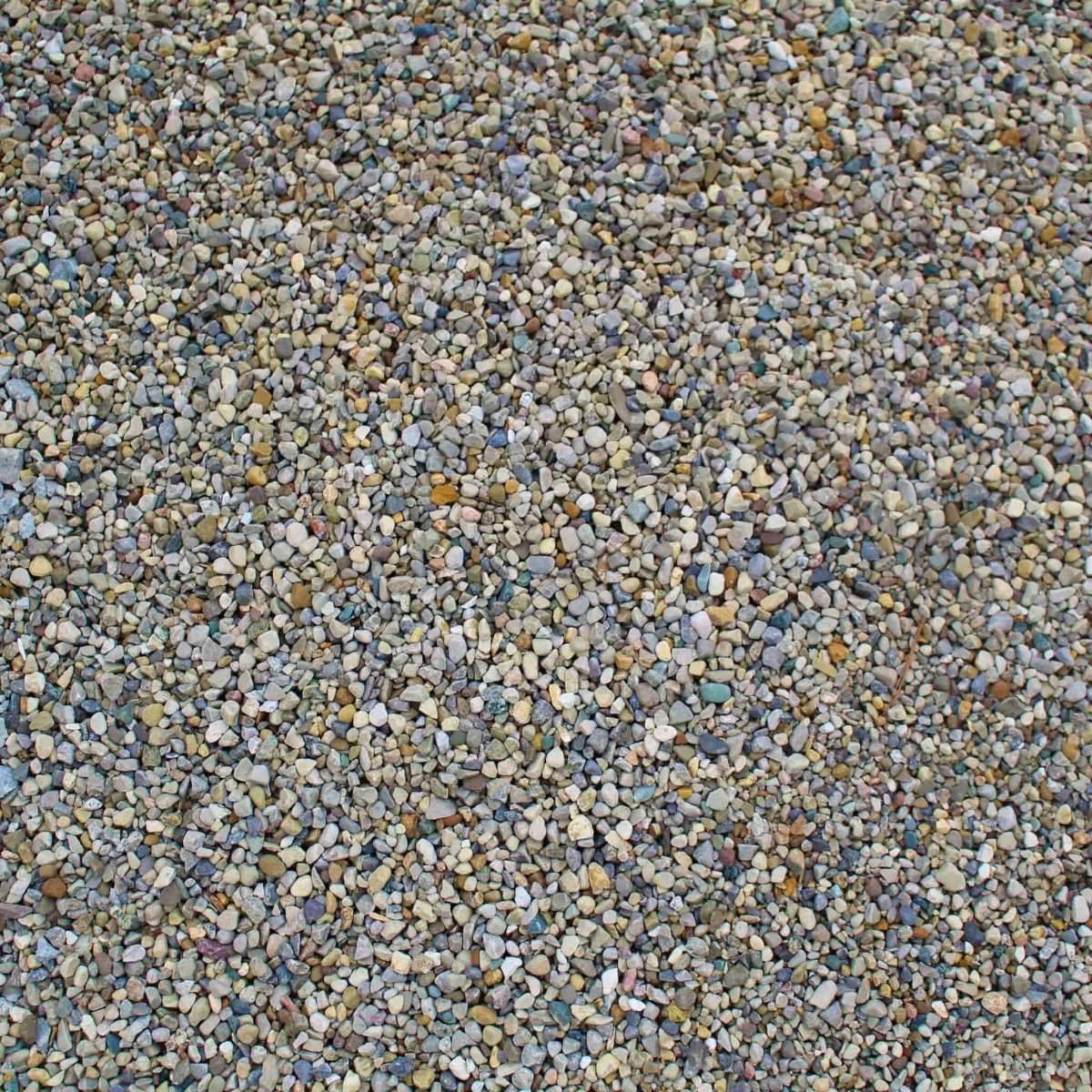
Pea Gravel features smooth, rounded stones in warm earth tones that complement the natural desert palette common in southern Utah. It suits pathways, patios, dry creek beds, and drip-line borders around desert-adapted plants. The rounded texture also improves drainage in the sandy, fast-draining soil found throughout this region.
Complete Your Outdoor Stone Project
Pair your stone order with a bulk soil delivery if you are preparing raised beds or graded areas nearby, and add mulch to any organic planting zones that border your new stone areas for a clean and cohesive St. George landscape design that handles both the heat and the occasional storm.



Service area
Areas we deliver stone and gravel in St. George, Utah
Mulch Mound Pro Tip
Before laying decorative stone in St. George, always install a quality landscape fabric weed barrier underneath. Sandy loam is loose enough that stone gradually sinks into the soil over time, and without a barrier you will also be fighting weed seeds that blow in and germinate in the gaps between rocks. Use a heavy-duty non-woven fabric rather than thin woven plastic mesh, as the non-woven material blocks sunlight more effectively and resists puncture from the angular edges of crushed stone.
Mulch Mound Pro Tip
Choose your stone color with St. George's sun intensity in mind before placing a bulk order. The high-elevation UV environment here means the colors you see in shaded display areas at the supply yard will look significantly brighter and more reflective once installed in your full-sun yard. Light-colored stones like white river rock or pale tan gravel can create a very high-contrast, almost glaring look that surprises some homeowners. Test a small sample in your actual yard location and lighting conditions before committing to a full delivery.
Mulch Mound Pro Tip
In St. George, where summer storms can deliver an inch of rain in under an hour despite the annual average sitting at only 8 inches, stone placement around downspouts and low-lying areas matters greatly. Use a layer of larger cobble or river rock directly under downspout discharge points to absorb the impact of concentrated water flow and prevent it from carving channels into your sandy loam yard. Extending a stone drainage path from those impact zones gives flash rainfall a clear route away from your foundation and landscaping before it can cause damage.
The Unique Landscape of St. George
Stone is one of the most practical and visually fitting landscape materials available to St. George homeowners, blending naturally with the surrounding red rock terrain while solving real problems that organic materials cannot handle in the desert. With only 8 inches of annual rainfall, drainage management is a critical concern, and properly placed gravel and stone can channel water away from foundations and prevent erosion during the intense but rare storms that do arrive. In a growing zone 8b climate where summer temperatures push past 110 degrees, stone ground cover in low-traffic areas eliminates the need for seasonal material replenishment since it does not decompose the way organic mulch does. Sandy loam soil also erodes easily on slopes and around structures, and stone coverage provides stable protection that stays in place regardless of wind or occasional heavy rain. Whether you are creating walkways, lining drainage swales, decorating foundation borders, or building a low-maintenance xeriscape zone, bulk stone is an investment that performs year after year in St. George's demanding environment.