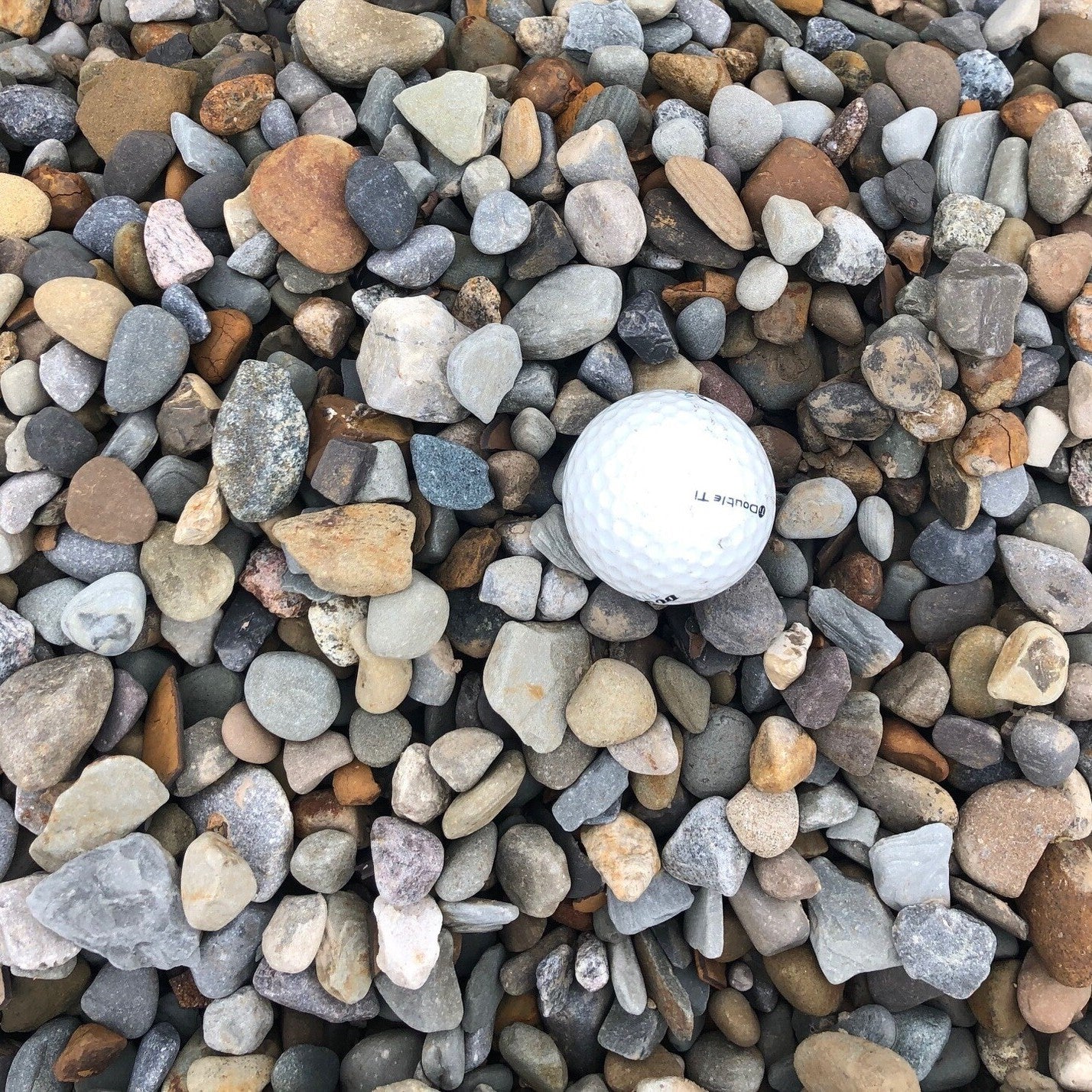
Number 57 crushed stone, angular limestone graded to about three quarters of an inch. The standard driveway, base and drainage gravel, it locks together under traffic and drains fast.
I contacted Mulch Mound for #57 river rocks and it was easy and fast to get a delivery right before the holiday weekend. Stone was delivered as promised and place exactly where I asked. Excellent service! I will be ordering mulch next!
Tell us what you're looking for
Thanks! We received your request.
Something went wrong. Please try again.
How Much Material Do I Need?
Use two to three inches for decorative beds and pathways, and four to six inches for drainage trenches or areas that carry water. One cubic yard covers roughly 160 square feet at two inches or 108 square feet at three inches.
Use our free gravel calculator
What is a Yard?
A yard is approximately 27 cubic feet. As a general guideline, one yard of material can cover an area of about 100-160 square feet at a 2-3 inch depth.
We can't take orders for this right now. Tell us what you need and we'll get back to you.
What do you need?
Thanks! We received your request.
Something went wrong. Please try again.
Hand-picked local yards
4,000+ regional deliveries
Dedicated support
Why order through Mulch Mound
The best local , without the guesswork.
We hand-pick and partner with the best yards in your region, keep only the ones our buyers rate well, and back each load with our guarantee.
Mulch Mound Guarantee
If your isn't the quantity or quality you ordered, we'll make it right.
About this stone
Number 57 crushed stone, angular limestone graded to about three quarters of an inch. The standard driveway, base and drainage gravel, it locks together under traffic and drains fast.
I contacted Mulch Mound for #57 river rocks and it was easy and fast to get a delivery right before the holiday weekend. Stone was delivered as promised and place exactly where I asked. Excellent service! I will be ordering mulch next!
How Much Material Do I Need?
Use two to three inches for decorative beds and pathways, and four to six inches for drainage trenches or areas that carry water. One cubic yard covers roughly 160 square feet at two inches or 108 square feet at three inches.
Use our free gravel calculator
What is a Yard?
A yard is approximately 27 cubic feet. As a general guideline, one yard of material can cover an area of about 100-160 square feet at a 2-3 inch depth.
I contacted Mulch Mound for #57 river rocks and it was easy and fast to get a delivery right before the holiday weekend. Stone was delivered as pro...
Read full review
I contacted Mulch Mound for #57 river rocks and it was easy and fast to get a delivery right before the holiday weekend. Stone was delivered as promised and place exactly where I asked. Excellent service! I will be ordering mulch next!
Stone is sold by weight as well as volume, so know both. A cubic yard of crushed rock runs about 1.3 to 1.5 tons, which is heavier than most St. Paul homeowners expect when planning wheelbarrow trips. Measure length times width in feet, multiply by your depth in feet, and divide by 27 for cubic yards.
Complete Your Outdoor Stone Project
Add landscape fabric and steel or paver edging to keep stone from migrating into St. Paul lawns, and pick up a few yards of soil if you are regrading before the rock goes down.
Set your edging deep enough to survive winter. St. Paul frost drives three to four feet down in a cold year, and shallow plastic edging pops right out of silt loam by April. Use steel edging staked twelve inches or more, or a concrete paver border set on a compacted base. Stone that escapes into the lawn once will find your mower blade every summer after that.
Mulch Mound Pro Tip
Keep stone out of the snow-throw zone unless you want it in your lawn. Along St. Paul driveways and walks, a snowblower will fling rock twenty feet and then a mower will find it. Either set the stone bed a foot back from the pavement edge with a raised border, or use larger three to five inch rock that a blower cannot pick up.
Mulch Mound Pro Tip
Grade before you rock, not after. On St. Paul lots, especially the flat ones in the Midway and North End, the reason a bed floods is not the surface material but the pitch underneath. Establish a quarter inch per foot fall away from the house with soil, compact it, lay fabric, then place stone. Rock on a bad grade just holds water where you least want it.
The Unique Landscape of St. Paul
Stone earns its place in St. Paul yards anywhere water moves fast or soil will not stay put. Our 34 inches of annual rain arrives in concentrated summer storms, and on the bluff slopes above the Mississippi and along the ravines in Highland Park and Dayton's Bluff that runoff cuts channels through silt loam in a single afternoon. Rock does not float, wash out, or decompose, so it holds those transition zones year after year. Stone also solves the winter problem, since it stands up to snow shoveling, plow spray, and the salt that ends up along every St. Paul driveway and sidewalk. Around foundations it keeps splash-back off siding and keeps the soil from staying wet against the block, which matters in the older St. Paul housing stock with limestone and rubble basements. And in a Zone 5a climate where mulch needs replacing every year, stone is a one-time investment.
Frequently Asked Questions
Click a question to see the answer
Answer
What size stone should I use around my St. Paul foundation?
Three quarter inch to one and a half inch washed rock works best in a twelve to eighteen inch band along the foundation. It lets the heavy summer downpours drain straight down instead of splashing silt loam onto the siding, and it dries out fast, which helps the older limestone and block basements common in St. Paul. Keep the grade sloping away from the house at least a quarter inch per foot.
Answer
Will road salt ruin my decorative stone?
Salt will not damage granite, trap rock, or river rock, which is exactly why stone beats mulch along St. Paul sidewalks and driveways. Limestone can etch slightly over many winters. The bigger issue is the plants near the stone, so if you get plow spray from your street, choose salt-tolerant plantings and consider rinsing the bed once in April after the melt.
Answer
Do I need fabric under stone?
Yes for decorative beds and no for drainage applications. In St. Paul silt loam, stone laid directly on soil will work its way down and mix within a couple of seasons, and fine silt will migrate up between the rocks. Use a woven landscape fabric, not the thin plastic sheeting. For a French drain or dry well, keep the stone open so water can move.
Answer
How deep does stone need to be to stop weeds?
Three inches over fabric is the practical minimum in St. Paul. Anything thinner and you will see sunlight reach the fabric, which is all creeping charlie and thistle need. Even at three inches, wind-blown seed and the maple and elm samaras that blanket older St. Paul neighborhoods will sprout in the dust that collects between stones, so plan on a spring cleanup.
Answer
Can I use stone instead of mulch in my planting beds?
You can, with two cautions specific to our climate. Stone absorbs heat and radiates it, which pushes soil temperature up in July and can stress shade-loving hostas and ferns that do well in St. Paul yards. Stone also adds no organic matter, so silt loam beneath it stays compacted. It works best around shrubs, ornamental grasses, and drought-tolerant plantings.
Answer
What stone works for a driveway or parking pad here?
Use a crushed stone with fines, like class five or three quarter inch minus, so it locks together and packs hard. Washed round rock will rut and spread. In St. Paul the freeze and thaw cycle heaves gravel surfaces every spring, so plan on regrading and adding a thin lift of material most years, usually in late April once the frost is out.
Answer
Will stone help with my erosion problem on a slope?
Yes, and it is often the only thing that holds on St. Paul bluff-side lots. Use angular rock rather than smooth river stone so the pieces interlock, sized two to four inches on moderate slopes and larger for a rip rap channel. Lay fabric first so the silt loam underneath does not wash out from below the stone during a heavy July storm.
Answer
What is Class 5 gravel?
Driveways and shed pads need a base that locks together under weight, which is exactly what Class 5 gravel is built for, a crushed mix of limestone or gravel with fines that compacts hard. For St Paul yards fighting runoff on bluff slopes or ravine edges, our Crushed Stone #57 is the better fit since it drains freely instead of packing tight.
Answer
Is there a stone yard near St. Paul?
Summer storms on the bluff slopes above the Mississippi can cut channels through St. Paul's silt loam in one afternoon, so those slopes and ravines call for a crushed stone base that stays put. You can skip the stone yard entirely, because Mulch Mound delivers crushed stone by the cubic yard right to your driveway or yard, and there is no quarry trip required.