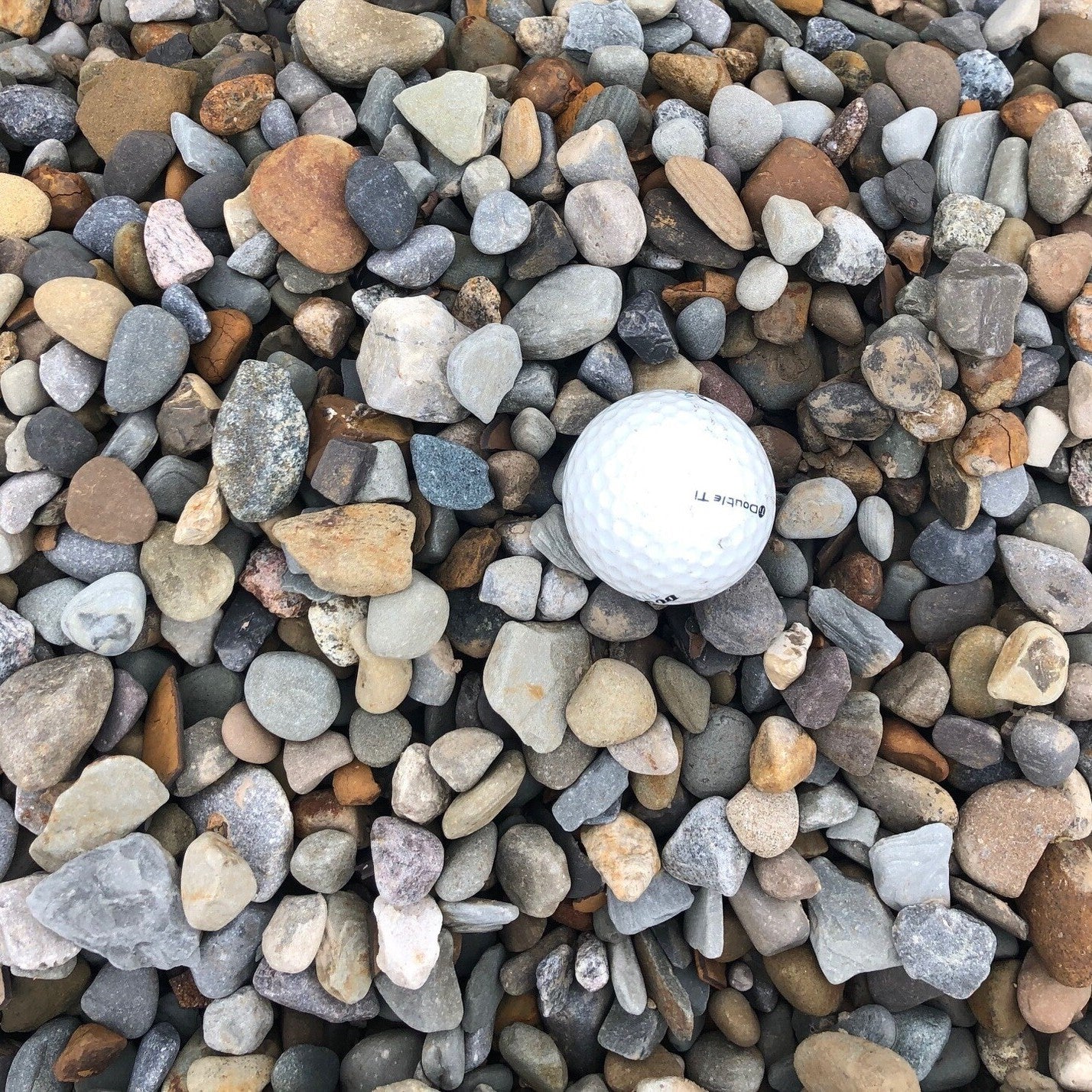
Number 57 crushed stone, angular limestone graded to about three quarters of an inch. The standard driveway, base and drainage gravel, it locks together under traffic and drains fast.
I contacted Mulch Mound for #57 river rocks and it was easy and fast to get a delivery right before the holiday weekend. Stone was delivered as promised and place exactly where I asked. Excellent service! I will be ordering mulch next!
Tell us what you're looking for
Thanks! We received your request.
Something went wrong. Please try again.
How Much Material Do I Need?
For most decorative and pathway applications in Steubenville, a 3 to 4 inch stone depth is sufficient to cover fabric and base material cleanly, but drainage channels and erosion control areas along slopes or downspout outlets benefit from a 4 to 6 inch layer that can absorb the velocity of water during the area's heavier seasonal rain events.
Use our free gravel calculator
What is a yard?
A yard is approximately 27 cubic feet. As a general guideline, one yard of material can cover an area of about 100-160 square feet at a 2-3 inch depth.
We can't take orders for this right now. Tell us what you need and we'll get back to you.
What do you need?
Thanks! We received your request.
Something went wrong. Please try again.
Hand-picked local yards
4,000+ regional deliveries
Dedicated support
Why order through Mulch Mound
The best local stone, without the guesswork.
We hand-pick and partner with the best yards in your region, keep only the ones our buyers rate well, and back each load with our guarantee.
Mulch Mound Guarantee
If your stone isn't the quantity or quality you ordered, we'll make it right.
About this stone
Number 57 crushed stone, angular limestone graded to about three quarters of an inch. The standard driveway, base and drainage gravel, it locks together under traffic and drains fast.
I contacted Mulch Mound for #57 river rocks and it was easy and fast to get a delivery right before the holiday weekend. Stone was delivered as promised and place exactly where I asked. Excellent service! I will be ordering mulch next!
How Much Material Do I Need?
For most decorative and pathway applications in Steubenville, a 3 to 4 inch stone depth is sufficient to cover fabric and base material cleanly, but drainage channels and erosion control areas along slopes or downspout outlets benefit from a 4 to 6 inch layer that can absorb the velocity of water during the area's heavier seasonal rain events.
Use our free gravel calculator
What is a yard?
A yard is approximately 27 cubic feet. As a general guideline, one yard of material can cover an area of about 100-160 square feet at a 2-3 inch depth.
I contacted Mulch Mound for #57 river rocks and it was easy and fast to get a delivery right before the holiday weekend. Stone was delivered as pro...
Read full review
I contacted Mulch Mound for #57 river rocks and it was easy and fast to get a delivery right before the holiday weekend. Stone was delivered as promised and place exactly where I asked. Excellent service! I will be ordering mulch next!
Measure the length and width of your stone project area in feet, multiply those together, then multiply by your intended depth in feet (3 inches equals 0.25 feet), and divide by 27 to arrive at cubic yards. Steubenville homeowners doing drainage or slope erosion projects should order 10 to 15 percent above their calculated need to account for settling in silt loam soil and the natural void space that exists between stones once they are placed. Our product page calculator handles all of this automatically when you enter your dimensions.
Stone Types We Deliver in Steubenville
Mulch Mound delivers bulk stone by the cubic yard to homes and properties across the Ohio Valley, with fast turnaround for customers searching for bulk gravel by the yard in Steubenville. From simple pathway fills to full backyard hardscape projects, we bring the materials directly to your driveway. Our selection focuses on the stone sizes that local homeowners and contractors rely on season after season.
Pea Gravel
Smooth and rounded with warm earth tones, pea gravel suits homeowners throughout the Ohio Valley who want a low-fuss ground cover for pathways, patios, and garden borders. It drains reliably in the clay-heavy soils common to this part of Ohio, keeping surfaces stable through the region's wet spring seasons.
1-2" River Stone
Larger and smoother than pea gravel, our 1 to 2 inch river stone brings a polished, natural look to decorative ground cover, dry creek beds, and accent features. Its generous size holds well in sloped yards and resists washing away during the heavy rain events typical of the Ohio Valley.
Complete Your Outdoor Stone Project
For a finished, cohesive landscape, pair stone borders and pathways with bulk mulch in adjacent planting beds to create clean visual contrast while managing Steubenville's annual rainfall across both hardscape and planted areas. If your stone project involves any base preparation or grade corrections, bulk topsoil from MulchMound helps establish the right foundation before the stone layer goes down.
Steubenville's silt loam has a tendency to migrate upward through stone layers over multiple freeze-thaw cycles, a process called soil pumping that gradually makes stone areas look dirty and uneven. Always lay a quality non-woven landscape fabric directly on the prepared soil surface before placing any stone base material. That single step dramatically extends how long your stone installation stays clean and level without requiring annual raking and soil removal.
Mulch Mound Pro Tip
If you are designing a dry creek bed to manage runoff through a sloped Steubenville yard, trace the natural low point of your property and make the channel at least 12 inches wide at its narrowest section. A channel that is too narrow gets overwhelmed during heavy spring rain events and the stone ends up displaced outside the bed. Wider channels handle the full volume of water Steubenville yards see without concentrating flow in a way that undermines the stone placement.
Mulch Mound Pro Tip
For stone pathways or gravel areas installed before Steubenville's first frost around October 23, compact your base layer firmly and allow the installation to pass through at least one full freeze-thaw cycle before making final adjustments. The heaving and resettling that happens through a zone 6b winter naturally tightens the stone layer, and any touch-up work you do in spring will be minor compared to pathways that were freshly adjusted in the fall and never allowed to weather and stabilize on their own.
The Unique Landscape of Steubenville
Steubenville's 40 inches of annual rainfall and naturally hilly terrain make erosion control and drainage management genuine concerns for local homeowners, and decorative stone offers a durable solution that handles both problems beautifully without ongoing seasonal maintenance. Unlike organic materials that decompose and require yearly replacement, stone holds its position through zone 6b freeze-thaw winters, heavy spring rains, and summer heat without losing coverage or structural integrity. Silt loam soil, while fertile, is particularly vulnerable to surface erosion along slopes and around downspout outlets where moving water concentrates, and a well-placed layer of river rock or gravel dissipates that energy effectively before it tears into the ground. Stone pathways and parking pads also eliminate the muddy worn turf patches that develop around high-traffic areas in Steubenville yards during wet weather stretches. From foundation borders to dry creek beds, bulk stone is one of the most cost-effective low-maintenance investments a Steubenville homeowner can make in their outdoor spaces.
Frequently Asked Questions
Click a question to see the answer
Answer
What size river rock works best for a drainage channel in my Steubenville yard?
For a dry creek bed or drainage swale designed to handle Steubenville's heavier rain events, a mix of 2 to 4 inch river rock is the most practical choice. It is large enough to stay anchored during fast-moving water after a storm but small enough to nestle together and create a natural-looking channel that slows flow without creating a dam. Smaller pea gravel is too light and will scatter out of a drainage channel under any meaningful water velocity.
Answer
Will decorative stone sink or shift in Steubenville's silt loam soil over time?
Silt loam does allow stones to gradually settle and migrate downward over time, particularly in areas with foot traffic or frost heaving through the winter months. Laying a 2 to 3 inch base of compacted sand or crushed gravel before placing decorative stone gives it a firmer foundation to rest on. Adding a non-woven landscape fabric between the native silt loam and the base material prevents soil migration up through the stone layer over multiple freeze-thaw seasons.
Answer
Can bulk gravel solve the muddy mess near my Steubenville driveway and garage entrance?
Gravel is one of the most effective and lasting fixes for chronically muddy areas in Steubenville. The key is proper base preparation before the stone goes down. Excavate 4 to 6 inches of existing silt loam, lay landscape fabric, and fill with compacted crushed limestone or dense-grade aggregate. This creates a stable base that handles vehicle weight and foot traffic without turning soft every time Steubenville sees a stretch of rainy spring weather.
Answer
Does stone actually help with erosion on the slopes in my Steubenville yard?
It is one of the most reliable tools available for slope erosion in this area. Steubenville's combination of rolling terrain and 40 inches of annual rainfall creates real erosion pressure on any exposed slope, especially during the heavy spring rain season. River rock, rip rap, or larger fieldstone placed along slope breaks, drainage swales, and downspout outlets absorbs the impact of concentrated water flow and holds soil in place far more effectively than grass or mulch can on their own.
Answer
What is the best stone type for a low-maintenance pathway through my Steubenville backyard?
Pea gravel and crushed limestone are both excellent choices for backyard pathways in Steubenville. Pea gravel has a clean rounded finish and stays comfortable underfoot. Crushed limestone compacts firmly over time into a more solid surface, which many Steubenville homeowners prefer for a stable walking path that does not shift with each step. Both materials handle the wet spring season and zone 6b freeze-thaw winters without cracking or heaving the way poured concrete or mortared surfaces sometimes do.
Answer
How do I keep stone from washing away around my downspouts when we get a big storm in Steubenville?
The solution is matching stone weight to the force of the water at the discharge point. Use heavier flat river rock or 3 to 5 inch rip rap directly in the splash zone beneath the downspout where water hits with the most velocity. Lighter pea gravel will scatter under that kind of flow. Extend the stone bed at least 4 to 6 feet out from the downspout exit so it covers the full erosion zone that forms during Steubenville's heavier rainfall events.
Answer
How much stone do I need for a decorative border around my home's foundation in Steubenville?
A 2 to 3 foot wide strip of stone at 3 inches deep is a standard starting point for foundation borders. Measure the linear footage around the perimeter you want to cover, multiply by your desired width and by 0.25 for 3-inch depth, and divide by 27 to get cubic yards. In Steubenville's moist climate, keeping stone pulled a few inches back from the actual foundation prevents moisture from being held directly against the structure through the wet months.