



The driver nailed it on putting the gravel I ordered in front of my trailer and between the sidewalk. Very satisfied with how my flowerbeds look now.
About this stone
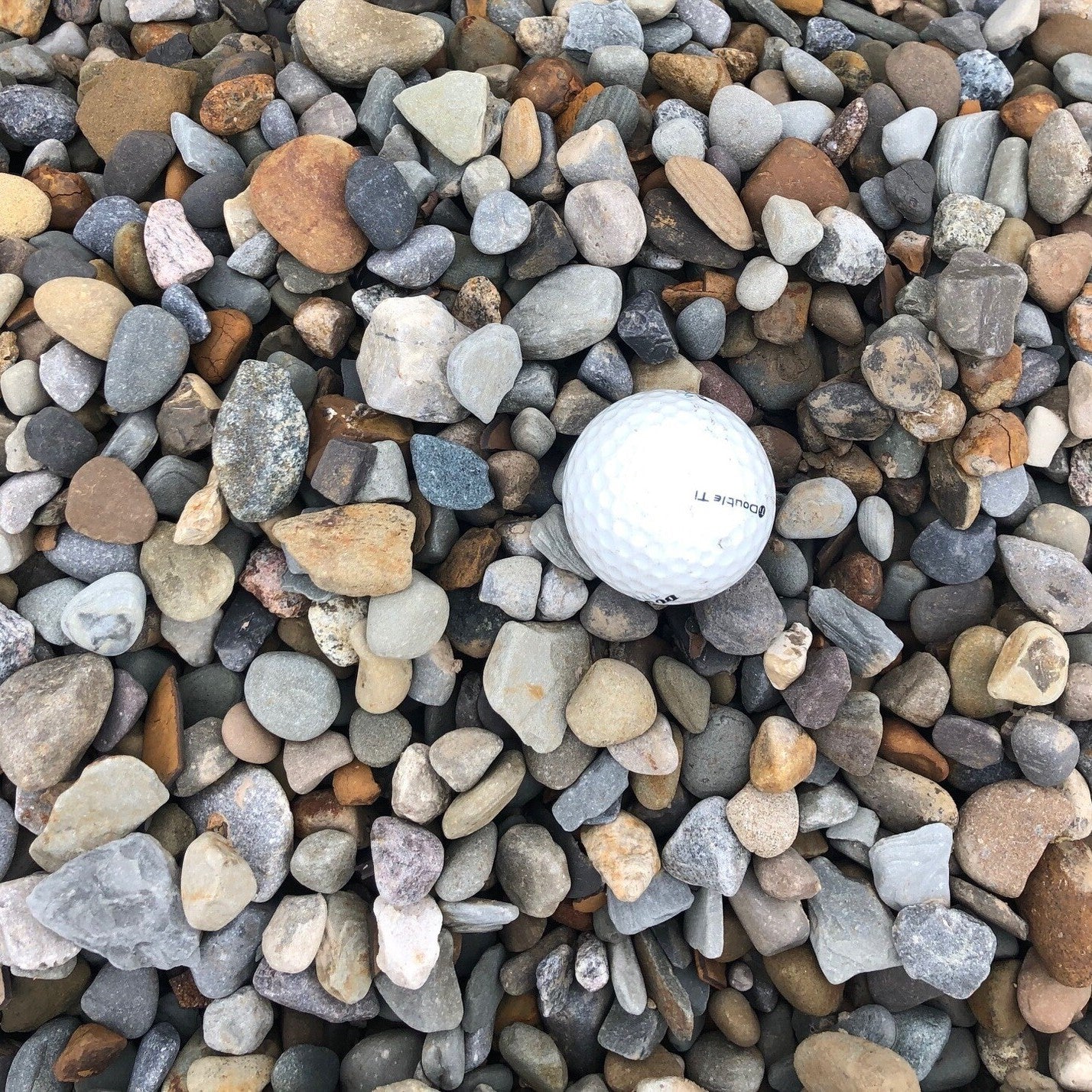
Number 57 crushed stone, angular limestone graded to about three quarters of an inch. The standard driveway, base and drainage gravel, it locks together under traffic and drains fast.
The driver nailed it on putting the gravel I ordered in front of my trailer and between the sidewalk. Very satisfied with how my flowerbeds look now.
Tell us what you're looking for
Thanks! We received your request.
Something went wrong. Please try again.
How Much Material Do I Need?
How Much Material Do I Need?
For most Stockton gravel and decomposed granite projects, plan on 3 inches of depth for solid weed suppression and a finished look, which requires roughly one cubic yard per 100 square feet of coverage. Dry creek bed applications typically use larger river rock at a deeper 4 to 6 inch depth, so factor that into your order when mixing project types.
Use our free gravel calculator
What is a Yard?
What is a Yard?
FAQs
FAQs
Stockton Gravel Delivery
Stockton Gravel Delivery
Regular price
$133.00
per
Yard
Regular price
Sale price
$133.00
Unit price
per
Shipping calculated at checkout.
Minimum of 3 Yard
Couldn't load pickup availability
Not currently available
We can't take orders for this right now. Tell us what you need and we'll get back to you.
Hand-picked local yards
4,000+ regional deliveries
Dedicated support
Why order through Mulch Mound
The best local , without the guesswork.
We hand-pick and partner with the best yards in your region, keep only the ones our buyers rate well, and back each load with our guarantee.
Mulch Mound Guarantee
If your isn't the quantity or quality you ordered, we'll make it right.
About this stone
Number 57 crushed stone, angular limestone graded to about three quarters of an inch. The standard driveway, base and drainage gravel, it locks together under traffic and drains fast.
The driver nailed it on putting the gravel I ordered in front of my trailer and between the sidewalk. Very satisfied with how my flowerbeds look now.
How Much Material Do I Need?
How Much Material Do I Need?
For most Stockton gravel and decomposed granite projects, plan on 3 inches of depth for solid weed suppression and a finished look, which requires roughly one cubic yard per 100 square feet of coverage. Dry creek bed applications typically use larger river rock at a deeper 4 to 6 inch depth, so factor that into your order when mixing project types.
Use our free gravel calculator
What is a Yard?
What is a Yard?
FAQs
FAQs
Tell us what you're looking for
Thanks! We received your request.
Something went wrong. Please try again.

How It Works
Getting started is easy — just follow these simple steps
1
Choose your stone
Make sure you adjust the quantity to your home's needs. You can use our calculator to estimate how much you'll need.
2
Select your delivery date
Select a delivery date you'd like for the product to be dropped off at your home
3
Sit back and wait
Sit back, wait, and let us work our magic to make sure the highest quality product is delivered to your driveway.

Placing an order online was so easy. Delivery was on time. When the driver realized we had a newly poured driveway they erred on the side of cautio...
Read full review
Placing an order online was so easy. Delivery was on time. When the driver realized we had a newly poured driveway they erred on the side of caution and opted not ti drive in it. The company even sent me a message explaining that call. Would recommend!

Online ordering was really simple and I liked the transparent pricing.
Need Help Calculating How Much Gravel You Need?
Use our NEW Trace from Satellite tool to get an estimate for your project based on an aerial view of your property
Try Our CalculatorFor stone projects, start by measuring the total square footage of your coverage area, then determine the depth you want to achieve, typically 2 inches for light decorative coverage and 3 to 4 inches for functional weed suppression or pathway use. Divide your square footage by 100 for a 3 inch depth to get a rough cubic yard figure. Because stone is significantly heavier than mulch or soil, double-check your driveway access before ordering large quantities, as a full load of river rock will be a substantial pile.
Complete Your Outdoor Stone Project
Pairing bulk stone with quality landscape fabric ensures your project stays weed-free through multiple Stockton wet seasons without constant maintenance. Adding a border of drought-tolerant plants mulched with a contrasting fine bark creates a layered look that is both water-wise and visually interesting in Central Valley landscapes.

Service area
Areas we deliver stone and gravel in Stockton, California
- Antioch, California
- August, California
- Brentwood, California
- Country Club, California
- Discovery Bay, California
- Escalon, California
- Galt, California
- Garden Acres, California
- Lathrop, California
- Lodi, California
- Manteca, California
- Modesto, California
Mulch Mound Pro Tip
Stockton's clay loam soil expands slightly when wet and contracts when dry, a cycle that repeats with every rain event and irrigation cycle. Before installing decomposed granite or gravel pathways, dampen the native soil thoroughly and then compact it with a plate compactor or hand tamper before laying your fabric and stone. Starting with a compacted base means the clay contraction that happens during Stockton's long dry summer will not create soft spots or uneven surfaces in your finished pathway after the first season.
Mulch Mound Pro Tip
If you are replacing a lawn area in Stockton with decorative stone, take the time to grade the area so it slopes very gently away from your house foundation before laying fabric and stone. Stockton sits at just 23 feet of elevation on flat valley terrain, which means water does not naturally drain away from structures the way it does in hillside communities. A subtle 1 to 2 percent slope built into your stone groundcover installation will direct those concentrated winter rain events away from your foundation and toward the street or a designated drainage point.
Mulch Mound Pro Tip
Decomposed granite in Stockton tends to develop a light surface crust during summer heat that can briefly sheet water rather than absorbing it during the first irrigation or rain event after a long dry stretch. To keep your DG permeable and functional, rake the surface lightly once or twice during summer to break up any crust that forms in high-sun areas. This simple 10 minute task done a couple of times between May and September keeps your decomposed granite draining the way it should when the winter rains finally arrive in Stockton.
The Unique Landscape of Stockton
Decorative stone and gravel have become some of the most practical landscaping choices in Stockton because they require essentially no water once installed and hold up beautifully through the extreme temperature swings of a Central Valley year. With only 14 inches of annual rainfall and summers that can sustain weeks of 100 degree heat, organic groundcovers in Stockton require significant irrigation to survive, while stone simply sits and does its job season after season. Stockton's clay loam soil also benefits from a gravel or decomposed granite layer in high-traffic areas because stone distributes foot traffic load and prevents the surface compaction and mud problems that bare clay creates after winter rains. The mild Stockton winters with a first frost not arriving until around December 5 mean that landscaped stone areas remain attractive and functional for virtually the entire year with no seasonal shutdown. Whether used in pathways, dry creek beds designed to handle those concentrated winter rain events, or as a water-wise lawn alternative, bulk stone is a long-term investment that fits Stockton's climate perfectly.