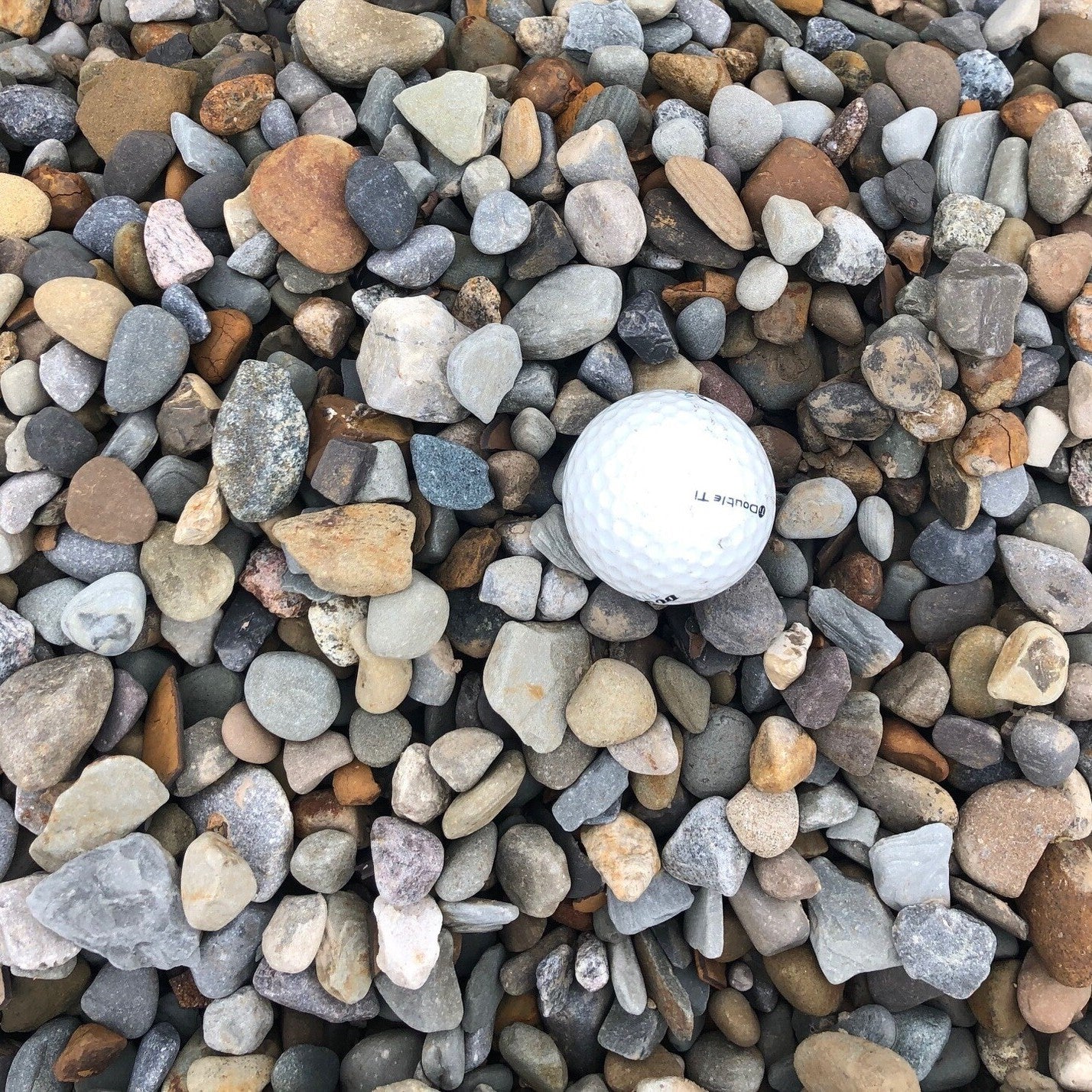
Number 57 crushed stone, angular limestone graded to about three quarters of an inch. The standard driveway, base and drainage gravel, it locks together under traffic and drains fast.
My experience with Mulch Mound was great and super easy. I ordered two yards of screened topsoil and was able to get it delivered within 2 days. They came in my requested time frame (afternoon) and dropped it off where I asked on my driveway. The topsoil was exactly what was a...
Tell us what you're looking for
Thanks! We received your request.
Something went wrong. Please try again.
How Much Material Do I Need?
Two inches of depth is enough for a decorative bed, three inches for a walkway or drip strip, and four to six inches for a dry creek bed or French drain trench. One cubic yard covers roughly 160 square feet at two inches deep.
Use our free gravel calculator
What is a Yard?
A yard is approximately 27 cubic feet. As a general guideline, one yard of material can cover an area of about 100-160 square feet at a 2-3 inch depth.
We can't take orders for this right now. Tell us what you need and we'll get back to you.
What do you need?
Thanks! We received your request.
Something went wrong. Please try again.
Hand-picked local yards
4,000+ regional deliveries
Dedicated support
Why order through Mulch Mound
The best local , without the guesswork.
We hand-pick and partner with the best yards in your region, keep only the ones our buyers rate well, and back each load with our guarantee.
Mulch Mound Guarantee
If your isn't the quantity or quality you ordered, we'll make it right.
About this stone
Number 57 crushed stone, angular limestone graded to about three quarters of an inch. The standard driveway, base and drainage gravel, it locks together under traffic and drains fast.
My experience with Mulch Mound was great and super easy. I ordered two yards of screened topsoil and was able to get it delivered within 2 days. They came in my requested time frame (afternoon) and dropped it off where I asked on my driveway. The topsoil was exactly what was a...
How Much Material Do I Need?
Two inches of depth is enough for a decorative bed, three inches for a walkway or drip strip, and four to six inches for a dry creek bed or French drain trench. One cubic yard covers roughly 160 square feet at two inches deep.
Use our free gravel calculator
What is a Yard?
A yard is approximately 27 cubic feet. As a general guideline, one yard of material can cover an area of about 100-160 square feet at a 2-3 inch depth.
My experience with Mulch Mound was great and super easy. I ordered two yards of screened topsoil and was able to get it delivered within 2 days. Th...
Read full review
My experience with Mulch Mound was great and super easy. I ordered two yards of screened topsoil and was able to get it delivered within 2 days. They came in my requested time frame (afternoon) and dropped it off where I asked on my driveway. The topsoil was exactly what was advertised, clean with no rocks or other debris. The price was reasonable. I plan to use them again in a couple weeks to order compost for my garden beds.
Measure the length and width of the area in feet, multiply by your depth in feet, and divide by 27 for cubic yards. Stone is sold by weight as often as volume in this area, so remember one cubic yard of gravel weighs roughly 1.3 to 1.5 tons. For dry creek beds and irregular shapes, break the area into segments and total them rather than guessing an average.
Complete Your Outdoor Stone Project
Add woven landscape fabric, steel or paver edging, and a few larger accent boulders to keep stone contained and give a dry creek bed a natural look. Hardwood mulch in the planted areas beyond the stone band completes the transition.
Set your edging before the stone arrives. On flat Summerville lots, sheet flow from a heavy storm will push loose gravel across turf and sidewalks in a single afternoon. Steel edging or a buried paver soldier course an inch above the finished stone height creates a lip that holds material in place. It also gives you a clean mowing edge, which is worth a lot when St. Augustine is running hard in July.
Mulch Mound Pro Tip
Aim your downspouts before you place a single rock. Many Summerville drainage complaints are simply a downspout dumping hundreds of gallons at a foundation corner during one of our two inch rain events. Extend the downspout underground with solid pipe to a pop up emitter or the head of a stone creek bed, at least ten feet from the house. Stone placed downstream of that fix works far better than stone placed at the problem.
Mulch Mound Pro Tip
Match stone size to slope and traffic. Pea gravel rolls underfoot and migrates on any grade, which makes it a poor choice for Summerville walkways that see regular use and periodic sheet flow. Angular crushed stone locks together and stays put, while smooth river rock is best reserved for decorative channels where the look matters more than footing. For parking areas, always compact an angular base first rather than laying rock on bare sand.
The Unique Landscape of Summerville
With 50 inches of rain a year falling on flat land only 43 feet above sea level, Summerville yards need places for water to go, and stone is one of the best tools for the job. Gravel drip strips, dry creek beds, and French drain fill move stormwater away from foundations instead of letting it sit in sandy loam that saturates quickly during a tropical system. Stone also solves the termite adjacency problem, giving you an inorganic band along the foundation where organic mulch would be risky in the Lowcountry. Unlike mulch, stone does not decompose in our long humid growing season, so a well laid stone bed can look the same in year five as it did on day one. It also holds firm on driveways and paths that stay damp under Summerville's dense tree canopy.
Frequently Asked Questions
Click a question to see the answer
Answer
What size stone works best for drainage around a Summerville foundation?
Washed number 57 stone, roughly three quarters of an inch, is the local standard for drip strips and French drains because it has large void spaces that pass water fast. Avoid crusher run or anything with fines in a drainage application, since the fines pack tight and defeat the purpose in our high rainfall climate. A twelve to eighteen inch wide strip along the drip line handles most Summerville roof runoff.
Answer
Will stone keep termites away from my house?
Stone does not repel termites, but it removes the wood food source and the constant moisture that mulch holds right against your siding. Given the heavy Formosan termite pressure in the Charleston and Summerville area, many pest professionals recommend a stone or bare band along the foundation with mulch starting beyond it. Keep the stone below your siding line and clear of weep holes.
Answer
Does stone make my beds too hot for plants here?
It can. Light colored stone reflects heat, and a Summerville August afternoon already puts beds under real stress. Use stone around drought tolerant, heat loving plants like yucca, agave, rosemary, and ornamental grasses, and keep it away from azaleas, hydrangeas, and ferns that want a cooler root zone.
Answer
Do I need landscape fabric under stone in Summerville?
Yes for most applications. Sandy loam is loose, and without a barrier stone gradually sinks into the ground while soil migrates up and lets nutsedge and betony take hold. Use a woven fabric rather than the thin plastic type, and overlap seams by at least six inches to handle the water volume our storms deliver.
Answer
How much stone do I need for a dry creek bed?
Measure the average width and length of the channel and plan on four to six inches of depth, then divide the cubic feet by 27 for cubic yards and multiply by about 1.4 to get tons. Most Summerville backyard creek beds run two to four feet wide and use a mix of one to three inch river rock with larger accent boulders. Add extra for the bank edges.
Answer
Will pine needles and oak leaves ruin my stone beds?
Summerville's live oaks and pines drop a lot of debris, and organic matter collecting between stones eventually becomes weed seedbed. A leaf blower on low a few times each fall and spring keeps most of it out. Larger stone, one and a half inches and up, traps less debris than pea gravel does under a heavy canopy.
Answer
Is stone or gravel a good driveway option in Summerville?
It works well if you build it right. Use a compacted crusher run or ABC stone base four to six inches deep, then a wearing surface on top, because loose stone over bare sandy loam will rut and disappear. On a flat, low lot make sure the crown sheds water to the sides so the driveway does not become the drainage path during a heavy Lowcountry rain.
Answer
Is crush and run the same as crusher run?
Crush and run is the traditional term for crusher run, a mix of crushed stone and stone dust that compacts into a firm base for driveways and paver projects. With Summerville's heavy rainfall and sandy soil, drainage matters more than compaction, so our Crushed Stone #57 is the better choice for French drains, dry creek beds, and moisture control near foundations.
Answer
Is there a stone yard near Summerville?
For a dry creek bed that carries stormwater away from your foundation in Summerville, you can haul crushed stone home from a stone yard yourself, or have Mulch Mound drop it right where you need it. We are not a stone yard or a quarry, so there is no pickup trip. You order online and the crushed stone arrives at your yard.