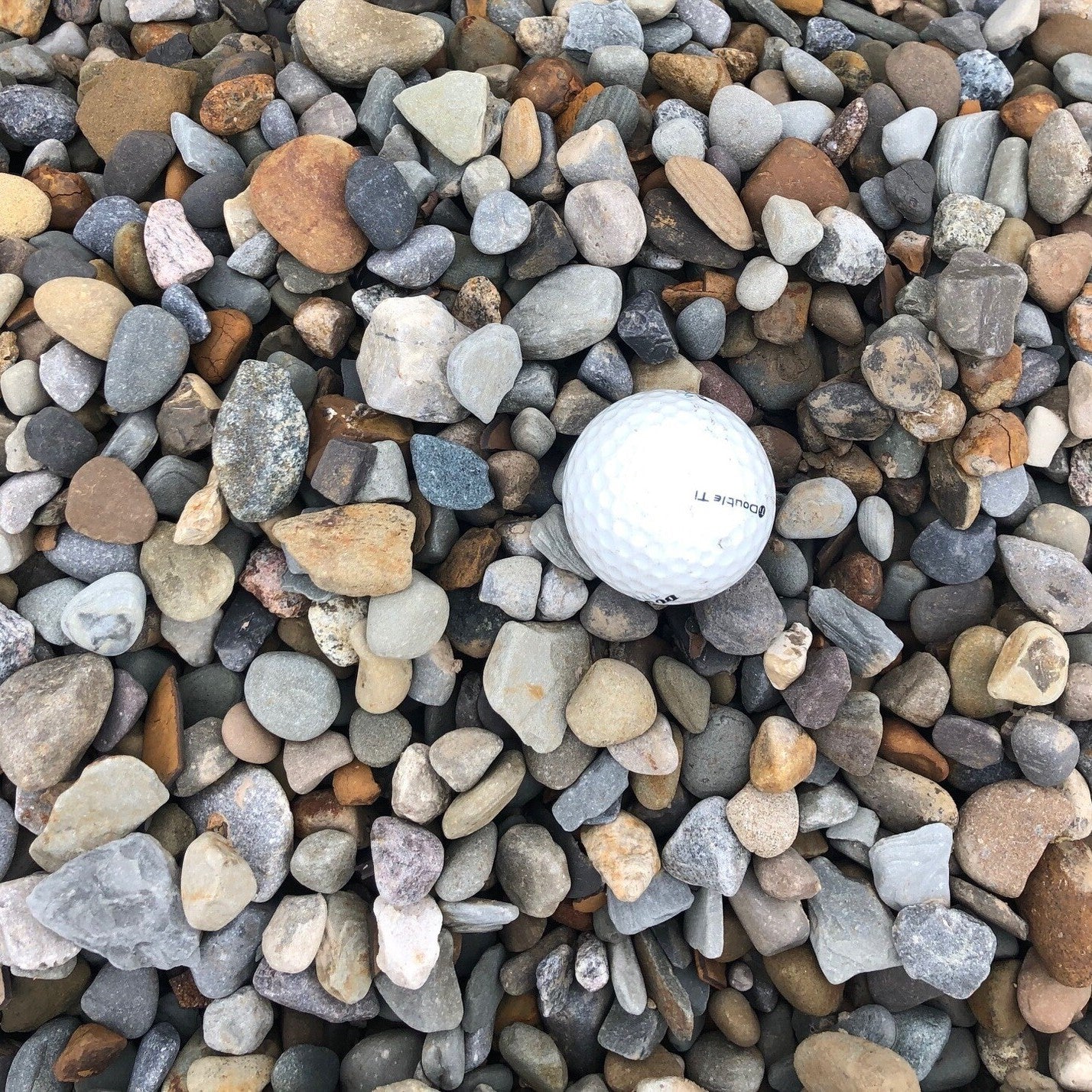
I contacted Mulch Mound for #57 river rocks and it was easy and fast to get a delivery right before the holiday weekend. Stone was delivered as promised and place exactly where I asked. Excellent service! I will be ordering mulch next!
Tell us what you're looking for
Thanks! We received your request.
Something went wrong. Please try again.
How Much Material Do I Need?
Use 2 inches of depth for larger river rock and cobble and 3 inches for crushed granite or breeze so no fabric shows through. That is roughly one cubic yard per 110 to 160 square feet depending on depth.
Use our free gravel calculator
What is a ton?
A ton is 2,000 pounds of material. As a general guideline, one ton of rock covers roughly 100 square feet at 2 inches deep, depending on rock size and density.
What is a Yard?
A yard is approximately 27 cubic feet. As a general guideline, one yard of material can cover an area of about 100-160 square feet at a 2-3 inch depth.
I contacted Mulch Mound for #57 river rocks and it was easy and fast to get a delivery right before the holiday weekend. Stone was delivered as promised and place exactly where I asked. Excellent service! I will be ordering mulch next!
How Much Material Do I Need?
Use 2 inches of depth for larger river rock and cobble and 3 inches for crushed granite or breeze so no fabric shows through. That is roughly one cubic yard per 110 to 160 square feet depending on depth.
Use our free gravel calculator
What is a ton?
A ton is 2,000 pounds of material. As a general guideline, one ton of rock covers roughly 100 square feet at 2 inches deep, depending on rock size and density.
What is a Yard?
A yard is approximately 27 cubic feet. As a general guideline, one yard of material can cover an area of about 100-160 square feet at a 2-3 inch depth.
I contacted Mulch Mound for #57 river rocks and it was easy and fast to get a delivery right before the holiday weekend. Stone was delivered as pro...
Read full review
I contacted Mulch Mound for #57 river rocks and it was easy and fast to get a delivery right before the holiday weekend. Stone was delivered as promised and place exactly where I asked. Excellent service! I will be ordering mulch next!
Measure each rocked area in feet and multiply length by width, then break odd shapes into rectangles and triangles rather than guessing. Remember that stone is sold by weight in many cases, so note whether you need cubic yards or tons. One cubic yard covers about 160 square feet at 2 inches deep.
Complete Your Outdoor Stone Project
Round out the job with woven landscape fabric, steel edging to hold the rock line crisp against turf, and a few accent boulders for scale. Many Thornton customers also grab a yard of squeegee for leveling steppers within a rocked bed.
Set your edging before the rock arrives. Thornton yards typically have bluegrass or fescue running right up to the beds, and without a hard edge the rock migrates into the lawn where it becomes a projectile for your mower. Four inch steel edging staked every three feet is the standard here and it will still be straight in a decade, unlike thin plastic edging that heaves out of the clay each winter.
Mulch Mound Pro Tip
Think about snowmelt runoff when you place rock. Thornton picks up a good share of its annual moisture as spring snow, and that melt runs across frozen clay rather than soaking in. Slope rocked areas so water moves toward turf or a dry creek instead of pooling against the foundation, and keep the rock layer at least two inches below adjacent concrete so it does not spill onto walks.
Mulch Mound Pro Tip
Rinse and refresh instead of replacing. Rock does not decompose, but Thornton dust, cottonwood fluff, and leaf litter build up in the voids within a few years and start growing weeds. A stiff rake in early spring plus a hose blast will lift most of the debris, and a half inch top dress of fresh matching stone every four or five years makes the whole bed look new for a fraction of a full rebuild.
The Unique Landscape of Thornton
With 16 inches of annual precipitation and increasingly common watering restrictions, decorative rock has become a staple across Thornton front yards and parking strips. Stone never blows away in the spring downslope winds, never fades in the intense UV at 5,351 feet, and never needs replacing the way organic mulch does. It also handles our freeze thaw cycles beautifully, which is why crushed granite and squeegee are the go to base under Thornton patios and walkways where clay heaves in winter. The tradeoff is heat, since rock radiates warmth back into the landscape on 95 degree July afternoons, so placement matters. Used thoughtfully in xeric beds, dry creek drainage lines, and high traffic areas, stone is the lowest maintenance surface a Thornton yard can have.
Frequently Asked Questions
Click a question to see the answer
Answer
Is rock mulch a good idea for my Thornton front yard?
It works well in full sun xeric beds with penstemon, blue grama, yucca, and rabbitbrush, which all handle reflected heat. It is a poor choice around thirsty foundation shrubs or under maples, where the extra radiant heat and lack of organic matter will stress plants. Many Thornton homeowners split the difference, using rock in the hell strip and hardwood mulch in shaded beds.
Answer
How deep should decorative rock go?
Two inches is enough for 1 to 2 inch river rock and cobble, while three quarter inch crushed material should go about three inches deep so the ground does not show through. Going deeper than three inches in Thornton mostly just adds cost and makes weeding harder when kochia and bindweed find their way in.
Answer
Do I need landscape fabric under stone in Thornton?
Under rock, yes, a quality woven fabric is worth it, unlike under wood mulch. Thornton clay will slowly swallow rock that sits directly on soil, and fabric keeps the layer clean for years. Just know that windblown dust and organic debris will build a thin soil layer on top over time, so plan on occasional weeding regardless.
Answer
What size stone works best for a dry creek bed?
Mix sizes for a natural look, using 3 to 8 inch cobble for the channel bottom and 1 to 2 inch river rock along the shoulders with a few boulders as accents. Dry creek beds are genuinely useful in Thornton because our rainfall arrives in short intense bursts that overwhelm clay infiltration, and a rock lined channel routes that runoff away from the house.
Answer
Will rock make my yard hotter?
Somewhat. Light colored granite and cobble reflect more and absorb less than dark lava rock or basalt, and at our elevation the summer sun is strong enough to make a large expanse of dark rock uncomfortable to stand near. Keep dark stone to accents on the south and west sides of Thornton homes and use lighter tones for large areas.
Answer
What should I put under a paver patio here?
Plan on four to six inches of compacted class 6 road base topped with an inch of squeegee for the setting bed. Thornton clay expands and contracts with moisture, so proper base depth and compaction in lifts is what keeps pavers level through winter freeze thaw. Skimping on base is the number one reason patios in this area go wavy by year three.
Answer
How much does a yard of stone weigh for my driveway?
Most decorative rock runs 2,600 to 3,000 pounds per cubic yard, considerably heavier than mulch. Standard Thornton residential driveways handle a typical delivery fine, but if you have decorative stamped concrete or a newer pour still curing, tell us and we can split the load or drop on plywood.
Answer
Is there a stone yard near Thornton?
Crushed Stone holds up well under Thornton driveways and parking strips because it locks together and shrugs off our freeze thaw swings. It is the same stone you would buy at a stone yard, but we bring it to your curb by the cubic yard instead. Order online, tell us where to drop it, and skip the trip to any quarry.