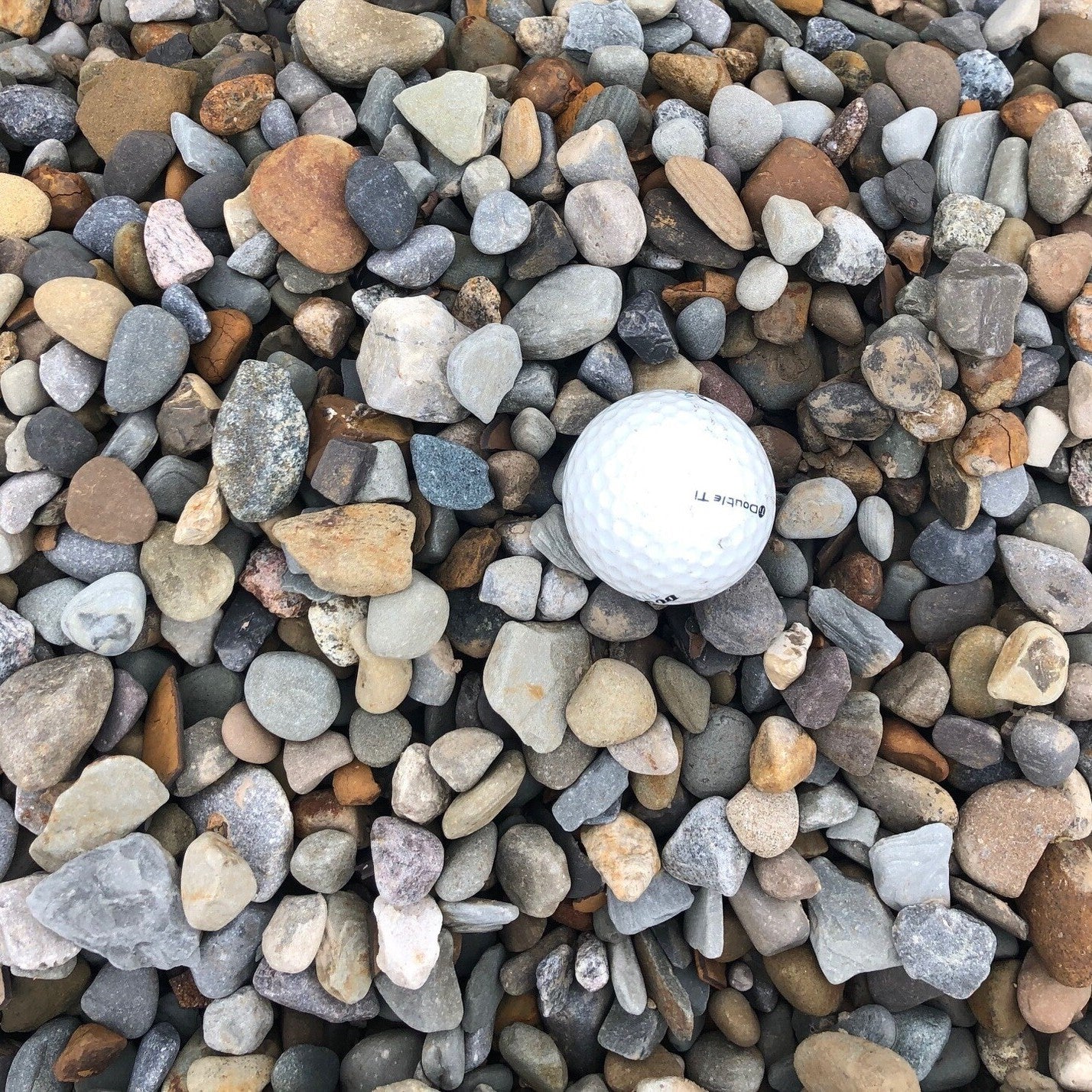
Number 57 crushed stone, angular limestone graded to about three quarters of an inch. The standard driveway, base and drainage gravel, it locks together under traffic and drains fast.
Mulch Mound delivered a yard of pea gravel to us. Delivery was on time, driver was friendly and hit a bullseye on the “tarp target”. We used the pea gravel (which was diameter as specified) to fill several muskrat holes around our pond. I would definitely recommend Mulch Mo...
Tell us what you're looking for
Thanks! We received your request.
Something went wrong. Please try again.
How Much Material Do I Need?
For pathway and decorative bed applications in Titusville, plan for at least 2 inches of stone depth over landscape fabric, with 3 inches recommended for areas that experience regular foot traffic or heavy water flow during summer storms.
Use our free gravel calculator
What is a yard?
A yard is approximately 27 cubic feet. As a general guideline, one yard of material can cover an area of about 100-160 square feet at a 2-3 inch depth.
We can't take orders for this right now. Tell us what you need and we'll get back to you.
What do you need?
Thanks! We received your request.
Something went wrong. Please try again.
Hand-picked local yards
4,000+ regional deliveries
Dedicated support
Why order through Mulch Mound
The best local stone, without the guesswork.
We hand-pick and partner with the best yards in your region, keep only the ones our buyers rate well, and back each load with our guarantee.
Mulch Mound Guarantee
If your stone isn't the quantity or quality you ordered, we'll make it right.
About this stone
Number 57 crushed stone, angular limestone graded to about three quarters of an inch. The standard driveway, base and drainage gravel, it locks together under traffic and drains fast.
Mulch Mound delivered a yard of pea gravel to us. Delivery was on time, driver was friendly and hit a bullseye on the “tarp target”. We used the pea gravel (which was diameter as specified) to fill several muskrat holes around our pond. I would definitely recommend Mulch Mo...
How Much Material Do I Need?
For pathway and decorative bed applications in Titusville, plan for at least 2 inches of stone depth over landscape fabric, with 3 inches recommended for areas that experience regular foot traffic or heavy water flow during summer storms.
Use our free gravel calculator
What is a yard?
A yard is approximately 27 cubic feet. As a general guideline, one yard of material can cover an area of about 100-160 square feet at a 2-3 inch depth.
Mulch Mound delivered a yard of pea gravel to us. Delivery was on time, driver was friendly and hit a bullseye on the “tarp target”. We used the ...
Read full review
Mulch Mound delivered a yard of pea gravel to us. Delivery was on time, driver was friendly and hit a bullseye on the “tarp target”. We used the pea gravel (which was diameter as specified) to fill several muskrat holes around our pond. I would definitely recommend Mulch Mound to a friend!
Placing an order online was so easy. Delivery was on time. When the driver realized we had a newly poured driveway they erred on the side of cautio...
Read full review
Placing an order online was so easy. Delivery was on time. When the driver realized we had a newly poured driveway they erred on the side of caution and opted not ti drive in it. The company even sent me a message explaining that call. Would recommend!
Measure your project area in length and width to get total square footage, then plan for a depth of 2 to 3 inches for pathways or decorative beds in Titusville. Divide cubic feet by 27 to convert to cubic yards, and keep in mind that Titusville's sandy soil base is easy to grade but tends to settle slightly after the first heavy summer rain. Having a small amount of extra stone on hand for touch-ups after the first major storm is a practical habit for any Titusville stone project.
Stone Types We Deliver in Titusville
Mulch Mound delivers bulk stone by the cubic yard straight to properties across the area, making it simple to complete a landscaping project without hauling materials yourself. If you have been searching for bulk gravel by the yard in Titusville, we make ordering easy with flexible load sizes and reliable curbside drop-off. Our stone arrives clean and ready to place, so you can focus on getting the job done.
Pea Gravel
Pea gravel is a popular choice for Florida properties where sandy soil and heavy summer rainfall call for reliable drainage alongside clean visual appeal. The smooth, rounded stones work well on garden paths, patios, and open planting beds, and their warm earth tones complement the casual, tropical landscape style common across this part of the state.
Complete Your Outdoor Stone Project
Combine stone with quality topsoil to create defined raised planting areas with clean stone borders that stay intact through Titusville's summer downpours. Adding mulch to the surrounding planting beds alongside your stone installation creates a finished, cohesive landscape that handles both drainage and moisture retention across your entire yard.
Installing landscape fabric beneath your stone layer is especially important in Titusville's sandy soil conditions. Without it, stone gradually sinks into fine sandy particles over several seasons, particularly after repeated heavy rainstorms compact both materials together. Use a commercial-grade woven fabric rather than the thin plastic sheeting sold at most big box stores, because Titusville's intense summer heat and UV exposure will degrade thin plastic quickly while quality woven fabric performs reliably for many years.
Mulch Mound Pro Tip
For Titusville homeowners managing drainage near their foundation, a stone-filled dry creek bed or graded swale can redirect runoff from heavy rain events away from your home without any mechanical components to maintain. Grade the swale to slope consistently away from your foundation and fill it with clean crushed stone or river rock at least 4 inches deep. The channel fills during heavy storms and empties gradually between events, keeping water moving away from areas where it can cause settling in Titusville's sandy foundation soil.
Mulch Mound Pro Tip
Decorative stone around Titusville's tropical plantings, including bird of paradise, croton, and ornamental palms, creates a polished look that holds up through hot, humid summers without fading or decomposing. Choose a stone color that contrasts with your plant foliage for the most visual impact in a finished bed. Light-colored options like white marble chips or tan river rock also reflect heat rather than absorbing it, which keeps root zones cooler and reduces water stress on ornamentals during Titusville's hottest months from June through September.
The Unique Landscape of Titusville
Titusville's combination of sandy soil, intense summer rain events, and a nearly frost-free Zone 10a climate makes decorative and functional stone one of the most durable and low-maintenance choices a homeowner can install. Unlike organic landscape materials, stone does not decompose in the heat and humidity that defines Titusville's long summer season, meaning a well-installed pathway or drainage bed will perform just as well in ten years as it does on installation day. Sandy soil in Titusville shifts and settles under heavy foot traffic and after intense summer downpours, and compacted gravel or crushed stone stabilizes those vulnerable areas while directing runoff away from foundations and low spots. Stone used in planting areas also reduces surface moisture evaporation, cutting down on how often ornamentals need supplemental water during the dry stretches between Titusville's rain events. Whether you are building a French drain to handle the 53 inches of annual rainfall this area receives, creating a low-maintenance pathway, or defining a decorative border around tropical plantings, bulk stone delivers lasting results that stand up to Florida's most demanding conditions.
Frequently Asked Questions
Click a question to see the answer
Answer
What type of stone works best for drainage projects in Titusville's sandy soil?
Clean crushed stone or pea gravel works very well for drainage projects in Titusville because the rounded or angular particles leave open pore spaces that water moves through quickly, complementing sandy soil's natural drainage tendency. For French drains and drainage swales, a washed number 57 stone or similar clean crushed material is the most common and effective choice. The goal is to create a fast-moving channel that captures surface or subsurface water and redirects it away from foundations and low spots before Titusville's intense summer storms cause standing water.
Answer
Will decorative stone get dangerously hot sitting in the Titusville summer sun?
Dark-colored stones like black lava rock or charcoal granite can get very hot in Titusville's direct summer sun, sometimes reaching temperatures uncomfortable to touch and potentially harmful to the roots of nearby plants. Light-colored stones like white marble chips or tan river rock reflect more sunlight and stay significantly cooler on the surface. If you are using stone as a mulch substitute around ornamentals, lighter-colored options are generally better in Titusville's intense summer heat, especially in full-sun beds with no afternoon shade relief.
Answer
Is stone a better choice than mulch around my Titusville foundation plantings?
Stone is an excellent choice for the strip of plantings directly against your home's foundation in Titusville. Unlike organic mulch, it does not break down and need annual replacement, and it provides a dry buffer zone that discourages the moisture buildup that can attract pests and cause wood issues in Florida's persistently humid climate. Keep stone pulled a few inches from the actual foundation wall itself, and choose a lighter-colored stone that will not absorb and radiate excessive heat onto your plants or siding during Titusville's long, hot summers.
Answer
How much stone do I need for a gravel pathway in my Titusville yard?
For a gravel or crushed stone walkway, plan for a depth of 2 to 3 inches after compaction, which provides a stable surface that does not shift significantly underfoot. Measure your pathway in length and width to get square footage, then calculate volume using a depth of about 0.2 feet. Titusville's sandy soil base is easy to grade but does settle over time, so installing landscape fabric beneath the stone layer prevents the material from gradually sinking into the sandy ground and keeps the pathway surface level after heavy rains.
Answer
Can stone help control erosion on my Titusville property?
Stone is one of the most effective erosion control materials available to Titusville homeowners. The combination of sandy soil and 53 inches of annual rain, much of it falling in powerful summer bursts, creates significant erosion risk on sloped areas and bare spots throughout the city. A layer of river rock or crushed stone on bare slopes absorbs the energy of heavy rain before it can dislodge sandy soil particles and carry them away. For steep slopes or active erosion channels, a thicker layer of larger stones provides more resistance and staying power than fine gravel.
Answer
Does gravel or stone work well under the large shade trees in Titusville yards?
Stone works well under large shade trees in Titusville, particularly around oak or magnolia canopies where grass and ground cover struggle because of root competition and deep shade. Using a ring of river rock or pea gravel over landscape fabric around a tree base gives you a clean, finished appearance without the annual mulch replacement that organic materials require in Titusville's fast-decomposing climate. Leave several inches between the stone layer and the actual tree trunk to allow for bark expansion and adequate air circulation around the root flare.
Answer
Will stone shift and spread in Titusville's sandy soil after a heavy rainstorm?
Stone does tend to migrate on pure sandy soil if nothing is holding it in place, especially after Titusville's summer downpours disturb loose material on sloped areas or near active drainage channels. Installing landscape fabric between the stone and the sandy soil below prevents material from sinking over time, and solid bed edging around the perimeter keeps stone from spreading laterally into the lawn. Angular crushed stone tends to lock together and resist shifting much better than smooth rounded pebbles, particularly on flat and lightly sloped areas.
Answer
Is crush and run the same as crusher run?
Crush and run refers to crushed stone blended with stone dust that compacts into a firm base for driveways and paver projects. In Titusville, where sandy soil and heavy summer rain can undermine unstable materials, our clean Crushed Stone #57 is the better choice, since it drains freely instead of trapping moisture against structures.
Answer
Is there a stone yard near Titusville?
For a drainage bed or pathway in Titusville, you could haul crushed stone home yourself from a stone yard or quarry, or skip the trip entirely. Mulch Mound is not a yard at all. We deliver crushed stone by the cubic yard and drop it where you want it, so the job starts without the loading and driving.