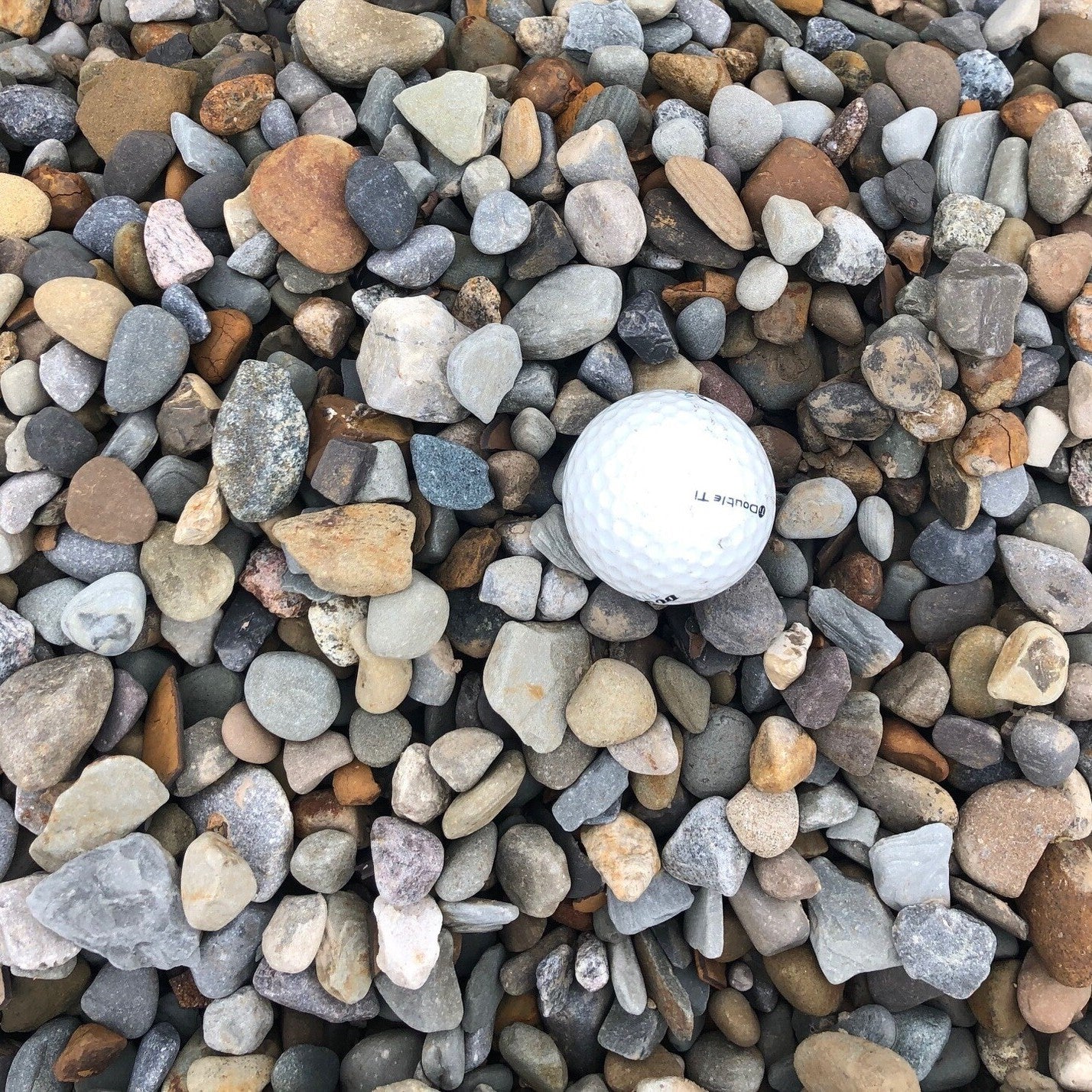
Number 57 crushed stone, angular limestone graded to about three quarters of an inch. The standard driveway, base and drainage gravel, it locks together under traffic and drains fast.
Mulch Mound delivered a yard of pea gravel to us. Delivery was on time, driver was friendly and hit a bullseye on the “tarp target”. We used the pea gravel (which was diameter as specified) to fill several muskrat holes around our pond. I would definitely recommend Mulch Mo...
Tell us what you're looking for
Thanks! We received your request.
Something went wrong. Please try again.
How Much Material Do I Need?
For decorative coverage in Topeka beds and low-maintenance zones, two to three inches of stone provides adequate coverage and effective weed suppression over landscape fabric. For drainage applications installed over clay soil, a minimum of four inches of clean angular gravel ensures enough void space for water to move through freely even after the ground has settled and shifted through a full season.
Use our free gravel calculator
What is a yard?
A yard is approximately 27 cubic feet. As a general guideline, one yard of material can cover an area of about 100-160 square feet at a 2-3 inch depth.
We can't take orders for this right now. Tell us what you need and we'll get back to you.
What do you need?
Thanks! We received your request.
Something went wrong. Please try again.
Hand-picked local yards
4,000+ regional deliveries
Dedicated support
Why order through Mulch Mound
The best local stone, without the guesswork.
We hand-pick and partner with the best yards in your region, keep only the ones our buyers rate well, and back each load with our guarantee.
Mulch Mound Guarantee
If your stone isn't the quantity or quality you ordered, we'll make it right.
About this stone
Number 57 crushed stone, angular limestone graded to about three quarters of an inch. The standard driveway, base and drainage gravel, it locks together under traffic and drains fast.
Mulch Mound delivered a yard of pea gravel to us. Delivery was on time, driver was friendly and hit a bullseye on the “tarp target”. We used the pea gravel (which was diameter as specified) to fill several muskrat holes around our pond. I would definitely recommend Mulch Mo...
How Much Material Do I Need?
For decorative coverage in Topeka beds and low-maintenance zones, two to three inches of stone provides adequate coverage and effective weed suppression over landscape fabric. For drainage applications installed over clay soil, a minimum of four inches of clean angular gravel ensures enough void space for water to move through freely even after the ground has settled and shifted through a full season.
Use our free gravel calculator
What is a yard?
A yard is approximately 27 cubic feet. As a general guideline, one yard of material can cover an area of about 100-160 square feet at a 2-3 inch depth.
Mulch Mound delivered a yard of pea gravel to us. Delivery was on time, driver was friendly and hit a bullseye on the “tarp target”. We used the ...
Read full review
Mulch Mound delivered a yard of pea gravel to us. Delivery was on time, driver was friendly and hit a bullseye on the “tarp target”. We used the pea gravel (which was diameter as specified) to fill several muskrat holes around our pond. I would definitely recommend Mulch Mound to a friend!
Measure the length and width of your stone project area and decide on your desired depth, typically two to three inches for decorative coverage and four inches or more for drainage applications over Topeka clay. Multiply those dimensions to get cubic feet and then divide by 27 to convert to cubic yards. Stone is considerably denser than mulch or soil, so keep in mind that each cubic yard is heavy and plan your wheelbarrow loads accordingly when estimating how long spreading will take.
Stone Types We Deliver in Topeka
Mulch Mound delivers bulk stone by the cubic yard to homes and job sites across northeast Kansas, making it simple to get the materials your landscape needs without hauling bags from a store. If you have been searching for bulk gravel by the yard in Topeka, we carry the varieties that perform best in this region's climate and heavy clay soils. Our flexible delivery options mean you get exactly the material and quantity your project calls for.
Pea Gravel
Pea gravel is a popular choice for homeowners in this part of Kansas because its smooth, rounded surface holds up through seasonal freeze and thaw cycles without shifting. It suits garden pathways, patios, and drainage beds especially well, where the heavy clay soils common to this region benefit from improved water movement.
Complete Your Outdoor Stone Project
Pairing stone features with properly mulched planting beds gives your Topeka yard a layered, finished look where each zone has the right material working for the right purpose. If adjacent planting areas need soil improvement before you finalize your stone layout, getting that grade work and soil preparation done first makes the whole project come together more cleanly and prevents having to disturb finished stone areas later.
Before placing any stone in a Topeka yard with clay soil, take time to grade the area so water flows naturally away from your house or toward your intended drainage outlet. Clay does not absorb runoff quickly, so any flat or low spot beneath your stone will collect and hold water under the surface where you cannot see it. Even a one to two percent slope, about one inch of drop for every six feet, makes a significant difference in how well stone areas drain after heavy spring rain and keeps the clay base from staying saturated for extended periods.
Mulch Mound Pro Tip
Stone color selection matters more in Topeka's climate than many homeowners realize. Light-colored stone like tan or cream river rock reflects heat and stays cooler on the surface, which is a real advantage during Topeka midsummers when ground-level temperatures near dark stone can climb significantly. Dark stone absorbs heat all day and releases it slowly at night, which can stress nearby plantings and make stone patios uncomfortable during the hottest weeks of July and August. If your stone feature is near planting beds or a seating area, lighter tones are a practical choice beyond just aesthetics.
Mulch Mound Pro Tip
Topeka's freeze-thaw cycle between October and April will gradually push stone edging out of alignment if the edging is not anchored well into the ground. Plastic edging that is simply pressed into clay soil tends to heave upward over winter and look uneven by spring. Steel edging staked at twelve-inch intervals holds its position through the seasonal ground movement much more reliably and stays flush year after year. Installing your edging in fall before the ground freezes, when the clay is still workable, gives it time to settle in before the first hard freeze and results in a cleaner, more stable border around your stone features come spring.
The Unique Landscape of Topeka
Decorative and functional stone is one of the most durable investments a Topeka homeowner can make because it does not decay, does not wash away in spring storms, and requires almost no maintenance once it is properly installed. Topeka's heavy clay soil creates serious drainage challenges in low-lying areas of the yard, and a well-installed bed of river rock or angular drainage gravel redirects water away from foundations and planting areas more effectively than almost any other landscape material. The freeze-thaw cycles that come with Zone 6b winters are hard on soft landscape materials, but stone holds up through repeated freezing and thawing without shifting, cracking, or breaking down the way wood-based ground covers do. For areas of your yard that are difficult to mow, heavily shaded, or prone to erosion along slopes, stone ground cover eliminates the problem entirely rather than managing it season after season. With a last frost around April 22, stone features also frame your lawn and beds year-round, providing structure and visual interest even through the months when everything else is dormant.
Frequently Asked Questions
Click a question to see the answer
Answer
What type of stone works best for improving drainage in a Topeka yard with heavy clay soil?
For drainage improvement over clay, you want a clean angular gravel or drainage stone rather than a rounded decorative rock. Angular stone interlocks and creates more void space for water to move through, while clay soil can pack tightly around smooth rounded stones over time and reduce their effectiveness. A clean washed three-quarter-inch crushed limestone or drainage gravel installed in a trench or dry creek channel moves Topeka's spring storm runoff efficiently and does not clog the way finer materials tend to. Lining the trench with landscape fabric before filling it with gravel keeps clay from migrating up into the stone layer over time.
Answer
Will decorative stone in my Topeka yard shift or sink because of the clay soil underneath?
Clay soil expands when wet and contracts when dry, and that movement can cause stone to shift and settle over time, particularly in areas where Topeka's heavy spring rains soften the ground significantly. The best way to stabilize stone here is to compact a two-inch base of coarse gravel or crushed limestone before placing decorative stone on top. This base layer gives water somewhere to drain and reduces the direct contact between your decorative layer and the expanding clay below. For stone pathways, a compacted gravel base makes a significant difference in how level and stable the surface stays through multiple freeze-thaw seasons.
Answer
Can I use decorative stone as mulch around my Topeka trees and shrubs instead of wood mulch?
Stone is not recommended as a direct tree mulch in Topeka because it does not insulate soil temperature the way wood mulch does, and Zone 6b winters require that root insulation through repeated freeze and thaw cycles. Stone also absorbs and radiates heat in summer, which can stress shallow-rooted plants by raising soil temperatures above what Topeka plants handle comfortably in July and August. Stone works very well as a border material around bed edges or in decorative zones between plantings, but around the drip line of trees and shrubs, wood mulch is still the better choice for long-term plant health.
Answer
How do I stop weeds from growing up through decorative stone in my Topeka yard?
The most effective approach in Topeka is to install a heavy commercial-grade woven landscape fabric before placing stone. Consumer-grade fabric degrades faster and allows more weed penetration over time, while heavier woven fabrics block light and root penetration far more effectively through multiple seasons. Even with good fabric, weed seeds blown in from neighboring yards will germinate in debris that collects on the stone surface over time. A pre-emergent herbicide applied in early April, before Topeka's weed season begins in earnest, keeps surface germination minimal for the rest of the growing season.
Answer
What stone size should I use for a garden path in my Topeka backyard?
For walking paths, pea gravel in the three-eighths-inch range gives a comfortable surface underfoot and stays put reasonably well with proper edging on both sides. If your path will see regular traffic or you want more stability, three-quarter-inch crushed limestone compacts firmly and gives a more solid footing, especially after Topeka's spring ground softening makes finer stone shift more easily. Larger decorative river rock looks attractive but can be uncomfortable to walk on and tends to migrate off pathway edges after the heavy rains Topeka sees in spring. Installing rigid steel or heavy plastic edging on both sides of any stone path keeps material contained regardless of the size you choose.
Answer
How much stone do I need to build a dry creek bed for drainage in my yard?
A dry creek bed in Topeka typically works best when it is eight to twelve inches deep and twelve to eighteen inches wide for a standard residential drainage application. At a twelve-inch depth and twelve-inch width, one cubic yard of stone covers roughly 27 linear feet of channel, though your specific dimensions will change that estimate. Dry creek beds are a particularly practical solution in Topeka because the native clay soil cannot absorb the volume of water that comes with a spring thunderstorm, and giving that runoff a defined channel protects your lawn and foundation from the sheet flow that would otherwise move across bare clay surfaces.
Answer
Is decorative stone a good low-maintenance solution for the shaded side of my Topeka house where grass refuses to grow?
Stone is one of the best solutions for shaded no-grow zones in Topeka, which are especially common on north-facing sides of homes where limited light and the compacted clay near foundations make grass establishment nearly impossible. Once installed over landscape fabric with solid edging, a stone ground cover requires almost no seasonal attention beyond an occasional rake to remove leaves and debris. It also handles the wet conditions that shaded clay areas tend to accumulate better than any organic ground cover, since it will not rot, mat down, or compact into the clay surface the way wood-based materials eventually do.
Answer
Is there a stone yard near Topeka?
Fixing a soggy low spot where Topeka's heavy clay holds water is a common reason to buy stone, and you won't need to visit a stone yard or a quarry for it. Mulch Mound delivers crushed stone by the cubic yard, ordered online and dropped at your driveway or wherever you want it for the job.