I can’t say enough good things about Mulch Mound! If you read my review below you will see I had a problem with my order. Mulch Mound was quick to respond and solved the issue with my delivery. Will definitely be a customer next year.
First time purchase...
Tell us what you're looking for
Thanks! We received your request.
Something went wrong. Please try again.
How Much Material Do I Need?
Two to three inches is right for most Tupelo beds, with three inches on exposed south and west facing areas that take the worst summer sun. One cubic yard covers about 160 square feet at two inches or 100 square feet at three inches.
Use our free mulch calculator
What is a yard?
A yard is approximately 27 cubic feet. As a general guideline, one yard of material can cover an area of about 100-160 square feet at a 2-3 inch depth.
I can’t say enough good things about Mulch Mound! If you read my review below you will see I had a problem with my order. Mulch Mound was quick to respond and solved the issue with my delivery. Will definitely be a customer next year.
First time purchase...
How Much Material Do I Need?
Two to three inches is right for most Tupelo beds, with three inches on exposed south and west facing areas that take the worst summer sun. One cubic yard covers about 160 square feet at two inches or 100 square feet at three inches.
Use our free mulch calculator
What is a yard?
A yard is approximately 27 cubic feet. As a general guideline, one yard of material can cover an area of about 100-160 square feet at a 2-3 inch depth.
I can’t say enough good things about Mulch Mound! If you read my review below you will see I had a problem with my order. Mulch Mou...
Read full review
UPDATE!
I can’t say enough good things about Mulch Mound! If you read my review below you will see I had a problem with my order. Mulch Mound was quick to respond and solved the issue with my delivery. Will definitely be a customer next year.
First time purchase from Mulch Mound!! First what I liked! Easy to order online and straight forward pricing and delivery. The driver was on time and courteous and delivered my Mulch exactly where I requested! The product is of good quality and comparable to others I have purchased from before. Now what I DID’NT LIKE! I have been mulching the same house and yard for almost 20 years. I always order the same amount and don’t have any issues with covering the same area but this year I fell about a yard short. I was home when the mulch was delivered and when the driver dumped it I noticed that it seemed a bit less than I was used to. I didn’t apply it any thicker than usual and probably a bit thinner than usual because I was worried about running out.
Mulch Mound made it so easy! So happy with the pricing, turn around time, delivery and product. I submitted my online order on a Thursday. The mu...
Read full review
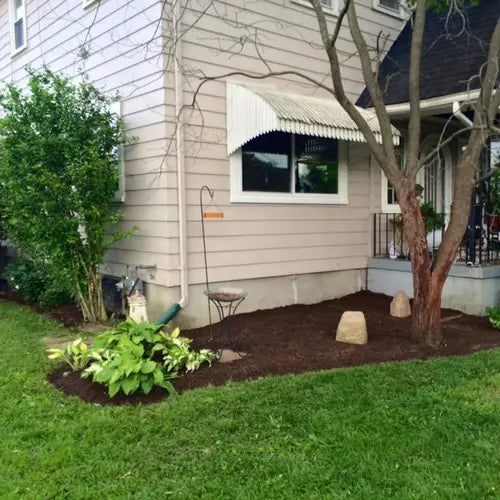
Mulch Mound made it so easy! So happy with the pricing, turn around time, delivery and product. I submitted my online order on a Thursday. The mulch was delivered to the designated location by a local landscape company at 8:30 a.m. the following Saturday morning. We had the job completed by that afternoon. We chose the natural brown mulch, and the plant beds are beautiful.
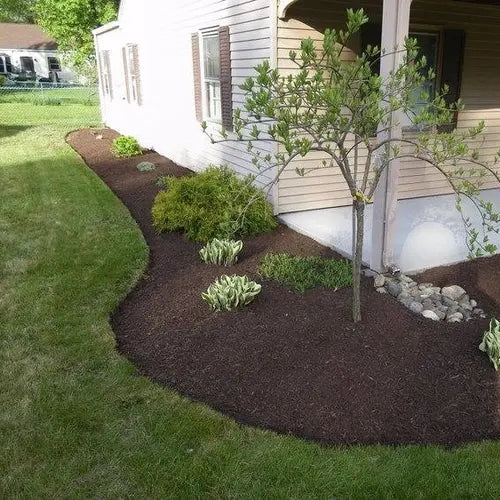
Measure each bed at its longest and widest point in feet, multiply the two, and add the beds together for total square footage. Curved beds around Tupelo foundations are easy to underestimate, so walk the edge and round up rather than down. Then pick your depth and let the calculator convert square feet into cubic yards.
Mulch vs. No Mulch: The Difference
Tupelo gets 54 inches of rain and a long humid growing season that runs from late March well into November, which is close to ideal conditions for the fungi and bacteria that eat mulch. That means organic mulches here break down noticeably faster than they do in drier climates, often losing a third of their volume in a single year. That decay is not waste, since it is exactly what builds tilth in local clay loam, but it does mean planning on an annual top off.
Before
After
Best Mulch Choice for Tupelo Lawns
Most yards in the Tupelo area sit on type of soil. Tupelo's clay loam holds nutrients well but compacts hard, and after a heavy spring rain followed by a hot week it can set up like a driveway around shallow rooted shrubs. Beds in that condition shed water instead of absorbing it, so plants stay thirsty even in a wet year.
Hardwood Mulch
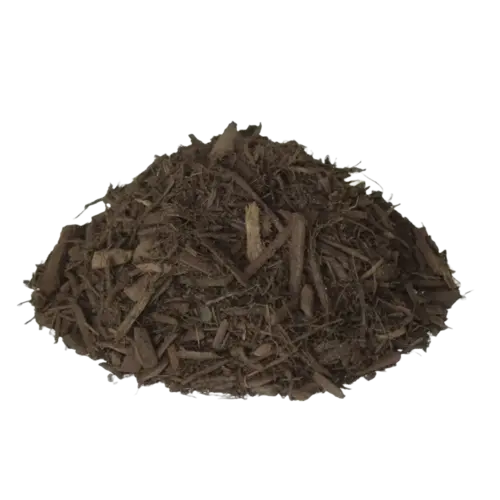
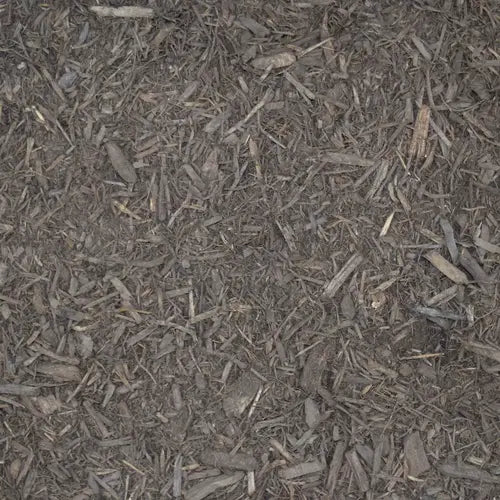
Shredded hardwood mulch is the best long term fix for Tupelo clay loam because it decomposes into fine organic matter that earthworms drag down into the profile, opening channels for air and water. Over two or three seasons of annual mulching, beds that once puddled and cracked become noticeably darker, softer, and easier to dig.
Complete Your Outdoor Mulch Project
Pair your mulch with a few yards of screened topsoil or compost to build up thin clay loam beds before you spread, and add steel or stone edging to keep mulch from washing onto walks during Tupelo downpours. Landscape staples and a roll of fabric help on any slope.
Water your beds thoroughly the day before mulching. Tupelo clay loam that has gone dry in summer repels water at the surface, and dropping three inches of mulch on top of dry ground seals that dryness in for weeks. Wet the soil, let it soak overnight, then spread. Your plants get an immediate reservoir instead of waiting until the next real rain finally works its way through the layer.
Mulch Mound Pro Tip
Build a shallow saucer, not a mound, around trees. Volcano mulching piled against the trunk traps our humid air and invites rot and boring insects, which is a real problem on the young maples and crape myrtles all over Tupelo neighborhoods. Pull mulch back three to four inches from the trunk flare and extend the ring outward toward the drip line instead. Wide and flat beats tall and cone shaped every single time.
Mulch Mound Pro Tip
On sloped front yards, use coarse double ground hardwood rather than fine or nugget style mulch. Tupelo storms can drop two inches of rain in an hour, and fine mulch floats straight into the street while pine nuggets roll. Coarse shredded hardwood knits together into a mat that grips the slope. Adding a slight lip of soil or edging at the downhill side of the bed gives it something to catch against.
Frequently Asked Questions
Click a question to see the answer
Answer
How often do I need to remulch in Tupelo?
Most Tupelo yards need a top off once a year, usually in March right around the March 26 last frost date. Our 54 inches of rain and long warm season break hardwood mulch down fast, so expect to lose an inch to an inch and a half of depth over twelve months. Some homeowners do a light half inch refresh in early fall to tidy beds before leaf drop.
Answer
Will mulch make my clay loam yard hold even more water?
Mulch itself does not cause standing water, but piling it too deep on already saturated clay loam can keep the surface soggy after Tupelo's spring storms. Keep it at two to three inches, never against trunks, and make sure beds drain away from the house. Over a few seasons the decomposing mulch actually improves clay structure and helps water move down instead of sitting.
Answer
What mulch color holds up best in the Tupelo sun?
Brown and black dyed mulches both fade under our long, high UV summers, with black showing fading fastest by late July. Natural double ground hardwood weathers to a soft gray brown that many Tupelo homeowners like, and it never looks blotchy. If you want a dyed look to last, plan on a light refresh each spring.
Answer
Do termites come with mulch here in northeast Mississippi?
Lee County has heavy native termite pressure with or without mulch, since the insects live in the soil already. Mulch does not create termites, but a thick damp layer touching your foundation or siding gives them cover. Keep a bare six inch gap between mulch and any wood or brick veneer on the house and you remove the risk that matters.
Answer
When is the best time of year to mulch in Tupelo?
Late March through mid April is ideal, after the March 26 average last frost when soil has warmed but before summer weeds germinate. A second good window is October, once temperatures drop but before the November 3 first frost, so root zones head into winter insulated. Avoid mulching heavily in the middle of a July heat wave when beds are already dry underneath.
Answer
Should I pull out the old mulch before adding new?
Usually not. Tupelo's humidity and rainfall break old hardwood mulch down into a dark crumbly layer that feeds clay loam soil, so leave it in place. Just rake it to loosen any matted crust, then add one to two inches of fresh material. If the old layer is more than three inches deep or growing a hard fungal mat, scrape some off first.
Answer
How much mulch fits in a pickup truck versus a delivery load?
A standard half ton pickup safely carries about one cubic yard of mulch, which covers roughly 100 square feet at three inches. A typical Tupelo front bed system runs three to five yards, so one delivery replaces several trips and a very tired truck. Bulk delivery also runs far less per yard than the same volume in bags.
The Unique Landscape of Tupelo
Tupelo sits in Zone 8a with 54 inches of rain a year, and most of that arrives in heavy late winter and spring downpours that pound bare clay loam beds into a sealed crust. Mulch is the buffer that absorbs that impact, keeps raindrops from splashing Lee County clay onto your siding and lower foliage, and slows runoff long enough for water to soak in. It also matters in July and August, when afternoon heat and humidity swing wildly and unmulched clay loam bakes into a hard shell around crape myrtle and azalea roots. A steady mulch layer holds soil moisture through the dry stretches that often show up in late summer, and it keeps root zones warmer through the short window between the November 3 first frost and the March 26 last frost. Because our long warm season lets weeds germinate nearly ten months out of the year, mulch is also the cheapest weed control most Tupelo homeowners will ever buy. Done right, it does the work of watering, weeding, and soil building all at once.