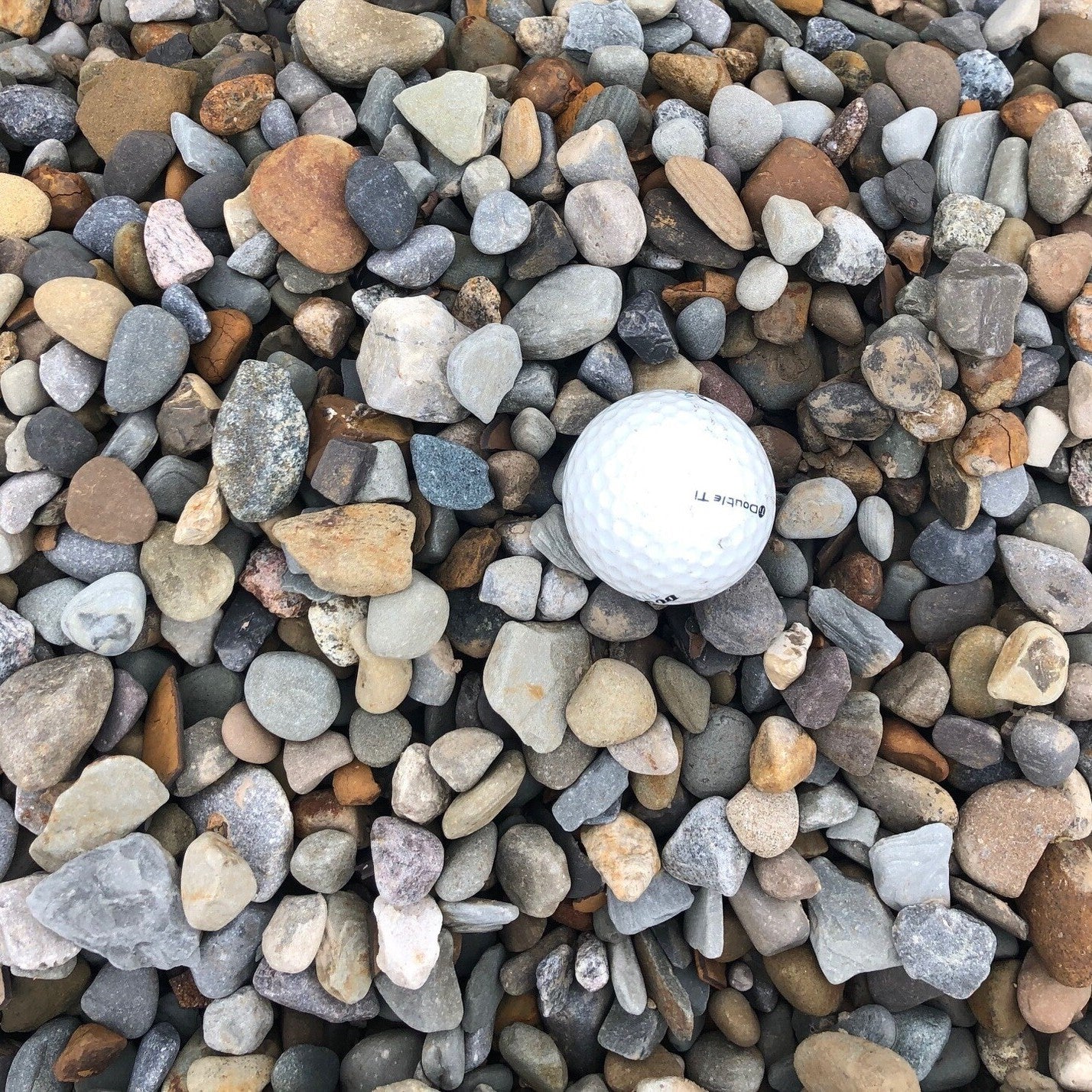
Number 57 crushed stone, angular limestone graded to about three quarters of an inch. The standard driveway, base and drainage gravel, it locks together under traffic and drains fast.
My experience with Mulch Mound was great and super easy. I ordered two yards of screened topsoil and was able to get it delivered within 2 days. They came in my requested time frame (afternoon) and dropped it off where I asked on my driveway. The topsoil was exactly what was a...
Tell us what you're looking for
Thanks! We received your request.
Something went wrong. Please try again.
How Much Material Do I Need?
Two to three inches is enough for decorative beds and pathways, while drainage channels and driveways want four inches or more. One cubic yard of stone covers about 100 square feet at three inches deep.
Use our free gravel calculator
What is a Yard?
A yard is approximately 27 cubic feet. As a general guideline, one yard of material can cover an area of about 100-160 square feet at a 2-3 inch depth.
We can't take orders for this right now. Tell us what you need and we'll get back to you.
What do you need?
Thanks! We received your request.
Something went wrong. Please try again.
Hand-picked local yards
4,000+ regional deliveries
Dedicated support
Why order through Mulch Mound
The best local , without the guesswork.
We hand-pick and partner with the best yards in your region, keep only the ones our buyers rate well, and back each load with our guarantee.
Mulch Mound Guarantee
If your isn't the quantity or quality you ordered, we'll make it right.
About this stone
Number 57 crushed stone, angular limestone graded to about three quarters of an inch. The standard driveway, base and drainage gravel, it locks together under traffic and drains fast.
My experience with Mulch Mound was great and super easy. I ordered two yards of screened topsoil and was able to get it delivered within 2 days. They came in my requested time frame (afternoon) and dropped it off where I asked on my driveway. The topsoil was exactly what was a...
How Much Material Do I Need?
Two to three inches is enough for decorative beds and pathways, while drainage channels and driveways want four inches or more. One cubic yard of stone covers about 100 square feet at three inches deep.
Use our free gravel calculator
What is a Yard?
A yard is approximately 27 cubic feet. As a general guideline, one yard of material can cover an area of about 100-160 square feet at a 2-3 inch depth.
My experience with Mulch Mound was great and super easy. I ordered two yards of screened topsoil and was able to get it delivered within 2 days. Th...
Read full review
My experience with Mulch Mound was great and super easy. I ordered two yards of screened topsoil and was able to get it delivered within 2 days. They came in my requested time frame (afternoon) and dropped it off where I asked on my driveway. The topsoil was exactly what was advertised, clean with no rocks or other debris. The price was reasonable. I plan to use them again in a couple weeks to order compost for my garden beds.
Measure your area in feet, multiply length by width by depth in feet, then divide by 27 for cubic yards. For long narrow runs like a side yard drainage channel, measure the actual path rather than estimating, since Wake Forest side yards are often longer than they look. Stone compacts and settles less than mulch, so a five percent buffer is plenty.
Complete Your Outdoor Stone Project
Add woven landscape fabric under your stone and steel or paver edging to hold it in place on Wake Forest slopes. Sand or screenings make a good leveling layer if you are setting stepping stones or pavers within the gravel.
Compact in layers, not all at once. Whether you are building a gravel parking pad or a walkway, spread stone two inches at a time and run a plate compactor or hand tamper over each lift. Wake Forest clay underneath will keep settling for months if the base is not tight, and you will end up with dips that collect water. Two properly compacted layers outperform four inches dumped and raked flat every time.
Mulch Mound Pro Tip
Give every stone drainage feature somewhere to go. A dry creek bed that dead ends in the middle of your yard just relocates the puddle. Follow the natural fall of your Wake Forest lot, usually toward the street or a rear swale, and confirm with a level or a garden hose test before you buy material. Even a one percent slope, about an inch of drop per eight feet, keeps water moving during heavy rain.
Mulch Mound Pro Tip
Edge everything. Wake Forest storms move loose stone with surprising force, and gravel that migrates into the lawn becomes a mower hazard and a permanent annoyance. Set steel edging, paver blocks, or a trenched border two inches above the stone surface along any run with slope. It costs a fraction of the stone itself and keeps the installation looking sharp for a decade instead of a season.
The Unique Landscape of Wake Forest
Wake Forest sees heavy convective downpours that can drop an inch in under an hour, and red clay sheds most of that water rather than absorbing it. Stone is the material that handles that runoff without floating away the way mulch does. Along downspouts, swales, and the sloped side yards common on Wake Forest lots, gravel and river rock create permanent channels that direct water instead of letting it carve ruts through beds. Stone also solves the shady damp spots under mature oaks and pines where nothing grows and mulch stays soggy through our humid summers. Because it does not decompose, stone is the low maintenance choice for driveways, walkways, fire pit areas, and the drip lines around foundations where you want moisture kept away from the slab. In a climate this wet, the drainage value alone often justifies the material.
Frequently Asked Questions
Click a question to see the answer
Answer
What size gravel works best for a dry creek bed in Wake Forest?
Use a mix. A base of 2 to 4 inch river rock in the channel with smaller washed stone along the edges handles the fast runoff our summer storms produce. Straight small gravel will migrate downhill after the first serious Wake Forest thunderstorm.
Answer
How deep should stone be around my downspouts?
Three to four inches over landscape fabric, spread across an area at least three feet wide. Wake Forest downspouts dump a lot of volume fast onto clay that cannot absorb it, so you need enough stone to break the fall and spread the flow. Slope the bed away from the foundation as you go.
Answer
Will landscape fabric keep weeds out of my gravel?
It helps for the first couple of years, but in Wake Forest humidity organic debris builds on top of the stone and weeds root in that layer regardless. Use a quality woven fabric, blow leaves and pine straw off a few times a year, and spot treat what comes through. That combination keeps gravel clean far longer than fabric alone.
Answer
How much gravel do I need for my driveway?
Plan on four inches of crushed run compacted as a base with an inch or two of 57 stone on top. A typical Wake Forest driveway of 12 by 60 feet needs roughly nine to ten cubic yards for that full buildup. For refreshing an existing gravel drive, two to three yards usually restores the surface.
Answer
Does stone make my beds hotter in the summer?
Yes, noticeably. Light colored stone reflects heat and can push bed temperatures well above ambient during a Wake Forest August afternoon. Save stone for drainage areas, walkways, and plantings that tolerate heat like yuccas, sedums, and ornamental grasses, and use mulch around azaleas, hydrangeas, and dogwoods.
Answer
Can I put stone over my existing mulch beds?
Remove the old mulch first. Mulch continues decomposing under stone and creates a soft settling layer, so the stone sinks unevenly and looks patchy within a season. Scrape it out, grade the clay, lay fabric, then set your stone for a surface that stays level.
Answer
How much does a yard of gravel weigh for delivery planning?
Roughly 2,600 to 3,000 pounds per cubic yard depending on the stone and how wet it is. That is why we recommend a driveway or gravel pad for the drop rather than a lawn, especially in spring when Wake Forest clay stays saturated. A loaded truck on soft ground leaves ruts that take real work to repair.
Answer
Is crush and run the same as crusher run?
Crush and run refers to crushed stone blended with stone dust that compacts into a firm base for driveways and paver projects. In Wake Forest, where sudden downpours run fast over red clay, our clean Crushed Stone #57 is the better choice since it drains freely instead of trapping water like a compacted base would.
Answer
Is there a stone yard near Wake Forest?
Lining a downspout channel or a sloped side yard with crushed stone is a common Wake Forest project, since red clay sheds heavy rain and stone holds up where mulch floats away. Mulch Mound brings the crushed stone straight to your driveway by the cubic yard, so there is no trip to a stone yard or any other quarry.