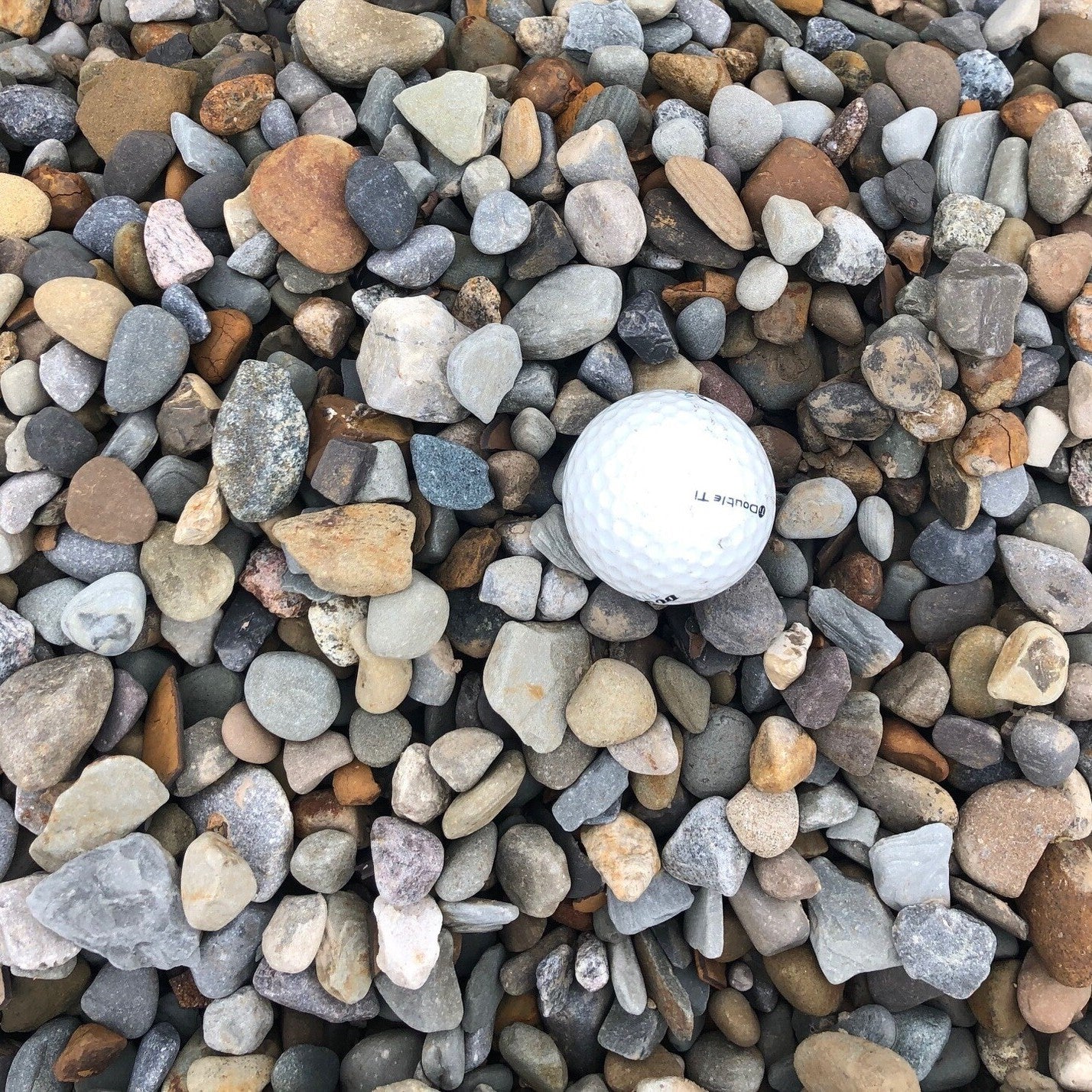
Number 57 crushed stone, angular limestone graded to about three quarters of an inch. The standard driveway, base and drainage gravel, it locks together under traffic and drains fast.
My experience with Mulch Mound was great and super easy. I ordered two yards of screened topsoil and was able to get it delivered within 2 days. They came in my requested time frame (afternoon) and dropped it off where I asked on my driveway. The topsoil was exactly what was a...
Tell us what you're looking for
Thanks! We received your request.
Something went wrong. Please try again.
How Much Material Do I Need?
Use 2 inches for small gravels and 3 inches for cobble and larger river rock. A cubic yard covers roughly 160 square feet at 2 inches or 108 square feet at 3 inches.
Use our free gravel calculator
What is a Yard?
A yard is approximately 27 cubic feet. As a general guideline, one yard of material can cover an area of about 100-160 square feet at a 2-3 inch depth.
We can't take orders for this right now. Tell us what you need and we'll get back to you.
What do you need?
Thanks! We received your request.
Something went wrong. Please try again.
Hand-picked local yards
4,000+ regional deliveries
Dedicated support
Why order through Mulch Mound
The best local , without the guesswork.
We hand-pick and partner with the best yards in your region, keep only the ones our buyers rate well, and back each load with our guarantee.
Mulch Mound Guarantee
If your isn't the quantity or quality you ordered, we'll make it right.
About this stone
Number 57 crushed stone, angular limestone graded to about three quarters of an inch. The standard driveway, base and drainage gravel, it locks together under traffic and drains fast.
My experience with Mulch Mound was great and super easy. I ordered two yards of screened topsoil and was able to get it delivered within 2 days. They came in my requested time frame (afternoon) and dropped it off where I asked on my driveway. The topsoil was exactly what was a...
How Much Material Do I Need?
Use 2 inches for small gravels and 3 inches for cobble and larger river rock. A cubic yard covers roughly 160 square feet at 2 inches or 108 square feet at 3 inches.
Use our free gravel calculator
What is a Yard?
A yard is approximately 27 cubic feet. As a general guideline, one yard of material can cover an area of about 100-160 square feet at a 2-3 inch depth.
My experience with Mulch Mound was great and super easy. I ordered two yards of screened topsoil and was able to get it delivered within 2 days. Th...
Read full review
My experience with Mulch Mound was great and super easy. I ordered two yards of screened topsoil and was able to get it delivered within 2 days. They came in my requested time frame (afternoon) and dropped it off where I asked on my driveway. The topsoil was exactly what was advertised, clean with no rocks or other debris. The price was reasonable. I plan to use them again in a couple weeks to order compost for my garden beds.
Really appreciate the care and follow thru that this company had with our order. A hiccup came up but they were quick to respond and address all co...
Read full review
Really appreciate the care and follow thru that this company had with our order. A hiccup came up but they were quick to respond and address all concerns, which made our garden day a success! Thank you for your prompt care.
Measure your area in feet, splitting curved park strips and irregular beds into simple shapes, and pick your depth before you calculate. Multiply length by width by depth in feet and divide by 27 for cubic yards, then multiply by about 1.4 tons per yard if you are ordering by weight. Round up, because coming back for a half yard of matching stone is harder than it sounds once a batch changes.
Complete Your Outdoor Stone Project
Round out the job with woven landscape fabric, steel edging to hold clean lines against turf, and a few accent boulders from local quarry stock. Drain rock and a perforated pipe finish out any low spot where clay traps spring runoff.
Buy all your stone in one delivery. Quarry and river rock color varies noticeably from batch to batch, and Wasatch front quartzite in particular shifts between pink, rust, and gray tones depending on where in the pit it came from. A patch added next season will read as a different material from the street. Measure the whole project, add ten percent, and take it in a single load so the color stays consistent.
Mulch Mound Pro Tip
Give plants an island. When you rock a park strip but leave a few shrubs or ornamental grasses, keep a mulched or bare ring at least a foot wide around each crown. Gravel packed against a stem holds radiant heat and abrades bark, and in West Jordan's dry summer air that combination kills young plants fast. The island also lets you get a hose or emitter right where the roots are.
Mulch Mound Pro Tip
Compact your base for anything you walk on. Paths and patio bases in valley clay need three to four inches of three quarter inch road base compacted in two lifts, with water misted between passes. Skipping this in West Jordan means the freeze and thaw cycles between late October and late April will heave your surface within one winter. A rented plate compactor for a half day saves you a full rebuild later.
The Unique Landscape of West Jordan
Water rates and conservation pressure in the Salt Lake Valley have pushed a lot of West Jordan homeowners toward rock in park strips, side yards, and around foundations, and with 17 inches of annual precipitation that decision makes sense. Decorative stone does not decompose, does not blow away in a downcanyon gust, and does not need replacing every couple of springs the way bark does. It is also the right answer for the drainage problems our alkaline clay creates, since gravel swales, dry creek beds, and French drains give snowmelt and cloudburst runoff somewhere to go instead of pooling against a foundation. Local geology helps too, because Wasatch quartzite, river rock from Jordan River gravels, and Oquirrh limestone all look at home in a West Jordan yard in a way imported tropical stone never does. Just know that rock absorbs and radiates heat, so a full south facing rock bed at 4,330 feet can run considerably hotter than the air, which affects nearby plants and windows. Used thoughtfully, stone is the lowest maintenance surface you can put down here.
Frequently Asked Questions
Click a question to see the answer
Answer
How much does a yard of rock weigh compared to mulch, and will it crack my driveway?
A cubic yard of decorative gravel runs roughly 2,500 to 2,900 pounds, versus about 800 pounds for bark mulch. Standard four inch residential driveway concrete in West Jordan handles a dumped pile fine, but freshly poured slabs under a year old, stamped concrete, and asphalt in July heat are all vulnerable. Tell us at booking and we will dump on plywood or a tarp.
Answer
Do I need fabric under rock in a West Jordan park strip?
Yes, use a quality woven landscape fabric, not the thin nonwoven stuff. Our clay pushes fines upward through gravel with every freeze and thaw cycle between the October and April frost dates, and without a barrier your clean rock turns muddy in three years. Fabric also slows bindweed and cheatgrass, which are the two weeds that reliably colonize valley rock beds.
Answer
Will a rock landscape make my yard hotter?
Noticeably, yes. At 4,330 feet the UV load is high and light colored gravel reflects it, while dark rock stores heat and releases it into the evening. On south and west exposures a large rock area can raise the temperature near your windows and stress adjacent shrubs. Mix in shade trees, use lighter tones on the hottest exposures, and keep rock a foot or so away from plant crowns.
Answer
What size rock works best for a dry creek bed handling spring snowmelt?
Combine sizes for a natural look and real function. Use a base of three quarter inch drain rock, then two to four inch river cobble as the main channel, then a few 8 to 12 inch boulders to break up flow and pin the edges. In West Jordan the biggest surge comes from March snowmelt and August thunderstorms, so size the channel for a short heavy flow rather than a steady trickle.
Answer
How deep should decorative rock be in a West Jordan bed?
Two inches for three eighths inch to half inch gravel and three inches for larger cobble. Deeper than that wastes money and creates a layer loose enough to slide underfoot. One cubic yard covers about 160 square feet at 2 inches. Around foundations, keep the top of the rock a few inches below the siding line so you keep proper clearance.
Answer
Can I put rock right over my existing lawn?
Not directly. Kentucky bluegrass rhizomes will push right through fabric and gravel and you will fight it for years. Kill or remove the sod first, strip the top inch or two, grade the area, then lay fabric and rock. Late summer is the best window in West Jordan because you can treat actively growing turf in August and have the rock down before the October 25 first frost.
Answer
Does gravel help with the water pooling next to my foundation?
It helps if the grade helps. West Jordan clay sheds very little water downward, so the fix is establishing positive slope away from the house first, at least six inches of fall in the first ten feet. Then a band of three quarter inch drain rock along the foundation moves surface water out to a swale or drain. Rock alone over flat clay just hides the puddle.
Answer
What is road base used for?
Under driveways, parking pads, and paver patios, road base is the compacted layer that carries the load and sheds water. For West Jordan projects needing that free draining, top course performance instead, our Crushed Stone #57 is the better fit, especially against alkaline clay drainage issues.