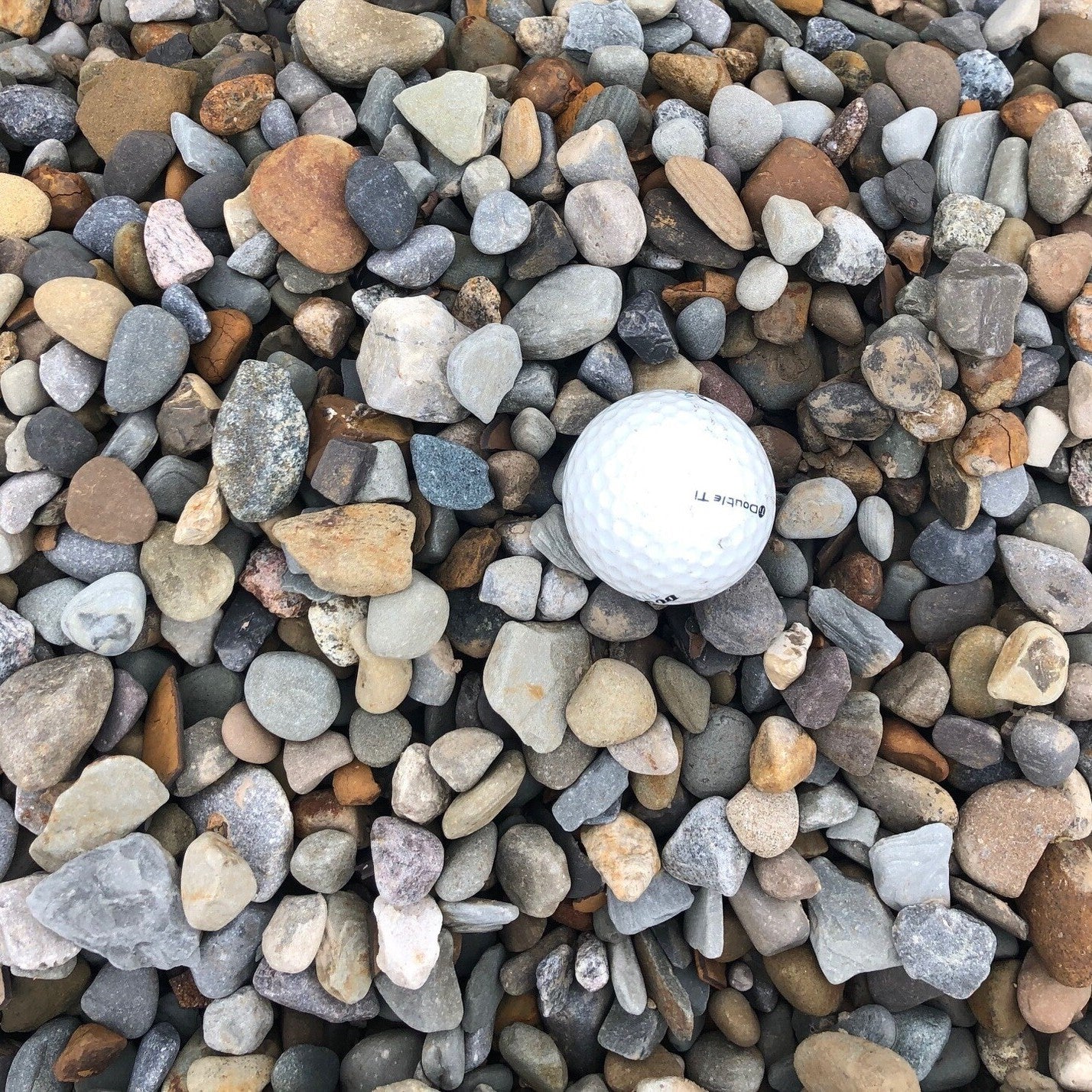
Number 57 crushed stone, angular limestone graded to about three quarters of an inch. The standard driveway, base and drainage gravel, it locks together under traffic and drains fast.
My experience with Mulch Mound was great and super easy. I ordered two yards of screened topsoil and was able to get it delivered within 2 days. They came in my requested time frame (afternoon) and dropped it off where I asked on my driveway. The topsoil was exactly what was a...
Tell us what you're looking for
Thanks! We received your request.
Something went wrong. Please try again.
How Much Material Do I Need?
Plan on 2 inches of depth for decorative rock over fabric and 3 to 4 inches for paths and drainage areas. One cubic yard covers about 160 square feet at 2 inches deep.
Use our free gravel calculator
What is a Yard?
A yard is approximately 27 cubic feet. As a general guideline, one yard of material can cover an area of about 100-160 square feet at a 2-3 inch depth.
We can't take orders for this right now. Tell us what you need and we'll get back to you.
What do you need?
Thanks! We received your request.
Something went wrong. Please try again.
Hand-picked local yards
4,000+ regional deliveries
Dedicated support
Why order through Mulch Mound
The best local , without the guesswork.
We hand-pick and partner with the best yards in your region, keep only the ones our buyers rate well, and back each load with our guarantee.
Mulch Mound Guarantee
If your isn't the quantity or quality you ordered, we'll make it right.
About this stone
Number 57 crushed stone, angular limestone graded to about three quarters of an inch. The standard driveway, base and drainage gravel, it locks together under traffic and drains fast.
My experience with Mulch Mound was great and super easy. I ordered two yards of screened topsoil and was able to get it delivered within 2 days. They came in my requested time frame (afternoon) and dropped it off where I asked on my driveway. The topsoil was exactly what was a...
How Much Material Do I Need?
Plan on 2 inches of depth for decorative rock over fabric and 3 to 4 inches for paths and drainage areas. One cubic yard covers about 160 square feet at 2 inches deep.
Use our free gravel calculator
What is a Yard?
A yard is approximately 27 cubic feet. As a general guideline, one yard of material can cover an area of about 100-160 square feet at a 2-3 inch depth.
My experience with Mulch Mound was great and super easy. I ordered two yards of screened topsoil and was able to get it delivered within 2 days. Th...
Read full review
My experience with Mulch Mound was great and super easy. I ordered two yards of screened topsoil and was able to get it delivered within 2 days. They came in my requested time frame (afternoon) and dropped it off where I asked on my driveway. The topsoil was exactly what was advertised, clean with no rocks or other debris. The price was reasonable. I plan to use them again in a couple weeks to order compost for my garden beds.
Measure length and width of each rock area and note that stone is ordered by weight or volume, so a coverage depth matters more than with mulch. West Valley City park strips are often odd shaped, so break them into rectangles and add the pieces together. Enter your total square footage and depth, then order slightly over since stone settles into silt loam.
Complete Your Outdoor Stone Project
Pair your stone with quality woven landscape fabric and steel edging to keep rock out of the lawn, and add a few boulders for scale in larger West Valley City front yards.
Do not run rock right up to your foundation without a plan for water. West Valley City lots often have flat grade at the house, and gravel against the wall lets snowmelt sit and soak in rather than shedding away. Slope the subgrade away from the foundation before placing fabric and stone, and keep the rock surface at least six inches below siding or stucco to prevent moisture wicking into the wall.
Mulch Mound Pro Tip
Match stone color to your home and the valley light. At 4,304 feet the sun is intense and washes out subtle tones, so a soft gray that looks nice in the yard sample can read as glaring white by midday in West Valley City. Bring a sample home and look at it at noon and again at dusk. Warmer tans and reds from local Utah quarries hold their character better under high altitude sun.
Mulch Mound Pro Tip
Wet down and compact road base in lifts of two inches or less. West Valley City silt loam subgrade is soft when moist and unforgiving when dry, so dumping six inches of base and running a plate compactor over it leaves a soft middle that ruts by the second winter. Two inch lifts, a light water spray, and two passes each gives you a path that survives freeze thaw without potholing.
The Unique Landscape of West Valley City
Decorative rock has been a West Valley City staple for decades, and with 21 inches of annual precipitation it makes real sense in the right places. Stone does not blow away in valley windstorms, does not need replacing every couple of years, and handles the intense UV at 4,304 feet without fading much. It is also the practical answer for drainage on silt loam, which sheds water at the surface and pools in low spots after spring snowmelt. Gravel paths, dry creek beds, and drip lines around foundations all move water off compacted valley ground before it finds your basement. The one caution is heat, since rock radiates warmth and can push a south facing Zone 7b bed well past what most plants tolerate in August. Used thoughtfully, stone is the lowest maintenance material in a West Valley City yard.
Frequently Asked Questions
Click a question to see the answer
Answer
Does rock mulch make my yard hotter?
Noticeably, yes. On a 98 degree West Valley City July afternoon, a light colored gravel bed can radiate significantly more heat than mulch, and that reflected warmth stresses plants and raises cooling costs on south and west facing walls. Use rock for paths, drainage, and areas away from the house, and keep organic mulch in foundation beds and around anything with tender foliage.
Answer
What stone size works best for a driveway or path here?
Three quarter inch minus road base is the workhorse for West Valley City. The fines lock together when compacted and hold up to freeze thaw cycles between the Oct 22 and Apr 21 frost dates far better than rounded pea gravel, which migrates and rolls underfoot. For a finished look, compact a road base subgrade and top it with an inch of decorative chip.
Answer
Do I need fabric under my rock?
Use a quality woven geotextile, not the thin nonwoven rolls sold at big box stores. West Valley City silt loam is fine textured and will pump up through cheap fabric within a few years, and once it does, wind blown seed germinates in the rock. Even good fabric is a delay, not a permanent fix, so plan on a spot spray routine for bindweed and puncturevine, which thrive in valley gravel.
Answer
Can I use rock to fix standing water in my yard?
Rock alone will not do it, but a properly built dry creek or French drain will. West Valley City silt loam drains slowly and low spots hold snowmelt into April. Excavate a channel, line it with fabric, add drain rock, and give it somewhere to go such as a swale, park strip, or storm inlet. Then dress the surface with cobble so it looks intentional.
Answer
How much does a yard of gravel weigh?
Most landscape stone runs 2,600 to 3,000 pounds per cubic yard dry, and more when wet. That means a single yard exceeds the safe payload of most half ton pickups driving around West Valley City. Let us deliver, and be aware that a load of several yards concentrated on one spot of an older concrete driveway can crack it, so we can place it on plywood.
Answer
Will rock keep weeds out permanently?
No material does that in our valley. Wind carries seed off open lots and canal banks, and it settles into the gaps between stones where a bit of dust and moisture is all it needs. Rock does cut weed pressure a lot compared to bare ground. Plan on a pre emergent application in early March before soil temperatures rise and a second in late summer.
Answer
Is river rock or crushed stone better for my beds?
Crushed angular stone stays put on slopes and in West Valley City's windy open areas because the faces lock together. Rounded river rock looks softer and works well in dry creek beds and flat areas, but it rolls out of beds and onto sidewalks. If your lot has any grade to it, go angular.
Answer
What is road base used for?
Road base is a crushed rock and fines blend that compacts hard under driveways, parking pads, and paver patios, shedding water instead of holding it. In West Valley City, where silt loam soils pool after spring snowmelt, our Crushed Stone #57 is the better choice for drainage and surface applications, though it will not compact into a firm base layer like road base does.
Answer
Is there a stone yard near West Valley City?
Fixing a soggy low spot in your front yard after spring snowmelt is a common West Valley City project, and crushed stone handles it well. Mulch Mound is not a stone yard, so you skip the drive to a gravel pit and load up. We deliver the crushed stone by the cubic yard right to your driveway.