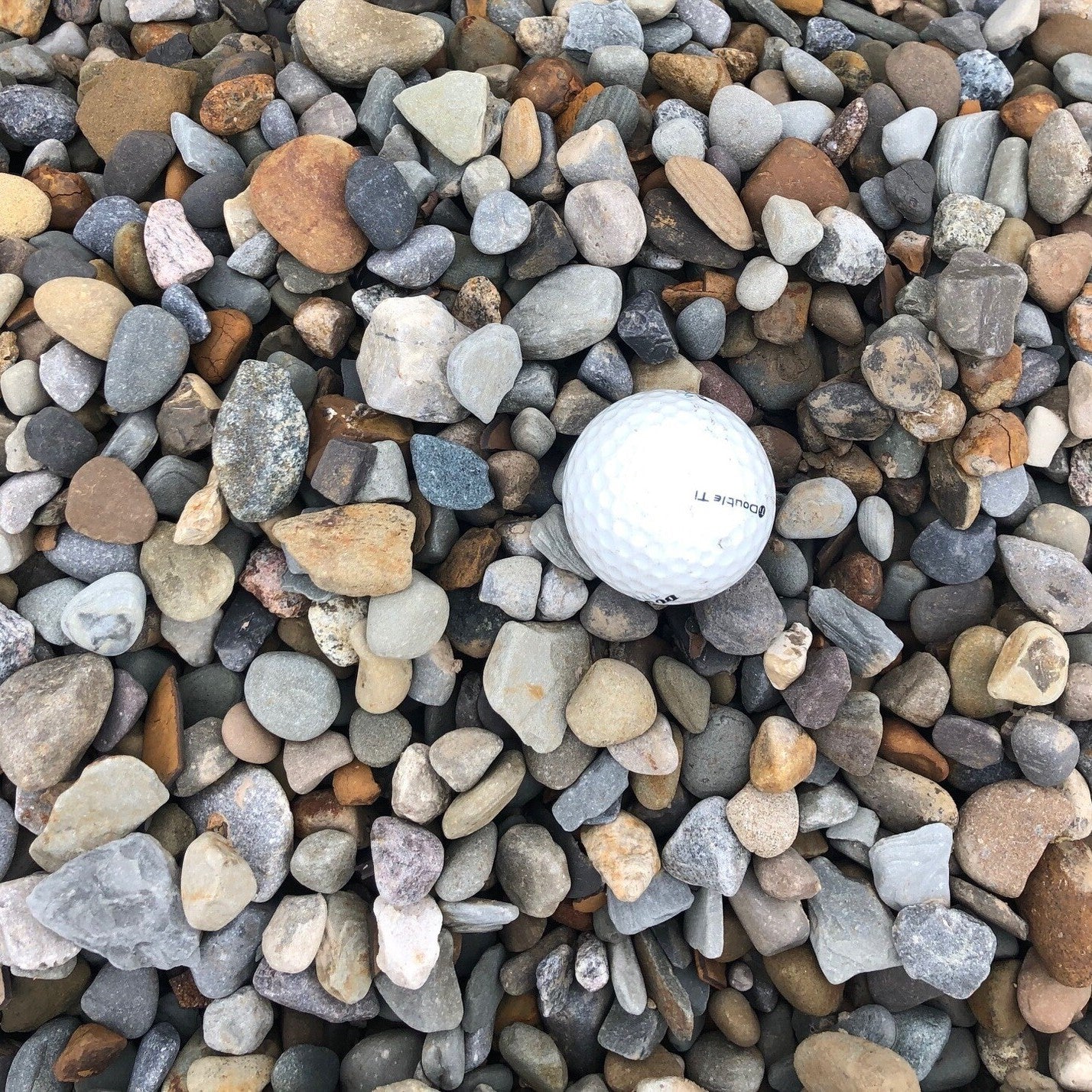
Number 57 crushed stone, angular limestone graded to about three quarters of an inch. The standard driveway, base and drainage gravel, it locks together under traffic and drains fast.
My experience with Mulch Mound was great and super easy. I ordered two yards of screened topsoil and was able to get it delivered within 2 days. They came in my requested time frame (afternoon) and dropped it off where I asked on my driveway. The topsoil was exactly what was a...
Tell us what you're looking for
Thanks! We received your request.
Something went wrong. Please try again.
How Much Material Do I Need?
Use 2 to 3 inches for decorative ground cover and 4 to 6 inches for drainage beds and compacted base. One cubic yard covers about 160 square feet at 2 inches or 108 square feet at 3 inches.
Use our free stone calculator
What is a Yard?
A yard is approximately 27 cubic feet. As a general guideline, one yard of material can cover an area of about 100-160 square feet at a 2-3 inch depth.
We hand-pick and partner with the best yards in your region, keep only the ones our buyers rate well, and back each load with our guarantee.
Mulch Mound Guarantee
If your isn't the quantity or quality you ordered, we'll make it right.
About this stone
Number 57 crushed stone, angular limestone graded to about three quarters of an inch. The standard driveway, base and drainage gravel, it locks together under traffic and drains fast.
My experience with Mulch Mound was great and super easy. I ordered two yards of screened topsoil and was able to get it delivered within 2 days. They came in my requested time frame (afternoon) and dropped it off where I asked on my driveway. The topsoil was exactly what was a...
How Much Material Do I Need?
Use 2 to 3 inches for decorative ground cover and 4 to 6 inches for drainage beds and compacted base. One cubic yard covers about 160 square feet at 2 inches or 108 square feet at 3 inches.
Use our free stone calculator
What is a Yard?
A yard is approximately 27 cubic feet. As a general guideline, one yard of material can cover an area of about 100-160 square feet at a 2-3 inch depth.
My experience with Mulch Mound was great and super easy. I ordered two yards of screened topsoil and was able to get it delivered within 2 days. Th...
Read full review
My experience with Mulch Mound was great and super easy. I ordered two yards of screened topsoil and was able to get it delivered within 2 days. They came in my requested time frame (afternoon) and dropped it off where I asked on my driveway. The topsoil was exactly what was advertised, clean with no rocks or other debris. The price was reasonable. I plan to use them again in a couple weeks to order compost for my garden beds.
Really appreciate the care and follow thru that this company had with our order. A hiccup came up but they were quick to respond and address all co...
Read full review
Really appreciate the care and follow thru that this company had with our order. A hiccup came up but they were quick to respond and address all concerns, which made our garden day a success! Thank you for your prompt care.
Measure each area in feet and sketch it out, breaking curved beds into rectangles and half circles. Stone depth is less forgiving than mulch, so decide on your target depth up front, typically 2 to 3 inches for decorative cover and 4 or more inches for drainage and base work. Round up slightly, because you cannot easily order a partial yard later without a second delivery fee.
Complete Your Outdoor Stone Project
Add woven landscape fabric, steel or paver edging to hold your stone lines, and polymeric sand if you are setting pavers. Many Wyoming homeowners pair a stone drainage bed with mulch in the surrounding planting areas for the best of both.
Compact your base in lifts, not all at once. When building a patio or walkway on Wyoming's sandy ground, spread crushed limestone in 2 inch layers, mist each one lightly, then run a plate compactor over it before adding the next. Compacting 6 inches in a single pass leaves the bottom loose, and West Michigan frost cycles will find that weakness and heave your pavers within two winters.
Mulch Mound Pro Tip
Set your edging before the stone, not after. Sandy loam offers less grip for edging spikes than clay does, so use spikes at least 10 inches long and drive them at a slight inward angle. Steel or heavy duty paver edging holds a clean line against plow damage and shovel abuse along driveways. Without it, gravel migrates into the lawn and ends up in your mower deck by June.
Mulch Mound Pro Tip
Plan for winter before you place stone near pavement. Snow gets pushed off Wyoming driveways and walks from November through March, and loose pea gravel within a couple feet of that edge will end up scattered across the lawn. Use larger 1 to 3 inch stone in plow zones, keep decorative beds set back or curbed, and mark bed corners with stakes so whoever clears your drive knows where the edge is.
The Unique Landscape of Wyoming
Decorative and functional stone solves problems that mulch cannot in Wyoming, MI. Our 37 inches of annual rainfall often shows up as short intense storms, and on sandy loam that means downspout outlets, swale bottoms, and driveway edges wash out repeatedly. Stone stays put through those events and through the freeze and thaw cycling that runs from October into May in Zone 6a. It also handles the reality of West Michigan winters, where plow piles, salt, and shoveling destroy mulch beds along walkways and driveway aprons. Because the native sand and gravel subsoil here drains well, stone bases for patios, walks, and fire pits set up firmly with proper compaction. And in tight foundation beds against the house, stone keeps moisture and insects away from siding better than any organic material.
Frequently Asked Questions
Click a question to see the answer
Answer
What size stone works best for a downspout drainage bed?
Use 1 to 3 inch river rock or washed drainage stone over filter fabric. Wyoming's sandy loam erodes quickly under a concentrated downspout discharge, and anything smaller than an inch tends to scatter during our heavy summer thunderstorms. Extend the bed at least 6 feet from the foundation so water sheds away from the basement wall.
Answer
Will landscape stone get too hot next to my house?
Light colored limestone and river rock reflect a fair amount of heat on a south or west facing wall during our humid July stretches. That is actually helpful for drying out foundation areas, but it stresses hostas, hydrangeas, and other moisture lovers. Save stone for tough plantings like junipers, sedum, and ornamental grasses, or use it in plant free zones.
Answer
How thick should my base be for a patio or walkway here?
Plan on 4 to 6 inches of compacted 21AA or crushed limestone under a walkway and 6 to 8 inches under a patio or driveway. Our sandy subsoil drains well, which helps, but West Michigan frost can drive 30 inches or more into the ground, so a proper compacted base is what keeps pavers from heaving by March.
Answer
Does road salt damage decorative stone?
Salt will not break down granite or river rock, but it does leave a white haze on limestone and it accumulates in the soil underneath. Along driveways and walks that get plowed and salted, rinse the stone in early spring once temperatures stay above freezing and choose salt tolerant plants nearby.
Answer
Do I need fabric under my stone?
Yes for most Wyoming applications. Woven geotextile keeps stone from sinking into our sandy loam and blocks weeds from below. Understand that it will not stop seeds that blow in from above, so plan on hand pulling or spot treating a few times each season, especially in late spring.
Answer
How much does a yard of stone weigh, and can my driveway handle it?
A cubic yard of stone runs roughly 2,400 to 2,800 pounds, well over twice the weight of mulch. On older asphalt driveways common in Wyoming neighborhoods, a loaded truck or a large concentrated pile can dent or crack the surface, especially in warm weather. We can split the load or dump at the street edge if you are concerned.
Answer
Can I put stone over the mulch I already have?
We do not recommend it. Old mulch keeps decomposing underneath and the stone settles unevenly into the soft layer within a season or two. Rake out the existing mulch, grade the soil, lay fabric, then place your stone for a bed that stays clean and level.