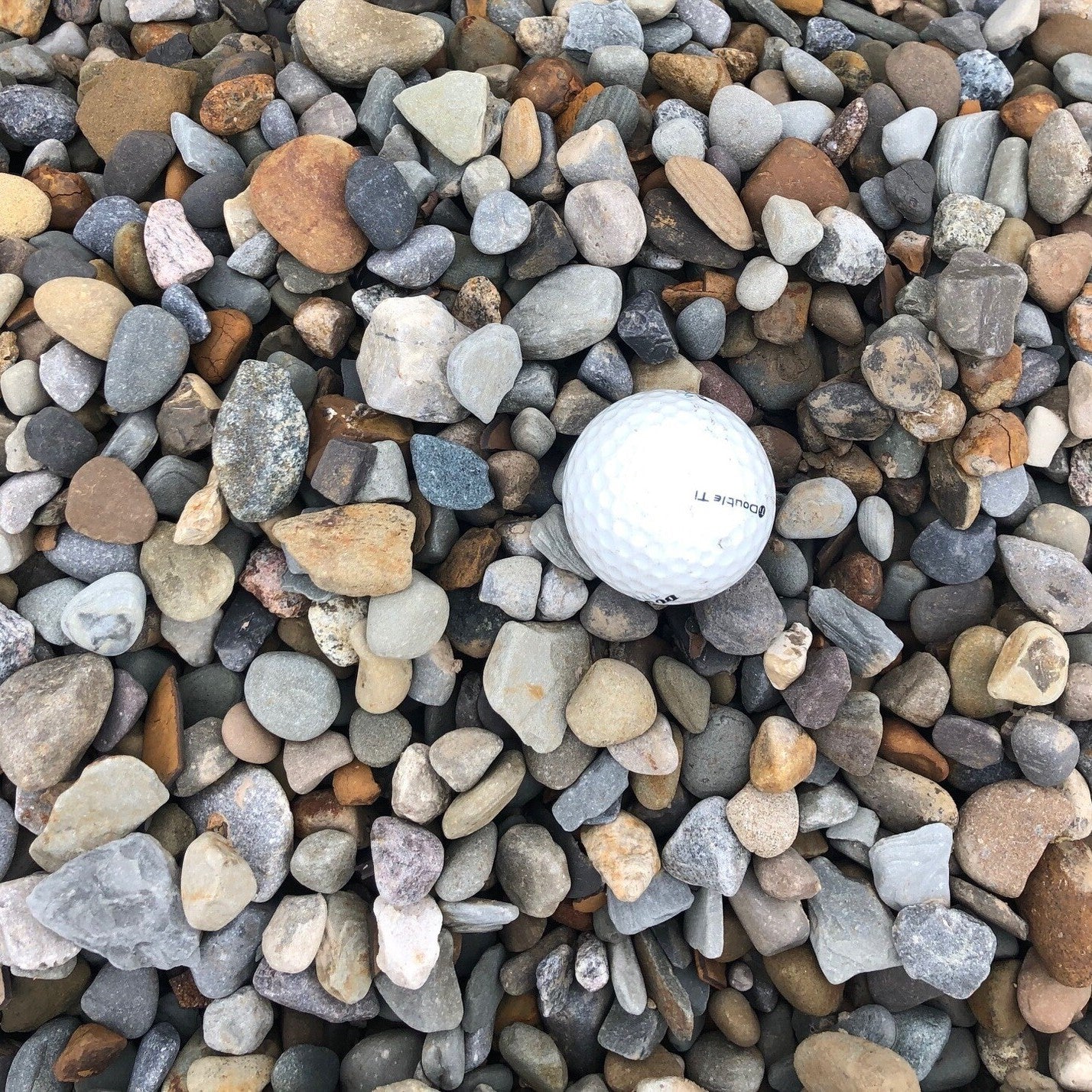
- 3” West Texas Black Crushed Stone landscape rock, sourced from our local supply yard. Color and gradation may vary slightly by quarry lot. Sold by the yard.
I used Mulch Mound to have 3 cubic yards of garden soil delivered. The process was easy and I love that I didn't have to call anyone. I placed my order online, picked my delivery date, laid out my tarp and the dirt was delivered. My delivery had to be pushed back, but I was ke...
Tell us what you're looking for
Thanks! We received your request.
Something went wrong. Please try again.
How Much Material Do I Need?
For most ground cover applications in Arlington, a three-to-four inch depth of stone provides adequate coverage to suppress weeds, protect soil moisture, and create a finished appearance that holds up through North Texas storm events. Pathway and patio base applications using decomposed granite should be compacted to a minimum of three inches of finished depth to provide a stable surface that does not shift under foot traffic.
Use our free gravel calculator
What is a yard?
A yard is approximately 27 cubic feet. As a general guideline, one yard of material can cover an area of about 100 square feet at 3 inches deep.
We can't take orders for this right now. Tell us what you need and we'll get back to you.
What do you need?
Thanks! We received your request.
Something went wrong. Please try again.
Hand-picked local yards
4,000+ regional deliveries
Dedicated support
Why order through Mulch Mound
The best local , without the guesswork.
We hand-pick and partner with the best yards in your region, keep only the ones our buyers rate well, and back each load with our guarantee.
Mulch Mound Guarantee
If your isn't the quantity or quality you ordered, we'll make it right.
About this stone
- 3” West Texas Black Crushed Stone landscape rock, sourced from our local supply yard. Color and gradation may vary slightly by quarry lot. Sold by the yard.
I used Mulch Mound to have 3 cubic yards of garden soil delivered. The process was easy and I love that I didn't have to call anyone. I placed my order online, picked my delivery date, laid out my tarp and the dirt was delivered. My delivery had to be pushed back, but I was ke...
How Much Material Do I Need?
For most ground cover applications in Arlington, a three-to-four inch depth of stone provides adequate coverage to suppress weeds, protect soil moisture, and create a finished appearance that holds up through North Texas storm events. Pathway and patio base applications using decomposed granite should be compacted to a minimum of three inches of finished depth to provide a stable surface that does not shift under foot traffic.
Use our free gravel calculator
What is a yard?
A yard is approximately 27 cubic feet. As a general guideline, one yard of material can cover an area of about 100 square feet at 3 inches deep.
I used Mulch Mound to have 3 cubic yards of garden soil delivered. The process was easy and I love that I didn't have to call anyone. I placed my o...
Read full review
I used Mulch Mound to have 3 cubic yards of garden soil delivered. The process was easy and I love that I didn't have to call anyone. I placed my order online, picked my delivery date, laid out my tarp and the dirt was delivered. My delivery had to be pushed back, but I was kept informed via text, which was great. So why not 5 stars? The description of garden soil on the website is "A balanced mix of topsoil and organic amendments ready for raised beds, flower gardens, and new planting areas. Good drainage, solid nutrients, easy to work with." What I got was more like fill dirt. It had a lot of gravel, a lot of clay, and random trash mixed in. I didn't test the soil to see if it actually had "amendments" because I already have compost and alpaca manure ready to add, but if I'd known the quality of the dirt was going to be the same as the bagged dirt I bought last year, I probably would have gotten 2 yards of top soil and a yard of leaf compost for better quality, especially since the leaf compost is cheaper. Photo of my mountain of dirt and just some of the trash I found in it.
Really appreciate the care and follow thru that this company had with our order. A hiccup came up but they were quick to respond and address all co...
Read full review
Really appreciate the care and follow thru that this company had with our order. A hiccup came up but they were quick to respond and address all concerns, which made our garden day a success! Thank you for your prompt care.
For stone projects in Arlington, measure the area you plan to cover in square feet and decide on your target depth before using the calculator, and remember that stone does not compress the way mulch does so the depth you enter is the depth you will end up with. For dry creek beds, measure the length and average width of the channel and use a depth of at least four inches to get the layered look that handles Arlington's storm water flow. If you are combining multiple stone sizes in one project, calculate each zone separately and add the totals together for your order.
Complete Your Outdoor Stone Project
Consider adding a bulk soil delivery to your stone project if you are building raised borders or grading low areas before laying your stone. A stable, properly leveled soil base beneath your stone installation ensures even settling and prevents the low spots and voids that can develop in Arlington's clay when soil shifts after heavy rains.
In Arlington's clay-heavy landscape, always install a buffer of coarse sand or fine gravel between your landscape fabric and the underlying clay before placing decorative stone. Arlington's Blackland clay is so fine-textured that small clay particles migrate upward through fabric over time, especially during the wet and dry cycles that characterize our spring and summer seasons. That clay migration eventually fills the voids in your stone layer, creating a muddy surface after rain and reducing the drainage benefit you installed the stone to provide. A one-inch layer of coarse sand under the fabric dramatically slows this process and extends the life of your stone installation.
Mulch Mound Pro Tip
When installing decomposed granite paths or patios in Arlington, plan for a slight cross-slope of one to two percent to direct water off the surface and away from your foundation or planting beds. Arlington's occasional intense rain events can overwhelm even well-draining decomposed granite if the surface is perfectly flat, leading to temporary sheeting water that erodes path edges and deposits granite fines into surrounding turf. A gentle slope built into the base before compaction requires almost no extra effort during installation but makes a significant difference in how the path performs through years of North Texas weather.
Mulch Mound Pro Tip
If you are planning a stone project near the edges of your Arlington property adjacent to natural drainage areas or creek tributaries, check Tarrant County's regulations for impervious surface coverage and floodplain restrictions before finalizing your design. Some areas of Arlington near Johnson Creek, Village Creek, and their tributaries have specific requirements about what materials can be placed in or adjacent to floodplain zones. Using permeable stone and gravel rather than solid paving keeps your project compliant with most drainage ordinances and supports Arlington's broader efforts to manage the storm water runoff that the city's clay soil and urban density create.
The Unique Landscape of Arlington
Landscape stone is one of the most practical choices for Arlington properties because it handles the city's clay soil challenges without requiring the seasonal maintenance that organic materials demand. Where mulch breaks down and washes away during Arlington's heavy spring rains, stone stays in place and continues to function year after year regardless of what the North Texas weather delivers. Arlington's hot summers make dark stone surfaces warm to the touch, which is a factor to consider near seating areas and plant beds, but light-colored decomposed granite and river stone reflect heat rather than absorbing it and stay usable throughout even the hottest August afternoons. Stone also addresses one of the most common Arlington landscape complaints, which is the bare clay areas under large shade trees where turf refuses to grow. Filling those areas with a clean river pebble or crushed limestone creates a finished look without fighting the shade and root competition that makes grass nearly impossible to maintain. Because Arlington sits at a moderate elevation with occasional drainage challenges, stone pathways and gravel drainage channels are genuinely functional improvements rather than purely decorative ones.
Frequently Asked Questions
Click a question to see the answer
Answer
Will landscape stone help with the drainage problems I have in my Arlington clay yard?
Stone can be a very effective drainage tool in Arlington landscapes when it is used correctly. Installing a gravel-filled French drain or a decorative dry creek bed in areas where water pools after rain gives that water a channel to move through without eroding the clay surface. The stone itself does not absorb water, but it creates void space that water can move through quickly, which is exactly what dense Blackland clay cannot do on its own. For best results, lay a permeable landscape fabric under any stone that is meant to function as a drainage feature so that silt from Arlington's fine clay particles does not gradually fill the gaps and reduce performance over time.
Answer
Does stone get too hot to be near plants during Arlington summers?
Dark stone colors like black Mexican pebble or dark lava rock can reach surface temperatures above 150 degrees on a direct-sun Arlington afternoon in July, and that level of heat radiating near plant stems can cause real damage. If you are placing stone around plants, choose light-colored options like cream-colored river gravel, light tan decomposed granite, or white marble chips, which reflect solar radiation rather than absorbing it. Also keep any stone mulch an inch or two away from plant stems and crown areas, because even light-colored stone traps heat close to the ground in a way that can stress plants that are not fully established.
Answer
How do I keep weeds from coming up through my new stone area?
Weed control under stone in Arlington requires a combination of approaches because our climate gives weed seeds a long growing season from late March through November. Start with a high-quality woven landscape fabric rather than cheap sheeting, because cheap plastic blocks water movement in a way that creates wet clay zones underneath and eventually fails faster. Over the fabric, three to four inches of stone depth is enough to block most weed germination in the stone layer itself. Even with good fabric and adequate depth, bermuda grass is notorious throughout Arlington for sending runners under and through fabric edges, so keeping edging tight and spot-treating with an appropriate herbicide twice a year is a realistic expectation.
Answer
What size stone works best for a dry creek bed in an Arlington backyard?
For a naturalistic dry creek bed that handles occasional water flow from Arlington's heavy rain events, a combination of sizes gives the most authentic look and best function. Use two-to-four inch river rock as the base layer in the channel bottom, then line the edges with four-to-eight inch rounded boulders or larger river rock to define the bank. Filling in with one-to-two inch smooth gravel between the larger stones completes the natural streambed appearance. This layered approach also functions well hydraulically because the size variation creates the kind of rough surface that slows fast-moving storm water and reduces erosion in the clay banks on either side of the channel.
Answer
Is decomposed granite a good choice for a garden path in Arlington?
Decomposed granite is one of the most popular path materials throughout the Arlington area and North Texas in general, and for good reason. When properly compacted with a stabilizing binder, it creates a firm walking surface that drains well and handles the heat far better than dark stone or paved surfaces. In Arlington's climate it stays workable even through summer since it does not crack like concrete does during temperature swings. The main maintenance consideration is that heavy Arlington rain events can wash the finer particles out of the path and onto surrounding turf or beds, so installing a raised steel or composite edging border on both sides of the path keeps the material contained through storm season.
Answer
Can I use river rock to cover the bare spots under my large live oak trees?
River rock is an excellent solution for the bare-soil problem under large live oaks in Arlington yards. Live oaks have surface roots that make it difficult to maintain turf even if the shade were not an issue, and those roots are easily damaged by regular mowing over compacted clay. A four-inch layer of smooth river pebble over a permeable fabric barrier covers the bare soil, protects the surface roots from mechanical damage, and gives the area a clean finished look year-round. Choose a light to medium colored stone rather than dark pebble under trees to avoid trapping excessive heat near the trunk, and leave a small mulched ring right at the base of the trunk rather than running stone all the way to the bark.
Answer
How much stone do I need for a typical Arlington backyard patio border or bed edging project?
For a simple decorative border or edging project, the amount of stone depends heavily on how wide and deep you want the stone band to be. A narrow four-inch-wide, two-inch-deep border around a 200-square-foot patio in Arlington would take less than half a cubic yard, while filling a four-foot-wide bed frame with three inches of river rock over the same perimeter would require closer to two cubic yards. The MulchMound calculator handles these kinds of projects well once you enter your dimensions, and it is worth spending a few minutes measuring before you order because stone is difficult and expensive to return or move once it is placed.
Answer
Is crush and run the same as crusher run?
Southern homeowners call it crush and run, while most suppliers label it crusher run, a mix of crushed stone and fines that compacts hard for driveways and paver bases. It performs well against Arlington's clay soil, and we deliver an equivalent base material here, our Road Base 1.5 inch or 0.75 inch.
Answer
Is there a stone yard near Arlington?
Laying stone over Arlington's clay soil to replace mulch that washes out every spring is a common weekend project, and the stone for it comes straight to your driveway instead of a trip to a stone yard. We deliver West Texas Black and other bulk stone by the cubic yard, so you never have to visit a quarry.