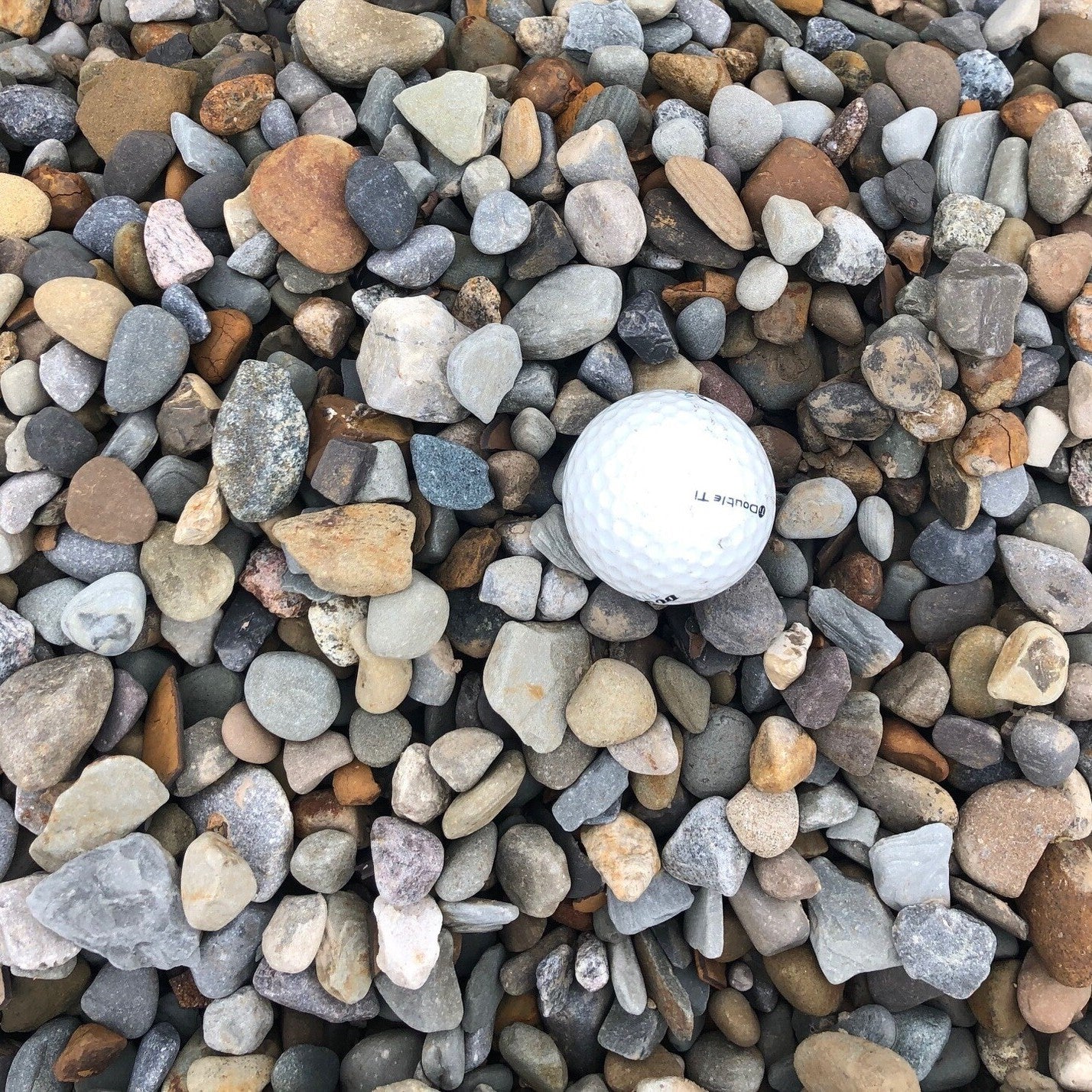
Number 57 crushed stone, angular limestone graded to about three quarters of an inch. The standard driveway, base and drainage gravel, it locks together under traffic and drains fast.
I contacted Mulch Mound for #57 river rocks and it was easy and fast to get a delivery right before the holiday weekend. Stone was delivered as promised and place exactly where I asked. Excellent service! I will be ordering mulch next!
Tell us what you're looking for
Thanks! We received your request.
Something went wrong. Please try again.
How Much Material Do I Need?
Two inches is plenty for decorative stone over fabric, 3 inches for a walking path, and 4 or more inches for a drainage bed or a dry creek that has to carry real water during a Lehigh Valley downpour.
Use our free gravel calculator
What is a Yard?
A yard is approximately 27 cubic feet. As a general guideline, one yard of material can cover an area of about 100-160 square feet at a 2-3 inch depth.
We can't take orders for this right now. Tell us what you need and we'll get back to you.
What do you need?
Thanks! We received your request.
Something went wrong. Please try again.
Hand-picked local yards
4,000+ regional deliveries
Dedicated support
Why order through Mulch Mound
The best local , without the guesswork.
We hand-pick and partner with the best yards in your region, keep only the ones our buyers rate well, and back each load with our guarantee.
Mulch Mound Guarantee
If your isn't the quantity or quality you ordered, we'll make it right.
About this stone
Number 57 crushed stone, angular limestone graded to about three quarters of an inch. The standard driveway, base and drainage gravel, it locks together under traffic and drains fast.
I contacted Mulch Mound for #57 river rocks and it was easy and fast to get a delivery right before the holiday weekend. Stone was delivered as promised and place exactly where I asked. Excellent service! I will be ordering mulch next!
How Much Material Do I Need?
Two inches is plenty for decorative stone over fabric, 3 inches for a walking path, and 4 or more inches for a drainage bed or a dry creek that has to carry real water during a Lehigh Valley downpour.
Use our free gravel calculator
What is a Yard?
A yard is approximately 27 cubic feet. As a general guideline, one yard of material can cover an area of about 100-160 square feet at a 2-3 inch depth.
I contacted Mulch Mound for #57 river rocks and it was easy and fast to get a delivery right before the holiday weekend. Stone was delivered as pro...
Read full review
I contacted Mulch Mound for #57 river rocks and it was easy and fast to get a delivery right before the holiday weekend. Stone was delivered as promised and place exactly where I asked. Excellent service! I will be ordering mulch next!
Stone sells by weight rather than volume, so measure your square footage and depth and let the calculator convert to tons for you. Different stones have different densities, with crushed limestone running heavier per cubic yard than river rock. For irregular Bethlehem side yards, break the area into rectangles and add them up rather than eyeballing the whole strip.
Complete Your Outdoor Stone Project
Pick up landscape fabric to keep silt loam from working up into the stone, plus steel or paver edging to hold the perimeter and keep stone off your lawn and out of the mower.
Put filter fabric under any drainage stone, not just decorative beds. Bethlehem silt loam is made of fine particles that migrate readily with moving water, and within a couple of seasons they will fill the voids in an unwrapped gravel trench and turn it into a mud pocket. A non woven filter fabric wrapped fully around the stone keeps the voids open and can double or triple the working life of the trench.
Mulch Mound Pro Tip
Compact your stone base in layers rather than all at once. Dump 3 inches, run a plate compactor over it, then add the next 3 inches. Compacting a full 6 inch lift only firms the top few inches, and the loose material underneath will settle unevenly through Bethlehem's winter freeze thaw cycles. Layered compaction is the single biggest difference between a patio that stays flat and one that ripples by spring.
Mulch Mound Pro Tip
Set your stone depth below the surrounding grade, not above it. Excavate 2 to 3 inches so the finished stone surface sits flush with the lawn edge. In Bethlehem yards this keeps stone from washing into the grass during heavy rain, makes edging and mowing easier, and prevents the slow spread that turns a crisp stone bed into a scattered mess after a few wet seasons.
The Unique Landscape of Bethlehem
Bethlehem's 46 inches of annual rain has to go somewhere, and on silt loam that means slow infiltration and plenty of surface runoff toward the Lehigh and the Monocacy. Decorative and drainage stone gives that water a path, whether it is a gravel bed along a downspout or a dry creek channeling water off a South Mountain slope. Stone also holds its position on grades where mulch would float away in a summer thunderstorm. Because it does not decompose, it is the right call for walkways, side yards, and the tight service strips common on older Bethlehem lots where you do not want to be topping off material every April. Under Zone 7a freeze thaw cycles, a properly built stone base also keeps patios and walkways from heaving the way bare silt loam does.
Frequently Asked Questions
Click a question to see the answer
Answer
What size stone should I use for a drainage trench in my Bethlehem yard?
Use a clean crushed stone in the three quarter inch range, commonly sold as 2B, with no fines in it. The open voids let water move fast, which matters here because our silt loam does not absorb quickly and a saturated trench backs up. Wrap the trench in filter fabric so silt loam does not migrate in and clog the voids within a few seasons.
Answer
Will stone mulch make my beds too hot in the summer?
It can. Stone absorbs and radiates heat, and in a south facing Bethlehem foundation bed that pushes soil temperatures well above what hostas, hydrangeas, and astilbe tolerate during a humid July. Stone works best around junipers, ornamental grasses, sedum, and yucca, or in beds with no plants at all. Keep organic mulch on the shade loving side of the house.
Answer
How thick should a gravel base be for a patio or walkway here?
Plan on 4 to 6 inches of compacted crushed stone base under a walkway and 6 to 8 inches under a patio or anything a vehicle touches. Bethlehem sees dozens of freeze thaw cycles each winter, and silt loam holds enough water to heave badly. A deep, well compacted, well draining base is what keeps pavers flat by April.
Answer
How many tons of stone do I need per square foot?
One ton of typical crushed stone covers roughly 100 square feet at 2 inches deep or about 70 square feet at 3 inches. River rock and larger decorative stone cover a bit less per ton because of the void space. Measure your area in square feet, decide on depth, and run it through our calculator, then add about 5 percent for settling and edges.
Answer
Do weeds grow through stone in Bethlehem?
Eventually, yes. Our humid climate drops enough leaf litter, pollen, and dust into stone beds that within two or three years there is a layer of organic material sitting on top for seeds to germinate in. Fabric underneath helps at the start, but the real maintenance is blowing debris out of the stone each fall before it breaks down. That single habit keeps a stone bed clean for years.
Answer
What stone looks right with Bethlehem's older brick and limestone homes?
Gray and buff toned crushed limestone and natural river rock tend to sit well against the brick rowhomes and stone foundations found throughout the Historic District and the South Side. They read as native to the Lehigh Valley because the underlying geology is limestone. Bright white marble chips and heavily dyed stone can look out of place against those older facades.
Answer
Can I put stone right against my downspout discharge?
Yes, and it is one of the best uses for it in Bethlehem. A splash pad of 2 to 3 inch river rock at the discharge point breaks the force of the water and prevents the erosion channels that form quickly in silt loam. Extend the stone at least 4 feet out and make sure the ground slopes away from the foundation, since with 46 inches of rain a year that downspout moves a lot of water.
Answer
Is there a stone yard near Bethlehem?
Bethlehem's 46 inches of yearly rain sits on silt loam that drains slowly, so water runs toward the Lehigh and the Monocacy unless you give it a path, and crushed stone makes a solid drainage base. You can skip the stone yard and the drive to a quarry entirely, because Mulch Mound delivers crushed stone by the cubic yard to wherever you want it.