


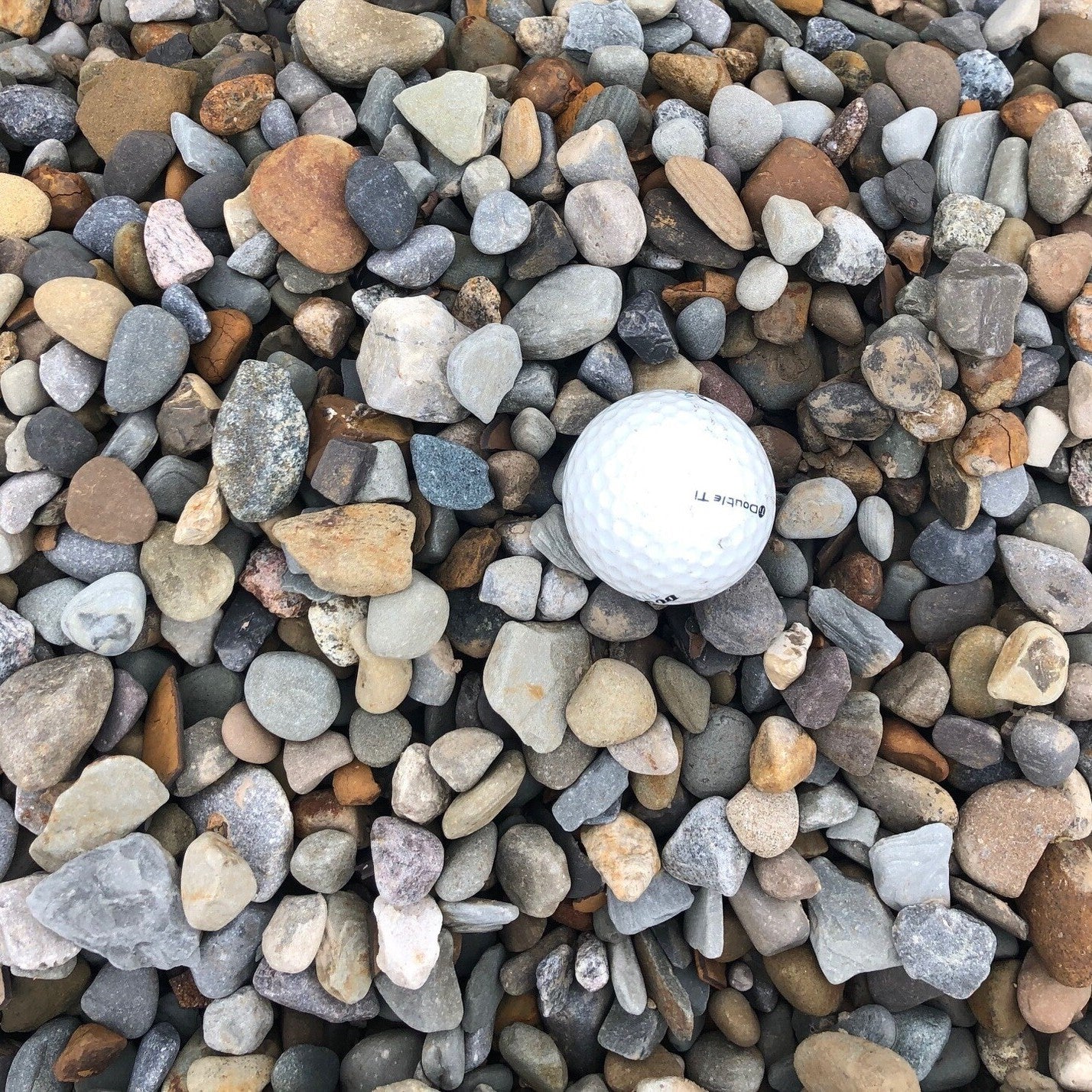

The driver nailed it on putting the gravel I ordered in front of my trailer and between the sidewalk. Very satisfied with how my flowerbeds look now.
About this stone
Number 57 crushed stone, angular limestone graded to about three quarters of an inch. The standard driveway, base and drainage gravel, it locks together under traffic and drains fast.
The driver nailed it on putting the gravel I ordered in front of my trailer and between the sidewalk. Very satisfied with how my flowerbeds look now.
Tell us what you're looking for
Thanks! We received your request.
Something went wrong. Please try again.
How Much Material Do I Need?
How Much Material Do I Need?
Most decorative stone applications in Binghamton call for a 2 to 3 inch depth for beds and borders, while base layers under hardscaping should be compacted to at least 4 to 6 inches. Drainage applications like dry creek beds and French drain trenches vary by project but typically run 4 to 8 inches deep.
Use our free gravel calculator
What is a Yard?
What is a Yard?
FAQs
FAQs
Binghamton Gravel Delivery
Binghamton Gravel Delivery
Regular price
$133.00
per
Yard
Regular price
Sale price
$133.00
Unit price
per
Shipping calculated at checkout.
Minimum of 3 Yard
Couldn't load pickup availability
Not currently available
We can't take orders for this right now. Tell us what you need and we'll get back to you.
Hand-picked local yards
4,000+ regional deliveries
Dedicated support
Why order through Mulch Mound
The best local , without the guesswork.
We hand-pick and partner with the best yards in your region, keep only the ones our buyers rate well, and back each load with our guarantee.
Mulch Mound Guarantee
If your isn't the quantity or quality you ordered, we'll make it right.
About this stone
Number 57 crushed stone, angular limestone graded to about three quarters of an inch. The standard driveway, base and drainage gravel, it locks together under traffic and drains fast.
The driver nailed it on putting the gravel I ordered in front of my trailer and between the sidewalk. Very satisfied with how my flowerbeds look now.
How Much Material Do I Need?
How Much Material Do I Need?
Most decorative stone applications in Binghamton call for a 2 to 3 inch depth for beds and borders, while base layers under hardscaping should be compacted to at least 4 to 6 inches. Drainage applications like dry creek beds and French drain trenches vary by project but typically run 4 to 8 inches deep.
Use our free gravel calculator
What is a Yard?
What is a Yard?
FAQs
FAQs
Tell us what you're looking for
Thanks! We received your request.
Something went wrong. Please try again.
How It Works
Getting started is easy — just follow these simple steps
1
Choose your stone
Make sure you adjust the quantity to your home's needs. You can use our calculator to estimate how much you'll need.
2
Select your delivery date
Select a delivery date you'd like for the product to be dropped off at your home
3
Sit back and wait
Sit back, wait, and let us work our magic to make sure the highest quality product is delivered to your driveway.

Placing an order online was so easy. Delivery was on time. When the driver realized we had a newly poured driveway they erred on the side of cautio...
Read full review
Placing an order online was so easy. Delivery was on time. When the driver realized we had a newly poured driveway they erred on the side of caution and opted not ti drive in it. The company even sent me a message explaining that call. Would recommend!

Online ordering was really simple and I liked the transparent pricing.
Need Help Calculating How Much Gravel You Need?
Use our NEW Trace from Satellite tool to get an estimate for your project based on an aerial view of your property
Try Our CalculatorTo calculate stone needs, multiply the length, width, and desired depth of your project area in feet, then divide by 27 to get cubic yards. Stone is denser than mulch or soil, so a single cubic yard covers roughly 100 square feet at a 3-inch depth. Always add 10 percent to your calculated total to account for settling and edge variation, especially on uneven Binghamton terrain.
Complete Your Outdoor Stone Project
Pair your stone order with a bulk soil delivery if you are regrading beds before laying stone, or add a mulch order for organic areas of the yard while using stone for pathways and borders. A combination of stone and mulch zones is one of the most popular low-maintenance landscape approaches for Binghamton homes.

Service area
Areas we deliver stone and gravel in Binghamton, New York
Mulch Mound Pro Tip
Binghamton's silt loam soil has fine particles that will migrate up into a stone layer over time without a proper barrier between them. Before spreading any decorative stone, lay a commercial-grade woven landscape fabric over the prepared bed and pin it every 18 inches. Consumer-grade fabric breaks down faster in Binghamton's wet conditions, so spending a bit more on a heavier fabric will save you from silt contamination showing up in your stone within a couple of seasons.
Mulch Mound Pro Tip
If you are using bulk crushed stone for a driveway apron or parking pad in Binghamton, plan for a top-off delivery every two to three years. The combination of vehicle traffic, frost heaving, and spring runoff events gradually displaces stone from unpaved surfaces in this region faster than in drier or warmer climates. Ordering a small refresh load is far cheaper than starting over on a badly degraded surface.
Mulch Mound Pro Tip
River rock and rounded decorative stone make beautiful dry creek beds for managing the runoff that Binghamton properties commonly experience during the April and May wet season. To make the design look natural, mix two or three sizes of stone rather than using a single grade. Larger stones at the center channel with smaller gravel along the edges mimics the way actual stream beds look and also functions better, directing water flow toward the center where it can move efficiently.
The Unique Landscape of Binghamton
Decorative and functional stone is one of the most practical landscape investments a Binghamton homeowner can make given the region's challenging weather patterns. Freeze-thaw cycles that run from November through March can heave and erode organic ground covers and soft edging materials, while stone remains stable through every cycle. Binghamton receives 40 inches of rain annually, and stone pathways and beds drain freely without washing away the way mulch can in heavy downpours. The relatively short frost-free window from May 10 to October 5 means outdoor living spaces need to be functional and low-maintenance during the season, and stone delivers exactly that. River rock, crushed limestone, and decorative gravel are also natural complements to the silt loam soils found throughout the city because they do not compact into that fine matrix the way organic materials can over time.