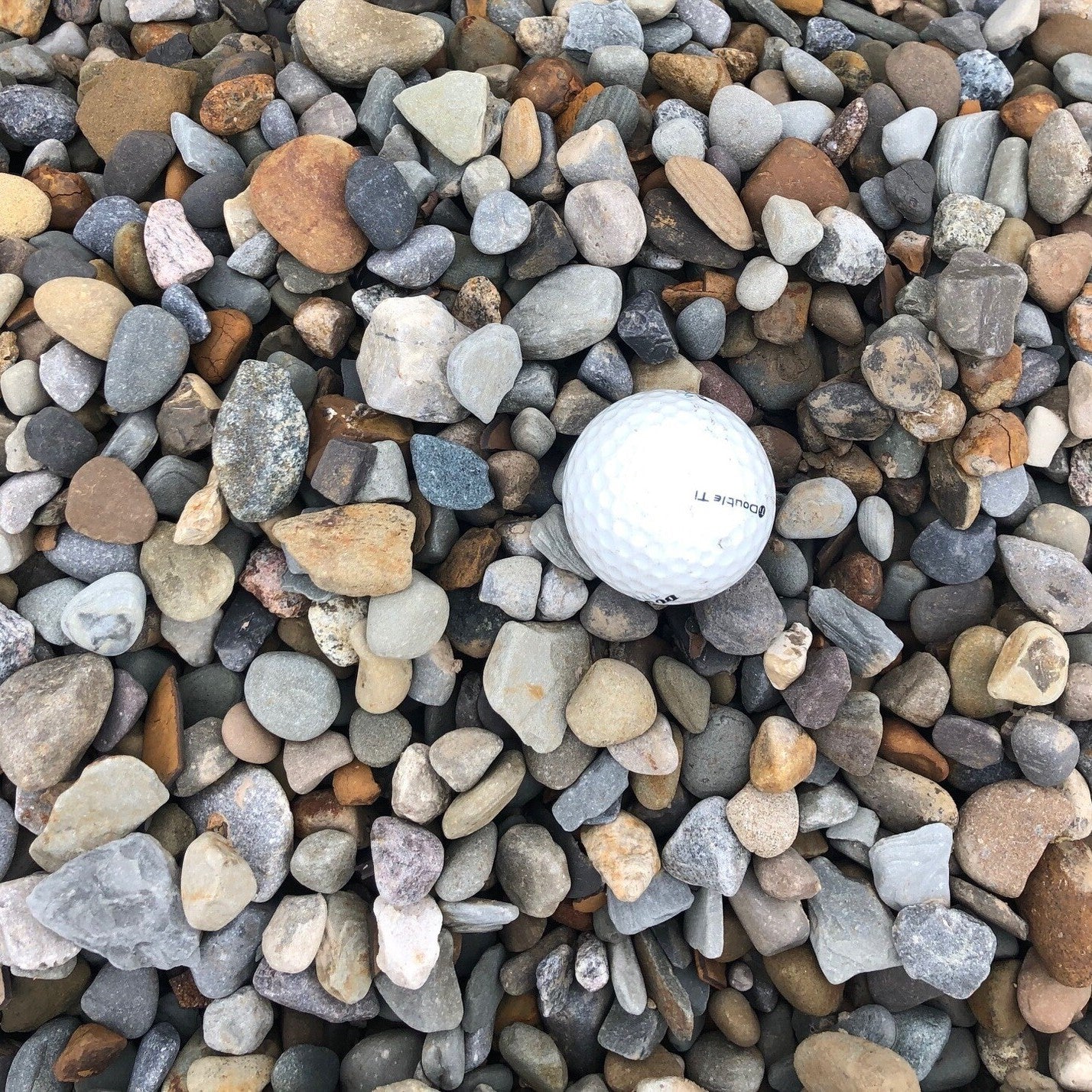
Number 57 crushed stone, angular limestone graded to about three quarters of an inch. The standard driveway, base and drainage gravel, it locks together under traffic and drains fast.
My experience with Mulch Mound was great and super easy. I ordered two yards of screened topsoil and was able to get it delivered within 2 days. They came in my requested time frame (afternoon) and dropped it off where I asked on my driveway. The topsoil was exactly what was a...
Tell us what you're looking for
Thanks! We received your request.
Something went wrong. Please try again.
How Much Material Do I Need?
Use two to three inches of stone for decorative beds and pathways, and four to six inches total for driveways and parking areas built over clay. One ton of crushed stone covers about 80 square feet at three inches deep.
Use our free gravel calculator
What is a Yard?
A yard is approximately 27 cubic feet. As a general guideline, one yard of material can cover an area of about 100-160 square feet at a 2-3 inch depth.
We can't take orders for this right now. Tell us what you need and we'll get back to you.
What do you need?
Thanks! We received your request.
Something went wrong. Please try again.
Hand-picked local yards
4,000+ regional deliveries
Dedicated support
Why order through Mulch Mound
The best local , without the guesswork.
We hand-pick and partner with the best yards in your region, keep only the ones our buyers rate well, and back each load with our guarantee.
Mulch Mound Guarantee
If your isn't the quantity or quality you ordered, we'll make it right.
About this stone
Number 57 crushed stone, angular limestone graded to about three quarters of an inch. The standard driveway, base and drainage gravel, it locks together under traffic and drains fast.
My experience with Mulch Mound was great and super easy. I ordered two yards of screened topsoil and was able to get it delivered within 2 days. They came in my requested time frame (afternoon) and dropped it off where I asked on my driveway. The topsoil was exactly what was a...
How Much Material Do I Need?
Use two to three inches of stone for decorative beds and pathways, and four to six inches total for driveways and parking areas built over clay. One ton of crushed stone covers about 80 square feet at three inches deep.
Use our free gravel calculator
What is a Yard?
A yard is approximately 27 cubic feet. As a general guideline, one yard of material can cover an area of about 100-160 square feet at a 2-3 inch depth.
My experience with Mulch Mound was great and super easy. I ordered two yards of screened topsoil and was able to get it delivered within 2 days. Th...
Read full review
My experience with Mulch Mound was great and super easy. I ordered two yards of screened topsoil and was able to get it delivered within 2 days. They came in my requested time frame (afternoon) and dropped it off where I asked on my driveway. The topsoil was exactly what was advertised, clean with no rocks or other debris. The price was reasonable. I plan to use them again in a couple weeks to order compost for my garden beds.
Measure length by width in feet to get square footage, then multiply by depth in feet and divide by 27 for cubic yards. Multiply cubic yards by roughly 1.4 to convert to tons for most crushed stone. Driveway and pad projects on Chapel Hill clay should include an extra ten percent for the base settling into soft spots.
Complete Your Outdoor Stone Project
Add woven geotextile fabric under any stone laid over clay, and finish with steel or paver edging to keep gravel from spreading into lawn and beds during heavy rain.
Fabric is not optional on Chapel Hill clay. Woven geotextile under a driveway or pad keeps the stone from being pumped down into the subgrade every time a car rolls over wet ground, and it roughly doubles the life of the installation. Buy the heavier woven product for traffic areas rather than the thin nonwoven landscape cloth sold for flower beds, because the two perform very differently under load.
Mulch Mound Pro Tip
Grade before you gravel. Water always wins in a 47 inch rainfall climate, so shape the surface with a slight crown or a consistent one to two percent fall toward a swale before any stone goes down. Gravel spread on a flat or dished area will hold standing water, soften the clay underneath, and develop potholes by the second winter no matter how good the stone was.
Mulch Mound Pro Tip
Stone around your foundation is a smart move in Chapel Hill because it drains fast, discourages termite cover, and does not need annual replacement. Run a two foot band of washed 57 stone over fabric where downspouts discharge, and pitch the grade away from the house. It handles the concentrated flow from a summer thunderstorm far better than mulch, which simply floats away and clogs the drain path.
The Unique Landscape of Chapel Hill
With 47 inches of rain a year moving across Chapel Hill's rolling terrain, water management is the defining landscape problem, and stone is the most durable tool for solving it. Red clay sheds water fast once it crusts, so driveways rut, side yards channel, and downspout outlets carve trenches within a couple of seasons. Crushed gravel, river rock, and drainage stone give that water somewhere to slow down, spread out, and soak in instead of taking your topsoil to Morgan Creek. Stone also solves the maintenance problem in tight spots where mulch simply washes away, like narrow side yards and steep bank plantings. Unlike organic material it does not decompose in our warm humid summers, so a properly installed stone area is a one time investment. For the long gravel drives common on the rural edges of Orange County, it is really the only practical surface.
Frequently Asked Questions
Click a question to see the answer
Answer
What size gravel is best for a Chapel Hill driveway?
A base of crusher run compacted three to four inches thick, topped with two inches of 57 stone, is the standard that holds up here. Crusher run has fines that lock together and bind to the clay, while pure 57 stone alone will migrate and sink into soft red clay within a year or two.
Answer
Will gravel help my soggy backyard?
It helps when installed as part of a French drain or dry well rather than just spread on the surface. Chapel Hill clay does not percolate well, so the stone needs a fabric lined trench and a perforated pipe with somewhere downhill to discharge. Loose gravel laid on wet clay will simply sink into it.
Answer
Why does my gravel keep disappearing into the ground?
That is red clay doing what red clay does. Under load and rain, stone works its way down into soft clay unless there is a separation layer. Lay woven geotextile fabric first, then your stone, and the two stay apart. It is the single biggest difference between gravel that lasts five years and gravel that lasts twenty.
Answer
Does river rock work as mulch around plants?
It works well in narrow side yards, along foundations, and on slopes where hardwood mulch washes out during Piedmont storms. Be aware that stone absorbs summer heat and radiates it, so keep it away from tender perennials and use it around tough evergreens, hollies, and ornamental grasses instead.
Answer
How do I keep weeds out of my stone beds?
Install quality landscape fabric underneath and keep the stone at least three inches deep. Even then, Chapel Hill's long growing season means organic debris collects in the stone and weeds eventually sprout in it. Blowing leaves and pine straw out each fall is the maintenance that keeps stone beds clean.
Answer
How much does a yard of stone weigh, and how do I order?
Most crushed stone runs about 1.4 tons per cubic yard, so stone is usually sold and delivered by the ton. Tell us your square footage and desired depth and we will convert it. A 12 by 30 foot parking pad at four inches deep needs roughly 5.5 tons.
Answer
Can stone fix erosion on my sloped yard?
Yes, and it is common in Chapel Hill where lots pitch toward creeks and street swales. A dry creek bed lined with fabric and filled with mixed river rock catches concentrated runoff and slows it down. Size the channel for a heavy summer thunderstorm, not for average rainfall, because our worst erosion happens in single big events.
Answer
Is crush and run the same as crusher run?
Same product, different name. Crush and run is crushed stone blended with stone dust that compacts hard for driveways and paver bases, but it is not what we deliver in Chapel Hill. Our Crushed Stone #57 has the fines washed out, so it drains freely and handles the area's heavy rain and clay soil better than a tightly packed base would.