




Great service. We ordered topsoil from Mulch Mound and the best experience. Thank you so much!
About this landscape rock
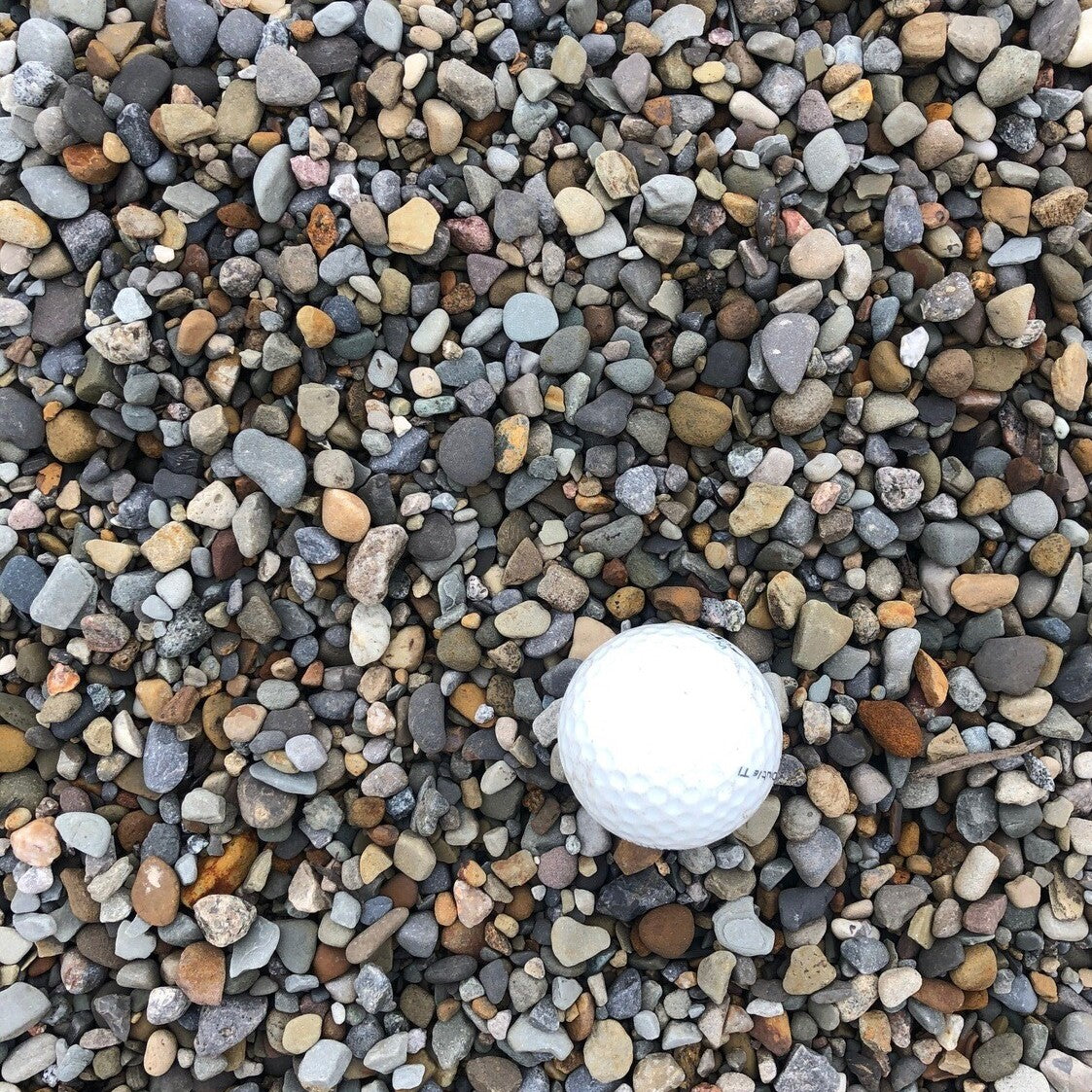
Weathered granite in a fines and chip blend that compacts into a firm natural path surface.
Great service. We ordered topsoil from Mulch Mound and the best experience. Thank you so much!
Tell us what you're looking for
Thanks! We received your request.
Something went wrong. Please try again.
How Much Landscape Rock Do I Need?
How Much Landscape Rock Do I Need?
One cubic yard covers about 162 square feet at a 2 inch depth, or a bit less if you go to 3 inches for better weed and erosion control. Measure your bed's length and width, multiply for square footage, and divide by 162 to get a rough yard count at 2 inches. Most Denver front yard beds run somewhere between 2 and 6 cubic yards, but corner lots and downspout runs can push higher.
Use our free stone calculator
What is a Yard?
What is a Yard?
What is a ton?
What is a ton?
FAQs
FAQs
Denver Landscape Rock Delivery
Denver Landscape Rock Delivery
Regular price
$101.00
per
Yard
Regular price
Sale price
$101.00
Unit price
per
Shipping calculated at checkout.
Minimum of 3 Yard
Couldn't load pickup availability
Not currently available
We can't take orders for this right now. Tell us what you need and we'll get back to you.
Hand-picked local yards
4,000+ regional deliveries
Dedicated support
Why order through Mulch Mound
The best local landscape rock, without the guesswork.
We hand-pick and partner with the best yards in your region, keep only the ones our buyers rate well, and back each load with our guarantee.
Mulch Mound Guarantee
If your landscape rock isn't the quantity or quality you ordered, we'll make it right.
About this landscape rock
Weathered granite in a fines and chip blend that compacts into a firm natural path surface.
Great service. We ordered topsoil from Mulch Mound and the best experience. Thank you so much!
How Much Landscape Rock Do I Need?
How Much Landscape Rock Do I Need?
One cubic yard covers about 162 square feet at a 2 inch depth, or a bit less if you go to 3 inches for better weed and erosion control. Measure your bed's length and width, multiply for square footage, and divide by 162 to get a rough yard count at 2 inches. Most Denver front yard beds run somewhere between 2 and 6 cubic yards, but corner lots and downspout runs can push higher.
Use our free stone calculator
What is a Yard?
What is a Yard?
What is a ton?
What is a ton?
FAQs
FAQs
Tell us what you're looking for
Thanks! We received your request.
Something went wrong. Please try again.
How It Works
Getting started is easy — just follow these simple steps
1
Choose your quantity
Adjust the quantity to match your project. One cubic yard covers about 100 to 160 square feet at a 2 to 3 inch depth.
2
Select your delivery date
Select a delivery date you'd like for the product to be dropped off at your home
3
Sit back and wait
Sit back, wait, and let us work our magic to make sure the highest quality product is delivered to your driveway.

One of the easiest customer service experiences I've had in a long time! Mulch Mound made it so simple. After putting it off for a while, I looked ...
Read full review
One of the easiest customer service experiences I've had in a long time! Mulch Mound made it so simple. After putting it off for a while, I looked at the weather and knew I needed to get to mulching ASAP before the rain came if I didn't want to wait another week. I put my order in for the next day online and they came right at 9 AM. The employee who dropped off the mulch did a great job, putting it right on the tarp I laid out, she even made sure none of it got on the yard and double checked the truck bed to make sure it all came out. The mulch was exactly what I needed and arrived right on time.

We have always spread our own mulch for the past 24 years. This was our first time with the Mulch Mound - things I liked: they have online ordering...
Read full review
We have always spread our own mulch for the past 24 years. This was our first time with the Mulch Mound - things I liked: they have online ordering and provide a digital receipt which means you can remember how much you ordered (I always forget for the next year!), they were on time, they were able to deliver in 48 hours, they were generous with the portion (we got 9 yards and it felt like a FULL nine yards!), the driver was polite! We have ordered from reputable places, and there is always a little trash in the mulch. The mulch we recv'd from Mulch Mound had barely any... we were pleasant surprised!!! Color was great! Not to mention - the price was competitive and LOWER than other mulch places around. We will use again !! Highly recommend! Thanks Mulch Mound!
Complete Your Outdoor Project
Landscape fabric underneath is what actually makes rock a decade long install instead of a weed patch by year two, so budget for it if you do not already have it down. Steel or aluminum edging keeps rock out of the lawn and out of clay soil that likes to shift and heave it toward the grass. Some Denver customers run a mulch bed for their planting beds and rock for the high traffic or foundation zones on the same property.


Service area
Areas we deliver landscape rock in Denver, Colorado
- Berkley, Colorado
- Brighton, Colorado
- Broomfield, Colorado
- Columbine, Colorado
- Commerce City, Colorado
- Dakota Ridge, Colorado
- Englewood, Colorado
- Erie, Colorado
- Federal Heights, Colorado
- Firestone, Colorado
- Four Square Mile, Colorado
- Frederick, Colorado
Mulch Mound Pro Tip
Denver's clay soil expands and contracts hard through our freeze thaw cycles, and that movement will slowly work rock down into bare clay if you skip fabric. Lay a woven landscape fabric first, overlap seams by several inches, and pin it every couple feet. Skipping this step is the number one reason people end up hand picking rock out of mud two years later, especially in beds that catch runoff off the roof.
Mulch Mound Pro Tip
Rock does not decompose or feed your soil, so any plants in a rock bed need to be types that tolerate lean, dry conditions, think yucca, sedum, or ornamental grasses rather than perennials that want organic matter. If you have existing beds with amended soil, keep rock away from those and use it for the foundation strips and downspout zones instead, where drainage matters more than fertility.
Mulch Mound Pro Tip
Because this is a one time install rather than an annual refresh, it is worth spending a little more time getting the depth right the first pass, 2 inches for a lighter look, 3 inches if you want better coverage over fabric seams and better weed suppression. Order the full amount up front, since matching rock color and size on a second, smaller order later can be inconsistent depending on the batch.
Decorative Stone in Denver
Denver's clay soil holds water and swells and cracks with our freeze thaw cycles, which is hard on plants but not on rock. Landscape rock over fabric shrugs off that clay movement and gives you a stable, permanent surface around foundations and downspouts where clay tends to pool water. At 5,280 feet the sun is intense and mulch bleaches and breaks down fast, rock does not fade the same way. It is a common choice for xeriscape style front yards across the metro that are trying to cut down on irrigation.
What Landscape Rock Is
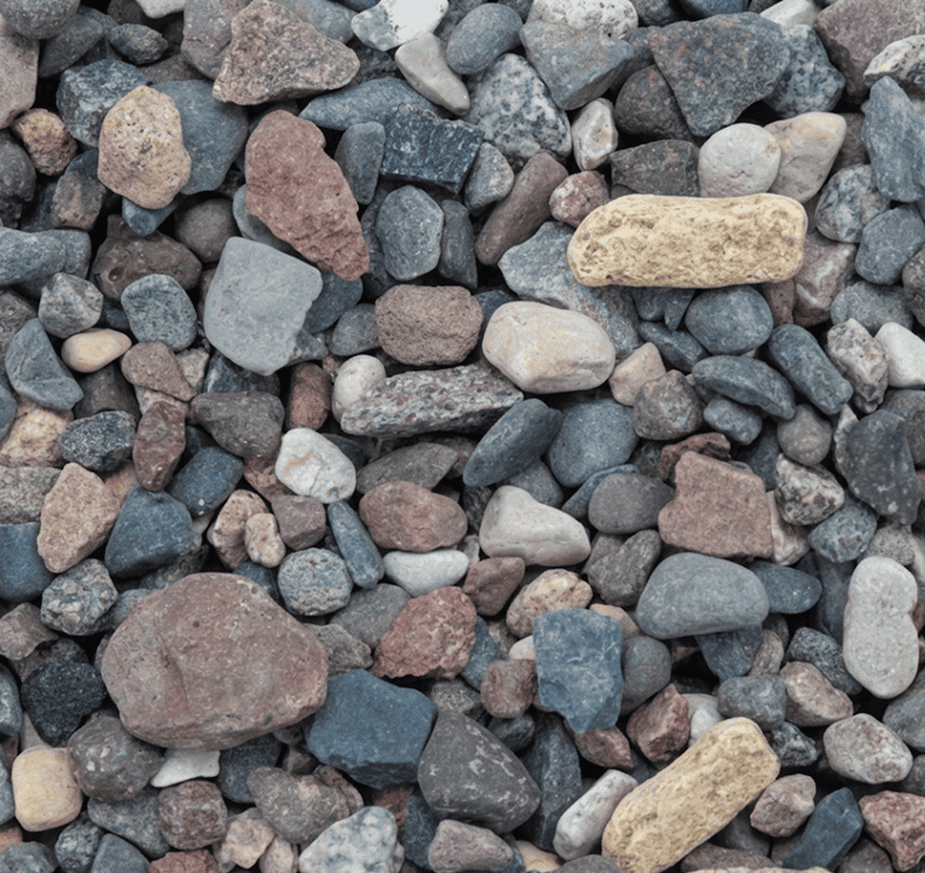
Landscape rock is stone chosen for how it looks as much as what it does. River rock is smooth and rounded, decomposed granite is fine and packs firm underfoot. Both are sold by the cubic yard for beds, borders, paths, and dry creek beds.
River Rock vs Decomposed Granite
River rock stays loose and rolls, so it suits beds, borders, and drainage runs where it can sit in place. Decomposed granite compacts into a firm surface, so it suits paths, patios, and anywhere you will walk or roll a wheelbarrow.
Depth and Coverage
Spread river rock 2 to 3 inches deep over landscape fabric so it stays put and weeds stay down. Lay decomposed granite 3 to 4 inches deep, wet it, and compact it in lifts for a surface that sheds water instead of rutting.