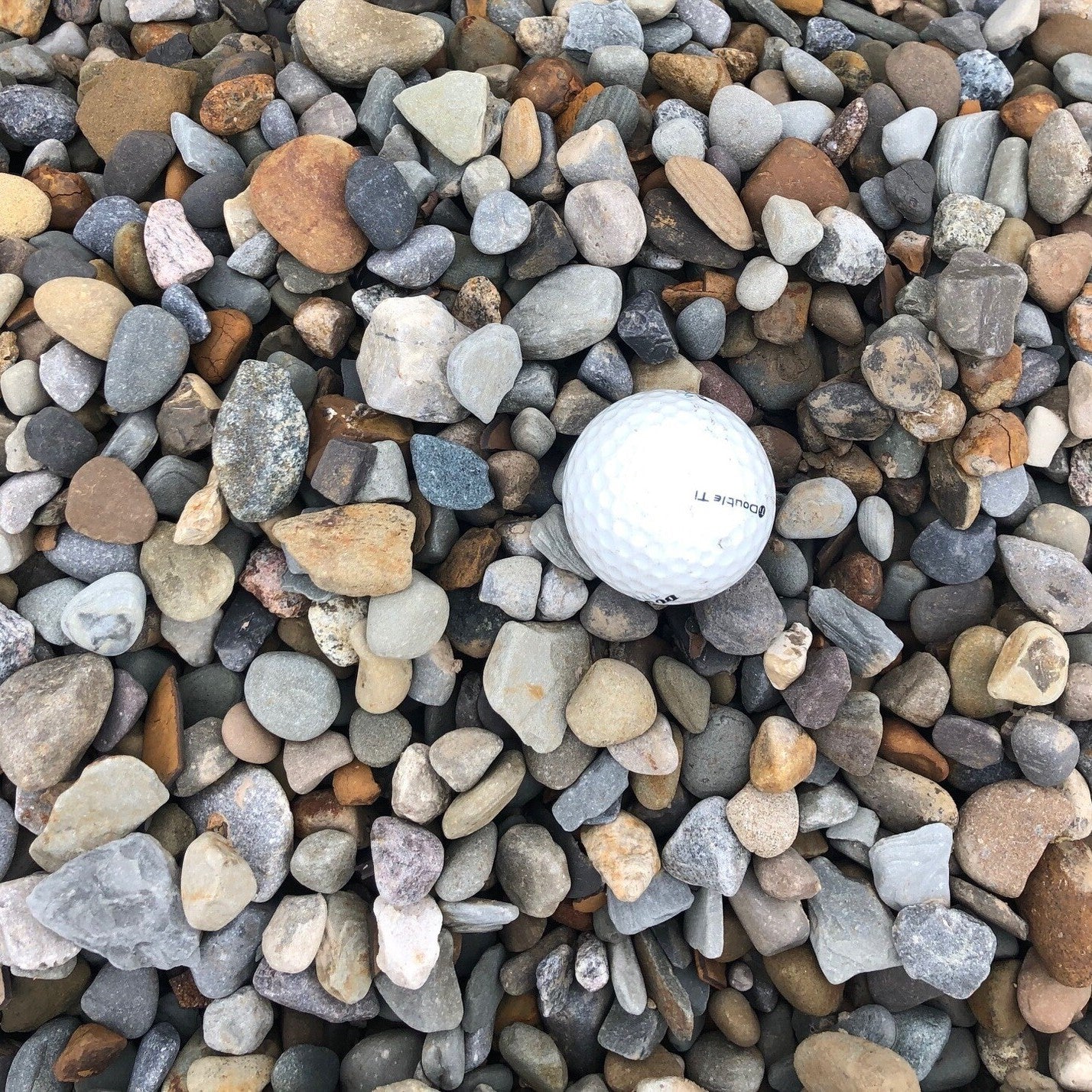
Number 57 crushed stone, angular limestone graded to about three quarters of an inch. The standard driveway, base and drainage gravel, it locks together under traffic and drains fast.
I used Mulch Mound to have 3 cubic yards of garden soil delivered. The process was easy and I love that I didn't have to call anyone. I placed my order online, picked my delivery date, laid out my tarp and the dirt was delivered. My delivery had to be pushed back, but I was ke...
Tell us what you're looking for
Thanks! We received your request.
Something went wrong. Please try again.
How Much Material Do I Need?
For decorative ground coverage in Fairfield planting beds, 2 inches of stone depth provides attractive coverage and adequate weed suppression when placed over a barrier. For pathway and lawn replacement applications, 3 to 4 inches gives the depth needed to stay stable and look full as the material settles over time.
Use our free gravel calculator
What is a Yard?
A yard is approximately 27 cubic feet. As a general guideline, one yard of material can cover an area of about 100-160 square feet at a 2-3 inch depth.
We can't take orders for this right now. Tell us what you need and we'll get back to you.
What do you need?
Thanks! We received your request.
Something went wrong. Please try again.
Hand-picked local yards
4,000+ regional deliveries
Dedicated support
Why order through Mulch Mound
The best local , without the guesswork.
We hand-pick and partner with the best yards in your region, keep only the ones our buyers rate well, and back each load with our guarantee.
Mulch Mound Guarantee
If your isn't the quantity or quality you ordered, we'll make it right.
About this stone
Number 57 crushed stone, angular limestone graded to about three quarters of an inch. The standard driveway, base and drainage gravel, it locks together under traffic and drains fast.
I used Mulch Mound to have 3 cubic yards of garden soil delivered. The process was easy and I love that I didn't have to call anyone. I placed my order online, picked my delivery date, laid out my tarp and the dirt was delivered. My delivery had to be pushed back, but I was ke...
How Much Material Do I Need?
For decorative ground coverage in Fairfield planting beds, 2 inches of stone depth provides attractive coverage and adequate weed suppression when placed over a barrier. For pathway and lawn replacement applications, 3 to 4 inches gives the depth needed to stay stable and look full as the material settles over time.
Use our free gravel calculator
What is a Yard?
A yard is approximately 27 cubic feet. As a general guideline, one yard of material can cover an area of about 100-160 square feet at a 2-3 inch depth.
I used Mulch Mound to have 3 cubic yards of garden soil delivered. The process was easy and I love that I didn't have to call anyone. I placed my o...
Read full review
I used Mulch Mound to have 3 cubic yards of garden soil delivered. The process was easy and I love that I didn't have to call anyone. I placed my order online, picked my delivery date, laid out my tarp and the dirt was delivered. My delivery had to be pushed back, but I was kept informed via text, which was great. So why not 5 stars? The description of garden soil on the website is "A balanced mix of topsoil and organic amendments ready for raised beds, flower gardens, and new planting areas. Good drainage, solid nutrients, easy to work with." What I got was more like fill dirt. It had a lot of gravel, a lot of clay, and random trash mixed in. I didn't test the soil to see if it actually had "amendments" because I already have compost and alpaca manure ready to add, but if I'd known the quality of the dirt was going to be the same as the bagged dirt I bought last year, I probably would have gotten 2 yards of top soil and a yard of leaf compost for better quality, especially since the leaf compost is cheaper. Photo of my mountain of dirt and just some of the trash I found in it.
To figure out how much stone you need, measure the length and width of your project area in feet and multiply them to get total square footage. Then decide on your depth, typically 2 inches for decorative coverage or 3 to 4 inches for a lawn replacement, and use our calculator to convert those numbers into cubic yards. Stone is heavier than mulch per cubic yard, so accurate measurements before ordering save you from over-ordering and managing excess heavy material on your property.
Complete Your Outdoor Stone Project
Combining decorative stone with drought-tolerant plants and a drip irrigation system creates a complete water-wise landscape that suits Fairfield's dry summers beautifully. Adding steel or aluminum landscape edging around your stone areas keeps gravel from migrating into lawn edges or garden beds and gives the finished project a clean, defined border.
Fairfield's rainy season arrives abruptly in November and the first storms of the year can be surprisingly heavy after months of no rainfall. If you are planning a stone installation for your yard, aim to complete the project by late October so the base layer has time to compact and settle before the wet season begins. Stone installed on a freshly graded clay base that has not had time to settle can shift during the first heavy rain, creating uneven spots and ruts that are frustrating to fix once the project is complete.
Mulch Mound Pro Tip
One underappreciated benefit of stone mulch in Fairfield is its effectiveness at reducing soil splash during winter rain events. When rain hits bare clay soil or even organic mulch, it kicks up a spray of soil particles that land on plant stems and lower leaves, creating conditions where fungal disease can develop during Fairfield's cool, moist winter months. A 2 to 3 inch layer of gravel or river rock around shrubs and perennials absorbs rain impact at the surface and keeps that splash from reaching the lower plant canopy, which results in healthier plants with fewer disease issues.
Mulch Mound Pro Tip
Decomposed granite is Fairfield's most popular stone product for good reason but it performs very differently depending on whether you choose stabilized or non-stabilized versions. Stabilized decomposed granite contains a binding agent that helps it pack into a firm surface that resists erosion from Fairfield's winter rains and the Delta breezes that can blow loose material around in spring. Non-stabilized DG is softer and shifts more easily, which is better for planting beds where you want some permeability but less ideal for pathways or driveway aprons where you want a firm walking surface.
The Unique Landscape of Fairfield
Decorative stone and gravel are increasingly popular in Fairfield landscapes as homeowners look for ways to reduce water use while maintaining attractive, low-maintenance yards. With only 21 inches of annual rainfall and long dry summers, traditional grass lawns in Fairfield require substantial irrigation that many property owners are moving away from in favor of drought-tolerant hardscaping. Stone provides permanent ground coverage that never needs watering, replacing, or seasonal replanting, which suits Fairfield's water-conscious Zone 9b gardening culture well. Fairfield's clay soil presents a specific challenge for stone installation because clay expands when wet and contracts when dry, which can shift and sink poorly prepared stone surfaces over time. Proper base preparation with compacted gravel and a weed barrier is especially important in Fairfield's seasonal wet-dry cycle to keep stone paths, patios, and mulched areas looking clean and level year after year.
Frequently Asked Questions
Click a question to see the answer
Answer
What type of gravel or stone works best as a lawn replacement in Fairfield?
Decomposed granite is the most popular lawn replacement material in Fairfield and throughout Solano County. It compacts into a firm, walkable surface that looks natural, drains reasonably well even over clay, and holds its color through the intense summer heat. For a cleaner, more designed look, crushed basalt or river cobble in the 1 to 3 inch size range works well in combination with drought-tolerant plants. Always install a quality woven weed barrier beneath any stone lawn replacement in Fairfield because the soil is fertile enough to push weeds up aggressively through gravel if there is no barrier in place.
Answer
Will gravel and stone still have weed problems in Fairfield?
Yes, weeds are a real concern with stone installations in Fairfield even when a weed barrier is used. Fairfield's clay soil is nutrient-rich and combined with winter rains, seeds blow in from surrounding areas and germinate in the thin layer of organic debris that accumulates on top of gravel over time. A properly installed barrier beneath the stone dramatically reduces root penetration from below, but surface weed seeds will still germinate on top of your gravel. Plan to do a quick hand-weeding or spot spray session once in spring and once in fall to keep stone areas clean through Fairfield's weed seasons.
Answer
Can I use stone to build a dry creek bed in my Fairfield yard to handle winter runoff?
Dry creek beds are an excellent solution for Fairfield properties that collect runoff during the rainy season between November and March. Because Fairfield's clay soil absorbs water slowly, even a moderate rain event can generate surface runoff that pools along fences or foundation lines. A well-designed dry creek bed using river rock in the 3 to 6 inch size range can channel that water across the yard to a lower drainage point or a permeable area where it can slowly infiltrate. The rock must be sized large enough that it does not wash away in a strong flow, so larger cobble is better than pea gravel for functional drainage channels.
Answer
How do I keep my stone pathway from sinking into Fairfield's clay soil over time?
Clay soil movement is the main reason stone pathways shift and sink in Fairfield, and the solution is a proper compacted base layer installed before the decorative stone goes down. Excavate at least 4 inches below your finished grade level, fill with class 2 road base or crushed aggregate, and compact it with a plate compactor before adding your surface stone. The compacted base creates a stable platform that resists the swelling and shrinking of the clay beneath it. Skipping this step is the most common reason homeowners end up with uneven, sunken stone paths after their first winter rainy season.
Answer
What size gravel should I use around my Fairfield home's foundation to improve drainage?
For foundation drainage in Fairfield, a 3 to 4 inch layer of washed drain rock in the 3/4 inch to 1.5 inch size range is the standard recommendation. This size is large enough to allow water to move freely through the stone layer rather than holding moisture against the foundation, which is important in Fairfield's wet winters. Avoid pea gravel right against the foundation because it can compact over clay and actually impede drainage rather than improve it. Keep any stone pulled back slightly from wood trim or siding to maintain airflow and reduce pest harborage.
Answer
How much stone do I need to replace my Fairfield front lawn with gravel?
For a typical Fairfield front lawn replacement, plan on 2 to 3 inches of decomposed granite or gravel depth over a weed barrier. A 400 square foot front yard area at 3 inches of depth requires approximately 3.7 cubic yards of material. It is always wise to order about 10 percent more than your calculation suggests because stone settles into low spots and you will want extra to top up the surface evenly. Measure your lawn area carefully and use our calculator to get an accurate estimate before finalizing your order.
Answer
Is lighter or darker stone better for Fairfield's hot summers?
Stone color makes a meaningful difference in Fairfield's summer heat because dark stones like black lava rock or dark basalt absorb significantly more solar radiation and can become uncomfortably hot to walk on in bare feet during July and August. Lighter colored stones like tan decomposed granite, cream river rock, or buff limestone reflect more heat and stay cooler underfoot. Near patios, play areas, or anywhere people walk frequently in summer, a lighter stone is the more comfortable choice. Dark stone works well in contained planting beds where heat retention can actually benefit heat-loving plants like lavender, rosemary, or desert willow.
Answer
Is there a stone yard near Fairfield?
With just 21 inches of rain a year and long dry summers, Fairfield yards do well with a firm Crushed Stone base that needs no watering. Mulch Mound brings it right to your driveway by the cubic yard, so you can skip the drive to a stone yard or any other quarry.