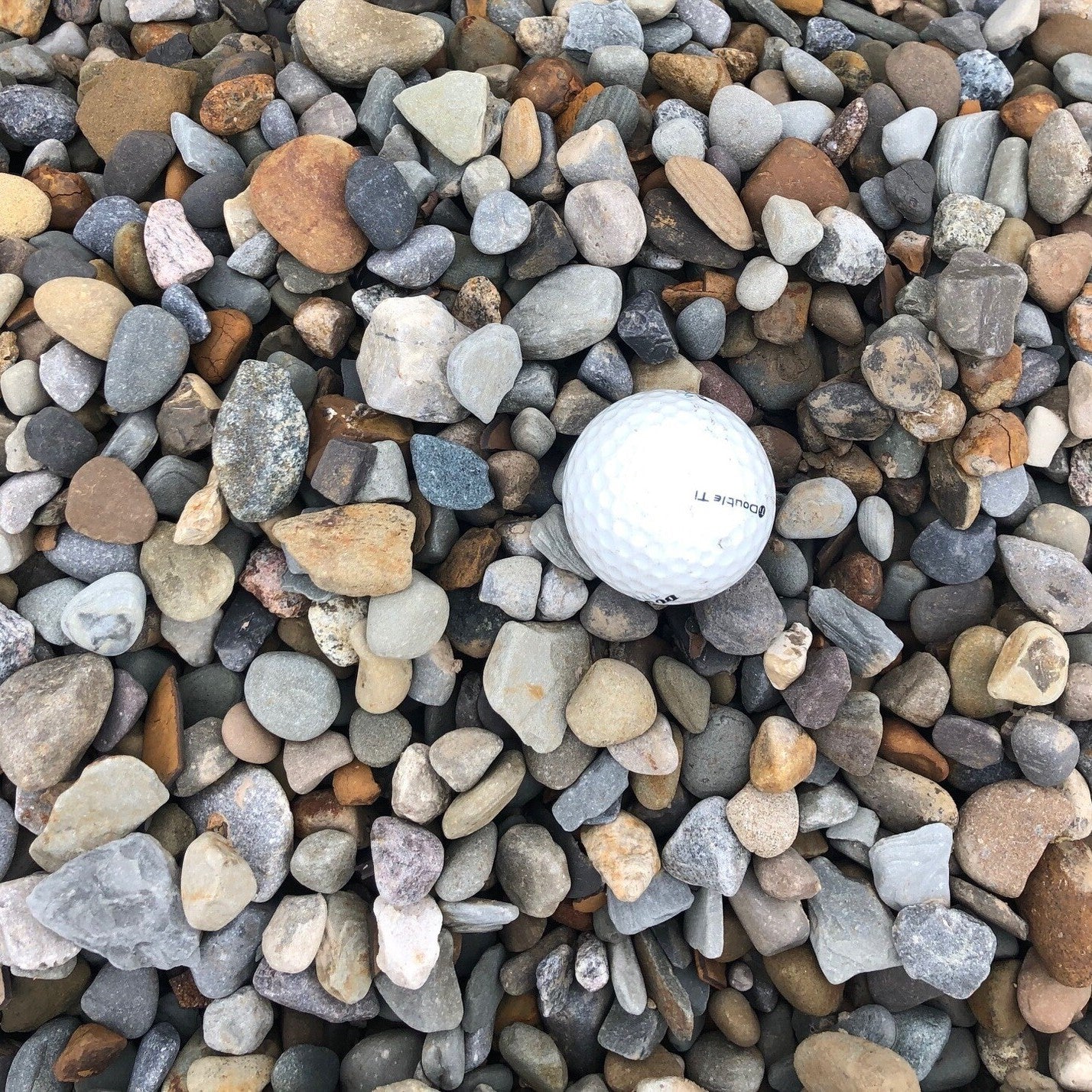
Number 57 crushed stone, angular limestone graded to about three quarters of an inch. The standard driveway, base and drainage gravel, it locks together under traffic and drains fast.
Mulch Mound delivered a yard of pea gravel to us. Delivery was on time, driver was friendly and hit a bullseye on the “tarp target”. We used the pea gravel (which was diameter as specified) to fill several muskrat holes around our pond. I would definitely recommend Mulch Mo...
Tell us what you're looking for
Thanks! We received your request.
Something went wrong. Please try again.
How Much Material Do I Need?
Decorative stone beds and borders in Garland generally perform well at 3 inches of depth, which is enough to suppress weeds, cover landscape fabric, and create a finished look that holds through rain. Drainage features and high-traffic pathways benefit from a full 4 inches to maintain function and structure over time.
Use our free gravel calculator
What is a Yard?
A yard is approximately 27 cubic feet. As a general guideline, one yard of material can cover an area of about 100-160 square feet at a 2-3 inch depth.
We can't take orders for this right now. Tell us what you need and we'll get back to you.
What do you need?
Thanks! We received your request.
Something went wrong. Please try again.
Hand-picked local yards
4,000+ regional deliveries
Dedicated support
Why order through Mulch Mound
The best local , without the guesswork.
We hand-pick and partner with the best yards in your region, keep only the ones our buyers rate well, and back each load with our guarantee.
Mulch Mound Guarantee
If your isn't the quantity or quality you ordered, we'll make it right.
About this stone
Number 57 crushed stone, angular limestone graded to about three quarters of an inch. The standard driveway, base and drainage gravel, it locks together under traffic and drains fast.
Mulch Mound delivered a yard of pea gravel to us. Delivery was on time, driver was friendly and hit a bullseye on the “tarp target”. We used the pea gravel (which was diameter as specified) to fill several muskrat holes around our pond. I would definitely recommend Mulch Mo...
How Much Material Do I Need?
Decorative stone beds and borders in Garland generally perform well at 3 inches of depth, which is enough to suppress weeds, cover landscape fabric, and create a finished look that holds through rain. Drainage features and high-traffic pathways benefit from a full 4 inches to maintain function and structure over time.
Use our free gravel calculator
What is a Yard?
A yard is approximately 27 cubic feet. As a general guideline, one yard of material can cover an area of about 100-160 square feet at a 2-3 inch depth.
Mulch Mound delivered a yard of pea gravel to us. Delivery was on time, driver was friendly and hit a bullseye on the “tarp target”. We used the ...
Read full review
Mulch Mound delivered a yard of pea gravel to us. Delivery was on time, driver was friendly and hit a bullseye on the “tarp target”. We used the pea gravel (which was diameter as specified) to fill several muskrat holes around our pond. I would definitely recommend Mulch Mound to a friend!
Measure your stone project area in feet and multiply length by width to get square footage. Then decide on your depth, typically 3 inches for decorative areas and 4 inches for pathways and drainage features. Divide the square footage by 100 to estimate cubic yards needed for a 3-inch depth, or divide by 81 for a 4-inch depth. Sketching out your project on paper before measuring helps you catch irregular corners and curves that are easy to underestimate.
Complete Your Outdoor Stone Project
Stone borders and gravel beds look even better and last longer when the surrounding planting beds are finished with quality mulch that ties the design together. Pairing a bulk stone delivery with a mulch order for adjacent beds is a common approach among Garland homeowners doing a full front yard refresh in one project.
Before spreading any bulk stone in your Garland yard, take the time to install a quality woven landscape fabric underneath. Garland's Blackland Clay has a remarkable ability to slowly swallow fine gravel over time as the soil expands and contracts through wet and dry cycles. Without a fabric barrier, you will find yourself adding stone every couple of years just to maintain the same depth. A good fabric layer extends the life of your stone installation significantly and keeps weed pressure manageable.
Mulch Mound Pro Tip
Garland summers push surface temperatures on dark stone to extreme levels, sometimes exceeding 140 degrees Fahrenheit on a July afternoon in full sun. If you are using stone in an area where pets or children play, choose lighter-colored options like crushed limestone or light tan pea gravel rather than dark lava rock or black polished stone. Lighter stone reflects more solar radiation and stays meaningfully cooler, which matters a great deal in a city that regularly sees 100-degree days from June through August.
Mulch Mound Pro Tip
When using stone to edge planting beds in Garland, set the edging stones slightly below the finished grade of the lawn on the grass side. This small detail means your lawnmower can pass over the edge of the stone without hitting it, which protects both your equipment and the stone border itself. It also creates a clean visual line between the stone bed and the lawn that looks intentional and finished rather than like the stones simply ended up at the edge of the grass.
The Unique Landscape of Garland
Stone and gravel are some of the most practical landscaping materials available for Garland properties precisely because of the challenges our climate creates for traditional plant-based ground covers. With 40 inches of annual rainfall hitting hard clay soil, bare soil areas erode and develop ruts quickly, and grass struggles in the dry shade under large trees that are common in established Garland neighborhoods. Decomposed granite pathways, river rock drainage swales, and crushed limestone borders all solve real problems that Garland homeowners face every year. Stone does not break down in the heat, does not require seasonal refreshing the way organic mulch does, and holds its position during the kind of heavy storms that wash lightweight materials across yards and into the street. At 551 feet of elevation on gently rolling terrain, many Garland lots have natural slope that benefits from stone used to define drainage paths and stabilize hillside beds. The long growing season also means any bare soil in your landscape is exposed to intense heat for many months, and stone coverage reflects and manages that heat in ways that complement your planting design.
Frequently Asked Questions
Click a question to see the answer
Answer
What kind of stone works best for a drainage swale in my Garland backyard?
River rock in the 2 to 4 inch size range is the go-to choice for drainage swales in Garland. The rounded stones allow water to move through quickly without compacting, and they stay in place during heavy storm events better than smaller gravel. Garland's Blackland Clay sheds water fast when it is saturated, so a well-lined swale with river rock can move a significant volume of runoff safely away from your foundation and toward a street or drainage outlet. Lining the swale with landscape fabric before placing the rock helps keep clay from migrating up into the stone layer over time.
Answer
Will decomposed granite wash away during Garland's heavy spring rainstorms?
Decomposed granite can shift on sloped surfaces during very heavy rain if it is not properly stabilized. For flat to gently sloped areas in Garland, standard decomposed granite performs well as a pathway material and holds up through most storms. If your path or patio area has any notable slope, consider stabilized decomposed granite, which uses a binding agent to keep the material from migrating. Edging around the perimeter of any DG installation is also important to keep the material contained during the heavy rain events that hit Garland every spring.
Answer
I want to replace my side yard grass with gravel because nothing grows there. What do you recommend for Garland?
Pea gravel or crushed granite are both excellent choices for that kind of side yard conversion in Garland. Pea gravel is comfortable underfoot, drains well, and stays cooler than larger stones in full sun. Crushed granite packs down nicely and creates a neater, more finished look if the area gets foot traffic. In either case, install a good quality landscape fabric under the stone to keep Garland's clay from gradually absorbing the gravel upward, which is a real phenomenon with heavy clay soils and fine stone over time.
Answer
How deep does gravel need to be for a proper pathway in my Garland yard?
For a functional and attractive pathway in Garland, 3 to 4 inches of gravel depth is the right target. Less than 2 inches tends to get displaced quickly from foot traffic and from the shifting that Garland's clay soil does as it expands and contracts through wet and dry cycles. Setting a solid edging material like metal or plastic landscape edging before you fill the path keeps the gravel contained and maintains a clean line between the pathway and adjacent planting beds. This small upfront step makes a big difference in how good the path looks a year after installation.
Answer
Is limestone gravel a good fit for Garland, or will it affect my soil pH in a bad way?
Garland's Blackland Clay is already naturally alkaline, so limestone gravel used as a decorative border or pathway material is not going to cause the kind of pH problem it might in a more acidic soil region. The small amount of calcium carbonate that leaches from limestone over time actually matches the existing mineral profile of Garland's native soil quite well. Where you want to be careful is if you are growing acid-loving plants like azaleas immediately adjacent to a limestone border, since any additional alkalinity in that spot could stress those particular plants.
Answer
Can I use river rock to help fix the area where water pools near my Garland foundation?
River rock can be part of the solution for foundation drainage issues in Garland, but it works best as part of a properly graded system rather than as a standalone fix. The goal is to get the grade sloping away from your foundation at about an inch per foot for the first 6 to 10 feet. Once the grade is right, a river rock border or dry creek bed can carry that water elegantly away from the structure. If the pooling is caused by a true low spot with no outlet, you may need a drain line before the rock will be effective.
Answer
How many cubic yards of stone do I need to cover a 10x20 foot area?
A 10 by 20 foot area, which is 200 square feet, covered to a 3-inch depth requires approximately 1.85 cubic yards of stone. If you are planning a 4-inch depth for better stability and weed suppression, you will need about 2.5 cubic yards. Our calculator on this page lets you plug in your exact dimensions and chosen depth so you can order precisely what you need. Ordering a small buffer of 10 percent above your calculated amount is always a good idea for stone projects since you will inevitably need to adjust depths in spots.
Answer
Is crush and run the same as crusher run?
Crush and run refers to crushed stone blended with stone dust, which compacts tight for driveway and paver base work. For Garland properties dealing with heavy clay and drainage issues, our Crushed Stone #57 is a better choice since it drains freely without the fines that crush and run relies on for compaction.
Answer
Is there a stone yard near Garland?
Filling a rutted, eroded patch under a big shade tree usually means hauling crushed stone home from a stone yard yourself, or having it delivered straight to the spot instead. Mulch Mound is not a rock yard, so there is no trip to make. You order Limestone online by the cubic yard and we drop it where you want it in Garland.