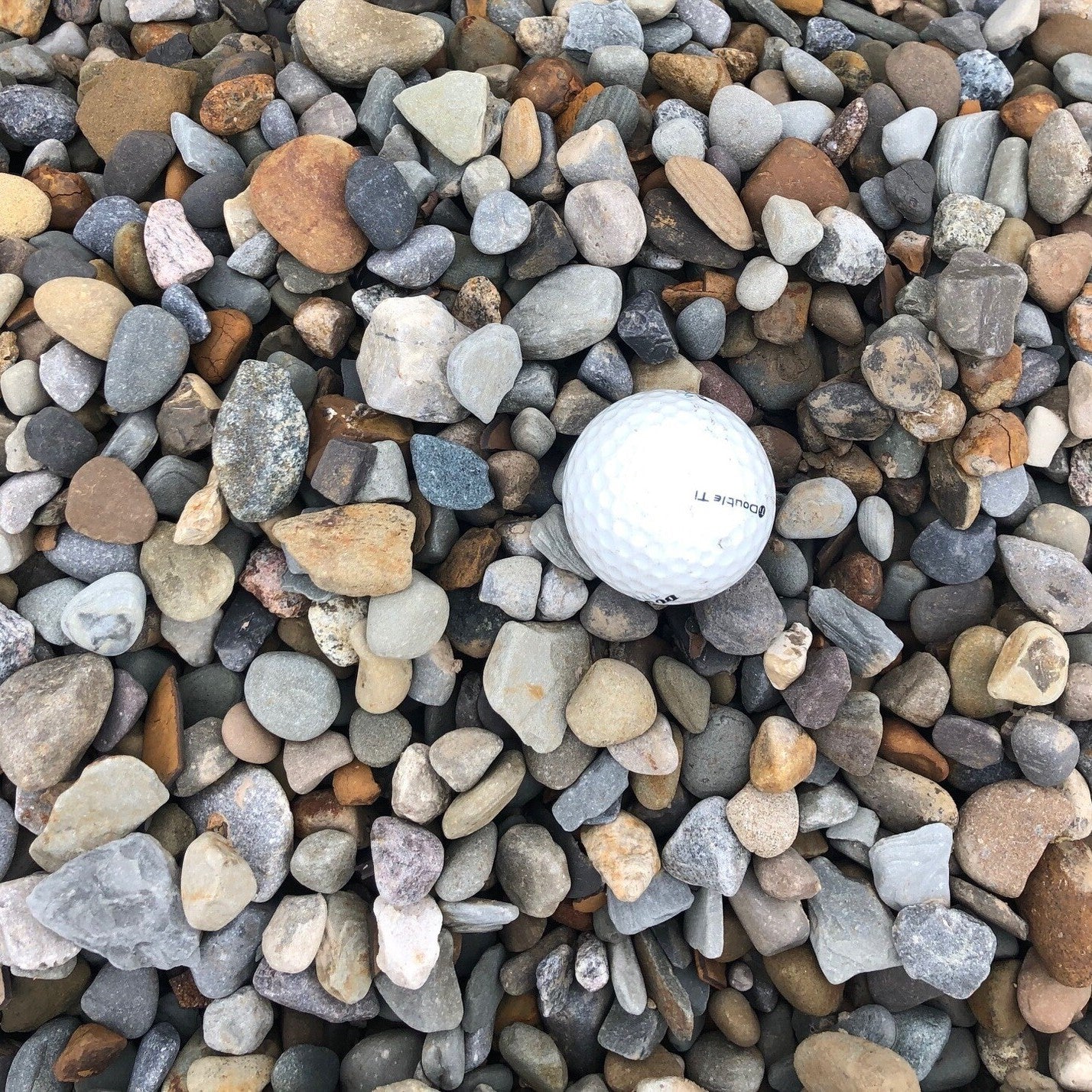
Number 57 crushed stone, angular limestone graded to about three quarters of an inch. The standard driveway, base and drainage gravel, it locks together under traffic and drains fast.
Mulch Mound delivered a yard of pea gravel to us. Delivery was on time, driver was friendly and hit a bullseye on the “tarp target”. We used the pea gravel (which was diameter as specified) to fill several muskrat holes around our pond. I would definitely recommend Mulch Mo...
Tell us what you're looking for
Thanks! We received your request.
Something went wrong. Please try again.
How Much Material Do I Need?
For most decorative stone applications in Hattiesburg landscape beds, plan on 2 to 3 inches of depth to achieve good ground coverage and meaningful weed suppression under your fabric liner. Drainage applications like dry creek beds or channel lining typically benefit from a deeper 4 to 6 inch fill to handle the water volumes that heavy South Mississippi rain events push through.
Use our free gravel calculator
What is a Yard?
A yard is approximately 27 cubic feet. As a general guideline, one yard of material can cover an area of about 100-160 square feet at a 2-3 inch depth.
We can't take orders for this right now. Tell us what you need and we'll get back to you.
What do you need?
Thanks! We received your request.
Something went wrong. Please try again.
Hand-picked local yards
4,000+ regional deliveries
Dedicated support
Why order through Mulch Mound
The best local , without the guesswork.
We hand-pick and partner with the best yards in your region, keep only the ones our buyers rate well, and back each load with our guarantee.
Mulch Mound Guarantee
If your isn't the quantity or quality you ordered, we'll make it right.
About this stone
Number 57 crushed stone, angular limestone graded to about three quarters of an inch. The standard driveway, base and drainage gravel, it locks together under traffic and drains fast.
Mulch Mound delivered a yard of pea gravel to us. Delivery was on time, driver was friendly and hit a bullseye on the “tarp target”. We used the pea gravel (which was diameter as specified) to fill several muskrat holes around our pond. I would definitely recommend Mulch Mo...
How Much Material Do I Need?
For most decorative stone applications in Hattiesburg landscape beds, plan on 2 to 3 inches of depth to achieve good ground coverage and meaningful weed suppression under your fabric liner. Drainage applications like dry creek beds or channel lining typically benefit from a deeper 4 to 6 inch fill to handle the water volumes that heavy South Mississippi rain events push through.
Use our free gravel calculator
What is a Yard?
A yard is approximately 27 cubic feet. As a general guideline, one yard of material can cover an area of about 100-160 square feet at a 2-3 inch depth.
Mulch Mound delivered a yard of pea gravel to us. Delivery was on time, driver was friendly and hit a bullseye on the “tarp target”. We used the ...
Read full review
Mulch Mound delivered a yard of pea gravel to us. Delivery was on time, driver was friendly and hit a bullseye on the “tarp target”. We used the pea gravel (which was diameter as specified) to fill several muskrat holes around our pond. I would definitely recommend Mulch Mound to a friend!
Measure the length and width of each stone area in feet and multiply them to get square footage, then decide on your desired depth. For decorative beds, 2 inches is a minimum and 3 inches provides better weed suppression and a fuller visual effect. Divide your total square footage by 162 for a 2-inch depth or by 108 for a 3-inch depth to calculate cubic yards, and add 10 percent extra to account for settling and edge areas that are easy to underestimate.
Complete Your Outdoor Stone Project
Installing landscape fabric before your stone delivery protects your investment by keeping stone from sinking into Hattiesburg's sandy loam soil and dramatically reduces weed breakthrough. If you are edging your stone beds with a defined border, consider pairing your stone order with a delivery of larger fieldstone or landscape timbers to create a clean separation from your lawn areas.
If you are using stone in a sloped area of your Hattiesburg yard, take extra time to plan water flow before you spread it. Stone can redirect water in unexpected ways, and with 60 inches of annual rainfall moving across your property, a poorly placed stone feature can concentrate runoff toward your foundation or neighbor's yard. Grading the underlying soil slightly toward your intended drainage path before laying fabric and stone gives every rain event somewhere productive to go.
Mulch Mound Pro Tip
For homeowners building a decorative stone bed around a tree or large shrub, avoid piling stone up against the trunk or main stem. In Hattiesburg's humid climate, moisture trapped between stone and bark creates an environment where fungal disease and rot develop more quickly than in drier regions. Keeping stone pulled back 4 to 6 inches from the base of any woody plant gives that critical trunk area the air circulation it needs while still achieving the clean, finished look that stone provides.
Mulch Mound Pro Tip
Consider the long-term weed picture when choosing your stone size for a Hattiesburg landscape bed. Smaller stones like pea gravel have more surface area between particles where windblown soil and organic debris can settle, creating a seedbed for weeds right on top of your fabric. Larger river rock stays cleaner longer because debris is less likely to accumulate in the wider gaps. For low-maintenance results in a climate that grows things as aggressively as zone 8b does, going slightly larger with your stone choice is usually worth it.
The Unique Landscape of Hattiesburg
Landscape stone serves both functional and aesthetic roles in Hattiesburg yards, and the local climate makes those functional benefits especially important. With 60 inches of annual rainfall, Hattiesburg homeowners frequently deal with erosion along beds, bare soil washing across walkways, and drainage channels that need stabilization. River rock, gravel, and decorative stone provide a permanent solution that does not break down in the heat and humidity the way organic materials do. Stone is also a smart choice for areas under pine trees or along driveways where mulch tends to scatter and dark organic material creates a maintenance headache. In growing zone 8b where landscapes are actively used for most of the year, stone creates clean, low-maintenance definition that holds up through both the wet spring season and the dry summer stretches.
Frequently Asked Questions
Click a question to see the answer
Answer
What kind of stone works best for a drainage channel in my Hattiesburg backyard?
River rock in the 2 to 4 inch size range is a strong choice for drainage channels and dry creek beds in Hattiesburg yards. Its smooth, rounded surface allows water to flow freely around and between the stones during heavy rain events rather than trapping debris and clogging. The rounded shape also means it stays in place better than angular crushed stone when fast-moving water from a summer downpour passes through. Lining a natural drainage path with river rock is one of the most durable and low-maintenance solutions for the heavy rain volume Hattiesburg yards see each year.
Answer
Can I use gravel under my pine trees instead of mulch to cut down on yard work?
You can, and many Hattiesburg homeowners make this switch under large pine trees where mulch tends to blow around and collect pine needles that make the bed look messy. A layer of landscape fabric topped with a 2 to 3 inch layer of pea gravel or small river rock creates a clean, low-maintenance area that does not need annual refreshing. Keep in mind that gravel does not improve the soil the way organic mulch does, so if the pine tree is showing signs of stress it may benefit more from the soil enrichment that decomposing mulch provides.
Answer
My driveway edges keep washing out when it rains. What stone size should I use to stabilize them?
For driveway edge stabilization in Hattiesburg, a medium crushed granite or #57 limestone gravel works well because the angular edges interlock and resist movement better than smooth river rock when water flows across them. Placing a 4 to 6 inch deep band of this material along the edge of your driveway creates a stable transition zone that absorbs the impact of water running off the paved surface without eroding into the lawn. This is a very common fix in neighborhoods throughout the Hattiesburg area where heavy rain regularly undercuts driveway edges.
Answer
How do I keep decorative stone from sinking into my sandy soil over time?
Sandy loam soil in Hattiesburg is especially prone to causing stone to gradually sink because the loose particle structure gives way under the weight of the stone and the constant movement of rainwater through the profile. The most reliable solution is to install a quality landscape fabric barrier between the soil and the stone layer before you spread your gravel or river rock. The fabric stabilizes the surface, keeps stone from migrating downward, and also significantly reduces the weed pressure that bare soil under decorative stone would otherwise create.
Answer
What is the difference between river rock and pea gravel and which one looks better in a Hattiesburg landscape?
River rock is larger, typically ranging from 1 inch to 4 inches or more, with smooth rounded surfaces and natural color variation that comes from its origin in streambeds. Pea gravel is smaller, usually around 3/8 of an inch, and has a similar smooth texture but a more uniform look. In Hattiesburg landscapes, river rock tends to read as more intentional and designed, making it popular for decorative beds, water features, and areas around pools or patios. Pea gravel is a practical and affordable choice for dog runs, playground areas, and utility paths where foot traffic is frequent.
Answer
Will light-colored stone get too hot in a Hattiesburg summer and burn my plants?
This is worth thinking about. Light-colored stones like white marble chips or pale limestone can reflect heat back onto low-growing plants and ground covers during the peak of a Hattiesburg summer when temperatures are already in the upper 90s. If you are using stone around heat-sensitive plants, darker river rock or earthy-toned gravel absorbs rather than reflects heat, which is gentler on surrounding foliage. For purely hardscape areas like paths and patios away from planting beds, light stone is fine and can actually make those spaces feel cooler and brighter in the long growing season.
Answer
How much stone do I need to cover my garden bed and is bulk delivery worth it for a smaller project?
For most decorative stone applications, a 2 to 3 inch depth is standard. Measure your bed's length and width in feet, multiply them together for square footage, and divide by 81 for a 3-inch depth to get cubic yards. Even for smaller projects in Hattiesburg, bulk delivery typically costs less per cubic yard than buying bagged stone from a home improvement store, and you avoid multiple trips hauling heavy bags. If your project is under one cubic yard, it may be worth combining it with a mulch or soil order to maximize the delivery value.
Answer
Is there a stone yard near Hattiesburg?
Anyone who walks up to a stone yard counter and asks for crushed stone can skip the trip, because Mulch Mound delivers it by the cubic yard to your Hattiesburg driveway or yard. With about 60 inches of rain a year, crushed stone helps hold beds in place and keeps runoff from carrying soil, and no quarry visit is needed.