Great experience with mulch mound. Their online calculator made it easy to estimate how many yards of mulch I needed and delivery was quick. I would definitely recommend them for your future projects.
Tell us what you're looking for
Thanks! We received your request.
Something went wrong. Please try again.
How Much Material Do I Need?
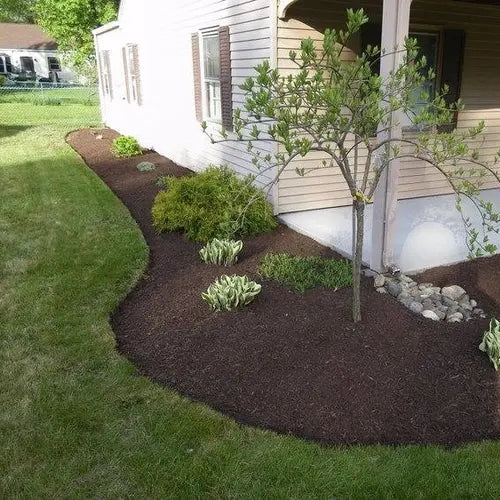
Plan on 3 inches of mulch for established Kettering beds and 2 inches over ground cover or newly planted perennials. One cubic yard covers about 108 square feet at 3 inches deep.
Use our free mulch calculator
What is a yard?
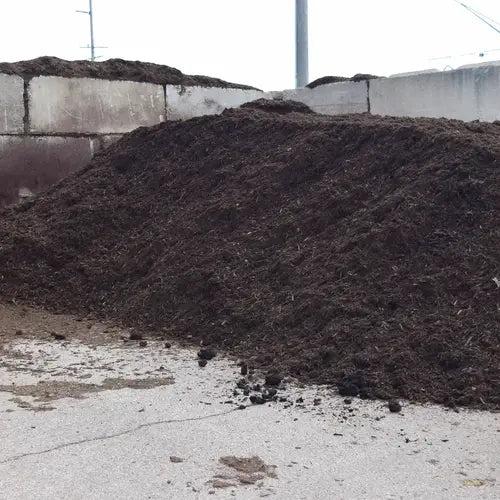
A yard is approximately 27 cubic feet. As a general guideline, one yard of material can cover an area of about 100-160 square feet at a 2-3 inch depth.
Great experience with mulch mound. Their online calculator made it easy to estimate how many yards of mulch I needed and delivery was quick. I would definitely recommend them for your future projects.
How Much Material Do I Need?
Plan on 3 inches of mulch for established Kettering beds and 2 inches over ground cover or newly planted perennials. One cubic yard covers about 108 square feet at 3 inches deep.
Use our free mulch calculator
What is a yard?
A yard is approximately 27 cubic feet. As a general guideline, one yard of material can cover an area of about 100-160 square feet at a 2-3 inch depth.
Great experience with mulch mound. Their online calculator made it easy to estimate how many yards of mulch I needed and delivery was quick. I woul...
Read full review
Great experience with mulch mound. Their online calculator made it easy to estimate how many yards of mulch I needed and delivery was quick. I would definitely recommend them for your future projects.
We needed mulch for our HOA common areas. Local providers were all holding high prices even for 40 yards of mulch. Mulch mound was easy to wowith...
Read full review
We needed mulch for our HOA common areas. Local providers were all holding high prices even for 40 yards of mulch. Mulch mound was easy to wowith & has great price for natural mulch + delivery schedule options. They called before delivery to ensure Delivery was exactly where we wanted it.
Delivery was on time and great quality Mulch. Got it done in a reasonable time and yard looks great. Couldn’t be happier!!! Thank you and will us...
Read full review
Delivery was on time and great quality Mulch. Got it done in a reasonable time and yard looks great. Couldn’t be happier!!! Thank you and will use again!!
Break your yard into simple rectangles and circles rather than trying to measure one odd shaped bed all at once, since most Kettering foundation plantings curve around a porch or a downspout. Multiply length by width in feet, add your sections together, then multiply by your target depth in feet and divide by 27 to get cubic yards. Round up to the nearest half yard so you have enough to finish tree rings and touch up thin spots.
Mulch vs. No Mulch: The Difference
Kettering's 41 inches of annual rainfall and humid Ohio Valley summers speed up decomposition, so organic mulch here breaks down faster than it would in a drier climate. A natural hardwood layer typically loses a third of its depth in a single season, feeding the silt loam beneath it as it goes. Non organic options like river rock and lava stone do not decompose at all, which is why homeowners choose them for downspout beds and slopes where mulch keeps washing away.
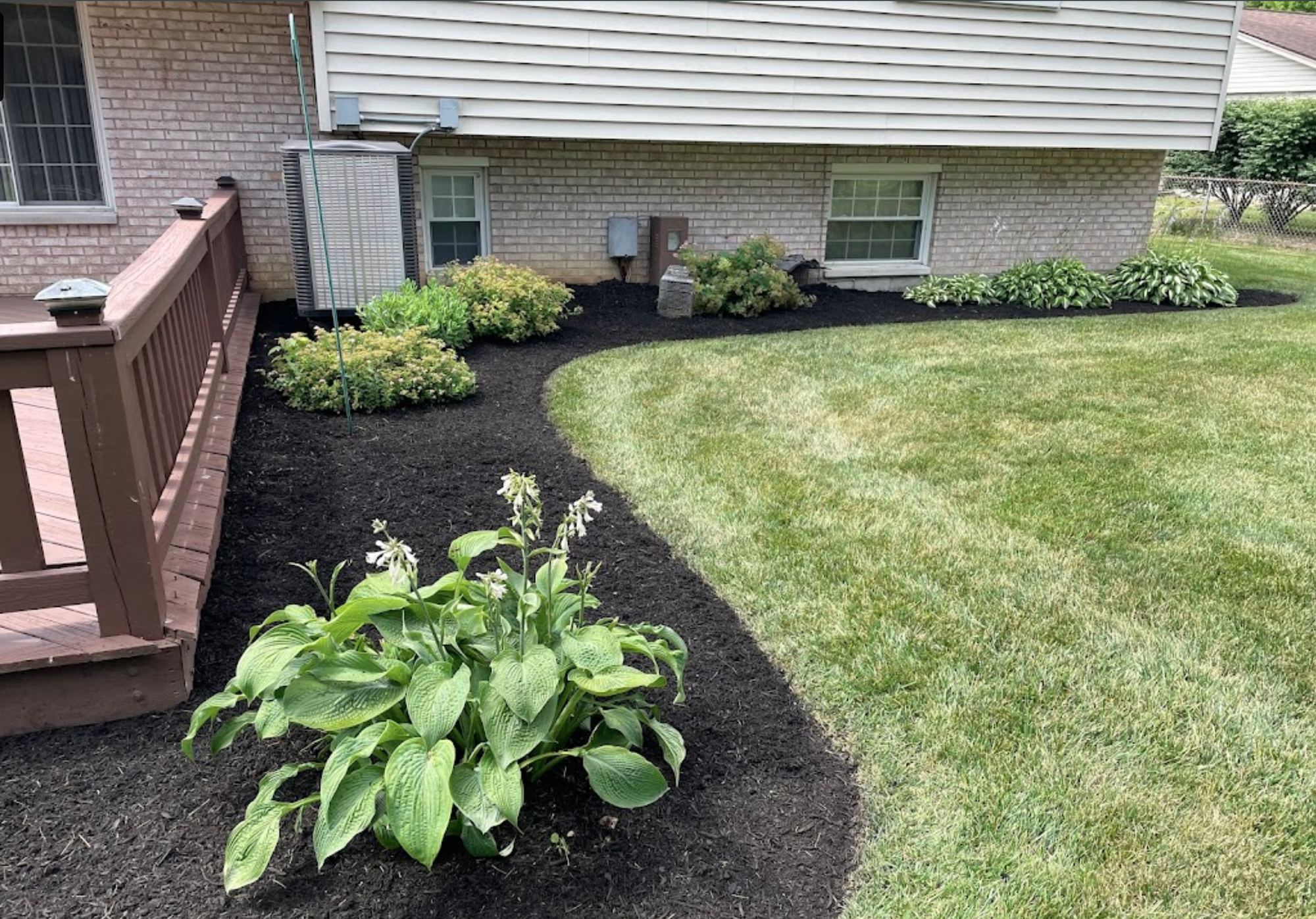
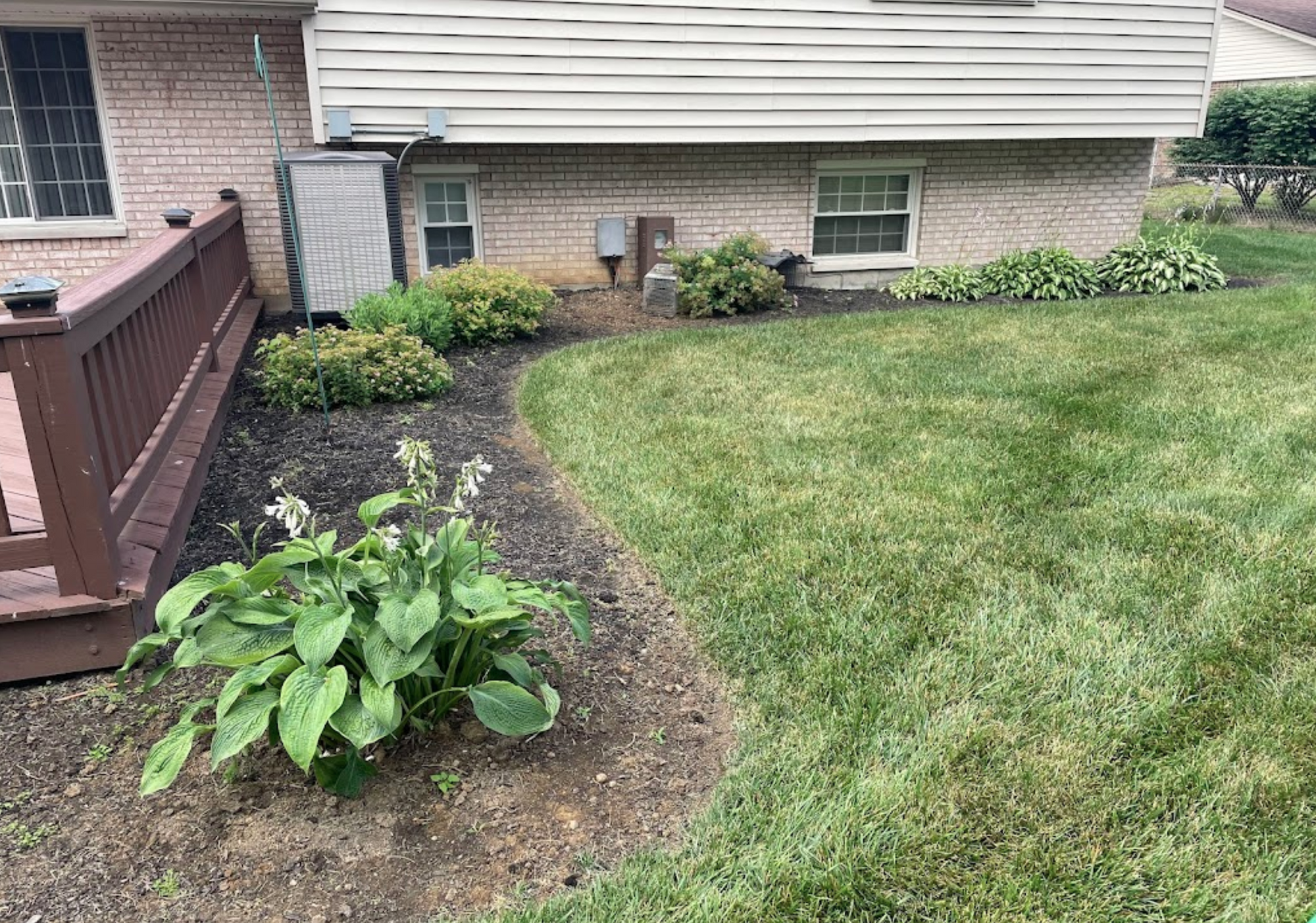
Before
After
Best Mulch Choice for Kettering Lawns
Most yards in the Kettering area sit on type of soil. Kettering's silt loam holds nutrients and water well, but its fine particles compact under foot traffic and heavy rain until roots struggle to push through. Plant beds built on it often develop a dense, oxygen starved layer just below the surface.
Hardwood Mulch
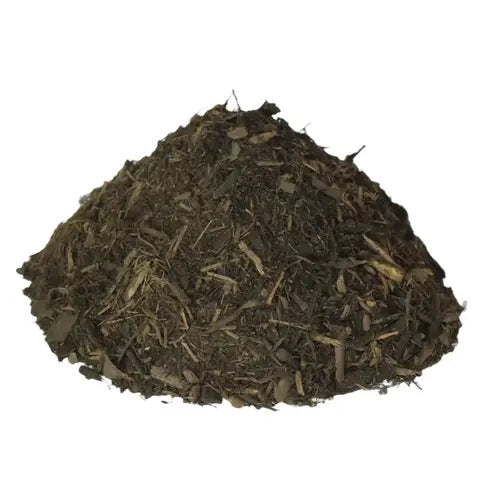
Double ground hardwood mulch is the practical fix, because as it decomposes it feeds organic matter into the top few inches of silt loam and improves crumb structure. That looser structure lets Kettering's spring rain infiltrate instead of pooling, while earthworms drawn to the decaying wood keep opening channels through the compacted layer.
Complete Your Outdoor Mulch Project
Pair your mulch with a few yards of screened topsoil to re grade any settled beds first, and add edging stone or river rock at downspouts where Kettering's spring runoff tends to wash mulch out of place.
Mulch Mound Pro Tip
Pull mulch back from trunks and stems before you spread. Volcano mulching against a maple or a serviceberry traps moisture against the bark, and with Kettering averaging 41 inches of rain that bark stays wet for weeks. Wet bark invites rot and gives voles a hidden runway to chew the cambium over winter. Leave a bare collar of two to three inches of soil around every trunk and spread the mulch flat from there.
Mulch Mound Pro Tip
Water your beds thoroughly before mulching, especially in a dry stretch of late April. Kettering silt loam develops a hard surface crust when it dries, and fresh mulch laid over that crust will shed the next rainfall rather than let it soak in. Soaking the soil first breaks the crust and gets moisture down into the root zone where mulch can then hold it through the summer.
Mulch Mound Pro Tip
Do not mulch too early in spring. Kettering's last frost lands around April 30, and a thick layer applied in March keeps cold soil cold, delaying root activity on perennials and slowing bulb emergence. Wait until you can push a finger easily into warm soil, usually mid to late April. In fall, flip the logic and mulch after the ground has chilled near the October 17 frost date to prevent winter heaving.
Frequently Asked Questions
Click a question to see the answer
Answer
When is the best time to mulch in Kettering?
Mid to late April is the sweet spot, right around Kettering's average last frost of April 30. The soil has warmed enough that you are not trapping winter cold, but you get the mulch down before the heavy May rains start compacting bare silt loam. A lighter refresh in early October, ahead of the October 17 first frost, helps insulate perennial crowns through the freeze and thaw months.
Answer
How much mulch do I need for a typical Kettering front yard bed?
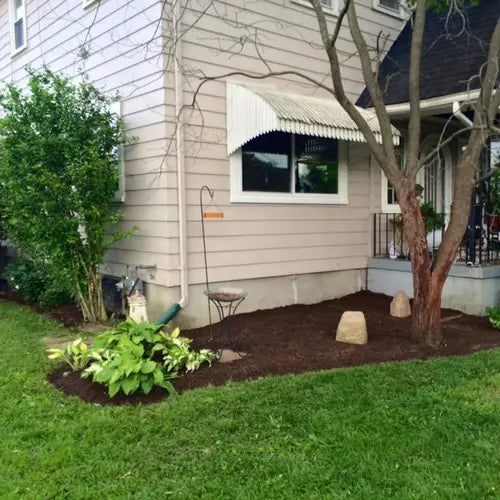
Most Kettering ranch and split level homes have front foundation beds running 40 to 70 square feet each. At a 3 inch depth, that is roughly half a cubic yard per bed, so two or three beds plus a tree ring usually lands between 2 and 3 cubic yards. Measure length times width for each bed and bring us the total.
Answer
Will mulch make my drainage problems worse in our silt loam?
Not if it is applied correctly. Silt loam compacts and crusts, and a 2 to 3 inch mulch layer actually breaks the impact of Kettering's hard spring rain so water infiltrates instead of sheeting off. Problems only appear when homeowners pile 5 or 6 inches on top of an already saturated bed, which keeps the soil soggy long after the storm passes.
Answer
Do termites or carpenter ants come with hardwood mulch around here?
Bulk hardwood mulch is shredded and aged, which makes it a poor food source and a poor nesting site compared to intact wood. The real risk in Kettering homes is mulch piled against siding or wood trim, which stays damp with 41 inches of annual rain. Keep a 6 inch gap between mulch and your foundation and you avoid the issue entirely.
Answer
Should I remove last year's mulch before adding new?
Usually no. Hardwood mulch in Kettering breaks down enough over one wet season that last year's layer has thinned to an inch or less by spring. Rake it to loosen any matted crust, then top with 1 to 2 inches of fresh material. Only strip the old layer if total depth has crept past 4 inches or if the surface has grown a thick fungal mat.
Answer
Which mulch color holds up best through a Dayton area summer?
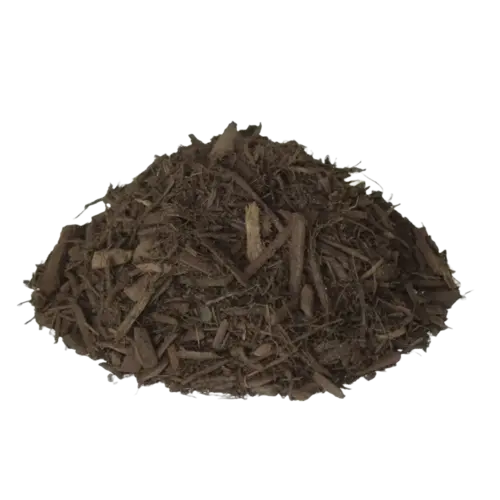
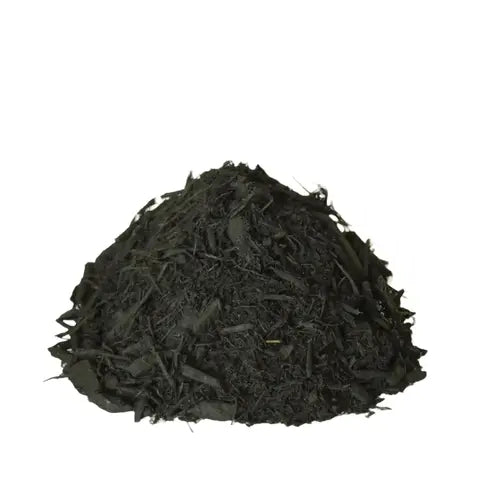
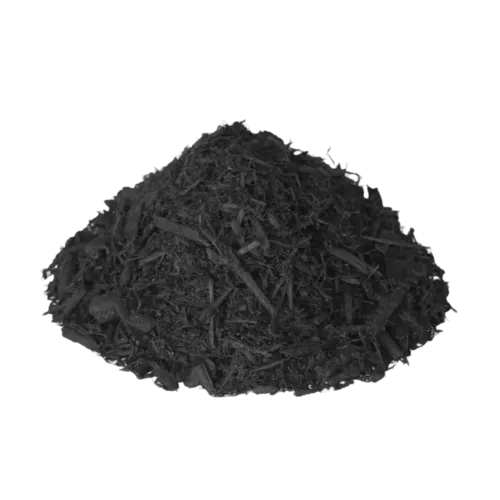
Dyed black and dyed brown mulches hold their color longest, typically a full season in Kettering, because the colorant resists fading better than raw wood. Natural double ground hardwood weathers to a soft gray by August under full sun, which many homeowners actually prefer near brick and stone. Shaded beds on the north side of a home keep any color noticeably longer.
Answer
Can you deliver if my driveway is narrow or my beds are in the back?
Yes. Plenty of older Kettering streets have short driveways and tight turnarounds, so our trucks are set up to place loads in compact spaces or on a tarp near the curb. Let us know about low branches, alley access, or a soft lawn from recent rain when you book, and we will plan the drop accordingly.
The Unique Landscape of Kettering
Kettering sits in growing zone 6b with roughly 41 inches of rain spread across the year, and much of that arrives in heavy spring downpours that pound bare beds along Far Hills Avenue and the neighborhoods around Lincoln Park. The native silt loam here holds moisture well but crusts over and sheds water once the surface dries, so an insulating mulch layer is what keeps rain soaking in instead of running toward the storm drains. Mulch also buffers the swing between a last frost around April 30 and a first frost near October 17, protecting shallow root systems on hydrangeas, hostas, and boxwood through both ends of that window. At about 1007 feet of elevation, Kettering yards get real freeze and thaw cycles in January and February that heave perennials right out of loose silt loam unless a blanket of mulch holds soil temperatures steady. Add in the summer weed pressure that follows every wet June, and mulch becomes the cheapest labor saver a Kettering homeowner can buy.