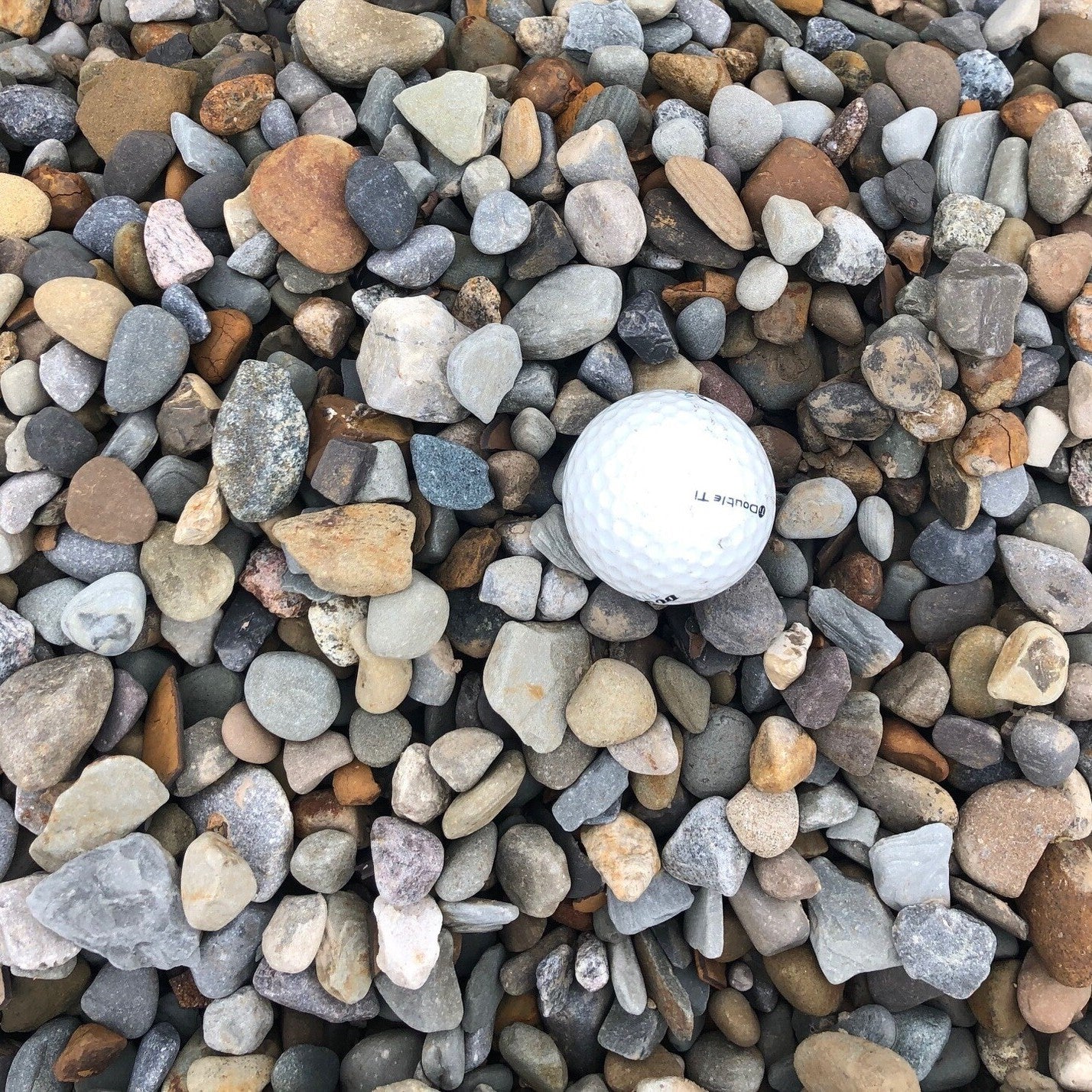
Number 57 crushed stone, angular limestone graded to about three quarters of an inch. The standard driveway, base and drainage gravel, it locks together under traffic and drains fast.
I used Mulch Mound to have 3 cubic yards of garden soil delivered. The process was easy and I love that I didn't have to call anyone. I placed my order online, picked my delivery date, laid out my tarp and the dirt was delivered. My delivery had to be pushed back, but I was ke...
Tell us what you're looking for
Thanks! We received your request.
Something went wrong. Please try again.
How Much Material Do I Need?
For decorative ground cover stone in Lancaster, plan for a minimum of 2 inches of depth for purely aesthetic applications and 3 to 4 inches for areas that need to suppress weeds or handle any foot traffic. Dry riverbeds and drainage swales should be filled to a depth of at least 4 to 6 inches with appropriately sized rock to handle the fast, heavy runoff that Lancaster's occasional desert cloudburst events can produce.
Use our free gravel calculator
What is a Yard?
A yard is approximately 27 cubic feet. As a general guideline, one yard of material can cover an area of about 100-160 square feet at a 2-3 inch depth.
We can't take orders for this right now. Tell us what you need and we'll get back to you.
What do you need?
Thanks! We received your request.
Something went wrong. Please try again.
Hand-picked local yards
4,000+ regional deliveries
Dedicated support
Why order through Mulch Mound
The best local , without the guesswork.
We hand-pick and partner with the best yards in your region, keep only the ones our buyers rate well, and back each load with our guarantee.
Mulch Mound Guarantee
If your isn't the quantity or quality you ordered, we'll make it right.
About this stone
Number 57 crushed stone, angular limestone graded to about three quarters of an inch. The standard driveway, base and drainage gravel, it locks together under traffic and drains fast.
I used Mulch Mound to have 3 cubic yards of garden soil delivered. The process was easy and I love that I didn't have to call anyone. I placed my order online, picked my delivery date, laid out my tarp and the dirt was delivered. My delivery had to be pushed back, but I was ke...
How Much Material Do I Need?
For decorative ground cover stone in Lancaster, plan for a minimum of 2 inches of depth for purely aesthetic applications and 3 to 4 inches for areas that need to suppress weeds or handle any foot traffic. Dry riverbeds and drainage swales should be filled to a depth of at least 4 to 6 inches with appropriately sized rock to handle the fast, heavy runoff that Lancaster's occasional desert cloudburst events can produce.
Use our free gravel calculator
What is a Yard?
A yard is approximately 27 cubic feet. As a general guideline, one yard of material can cover an area of about 100-160 square feet at a 2-3 inch depth.
I used Mulch Mound to have 3 cubic yards of garden soil delivered. The process was easy and I love that I didn't have to call anyone. I placed my o...
Read full review
I used Mulch Mound to have 3 cubic yards of garden soil delivered. The process was easy and I love that I didn't have to call anyone. I placed my order online, picked my delivery date, laid out my tarp and the dirt was delivered. My delivery had to be pushed back, but I was kept informed via text, which was great. So why not 5 stars? The description of garden soil on the website is "A balanced mix of topsoil and organic amendments ready for raised beds, flower gardens, and new planting areas. Good drainage, solid nutrients, easy to work with." What I got was more like fill dirt. It had a lot of gravel, a lot of clay, and random trash mixed in. I didn't test the soil to see if it actually had "amendments" because I already have compost and alpaca manure ready to add, but if I'd known the quality of the dirt was going to be the same as the bagged dirt I bought last year, I probably would have gotten 2 yards of top soil and a yard of leaf compost for better quality, especially since the leaf compost is cheaper. Photo of my mountain of dirt and just some of the trash I found in it.
Measure your coverage area in square feet by walking the perimeter of each zone and recording the length and width, then multiply to get the square footage of each section. For a dry riverbed or irregularly shaped rock area, break it into rough rectangles and add the sections together. Enter your total square footage and your desired rock depth into our calculator to get the cubic yardage, and remember that larger rock sizes like 3 to 5 inch cobble require a slightly deeper application to achieve full ground coverage than finer materials like decomposed granite.
Complete Your Outdoor Stone Project
Pair your stone delivery with decomposed granite for pathways and transition zones that tie your rock garden areas together into a cohesive desert landscape design. A layer of soil amendment worked into any remaining planting pockets before adding decorative rock gives your plants the nutrient-rich root environment they need beneath a surface that looks clean and water-wise from the street.
Lancaster's Antelope Valley winds are strongest in spring and can shift lightweight gravel and fine decomposed granite across your yard overnight, undoing a weekend of landscaping work. Choosing a slightly coarser stone size than you might otherwise pick, stepping up from a fine quarter-inch DG to a three-eighths inch crushed granite for example, significantly reduces wind displacement. For very exposed front yards that face the prevailing westerly winds, heavier river rock or larger cobble is the most wind-stable surface you can choose.
Mulch Mound Pro Tip
When planning a stone conversion project in Lancaster, think carefully about how your yard transitions from stone zones to any remaining planting beds. Without a clear physical border, decomposed granite and decorative rock gradually migrate into planting beds during irrigation and wind events, contaminating your soil and making both zones look messy over time. Steel edging, concrete curbing, or even a row of larger cobble stones set as a border creates a clear separation that holds up well in Lancaster's conditions and keeps your landscape looking intentional for years.
Mulch Mound Pro Tip
If you are using stone around an area where you occasionally need to work, like around fruit trees or a vegetable garden perimeter, choose decomposed granite over larger decorative rock. DG gives you a stable, clean surface to stand on while watering or harvesting, and it does not roll underfoot the way rounded river rock does. It also stays dry much faster after irrigation overspray than soil does, which is a small but genuinely pleasant advantage during a Lancaster summer when you are working outdoors in significant heat and want to stay clean and comfortable.
The Unique Landscape of Lancaster
Decorative and functional stone is one of the most practical landscape materials you can choose for a Lancaster property because it handles the Antelope Valley's extreme conditions without requiring irrigation, annual replenishment, or seasonal maintenance. With only 6 inches of rainfall per year and summer temperatures routinely exceeding 100 degrees, stone pathways, decorative rock beds, and gravel groundcover stay attractive year-round without any of the upkeep that organic materials demand in this climate. Lancaster's sandy loam base is well-suited to stone installation because it compacts and drains well beneath a rock layer, reducing the shifting and settling issues that plague stone projects built over heavy clay soils. Stone also plays an important thermal role in the Antelope Valley landscape, absorbing heat during the day and releasing it slowly at night, which can help moderate the sharp temperature drops Lancaster experiences between daytime highs and nighttime lows at 2,350 feet elevation. The growing trend toward water-wise landscaping in Lancaster means stone groundcover is increasingly replacing turf and thirsty plant beds as a long-term solution to the region's water scarcity challenges. Whether you are creating a dry riverbed drainage feature, a decomposed granite pathway, or a large-scale desert rock garden, bulk stone delivered to your Lancaster property is a cost-effective foundation for a beautiful and virtually maintenance-free landscape.
Frequently Asked Questions
Click a question to see the answer
Answer
What is the best type of stone for a water-wise front yard makeover in Lancaster?
Decomposed granite is the most popular choice for full front yard conversions in Lancaster because it compacts into a stable, walkable surface, looks natural in a desert setting, and is available in warm buff and tan tones that complement the Antelope Valley's native color palette. For accent areas and dry riverbeds, a mix of small and medium river rock or Mexican beach pebble adds texture and visual interest. If you are removing a lawn and replacing it entirely, plan for a base layer of compacted decomposed granite topped with larger decorative rock in key areas for a finished, layered look.
Answer
Will stone get too hot in Lancaster's summer and damage my plants or burn my pets?
This is a legitimate concern in Lancaster, where dark-colored stone can reach surface temperatures of 150 degrees or higher on a July afternoon. Lighter-colored stones like buff decomposed granite, white marble chips, or light tan gravel absorb significantly less heat than charcoal or black rock. For areas around plants, positioning stone so that shading from the plant canopy covers most of the rock surface by midday reduces radiant heat at root level. For pet-friendly pathways, lighter-toned gravel and decomposed granite are cooler underfoot and far more comfortable for dogs during the peak heat hours.
Answer
How deep should I lay decomposed granite for a pathway in my Lancaster yard?
For a walkable decomposed granite pathway in Lancaster, a compacted depth of 3 to 4 inches over a stable sub-base is the standard recommendation. The sandy loam native soil in Lancaster actually provides a reasonably firm base for DG paths because it compacts predictably and does not shift as dramatically as softer soils during wet weather, though Lancaster rarely has to worry about that. Apply the DG in two layers, compacting each one, for the most stable result. Adding a stabilizing polymer to the DG mix is worth considering for high-traffic paths where you want to minimize tracking and surface loosening.
Answer
Is river rock a good choice for drainage areas and dry riverbeds in Lancaster?
River rock is an excellent choice for drainage features in Lancaster, where the rare but intense rainfall events typical of the Mojave Desert can dump significant water volume in a very short time. A dry riverbed lined with 2 to 4 inch river rock moves water away from structures quickly while looking intentional and attractive the other 364 days of the year when it is dry. The rounded edges of river rock also make it comfortable to walk across and safe around children, which is a bonus if your drainage feature crosses a common path through your yard.
Answer
How much stone do I need to cover a typical Lancaster backyard for a desert landscape look?
The amount depends heavily on your target depth and whether you are covering the entire backyard or just designated rock beds around plants and structures. For a 2 inch decorative layer over 1,000 square feet, you would need approximately 6 to 7 cubic yards of stone. For a 3 inch depth over the same area, plan for about 9 to 10 cubic yards. Use our calculator on this page to enter your exact dimensions and preferred depth, which will give you a precise cubic yardage number so you can order confidently without a costly second delivery.
Answer
Should I put landscape fabric under my decorative rock in Lancaster?
In most Lancaster applications, yes, a permeable landscape fabric under decorative stone is a good idea, though it is not strictly required in every situation. Fabric helps prevent the sandy loam soil from migrating up into your rock layer over time, which is a common issue in windy desert environments where foot traffic and wind gradually mix fine soil particles into the decorative stone above. Fabric also suppresses weeds, which matter even in Lancaster's arid climate because wind-blown weed seeds can germinate in any small pocket of trapped moisture. Use a commercial-grade woven fabric rather than a thin plastic sheeting, which blocks drainage and creates runoff problems.
Answer
Can I use decomposed granite around my desert plants without hurting them in Lancaster's heat?
Yes, and in fact decomposed granite is one of the most plant-friendly groundcover choices for Lancaster's native and drought-adapted species. Plants like desert willow, lantana, agave, penstemon, and California native grasses all thrive with decomposed granite mulched around their base because it mimics the natural rocky soil conditions they evolved in. Keep the DG pulled back 2 to 3 inches from the base of plant stems to allow for air circulation and prevent crown moisture buildup on the rare irrigation days. For plants with woody stems and established root systems, DG around the drip line area helps retain the occasional deep watering Lancaster gardeners provide during the driest stretches of summer.
Answer
Is there a stone yard near Lancaster?
Ask at a stone yard counter for crushed stone and you would normally load it yourself, but Mulch Mound delivers it by the cubic yard to your Lancaster property instead, so there is no quarry trip. With only about 6 inches of rain a year and summers past 100 degrees, it stays tidy without irrigation or upkeep.