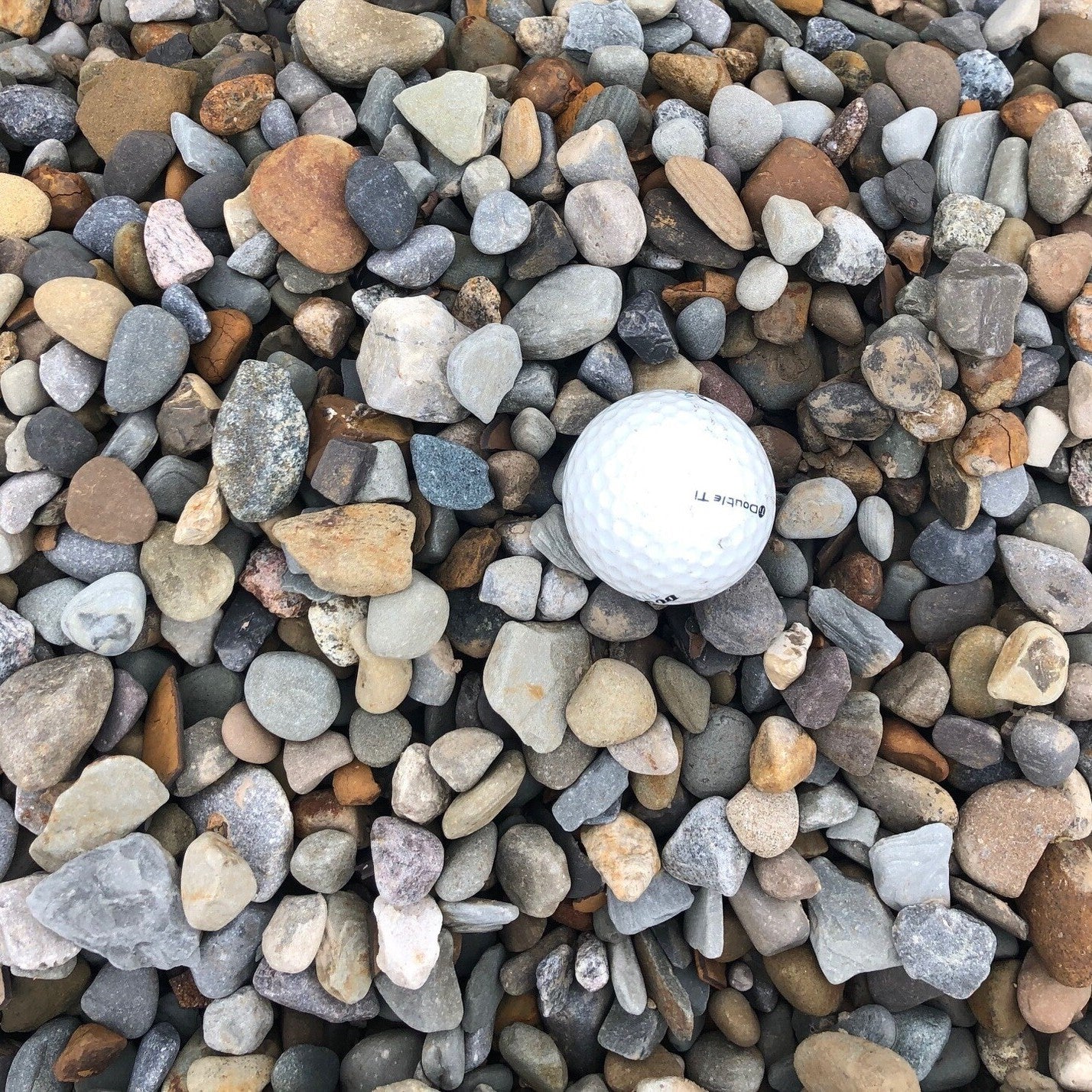
Number 57 crushed stone, angular limestone graded to about three quarters of an inch. The standard driveway, base and drainage gravel, it locks together under traffic and drains fast.
My experience with Mulch Mound was great and super easy. I ordered two yards of screened topsoil and was able to get it delivered within 2 days. They came in my requested time frame (afternoon) and dropped it off where I asked on my driveway. The topsoil was exactly what was a...
Tell us what you're looking for
Thanks! We received your request.
Something went wrong. Please try again.
How Much Material Do I Need?
One cubic yard covers about 160 square feet at 2 inches deep, which suits pathways and decorative beds. For driveways, defensible space zones, and areas over loose plateau soil, go 3 to 4 inches deep and plan on about 80 to 108 square feet per yard.
Use our free gravel calculator
What is a Yard?
A yard is approximately 27 cubic feet. As a general guideline, one yard of material can cover an area of about 100-160 square feet at a 2-3 inch depth.
We can't take orders for this right now. Tell us what you need and we'll get back to you.
What do you need?
Thanks! We received your request.
Something went wrong. Please try again.
Hand-picked local yards
4,000+ regional deliveries
Dedicated support
Why order through Mulch Mound
The best local , without the guesswork.
We hand-pick and partner with the best yards in your region, keep only the ones our buyers rate well, and back each load with our guarantee.
Mulch Mound Guarantee
If your isn't the quantity or quality you ordered, we'll make it right.
About this stone
Number 57 crushed stone, angular limestone graded to about three quarters of an inch. The standard driveway, base and drainage gravel, it locks together under traffic and drains fast.
My experience with Mulch Mound was great and super easy. I ordered two yards of screened topsoil and was able to get it delivered within 2 days. They came in my requested time frame (afternoon) and dropped it off where I asked on my driveway. The topsoil was exactly what was a...
How Much Material Do I Need?
One cubic yard covers about 160 square feet at 2 inches deep, which suits pathways and decorative beds. For driveways, defensible space zones, and areas over loose plateau soil, go 3 to 4 inches deep and plan on about 80 to 108 square feet per yard.
Use our free gravel calculator
What is a Yard?
A yard is approximately 27 cubic feet. As a general guideline, one yard of material can cover an area of about 100-160 square feet at a 2-3 inch depth.
My experience with Mulch Mound was great and super easy. I ordered two yards of screened topsoil and was able to get it delivered within 2 days. Th...
Read full review
My experience with Mulch Mound was great and super easy. I ordered two yards of screened topsoil and was able to get it delivered within 2 days. They came in my requested time frame (afternoon) and dropped it off where I asked on my driveway. The topsoil was exactly what was advertised, clean with no rocks or other debris. The price was reasonable. I plan to use them again in a couple weeks to order compost for my garden beds.
Measure length and width in feet for each area, then sketch irregular curves as a series of rectangles and add them up. Los Alamos driveways and pathways often follow contour lines, so walking the route with a tape gives a more honest number than eyeballing from the deck. Add 10 percent for settling into loose sandy loam.
Complete Your Outdoor Stone Project
Add permeable landscape fabric so your stone does not vanish into the sandy loam, plus steel edging to hold clean lines on sloped Los Alamos lots. Larger boulders make natural focal points that echo the surrounding tuff formations.
Compact in layers when building a gravel driveway or parking pad. Los Alamos sandy loam over pumice settles unevenly, and a single deep dump of rock will rut the first time a delivery truck or snowplow crosses it. Lay 3 inches of crushed base, wet it lightly, run a plate compactor, then repeat. Two compacted layers will outlast six inches of loose stone by many years.
Mulch Mound Pro Tip
Aim your stone work at water management, not just looks. Every Los Alamos property sheds monsoon runoff somewhere, and directing it into rock lined swales, basins, and infiltration areas rather than off the lot puts scarce moisture to work on your trees. In an 18 inch rainfall town, capturing roof and driveway runoff in gravel filled basins can effectively double what your plantings receive each season.
Mulch Mound Pro Tip
Match your stone to the local geology. Los Alamos sits on Bandelier tuff with basalt exposures in the canyons, so buff, pink, and gray tones read as natural here while bright white marble chips or red lava rock look imported and glare harshly under the high altitude sun. Choosing regional colors also means your gravel beds blend into the ponderosa and pinon backdrop instead of fighting it.
The Unique Landscape of Los Alamos
Stone is arguably the most practical landscape material in Los Alamos, where wildfire risk, steep canyon lots, and an 18 inch annual rainfall budget all push homeowners toward low water, noncombustible surfaces. Gravel and decorative rock create the defensible space that fire wise guidance calls for in the first 5 feet around a house, something wood mulch cannot do. On sloped lots above the canyons, larger cobble and riprap slow monsoon runoff that would otherwise carve channels through loose sandy loam in a single August storm. Stone also absorbs and releases heat, which extends the growing season slightly in a Zone 6a town with only about 169 frost free days. And unlike organic material, it never needs replacing in the punishing ultraviolet exposure at 7,300 feet.
Frequently Asked Questions
Click a question to see the answer
Answer
How much gravel do I need around my house for defensible space?
Fire wise guidance for Los Alamos calls for a noncombustible zone extending at least 5 feet out from the foundation. For a home with 150 feet of perimeter, that is 750 square feet, which takes roughly 4.6 cubic yards at 2 inches deep. Use crushed rock rather than smooth pea gravel so it stays put against the wall.
Answer
What stone size works best on the steep slopes in the canyons?
Go bigger than you think. On Los Alamos slopes, 3 to 8 inch cobble or angular riprap stays anchored during the concentrated monsoon downpours in July and August, while pea gravel and small chips migrate downhill quickly. Angular material interlocks better than rounded river rock on any grade over about 15 percent.
Answer
Will gravel make my yard even hotter at this elevation?
Light colored gravel reflects a lot of the intense high altitude sun back onto adjacent plants and windows, and dark basalt absorbs and radiates heat well into the evening. On south and west exposures in Los Alamos, choose lighter tan or buff tones and keep a mulched planting buffer between large gravel expanses and heat sensitive shrubs.
Answer
Do I need fabric under gravel here?
Yes for most applications. Los Alamos sandy loam is loose, so without a permeable woven fabric your stone gradually sinks and disappears into the soil. Fabric also slows the goatheads, kochia, and cheatgrass that colonize disturbed plateau ground. Use permeable woven fabric, never solid plastic, so monsoon rain can still reach the soil.
Answer
Can I put stone in a dry creek bed to handle runoff from summer storms?
That is one of the best uses for it in Los Alamos. Our monsoon rain arrives in short, intense bursts that overwhelm sandy loam infiltration, and a properly graded dry creek bed lined with mixed cobble routes that water safely away from foundations. Line the channel with fabric, set the largest stones along the edges, and fill the center with 2 to 4 inch rock.
Answer
How does gravel hold up through Los Alamos winters?
Very well. Freeze thaw cycling from October 15 through late April can heave finer material, and crushed base with fines will compact and shed water rather than absorb it. Angular crushed rock resists winter displacement better than rounded gravel, and it also gives snow shovels and plow blades something stable to ride on.
Answer
Is decorative stone or mulch better for my xeriscape beds?
For true low water plantings of natives like apache plume, chamisa, and penstemon, stone is the better long term match in Los Alamos because it does not decompose, does not need replacing, and reflects the natural plateau setting. Reserve organic mulch for vegetable gardens, fruit trees, and shade beds where soil building matters more than permanence.