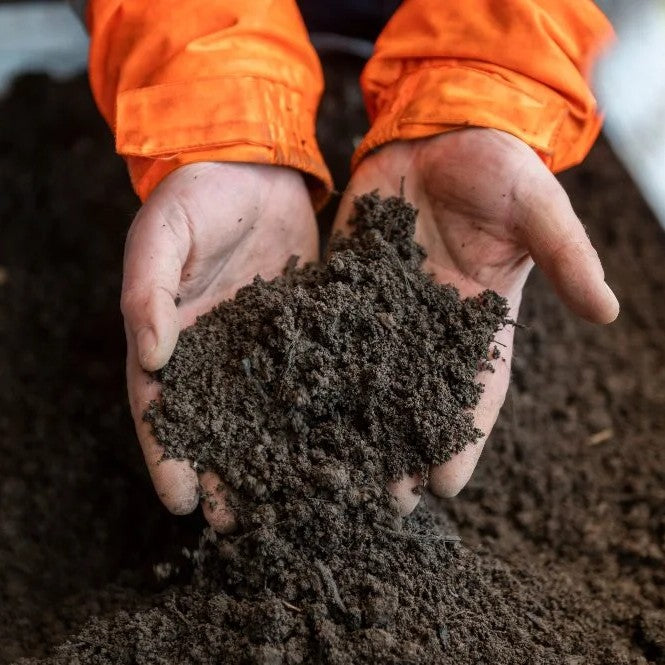
About this compost

Finished screened compost, fully broken down and ready to work into beds. The general purpose choice for building soil that holds water and feeds roots.

First time going with this company for mulch and it was an efficient process from start to finish. Website was easy—I told them exactly where I wanted the mulch put on my driveway, and it was delivered perfectly when I got home from work the next day. Best deal around when I c...

Compost is sold by the cubic yard and one yard covers about 324 square feet at a 1 inch depth, which is right for topdressing an established lawn. For garden beds, plan on tilling in 2 to 3 inches, so figure closer to 108 to 162 square feet per yard at that depth. Measure the actual bed or lawn area first, then work backward from the depth you need rather than guessing.

A yard is approximately 27 cubic feet. As a general guideline, one yard of material can cover an area of about 100-160 square feet at a 2-3 inch depth.

Nesconset Compost Delivery

Nesconset Compost Delivery

4.7
137 reviews
Regular price $60.00 per Yard
Regular price Sale price $60.00
Sale Sold out
Shipping calculated at checkout.
Type
Size
Hand-picked local yards
4,000+ regional deliveries
Dedicated support
Why order through Mulch Mound

The best local compost, without the guesswork.

We hand-pick and partner with the best yards in your region, keep only the ones our buyers rate well, and back each load with our guarantee.

Mulch Mound Guarantee

If your compost isn't the quantity or quality you ordered, we'll make it right.

About this compost

Finished screened compost, fully broken down and ready to work into beds. The general purpose choice for building soil that holds water and feeds roots.

First time going with this company for mulch and it was an efficient process from start to finish. Website was easy—I told them exactly where I wanted the mulch put on my driveway, and it was delivered perfectly when I got home from work the next day. Best deal around when I c...

Compost is sold by the cubic yard and one yard covers about 324 square feet at a 1 inch depth, which is right for topdressing an established lawn. For garden beds, plan on tilling in 2 to 3 inches, so figure closer to 108 to 162 square feet per yard at that depth. Measure the actual bed or lawn area first, then work backward from the depth you need rather than guessing.

A yard is approximately 27 cubic feet. As a general guideline, one yard of material can cover an area of about 100-160 square feet at a 2-3 inch depth.

View full details

How It Works

Getting started is easy — just follow these simple steps

1

Choose your quantity

Adjust the quantity to match your project. One cubic yard covers about 100 to 160 square feet at a 2 to 3 inch depth.

2

Select your delivery date

Select a delivery date you'd like for the product to be dropped off at your home

3

Sit back and wait

Sit back, wait, and let us work our magic to make sure the highest quality product is delivered to your driveway.

From The Mouths of Nesconset Folks

4.7
out of 5 based on 137 reviews
Google Reviews

Complete Your Outdoor Project

Compost pairs well with a topsoil blend if you are building up a new bed from scratch, and with mulch laid on top once the compost is worked in to hold moisture and cut down on weeds. If you are dealing with heavier clay pockets mixed into the sandy loam, a sand or soil conditioner delivered alongside the compost can help even out drainage across the yard.

Mulch Mound Pro Tip

Sandy loam like what you have around Nesconset drains so fast that compost worked in shallow can dry out before it fully integrates. Water the bed lightly right after tilling in your 2 to 3 inches, then again a day or two later, to help the organic matter bind with the existing soil instead of just sitting on top and drying into clumps.

Mulch Mound Pro Tip

The most common mistake with compost is piling it on thick thinking more equals better results. Anything beyond 3 inches tilled into a bed or 1 inch topdressed on a lawn can actually tie up nitrogen temporarily as it continues to break down, which shows up as yellowing rather than the boost you were expecting. Thin and repeated applications beat one heavy one.

Mulch Mound Pro Tip

If you are amending several beds around the property, it is more efficient to order one larger delivery and stage it in a central spot than to guess low and reorder a small batch later. Compost holds fine in a pile for a couple weeks if kept somewhat moist and covered with a tarp, which gives you room to work through the project over a weekend or two without rushing the whole yard at once.

Building Better Soil in Nesconset

Nesconset sits on sandy loam, which drains fast and does not hold nutrients well on its own. Compost worked into beds or spread thin over lawns adds organic matter that helps that soil retain moisture and feed roots through the growing season into zone 7b. With a last frost around April 10 and first frost around November 1, there is a workable window in both spring and fall to get compost down before or after the heat sets in. This is not a one and done fix, it is the kind of amendment that pays off over a few seasons of use.

What Finished Compost Is

Finished compost is organic matter that has fully broken down into a dark, crumbly material with an earthy smell. It feeds soil life, improves structure, and helps beds hold water without staying soggy.

How Much to Apply

Work 1 to 2 inches into new beds, or topdress lawns with a quarter to half inch and rake it in. More is not better. Too thick a layer can smother roots instead of feeding them.

When to Apply

Spring and fall are both good windows. Spring applications feed the growing season ahead, and fall applications break down over winter so beds are ready at first thaw.

Frequently Asked Questions

Click a question to see the answer

Answer

Will compost actually help my sandy soil here in Nesconset?

Yes, sandy loam is common through Nesconset and it drains quickly, which means it also loses nutrients fast. Compost adds organic matter that helps the soil hold both moisture and nutrients longer, so plants are not stressed between waterings. It is one of the more direct fixes for sandy soil, especially worked into beds at 2 to 3 inches.

Answer

How many cubic yards of compost do I need for my lawn?

One cubic yard covers about 324 square feet at a 1 inch depth, which is the standard topdressing rate for lawns. Measure your lawn's square footage and divide by 324 to get the yards needed. For a typical quarter acre lot with a modest lawn area, that often lands between 1 and 2 yards.

Answer

When is the best time to put compost down, spring or fall?

Both work here. Spring application, after the last frost around April 10, gives beds a boost heading into the growing season. Fall, before the first frost around November 1, lets compost break down over winter and improve soil structure by spring. Pick whichever fits your project rather than waiting for a specific season.

Answer

Where will the compost be dropped off and do I need to be home?

The load is placed on a hard, flat surface like a driveway that you point out ahead of delivery, and you do not need to be home for the drop off itself. Just make sure the spot is clear and accessible, since compost is dumped loose rather than in bags.

Answer

Should I get compost or topsoil for a new garden bed?

If you are building a bed from scratch on Nesconset's sandy loam, a blend of both works better than either alone, topsoil for volume and structure, compost for organic matter and nutrients. For an existing bed that just needs improvement, compost tilled in at 2 to 3 inches is usually enough on its own.

More delivery around Nesconset, New York

All Nesconset, New York landscape supply
