This was the easiest process to purchase mulch! It arrived on time and the driver did an amazing job putting it exactly where I wanted it. I will be a return customer for sure.
Tell us what you're looking for
Thanks! We received your request.
Something went wrong. Please try again.
How Much Sand Do I Need?
At a 1 inch install depth, one cubic yard covers about 324 square feet, so a small paver patio might only need a fraction of a yard while a pool deck base or a larger mortar job could call for two or three. Depth matters more than area here since mason sand is typically installed thin, between 1 and 2 inches, so measure your project footprint first and work backward from there. We deliver by the cubic yard so you can order exactly what the job needs without guessing at bag counts. Use our free sand calculator
What is a Yard?
A yard is approximately 27 cubic feet. As a general guideline, one yard of material can cover an area of about 100-160 square feet at a 2-3 inch depth.
This was the easiest process to purchase mulch! It arrived on time and the driver did an amazing job putting it exactly where I wanted it. I will be a return customer for sure.
How Much Sand Do I Need?
At a 1 inch install depth, one cubic yard covers about 324 square feet, so a small paver patio might only need a fraction of a yard while a pool deck base or a larger mortar job could call for two or three. Depth matters more than area here since mason sand is typically installed thin, between 1 and 2 inches, so measure your project footprint first and work backward from there. We deliver by the cubic yard so you can order exactly what the job needs without guessing at bag counts. Use our free sand calculator
What is a Yard?
A yard is approximately 27 cubic feet. As a general guideline, one yard of material can cover an area of about 100-160 square feet at a 2-3 inch depth.
This was the easiest process to purchase mulch! It arrived on time and the driver did an amazing job putting it exactly where I wanted it. I will b...
Read full review
This was the easiest process to purchase mulch! It arrived on time and the driver did an amazing job putting it exactly where I wanted it. I will be a return customer for sure.
Really appreciate the care and follow thru that this company had with our order. A hiccup came up but they were quick to respond and address all co...
Read full review
Really appreciate the care and follow thru that this company had with our order. A hiccup came up but they were quick to respond and address all concerns, which made our garden day a success! Thank you for your prompt care.
Most hardscape jobs around Newnan pair mason sand with pavers or natural stone, and some builders now add a layer of clean chip stone under the sand since it resists the pumping that plain sand bedding can develop over time. If you are mixing mortar for a courthouse-era brick repair or a retaining wall, you will also want portland cement and possibly a masonry lime on hand before the sand arrives.
Mason sand is finer and more uniform than concrete sand, which is exactly why it works for mortar but not for structural fill. If you are repointing brick on an older Newnan home near downtown, screen out any debris before mixing, since even small pebbles will clog a mortar joint and weaken the bond over a Georgia summer of expansion and contraction.
Mulch Mound Pro Tip
A common mistake is using mason sand as paver bedding and expecting it to stay put. It compacts less predictably than clean chip stone and can pump up through joints after heavy rain, which Newnan gets plenty of in spring. If you are building a paver patio, ask about chip stone for the bedding layer and save the mason sand for joint fill or mortar work.
Mulch Mound Pro Tip
Order mason sand and any base material like gravel or chip stone in the same delivery when possible, since scheduling one truck instead of two saves time on a hardscape build. Spring through fall is when most patio and walkway work happens here, so plan your sand order a few weeks ahead of peak season rather than the week you start digging.
Working With Sand in Newnan
Red clay dominates lots around Newnan, and it holds water then cracks hard in the dry stretch of late summer, which makes it a poor base for patios, walkways, or mortar work. Mason sand gives masons and DIYers a consistent, well drained material that will not shift the way clay does once it dries out. Around the Coweta County Courthouse and the older homes nearby, a lot of repointing and paver repair work still calls for this sand specifically because it is finer than concrete sand. With growing zone 8a summers running long and humid, sand-based bedding also drains faster after storms than a clay subgrade ever will.
Masonry vs Fill Sand
Masonry sand is washed and finely screened, the right choice for mortar work, paver joints, and sandboxes. Fill sand is coarser and less processed, better suited to leveling, bedding pipe, and filling low spots.
Bedding and Leveling
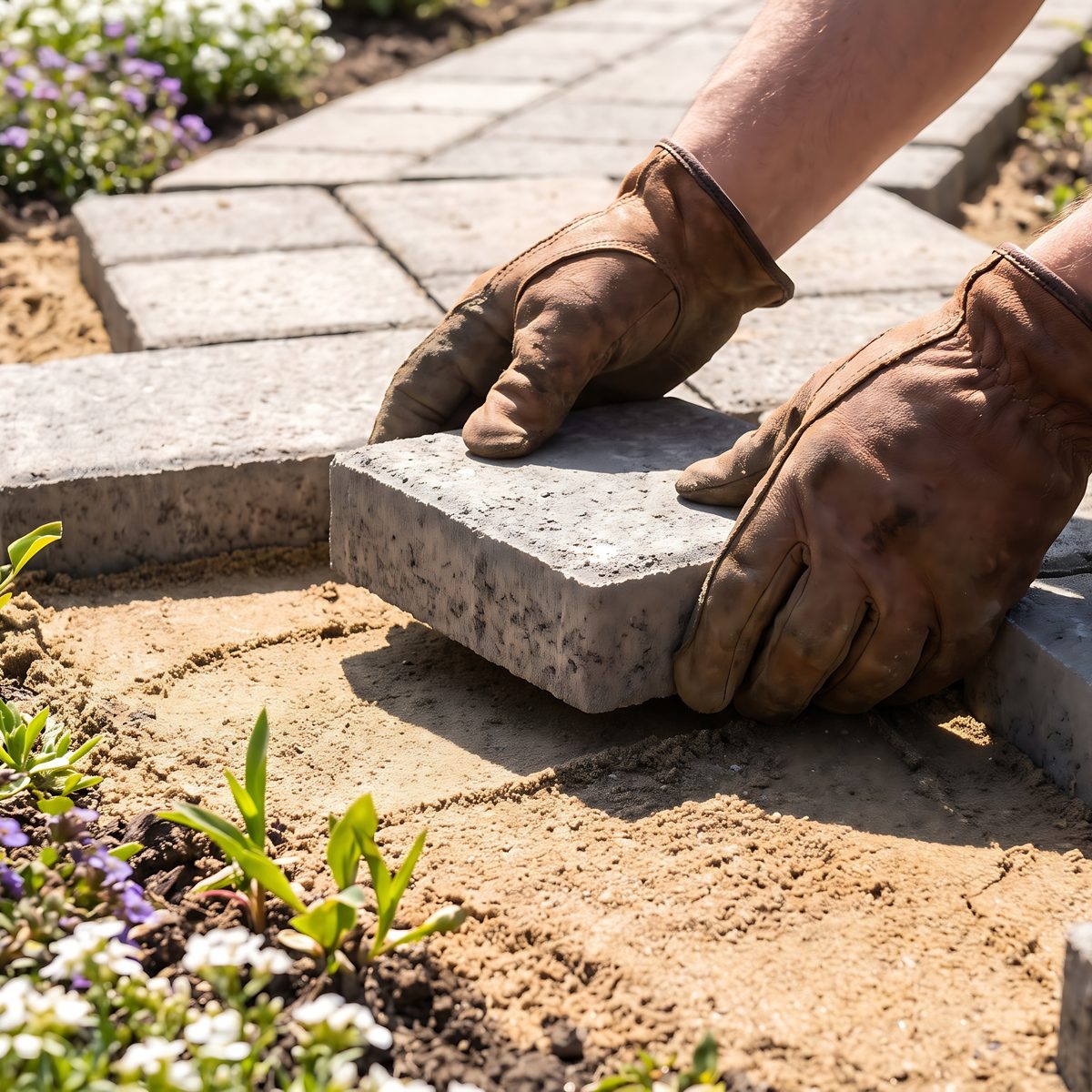
For pavers, screed a 1 inch sand bed over a compacted base rather than using sand to fix deep grade problems. A thin, even bed locks pavers in place. A thick one shifts underfoot.
Working With Moisture
Slightly damp sand spreads, screeds, and compacts far more easily than bone dry sand, which just flows back into your screed lines. Lightly wetting the pile before you work it saves real effort.
Frequently Asked Questions
Click a question to see the answer
Answer
Is mason sand the same as what people call sand for pools around here?
Mason sand and pool base sand are often the same washed, fine sand, yes. It is screened uniform enough to level under a pool liner or paver base and workable enough for mortar mixing, which is why it gets used for both around Newnan.
Answer
How many cubic yards do I need for a paver patio in my backyard?
At a 1 inch bedding depth, one cubic yard covers about 324 square feet, so a 300 square foot patio needs roughly one yard. If you are going 2 inches deep, cut that coverage in half and order closer to two yards for the same footprint.
Answer
When is the best time to install sand-based projects in Newnan?
Spring through fall is peak hardscape season here, after the last frost around April 16 and before the ground cools again heading into November. Working in that window means the sand sets and compacts without freeze thaw cycles disturbing your base.
Answer
Where will the sand be dropped and do I need to prep anything?
The truck places the load wherever you designate, usually a driveway or the edge of the work area, and delivery is scheduled at checkout. Make sure the drop spot is clear and accessible for a full size truck, especially on narrower older streets near downtown.
Answer
Should I use mason sand or chip stone for my paver patio base?
Chip stone is increasingly preferred for paver bedding because it locks together and resists pumping, while mason sand is better reserved for joint fill and mortar mixing. If your project is mortar work, brick repair, or a pool base, mason sand is still the right call.