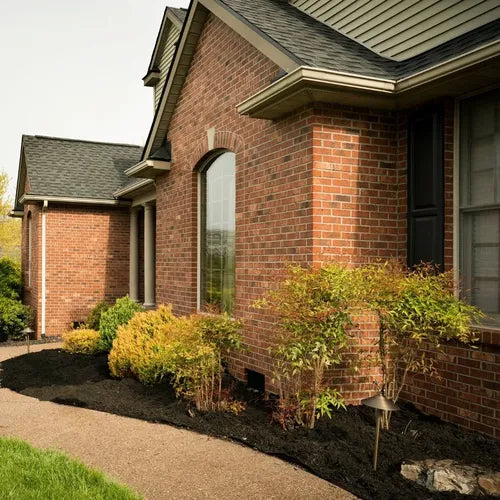
Delivery was on time and great quality Mulch. Got it done in a reasonable time and yard looks great. Couldn’t be happier!!! Thank you and will use again!!
Tell us what you're looking for
Thanks! We received your request.
Something went wrong. Please try again.
How Much Material Do I Need?
Plan on three inches for open beds and two inches under shrubs and around tree bases, which works out to roughly one cubic yard per 100 square feet. Order about ten percent extra so you are not short on the last bed.
Use our free mulch calculator
What is a yard?
A yard is approximately 27 cubic feet. As a general guideline, one yard of material can cover an area of about 100-160 square feet at a 2-3 inch depth.
Delivery was on time and great quality Mulch. Got it done in a reasonable time and yard looks great. Couldn’t be happier!!! Thank you and will use again!!
How Much Material Do I Need?
Plan on three inches for open beds and two inches under shrubs and around tree bases, which works out to roughly one cubic yard per 100 square feet. Order about ten percent extra so you are not short on the last bed.
Use our free mulch calculator
What is a yard?
A yard is approximately 27 cubic feet. As a general guideline, one yard of material can cover an area of about 100-160 square feet at a 2-3 inch depth.
Delivery was on time and great quality Mulch. Got it done in a reasonable time and yard looks great. Couldn’t be happier!!! Thank you and will us...
Read full review
Delivery was on time and great quality Mulch. Got it done in a reasonable time and yard looks great. Couldn’t be happier!!! Thank you and will use again!!
Mulch Mound delivered a yard of pea gravel to us. Delivery was on time, driver was friendly and hit a bullseye on the “tarp target”. We used the ...
Read full review
Mulch Mound delivered a yard of pea gravel to us. Delivery was on time, driver was friendly and hit a bullseye on the “tarp target”. We used the pea gravel (which was diameter as specified) to fill several muskrat holes around our pond. I would definitely recommend Mulch Mound to a friend!
I can’t say enough good things about Mulch Mound! If you read my review below you will see I had a problem with my order. Mulch Mou...
Read full review
UPDATE!
I can’t say enough good things about Mulch Mound! If you read my review below you will see I had a problem with my order. Mulch Mound was quick to respond and solved the issue with my delivery. Will definitely be a customer next year.
First time purchase from Mulch Mound!! First what I liked! Easy to order online and straight forward pricing and delivery. The driver was on time and courteous and delivered my Mulch exactly where I requested! The product is of good quality and comparable to others I have purchased from before. Now what I DID’NT LIKE! I have been mulching the same house and yard for almost 20 years. I always order the same amount and don’t have any issues with covering the same area but this year I fell about a yard short. I was home when the mulch was delivered and when the driver dumped it I noticed that it seemed a bit less than I was used to. I didn’t apply it any thicker than usual and probably a bit thinner than usual because I was worried about running out.
Break irregular beds into rectangles and circles, measure each one, then add the square footage together instead of eyeballing the whole yard at once. Most O'Fallon homeowners underestimate curved island beds by 20 to 30 percent. One cubic yard covers about 100 square feet at three inches deep, so divide your total square footage by 100 to get a starting number.
Mulch vs. No Mulch: The Difference
O'Fallon's combination of 43 inches of annual rain, humid summers, and a long warm season means organic mulch breaks down fast here, typically losing an inch or more of depth every year. That decomposition is not a flaw, it is how your silt loam gets the organic matter it is missing, but it does mean you will be topping off each spring. Non organic options like river rock or gravel hold their depth indefinitely and never need replacing, though they do nothing to feed the soil.
Before
After
Best Mulch Choice for O'Fallon Lawns
Most yards in the O'Fallon area sit on type of soil. O'Fallon's silt loam holds nutrients well but compacts easily, and after a few hard spring rains a bare bed can seal over into a crust that sheds water instead of absorbing it. That crust starves plant roots of both moisture and oxygen right when they are trying to push new growth.
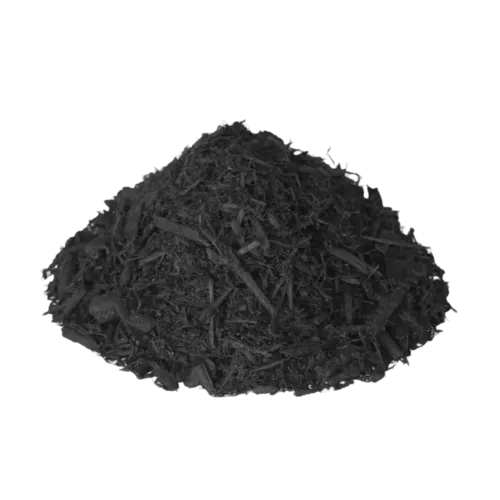
Hardwood Mulch
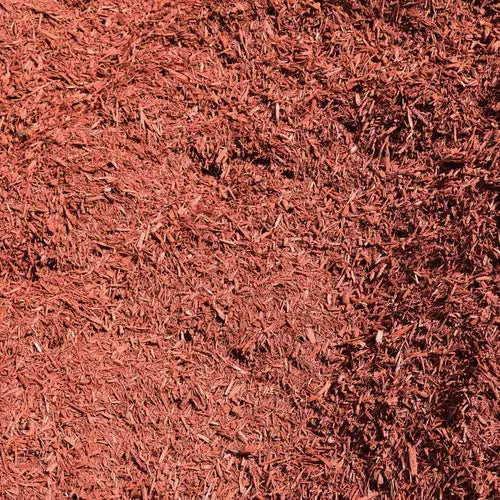
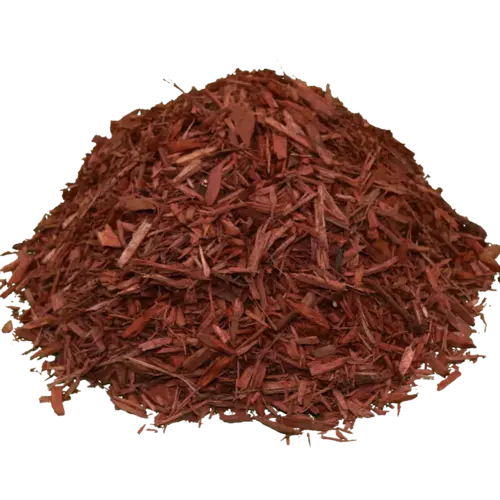
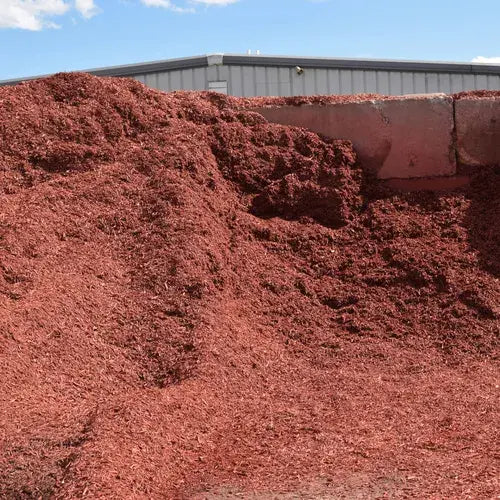
Shredded hardwood mulch is the best fix for silt loam because it absorbs raindrop impact before it reaches the soil and feeds earthworms and microbes as it decomposes. Those organisms build channels and crumb structure in the top few inches, which is exactly what compacted O'Fallon silt loam needs to drain better and breathe.
Complete Your Outdoor Mulch Project
Pair your mulch with a few yards of compost or garden soil worked in first, since O'Fallon's silt loam benefits from organic matter below the surface as well as on top. Steel or poly edging keeps mulch out of the turf during heavy spring runoff.
Mulch Mound Pro Tip
Never build a mulch volcano around your trees. It is the single most common mistake we see in O'Fallon yards, and with our wet springs it holds moisture against the bark until the trunk rots or girdling roots form. Pull mulch back three to four inches from the trunk flare on every tree, and keep the ring flat like a doughnut. Extend it out to the drip line if you can, since that is where the feeder roots actually live.
Mulch Mound Pro Tip
Time your mulching around our rain, not the calendar. Spreading mulch onto bone dry silt loam during a hot O'Fallon July means the fresh layer wicks up the first light shower before it ever reaches the roots. Water the beds deeply the day before you spread, or better yet, mulch within a day or two after a soaking rain. The soil underneath stays charged and the mulch settles into place instead of blowing around.
Mulch Mound Pro Tip
Handle dyed mulch with a little care on your first day. Colored hardwood mulch is common in O'Fallon subdivisions because it holds its look through the season, but the dye needs about 24 dry hours to cure. If a thunderstorm rolls in right after you spread it, you can get color bleed onto concrete driveways and sidewalks. Check the forecast, spread on a clear morning, and rinse any stray splash off hardscape right away.
Frequently Asked Questions
Click a question to see the answer
Answer
How many inches of mulch should I put down in O'Fallon?
Three inches is the sweet spot for most O'Fallon beds. That is deep enough to smother weeds and slow evaporation through our humid July and August, but shallow enough that spring rain can still soak into the silt loam underneath. Around shallow rooted shrubs like hydrangeas and azaleas, back off to two inches so the crown stays dry.
Answer
When is the best time to mulch here in St. Charles County?
Mid to late April, once soil temperatures have come up after the April 12 average last frost, is ideal. Mulching too early traps cold in the ground and slows perennials. A second, lighter top off in late October after the first frost around October 20 helps insulate roots through winter freeze and thaw cycles.
Answer
Will mulch make my drainage problems worse? My backyard already stays soggy.
It can if you overdo it. O'Fallon's silt loam already drains slowly, so piling on five or six inches creates a sponge that stays wet and can rot roots. Keep it at two to three inches in low spots, pull mulch back from downspout outlets, and consider regrading or a shallow swale before you add more material.
Answer
Do I need to remove last year's mulch before adding new?
Usually not. In our climate, hardwood mulch loses roughly an inch to an inch and a half of depth each year to decomposition, so most O'Fallon beds just need a top off. If you have a compacted, matted layer that is shedding water, break it up with a rake first so rain can get through to the soil.
Answer
Why does my mulch grow that yellow slime after a rainy week?
That is slime mold, sometimes called dog vomit fungus, and it shows up all over O'Fallon during warm, wet stretches in June and July. It is harmless to plants and people. Scoop it out or hose it down and fluff the mulch so the surface dries faster.
Answer
How much mulch do I need for a typical O'Fallon subdivision front yard?
Most front foundation beds in O'Fallon's newer neighborhoods run 250 to 500 square feet total. At three inches deep, that is roughly two and a half to five cubic yards. Measure each bed separately, since curved island beds are almost always larger than they look.
Answer
Will mulch keep the ticks and chiggers down?
It helps at the edges. A three foot wide band of dry mulch or gravel between wooded property lines and your lawn creates a barrier that ticks avoid crossing, which matters in O'Fallon where wooded creek corridors back up to a lot of yards. Keep the mulch fluffed and dry rather than damp and matted, since moist debris is exactly what chiggers prefer.
The Unique Landscape of O'Fallon
O'Fallon sits in Zone 6b with roughly 43 inches of rain a year, and much of that arrives in heavy spring downpours that pound bare silt loam into a sealed crust. Mulch is the buffer that absorbs that impact, keeps St. Charles County beds from washing toward the street, and holds moisture through the dry, humid stretch that usually settles in from mid July into September. It also moderates soil temperature during the wild swings this area gets, where a 70 degree February afternoon can be followed by a hard freeze a week later. Around O'Fallon's newer subdivisions, where topsoil was stripped and replaced during construction, a steady mulch layer is often the fastest way to rebuild organic matter. Add a growing season that runs roughly from the April 12 last frost to the October 20 first frost, and you have about six months where mulch is actively feeding, cooling, and protecting your beds.