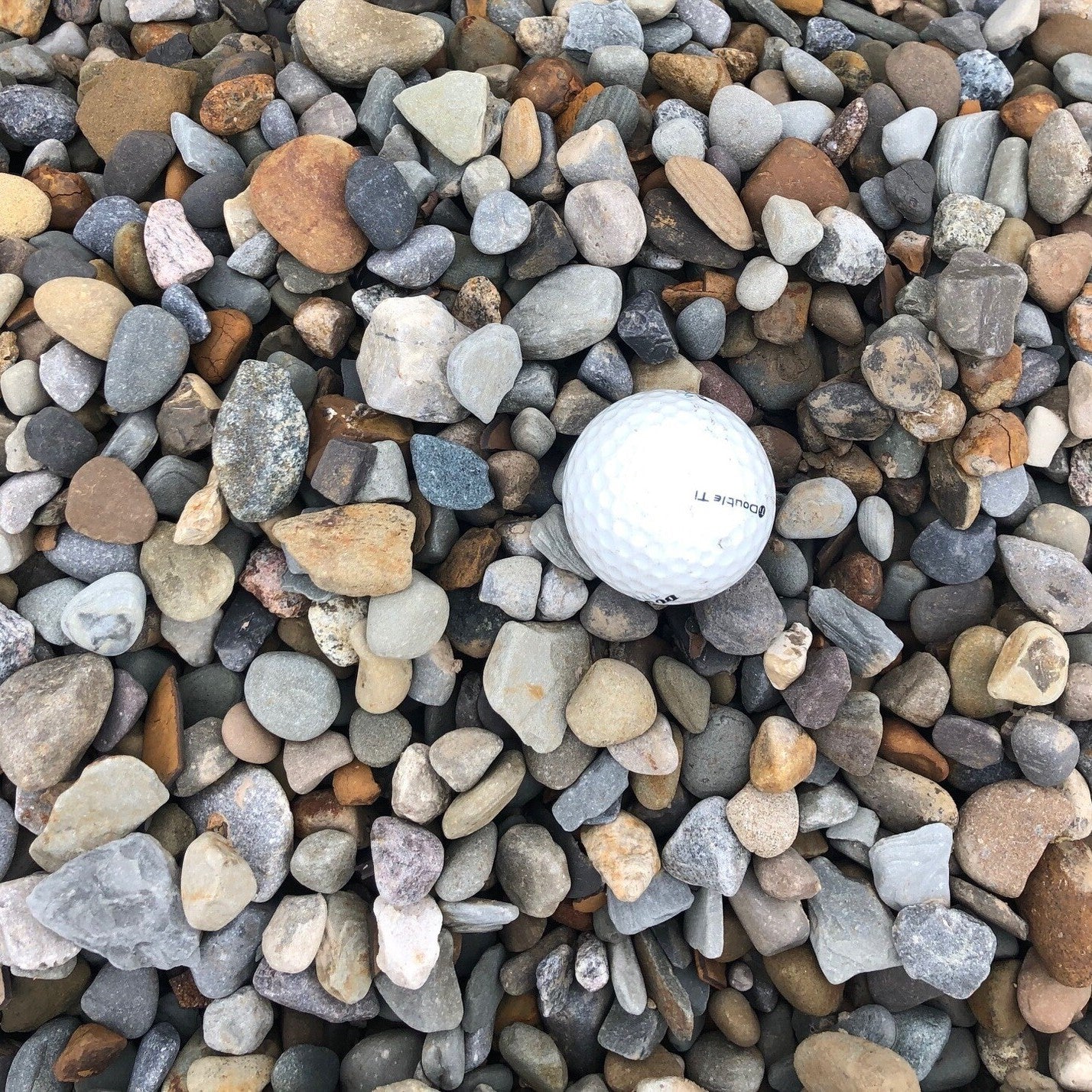
Number 57 crushed stone, angular limestone graded to about three quarters of an inch. The standard driveway, base and drainage gravel, it locks together under traffic and drains fast.
My experience with Mulch Mound was great and super easy. I ordered two yards of screened topsoil and was able to get it delivered within 2 days. They came in my requested time frame (afternoon) and dropped it off where I asked on my driveway. The topsoil was exactly what was a...
Tell us what you're looking for
Thanks! We received your request.
Something went wrong. Please try again.
How Much Material Do I Need?
Two to three inches is right for decorative rock beds, four inches for walkways, and six inches or more of compacted crushed base under patios and driveways. One cubic yard covers roughly 100 square feet at three inches deep.
Use our free gravel calculator
What is a yard?
A yard is approximately 27 cubic feet. As a general guideline, one yard of material can cover an area of about 100-160 square feet at a 2-3 inch depth.
We can't take orders for this right now. Tell us what you need and we'll get back to you.
What do you need?
Thanks! We received your request.
Something went wrong. Please try again.
Hand-picked local yards
4,000+ regional deliveries
Dedicated support
Why order through Mulch Mound
The best local , without the guesswork.
We hand-pick and partner with the best yards in your region, keep only the ones our buyers rate well, and back each load with our guarantee.
Mulch Mound Guarantee
If your isn't the quantity or quality you ordered, we'll make it right.
About this stone
Number 57 crushed stone, angular limestone graded to about three quarters of an inch. The standard driveway, base and drainage gravel, it locks together under traffic and drains fast.
My experience with Mulch Mound was great and super easy. I ordered two yards of screened topsoil and was able to get it delivered within 2 days. They came in my requested time frame (afternoon) and dropped it off where I asked on my driveway. The topsoil was exactly what was a...
How Much Material Do I Need?
Two to three inches is right for decorative rock beds, four inches for walkways, and six inches or more of compacted crushed base under patios and driveways. One cubic yard covers roughly 100 square feet at three inches deep.
Use our free gravel calculator
What is a yard?
A yard is approximately 27 cubic feet. As a general guideline, one yard of material can cover an area of about 100-160 square feet at a 2-3 inch depth.
My experience with Mulch Mound was great and super easy. I ordered two yards of screened topsoil and was able to get it delivered within 2 days. Th...
Read full review
My experience with Mulch Mound was great and super easy. I ordered two yards of screened topsoil and was able to get it delivered within 2 days. They came in my requested time frame (afternoon) and dropped it off where I asked on my driveway. The topsoil was exactly what was advertised, clean with no rocks or other debris. The price was reasonable. I plan to use them again in a couple weeks to order compost for my garden beds.
Really appreciate the care and follow thru that this company had with our order. A hiccup came up but they were quick to respond and address all co...
Read full review
Really appreciate the care and follow thru that this company had with our order. A hiccup came up but they were quick to respond and address all concerns, which made our garden day a success! Thank you for your prompt care.
Measure the length and width of the area and pick the depth before you calculate, then remember that stone is sold by weight as often as by volume. Because a cubic yard of stone runs about 1.35 tons, convert carefully so you do not order half of what you need. For trenches and dry creek beds, measure the average width and depth of the channel rather than the widest point.
Complete Your Outdoor Stone Project
Add woven landscape fabric under any decorative rock and steel edging to hold the perimeter, since O'Fallon runoff will otherwise carry stone into the lawn. Paver base sand and polymeric joint sand round out patio installs.
Use washed stone, not crusher run, anywhere water needs to move. O'Fallon silt loam is full of fine particles that migrate with every rain, and if your French drain or dry creek is backfilled with material containing fines, those fines cement together and the drain stops working within a few seasons. Clean washed one inch rock keeps the voids open. Pair it with a proper fabric wrap and the system will still be draining in twenty years.
Mulch Mound Pro Tip
Compact in lifts, not all at once. Whether you are building a patio base or a gravel parking pad, spread crushed limestone three inches at a time and run a plate compactor over each layer before adding the next. Dumping six inches and compacting the top only leaves a soft middle that settles the first winter O'Fallon gives you a good freeze and thaw cycle. Lightly misting the stone helps the fines lock together.
Mulch Mound Pro Tip
Think about edges before you spread a single shovel of rock. Stone migrates, and in O'Fallon that migration is driven by heavy storm runoff pushing it downhill into turf where it will meet a mower blade. Install steel or heavy duty poly edging set slightly above the finished stone height, and on slopes over about five percent add a few larger cobbles as check points. It saves hours of raking rock back into place every spring.
The Unique Landscape of O'Fallon
Stone earns its keep in O'Fallon because water is the main force working against local landscapes. With 43 inches of rain a year falling mostly in intense spring and early summer storms, silt loam yards develop erosion channels, soggy side yards, and washed out downspout areas fast. Gravel swales, rock beds, and dry creek beds move that water where you want it instead of letting it carve the lawn. Stone also never breaks down, which matters in a humid climate that eats organic mulch in a single season. For driveways, walkways, and patio bases, a properly compacted crushed stone layer is what keeps surfaces from heaving during O'Fallon's freeze and thaw cycles between December and March. And along the sunny south and west sides of homes, decorative rock stays put and stays neat where mulch would fade and float away.
Frequently Asked Questions
Click a question to see the answer
Answer
What size rock works best for a dry creek bed in my O'Fallon backyard?
Use a mix. Two to four inch river rock for the main channel handles the volume our spring downpours produce, with smaller three quarter inch gravel filling gaps and a few larger cobbles or boulders set along the edges to look natural. Line the channel with fabric first so O'Fallon silt loam does not pump up between the stones after the first heavy rain.
Answer
How thick should the gravel base be under a paver patio here?
Plan on six inches of compacted crushed limestone base for a patio and eight to ten inches for a driveway. Our silt loam subgrade holds moisture and heaves during winter freeze and thaw, so the base needs to be thick, compacted in three inch lifts, and sloped to drain. Skimping on base depth is the number one reason O'Fallon patios go wavy by year three.
Answer
Will rock beds get too hot next to my foundation?
Light colored limestone and river rock reflect heat, which is noticeable on the south and west sides of O'Fallon homes during July and August. That works fine for junipers, sedum, and ornamental grasses but stresses hydrangeas and azaleas. Keep rock beds for the hot exposures and use mulch where you have moisture loving shrubs.
Answer
How do I stop weeds from coming up through my river rock?
Weeds in O'Fallon rock beds almost always germinate in the dust and leaf litter that collects on top, not from below. Install quality woven fabric underneath, then blow or rake debris out of the rock two or three times a year, especially after fall leaf drop in late October. Spot treating in early spring before the April growth flush keeps it manageable.
Answer
What should I put down for a gravel driveway that will not wash out?
Build it in layers. Start with three to four inches of larger clean rock as a base, then top with three inches of crusher run or three quarter inch minus limestone, which has fines that lock together when compacted. On the sloped drives common in parts of O'Fallon, add a crowned profile and a cross drain so storm runoff leaves the surface instead of running down it.
Answer
How much does a cubic yard of stone weigh, and can my driveway handle a delivery?
A cubic yard of crushed limestone runs about 2,700 pounds and river rock is similar. A loaded delivery truck concentrates a lot of weight, so if you have newer or thin concrete, common in recent O'Fallon builds, ask us to drop at the street or the end of the drive. We will work with whatever access you have.
Answer
Can I use gravel to fix the soggy strip between my house and my neighbor's?
Gravel alone will not fix it, but a French drain will. Narrow side yards in O'Fallon subdivisions collect roof runoff from two houses over slow draining silt loam. Trench, add fabric, set perforated pipe, backfill with clean one inch washed rock, and daylight the outlet toward the back or a curb. The washed rock is essential because anything with fines will silt the pipe up.