Wonderful experience! They put the mulch exactly where we wanted. This mulch spread very easily and didn’t have the usual “mulch smell.” We will definitely use again!
Tell us what you're looking for
Thanks! We received your request.
Something went wrong. Please try again.
How Much Sand Do I Need?
At a 1 inch install depth, one cubic yard covers about 324 square feet, so a paver patio or pool base project usually needs a fraction of a yard to a couple of yards depending on footprint. For mortar mixing, you're working in smaller volumes per batch, so order based on total joint area or wall square footage rather than trying to eyeball bag counts. Since it's sold by the cubic yard, round up slightly for waste and spillage on a real jobsite. Use our free sand calculator
What is a Yard?
A yard is approximately 27 cubic feet. As a general guideline, one yard of material can cover an area of about 100-160 square feet at a 2-3 inch depth.
Wonderful experience! They put the mulch exactly where we wanted. This mulch spread very easily and didn’t have the usual “mulch smell.” We will definitely use again!
How Much Sand Do I Need?
At a 1 inch install depth, one cubic yard covers about 324 square feet, so a paver patio or pool base project usually needs a fraction of a yard to a couple of yards depending on footprint. For mortar mixing, you're working in smaller volumes per batch, so order based on total joint area or wall square footage rather than trying to eyeball bag counts. Since it's sold by the cubic yard, round up slightly for waste and spillage on a real jobsite. Use our free sand calculator
What is a Yard?
A yard is approximately 27 cubic feet. As a general guideline, one yard of material can cover an area of about 100-160 square feet at a 2-3 inch depth.
Wonderful experience! They put the mulch exactly where we wanted. This mulch spread very easily and didn’t have the usual “mulch smell.” We will de...
Read full review
Wonderful experience! They put the mulch exactly where we wanted. This mulch spread very easily and didn’t have the usual “mulch smell.” We will definitely use again!
Placing an order online was so easy. Delivery was on time. When the driver realized we had a newly poured driveway they erred on the side of cautio...
Read full review
Placing an order online was so easy. Delivery was on time. When the driver realized we had a newly poured driveway they erred on the side of caution and opted not ti drive in it. The company even sent me a message explaining that call. Would recommend!
Sand pairs naturally with paver base gravel and edging on patio jobs, and with mortar mix and brick on wall repairs, both common around Pittsburgh's older housing stock. If you're setting a pool base, a layer of sand over compacted gravel is standard practice. Many customers order both in the same delivery to keep the job moving without a second trip.
If you're mixing mortar for exterior brick or stone work common in Pittsburgh's older neighborhoods, keep your sand dry and covered before use, silty clay soil underneath holds moisture and can wick it into an uncovered pile overnight. Damp sand throws off your mortar ratio and weakens the bond. A tarp over the pile costs nothing and saves a bad batch the next morning.
Mulch Mound Pro Tip
A common mistake on paver jobs is using mason sand as bedding instead of jointing sand. It's fine and uniform, which is great for mortar, but as a bedding layer it can pump up through joints under freeze thaw cycles, which are frequent here given the October to May frost window. Many contractors are shifting to clean chip stone for bedding and saving mason sand strictly for joints and mortar.
Mulch Mound Pro Tip
Order slightly more than your calculated volume if you're doing mortar work in multiple stages, leftover sand stores fine in a covered pile for weeks and saves a second delivery fee. Combining a sand order with base gravel or paver material in one trip also cuts down on truck trips to a tight city lot, which matters if your access is limited.
Working With Sand in Pittsburgh
Pittsburgh sits on silty clay that drains slowly and holds moisture, which is exactly why sand matters for hardscape work here, it gives you a clean, stable layer under pavers and pool decks instead of relying on native soil that shifts with the freeze thaw cycle. With first frost around October 10 and last frost near May 10, the building window is real but not endless, so most sand orders here cluster in spring through fall when mortar and paver jobs are underway. In a Steel City built on masonry and stone, sand is still doing the same job it always did, holding joints and beds together.
Masonry vs Fill Sand
Masonry sand is washed and finely screened, the right choice for mortar work, paver joints, and sandboxes. Fill sand is coarser and less processed, better suited to leveling, bedding pipe, and filling low spots.
Bedding and Leveling
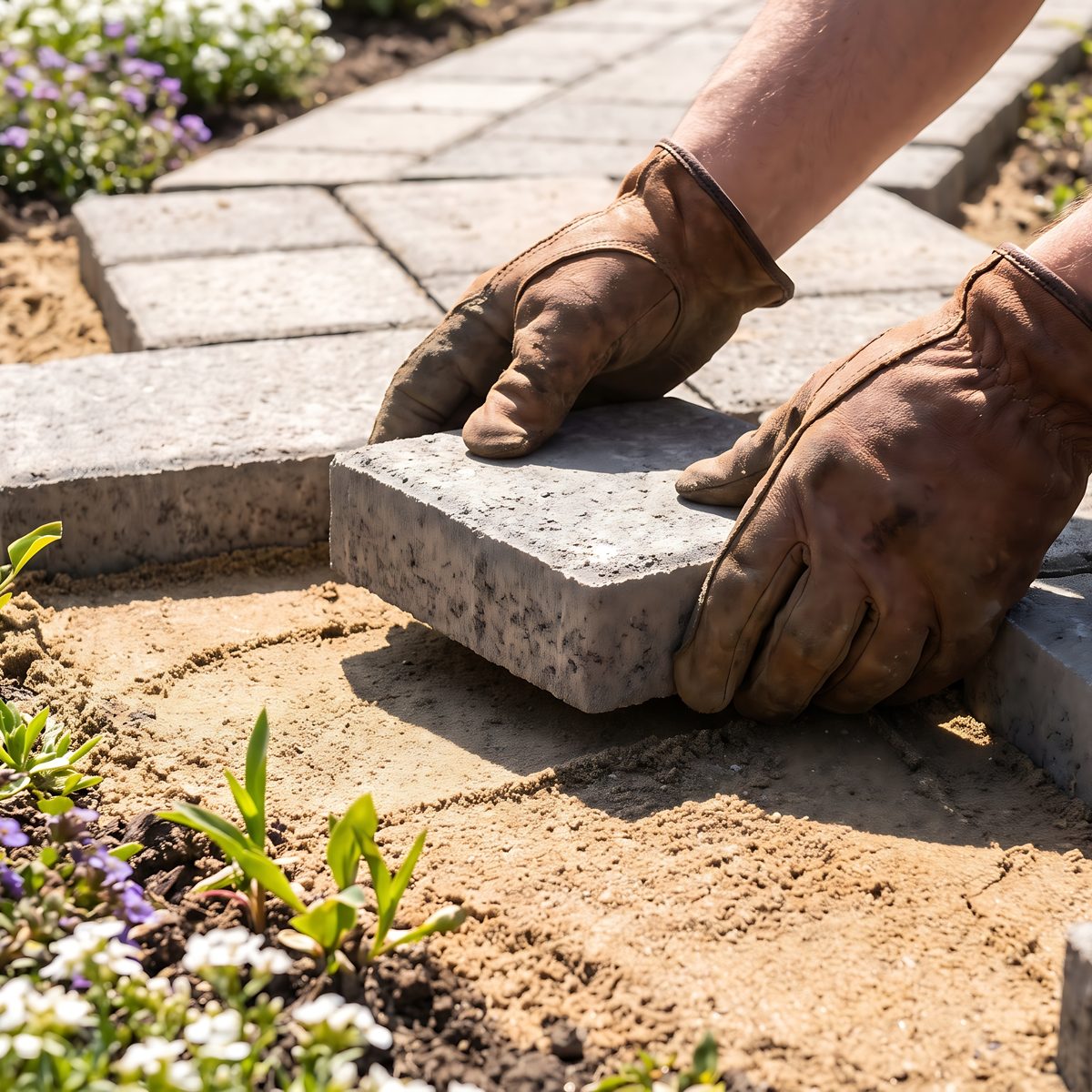
For pavers, screed a 1 inch sand bed over a compacted base rather than using sand to fix deep grade problems. A thin, even bed locks pavers in place. A thick one shifts underfoot.
Working With Moisture
Slightly damp sand spreads, screeds, and compacts far more easily than bone dry sand, which just flows back into your screed lines. Lightly wetting the pile before you work it saves real effort.
Frequently Asked Questions
Click a question to see the answer
Answer
What is mason sand used for on a typical Pittsburgh project?
It's used for mortar mixing on brick and stone work, filling paver joints, and as a base layer under pool decks. It's finer and more uniform than concrete sand, which is what makes mortar workable and joints pack tight. It is less commonly used as paver bedding now since chip stone handles that job without pumping.
Answer
How many cubic yards do I need for a patio or wall project?
At a 1 inch depth, one cubic yard covers about 324 square feet, so most residential paver joint work needs well under a full yard. Mortar mixing for a wall depends on your joint volume, but a half yard to a yard covers most single wall jobs. Measure your area first and round up slightly.
Answer
When is the best time to schedule a sand delivery in Pittsburgh?
Spring through fall is when most hardscape and mortar projects happen here, roughly matching the frost free window from mid May to early October. Working sand in freezing temperatures makes mortar unreliable, so most contractors avoid winter installs entirely and stage material ahead of the season instead.
Answer
Where will the sand be dropped and do I need to prepare anything?
The load is placed at your driveway or an agreed drop spot on your property, so clear the area and make sure there's a flat, accessible path beforehand. Pittsburgh's hillside streets and narrow alleys can limit truck access, so let us know if your site has tight clearance or a steep grade.
Answer
Should I use mason sand or chip stone for paver bedding?
Chip stone is increasingly preferred for paver bedding because it locks together and resists pumping up through joints during freeze thaw cycles, common in Pittsburgh's winters. Mason sand is still the right call for the joints themselves and for mortar mixing, it's just being phased out as the bedding layer under the pavers.