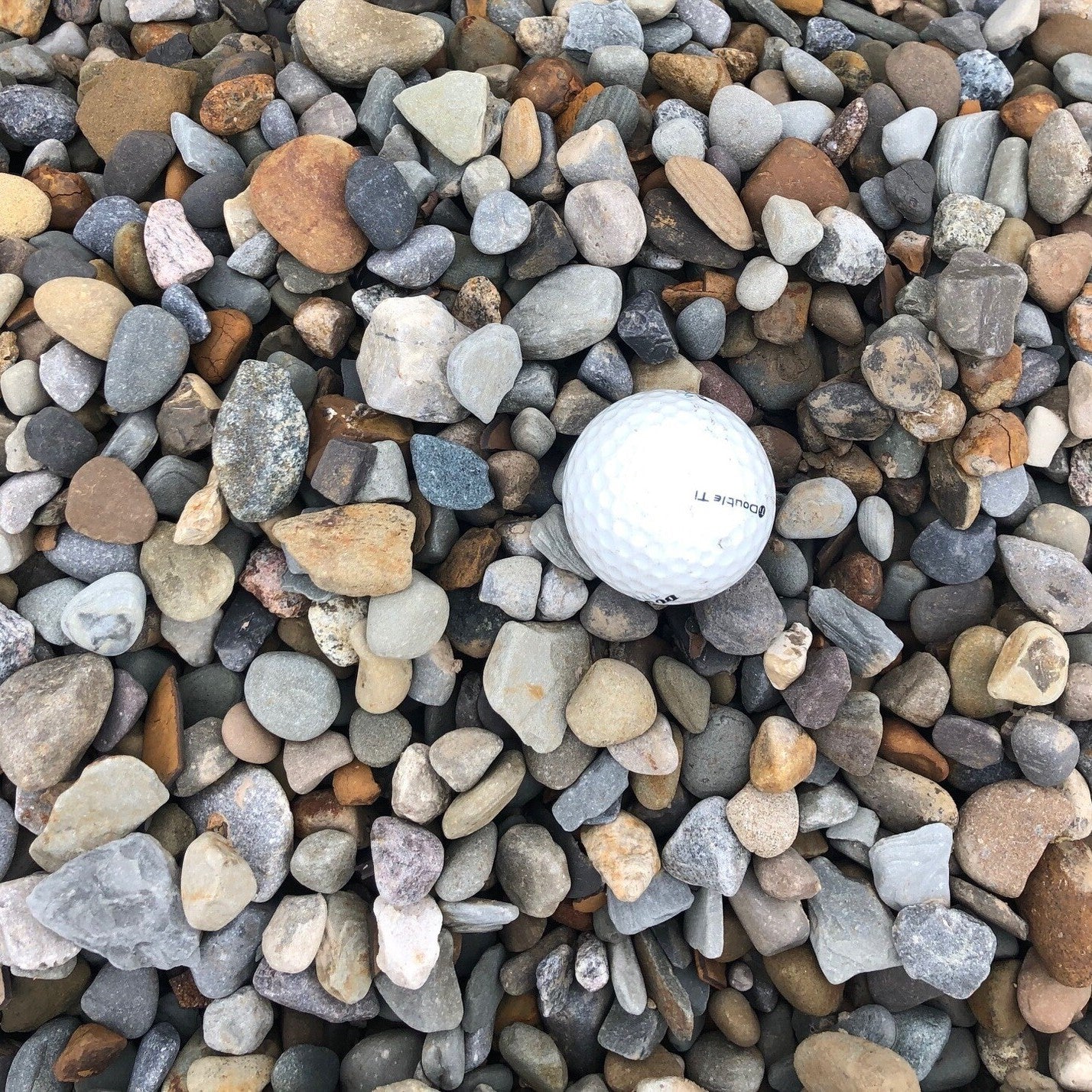
Number 57 crushed stone, angular limestone graded to about three quarters of an inch. The standard driveway, base and drainage gravel, it locks together under traffic and drains fast.
I contacted Mulch Mound for #57 river rocks and it was easy and fast to get a delivery right before the holiday weekend. Stone was delivered as promised and place exactly where I asked. Excellent service! I will be ordering mulch next!
Tell us what you're looking for
Thanks! We received your request.
Something went wrong. Please try again.
How Much Material Do I Need?
Use 2 to 3 inches of decorative gravel for beds and pathways, and 4 inches of compacted base rock under driveways and patio areas. One ton of crushed stone covers about 80 to 100 square feet at 2 inches deep.
Use our free gravel calculator
What is a Yard?
A yard is approximately 27 cubic feet. As a general guideline, one yard of material can cover an area of about 100-160 square feet at a 2-3 inch depth.
We can't take orders for this right now. Tell us what you need and we'll get back to you.
What do you need?
Thanks! We received your request.
Something went wrong. Please try again.
Hand-picked local yards
4,000+ regional deliveries
Dedicated support
Why order through Mulch Mound
The best local , without the guesswork.
We hand-pick and partner with the best yards in your region, keep only the ones our buyers rate well, and back each load with our guarantee.
Mulch Mound Guarantee
If your isn't the quantity or quality you ordered, we'll make it right.
About this stone
Number 57 crushed stone, angular limestone graded to about three quarters of an inch. The standard driveway, base and drainage gravel, it locks together under traffic and drains fast.
I contacted Mulch Mound for #57 river rocks and it was easy and fast to get a delivery right before the holiday weekend. Stone was delivered as promised and place exactly where I asked. Excellent service! I will be ordering mulch next!
How Much Material Do I Need?
Use 2 to 3 inches of decorative gravel for beds and pathways, and 4 inches of compacted base rock under driveways and patio areas. One ton of crushed stone covers about 80 to 100 square feet at 2 inches deep.
Use our free gravel calculator
What is a Yard?
A yard is approximately 27 cubic feet. As a general guideline, one yard of material can cover an area of about 100-160 square feet at a 2-3 inch depth.
I contacted Mulch Mound for #57 river rocks and it was easy and fast to get a delivery right before the holiday weekend. Stone was delivered as pro...
Read full review
I contacted Mulch Mound for #57 river rocks and it was easy and fast to get a delivery right before the holiday weekend. Stone was delivered as promised and place exactly where I asked. Excellent service! I will be ordering mulch next!
Stone is sold by weight, so measure length, width, and desired depth in feet, divide by 27 for cubic yards, then multiply by roughly 1.4 tons per yard for crushed rock. Placerville driveways and paths are rarely perfect rectangles, so break curved or terraced areas into simple shapes and total them. Order 10 percent extra for settling into decomposed granite.
Complete Your Outdoor Stone Project
Add steel or stone edging to keep gravel from creeping into planting beds on sloped Placerville lots. Filter fabric and drain pipe round out any French drain or swale project before the winter rains arrive.
Compact base rock in lifts, not all at once. Placerville decomposed granite subgrade is loose and forgiving, which means a thick uncompacted layer of stone will rut the first time a delivery truck rolls over it. Spread 2 inches, run a plate compactor or hand tamper, then spread the next 2 inches and repeat. The extra hour of work is the difference between a driveway that holds five years and one that fails by March.
Mulch Mound Pro Tip
Install drainage stone before the rains start, not during them. Placerville sees most of its 40 inches between November and March, and once the ground is saturated, digging a trench in decomposed granite turns into a slurry that will not hold a clean wall. September and October are the ideal months. The soil is dry, trenches cut cleanly, and your French drain is functional before the first real atmospheric river arrives.
Mulch Mound Pro Tip
Match stone color to Placerville's natural palette. The foothills read in warm golds, tans, and rust tones from the weathered granite and iron rich soil, so gold fines, tan cobble, and buff crushed rock look native. Bright white marble chips or black lava rock tend to fight the surroundings and show dust badly. Grab a sample and set it on the ground in full afternoon sun before you commit to a full load.
The Unique Landscape of Placerville
Placerville's steep terrain and 40 inches of winter rain make erosion control a genuine concern, and stone is the material that solves it permanently. Where organic mulch floats away in a January storm, gravel and cobble stay put and slow water down before it cuts channels through decomposed granite. Stone is also a fire smart choice, and with Placerville sitting in a high fire hazard area, replacing bark with gravel in the first five feet around a structure is one of the most effective defensible space moves a homeowner can make. Decomposed granite pathways and crushed base rock also handle the freeze thaw cycles we see between the November 9 first frost and the April 5 last frost far better than pavers set on soft ground. And on the hottest August afternoons, a gravel path does not decompose, fade, or need topping off. Stone is the once and done layer of a foothill landscape.
Frequently Asked Questions
Click a question to see the answer
Answer
What stone works best for a dry creek bed on my sloped lot?
A mix of sizes looks most natural and performs best. Use 3 to 8 inch river cobble for the channel bed with larger 12 inch plus boulders anchoring the turns. Placerville slopes move a lot of water in December and January, so line the channel with filter fabric and bed the largest stones first so the smaller material has something to lock against.
Answer
Is gravel a good option for defensible space around my house?
It is one of the best. Cal Fire guidance for Zone 0, the first five feet around a structure, calls for noncombustible ground cover, and three quarter inch crushed rock or pea gravel fits perfectly. Many Placerville homeowners pull bark mulch back from the foundation and replace it with a 3 inch gravel band, which also keeps embers from landing in flammable material.
Answer
How is crushed stone different from the decomposed granite already on my property?
Native Placerville DG is weathered granite that has broken down in place, and it is often mixed with clay and fines that compact and shed water. Purchased crushed stone is quarried and screened to a consistent size with the fines removed, so it drains freely and locks together for driveways and paths. They serve very different purposes.
Answer
How much stone do I need for a driveway repair?
For a typical Placerville driveway pothole or wash out area, plan on 4 inches of three quarter inch base rock compacted, then a 1 to 2 inch top layer. A 10 by 20 foot section at 4 inches works out to about 2.5 tons. Steep driveways off Gold Hill or Cold Springs often need more because material migrates downhill.
Answer
Will gravel make my yard hotter in summer?
It can, especially large expanses in full sun during a 100 degree Placerville July. Lighter colored stone reflects more heat than dark basalt or lava rock. Keep gravel areas to paths, drainage, and defensible space bands, and use shade trees or planted beds for the areas where you actually spend time outdoors.
Answer
Do I need landscape fabric under my stone?
For drainage applications yes, use a permeable filter fabric so decomposed granite fines do not migrate up into the rock and clog it. For decorative gravel beds, fabric helps for a few years but eventually silt settles on top and weeds root in it anyway. Many Placerville homeowners skip the fabric and just plan on spot treating weeds each spring.
Answer
Can stone help with the water running off my hillside in winter?
Absolutely. With around 40 inches of rain falling mostly November through March, Placerville hillsides move real volume. Rock lined swales, gravel filled French drains, and riprap at outlet points slow water and spread it out instead of letting it concentrate and cut into the granite. Size the rock to the flow, using larger cobble where water speeds up.