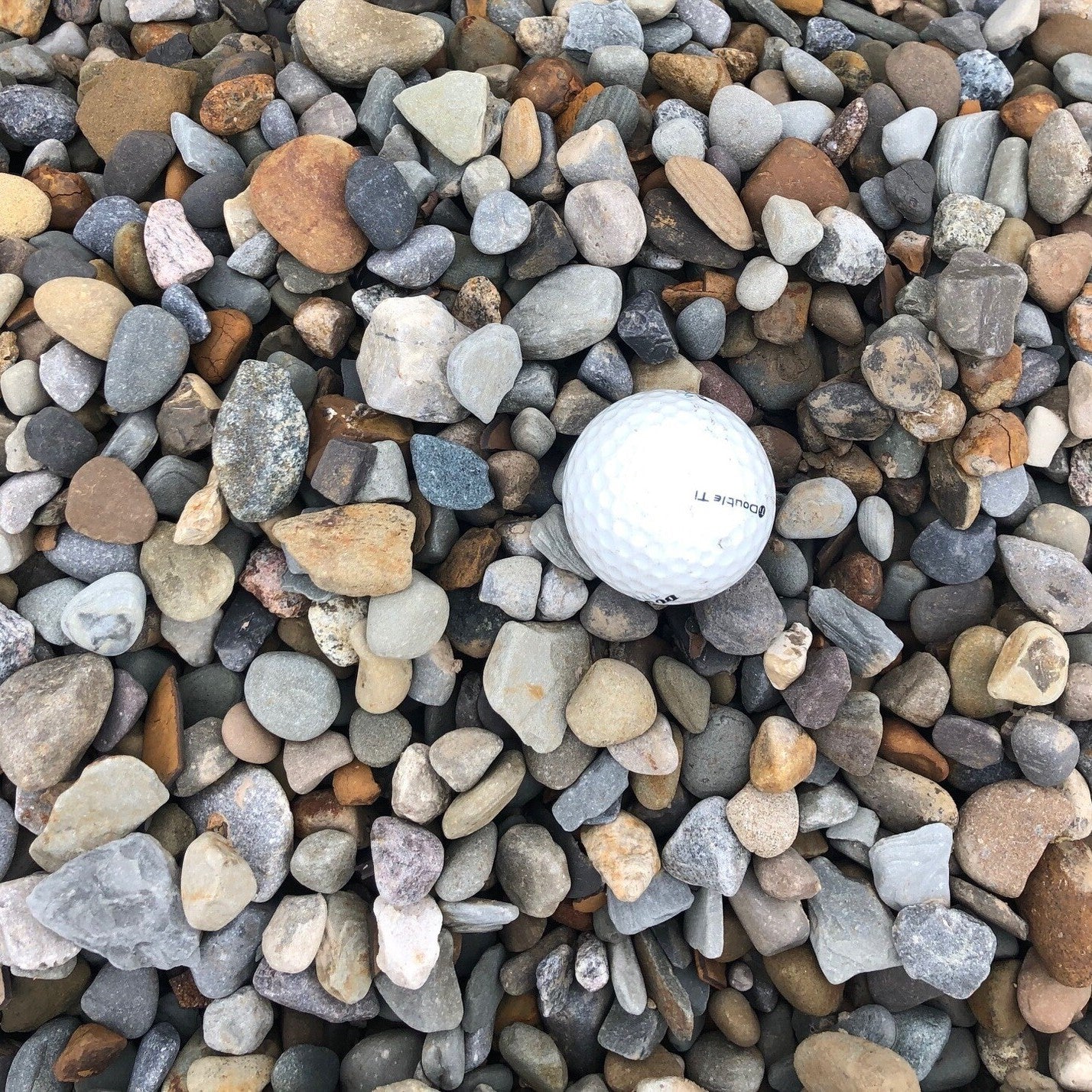
Number 57 crushed stone, angular limestone graded to about three quarters of an inch. The standard driveway, base and drainage gravel, it locks together under traffic and drains fast.
Mulch Mound delivered a yard of pea gravel to us. Delivery was on time, driver was friendly and hit a bullseye on the “tarp target”. We used the pea gravel (which was diameter as specified) to fill several muskrat holes around our pond. I would definitely recommend Mulch Mo...
Tell us what you're looking for
Thanks! We received your request.
Something went wrong. Please try again.
How Much Material Do I Need?
Two to three inches is typical for decorative beds, while driveways and paths need three to four inches of surface rock over a compacted base. One cubic yard covers roughly 100 square feet at three inches.
Use our free gravel calculator
What is a Yard?
A yard is approximately 27 cubic feet. As a general guideline, one yard of material can cover an area of about 100-160 square feet at a 2-3 inch depth.
We can't take orders for this right now. Tell us what you need and we'll get back to you.
What do you need?
Thanks! We received your request.
Something went wrong. Please try again.
Hand-picked local yards
4,000+ regional deliveries
Dedicated support
Why order through Mulch Mound
The best local , without the guesswork.
We hand-pick and partner with the best yards in your region, keep only the ones our buyers rate well, and back each load with our guarantee.
Mulch Mound Guarantee
If your isn't the quantity or quality you ordered, we'll make it right.
About this stone
Number 57 crushed stone, angular limestone graded to about three quarters of an inch. The standard driveway, base and drainage gravel, it locks together under traffic and drains fast.
Mulch Mound delivered a yard of pea gravel to us. Delivery was on time, driver was friendly and hit a bullseye on the “tarp target”. We used the pea gravel (which was diameter as specified) to fill several muskrat holes around our pond. I would definitely recommend Mulch Mo...
How Much Material Do I Need?
Two to three inches is typical for decorative beds, while driveways and paths need three to four inches of surface rock over a compacted base. One cubic yard covers roughly 100 square feet at three inches.
Use our free gravel calculator
What is a Yard?
A yard is approximately 27 cubic feet. As a general guideline, one yard of material can cover an area of about 100-160 square feet at a 2-3 inch depth.
Mulch Mound delivered a yard of pea gravel to us. Delivery was on time, driver was friendly and hit a bullseye on the “tarp target”. We used the ...
Read full review
Mulch Mound delivered a yard of pea gravel to us. Delivery was on time, driver was friendly and hit a bullseye on the “tarp target”. We used the pea gravel (which was diameter as specified) to fill several muskrat holes around our pond. I would definitely recommend Mulch Mound to a friend!
Placing an order online was so easy. Delivery was on time. When the driver realized we had a newly poured driveway they erred on the side of cautio...
Read full review
Placing an order online was so easy. Delivery was on time. When the driver realized we had a newly poured driveway they erred on the side of caution and opted not ti drive in it. The company even sent me a message explaining that call. Would recommend!
Measure the length and width of the area, then choose your depth before calculating, and remember that stone is sold by volume but arrives by weight. One cubic yard covers about 100 square feet at three inches deep. For pathways and driveways on Pullman slopes, add ten to fifteen percent since material migrates downhill and you will want extra for topping off.
Complete Your Outdoor Stone Project
Add heavy landscape fabric and steel or paver edging to keep stone from creeping into lawns on sloped Pullman lots. Drain rock and perforated pipe round out any wall or drainage project.
Choose angular over rounded anywhere gravity is involved. Crushed rock has flat faces that interlock and stay locked through Pullman snowmelt and freeze and thaw. Rounded river rock behaves like marbles on the grades common throughout town and will migrate to the bottom of your driveway or path within a season. Save the smooth river cobble for dry creek beds and flat decorative areas where it will not be walked on or driven over.
Mulch Mound Pro Tip
Always separate stone from Palouse silt loam with fabric. Silt is fine enough to pump upward into the voids of your rock every time the ground freezes, thaws, and gets saturated with snowmelt. Within two or three Pullman winters, an unseparated gravel layer becomes a muddy mess with rocks floating in it. A commercial grade woven fabric under the base course costs very little and doubles the life of the installation.
Mulch Mound Pro Tip
Grade before you place stone, not after. Establish a slope of at least two percent away from your foundation and toward wherever water can safely exit the property. Pullman lots already move a lot of water in March and April, and stone placed on a flat or backward pitched surface will trap it against your house. Set the grade with the subgrade material first, compact it, then bring in the rock.
The Unique Landscape of Pullman
Stone earns its keep in Pullman because water is always moving here. Nearly every lot in town sits on a grade, and the combination of spring snowmelt and heavy silt loam means runoff cuts channels through anything loose. Gravel, drain rock, and larger decorative stone armor those paths, stabilize driveways and walkways, and keep beds from washing downhill each March. Stone also solves the maintenance problem in the hot dry strips that bake all summer, like south facing foundation edges and parking areas, where organic mulch dries out and blows away in the ridge wind. Because it does not decompose, stone holds its place through Zone 6b freeze and thaw cycles that heave and shift lighter materials. For Pullman homeowners dealing with slope, wind, and a dry July, it is often the most durable answer available.
Frequently Asked Questions
Click a question to see the answer
Answer
What size gravel holds best on a sloped Pullman driveway?
Use angular crushed rock, not rounded river rock. Something in the three quarter inch minus range with fines locks together and stays put on the grades common around Military Hill and Sunnyside. Rounded pea gravel will roll downhill with every snowmelt and every car tire. If the slope exceeds about twelve percent, plan on a compacted base course underneath.
Answer
Will landscape rock keep weeds out of my beds?
It slows them, but it will not stop them. Palouse wind carries a steady supply of seed, and once organic dust and needle litter collect in the voids between stones you have a seedbed sitting on top of your rock. Install quality fabric underneath, plan on blowing debris out of the rock each fall, and expect to spot treat a few volunteers each spring.
Answer
How much does a yard of stone weigh, and can my driveway handle it?
Most gravel and crushed rock runs between 2600 and 3000 pounds per cubic yard, so a five yard load is roughly seven tons before the truck itself. On older Pullman properties with narrow or steep drives, tell us in advance and we can split the delivery or place the load at the street to avoid cracking asphalt or getting stuck on a wet grade.
Answer
Should I use stone instead of mulch around my foundation?
On the south and west sides of a Pullman house, stone often makes sense because those strips bake in the high elevation sun and organic mulch breaks down and blows out. Just keep in mind that rock radiates heat, so avoid it around plants that struggle in a Pullman August. On the north side, hardwood mulch is usually the better call.
Answer
What do I need behind a retaining wall on a Palouse hillside?
Clean three quarter inch drain rock, twelve inches thick, with fabric separating it from the silt loam behind. Palouse silt holds a lot of water in spring and the pressure it puts on a wall during snowmelt is what fails most Pullman retaining walls. The drain rock plus a perforated pipe at the base gives that water somewhere to go before it pushes on the block.
Answer
Can I build a dry creek bed to handle runoff on my lot?
It is one of the more effective fixes in Pullman. Trace where snowmelt already runs across your yard, excavate a shallow channel, line it with fabric, then place a base of angular rock topped with rounded river cobble. This channels spring runoff away from the foundation and low spots while looking intentional the rest of the year when it sits dry.
Answer
Does gravel heave or shift over a Pullman winter?
Well compacted angular rock over a proper base handles freeze and thaw fine. Problems show up when stone is placed directly on undisturbed silt loam, which holds water, freezes, and pushes the rock upward into an uneven surface. A four to six inch compacted base with fabric beneath it prevents nearly all of that movement through a Pullman winter.