Wonderful experience! They put the mulch exactly where we wanted. This mulch spread very easily and didn’t have the usual “mulch smell.” We will definitely use again!
Tell us what you're looking for
Thanks! We received your request.
Something went wrong. Please try again.
How Much Sand Do I Need?
One cubic yard covers about 324 square feet at a 1 inch depth, and most mortar or joint work only calls for a 1 to 2 inch layer, so a single yard goes a long way on smaller jobs like a walkway or a mailbox column. Pool base work and larger paver projects will need more, so measure the actual footprint before ordering rather than guessing. At 1.35 tons per cubic yard, this is heavy material, so oversized orders add up fast in what your truck or driveway can handle. Use our free sand calculator
What is a Yard?
A yard is approximately 27 cubic feet. As a general guideline, one yard of material can cover an area of about 100-160 square feet at a 2-3 inch depth.
Wonderful experience! They put the mulch exactly where we wanted. This mulch spread very easily and didn’t have the usual “mulch smell.” We will definitely use again!
How Much Sand Do I Need?
One cubic yard covers about 324 square feet at a 1 inch depth, and most mortar or joint work only calls for a 1 to 2 inch layer, so a single yard goes a long way on smaller jobs like a walkway or a mailbox column. Pool base work and larger paver projects will need more, so measure the actual footprint before ordering rather than guessing. At 1.35 tons per cubic yard, this is heavy material, so oversized orders add up fast in what your truck or driveway can handle. Use our free sand calculator
What is a Yard?
A yard is approximately 27 cubic feet. As a general guideline, one yard of material can cover an area of about 100-160 square feet at a 2-3 inch depth.
Wonderful experience! They put the mulch exactly where we wanted. This mulch spread very easily and didn’t have the usual “mulch smell.” We will de...
Read full review
Wonderful experience! They put the mulch exactly where we wanted. This mulch spread very easily and didn’t have the usual “mulch smell.” We will definitely use again!
Placing an order online was so easy. Delivery was on time. When the driver realized we had a newly poured driveway they erred on the side of cautio...
Read full review
Placing an order online was so easy. Delivery was on time. When the driver realized we had a newly poured driveway they erred on the side of caution and opted not ti drive in it. The company even sent me a message explaining that call. Would recommend!
Most Rochester jobs pairing sand also need crushed stone or gravel for a compacted base beneath pavers, since sand alone will not carry structural load. If you are doing brick or block work, cement and mortar mix go hand in hand with this order. For pool installs, a layer of paver base stone under the sand keeps the whole system from shifting once the ground freezes and thaws each winter.
Rochester's freeze thaw cycles between October and May are hard on anything loose packed in joints. If you are setting pavers with mason sand instead of chip stone, compact it thoroughly with a plate compactor in thin lifts and top off the joints again the following spring before hardscape season, since some settling after the first winter is normal even with a good install.
Mulch Mound Pro Tip
A common mistake is using mason sand as paver bedding instead of joint filling. It is too fine and uniform for that job now, contractors increasingly use chip stone for bedding because it locks together and resists pumping under weight. Save mason sand for mortar mixes and joint sweeping, where its fine grain actually gives you an advantage over coarser sands.
Mulch Mound Pro Tip
If your project needs both bedding stone and mason sand, order them together for the same delivery window rather than splitting trips, since both are sold by the cubic yard and staging them on site at once saves a second delivery fee and lets your crew move straight from base to joints without waiting.
Working With Sand in Rochester
Rochester sits on sandy loam soil already, so this material is not fighting drainage the way clay-heavy sites do, but that does not mean it is interchangeable with what is under your lawn. Washed mason sand is graded and cleaned in a way native soil never is, which matters for mortar strength and joint stability between pavers near the Opera House downtown or on a patio off Route 108. Zone 6a winters bring freeze thaw cycles that work sand loose from paver joints over a few seasons, so many contractors here are shifting to chip stone for bedding while keeping mason sand strictly for mortar work. If your project involves brick or block construction anywhere in the city, this is the sand for the mix, not the base.
Masonry vs Fill Sand
Masonry sand is washed and finely screened, the right choice for mortar work, paver joints, and sandboxes. Fill sand is coarser and less processed, better suited to leveling, bedding pipe, and filling low spots.
Bedding and Leveling
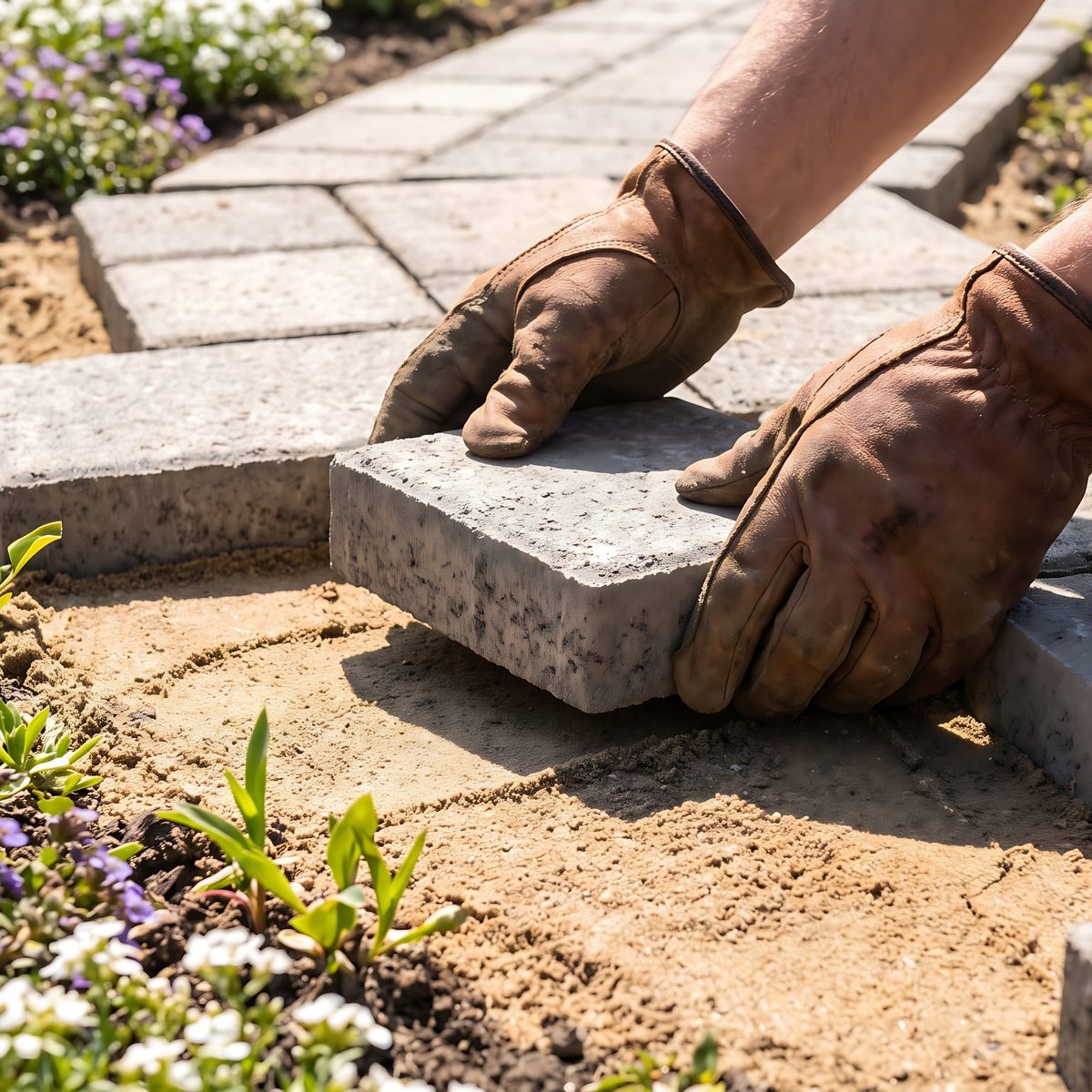
For pavers, screed a 1 inch sand bed over a compacted base rather than using sand to fix deep grade problems. A thin, even bed locks pavers in place. A thick one shifts underfoot.
Working With Moisture
Slightly damp sand spreads, screeds, and compacts far more easily than bone dry sand, which just flows back into your screed lines. Lightly wetting the pile before you work it saves real effort.
Frequently Asked Questions
Click a question to see the answer
Answer
Is mason sand the same as what is under my lawn in Rochester?
No. Rochester's native soil is sandy loam, which is fine for drainage but not washed or graded for construction use. Mason sand is cleaned and screened to a consistent, fine grain specifically for mortar mixing and paver joints, so it behaves predictably in a mix the way native soil never will.
Answer
How many cubic yards do I need for a small paver patio's joints?
For most residential patios, joint filling uses a fraction of a cubic yard since coverage is about 324 square feet per yard at 1 inch deep and joints are narrow gaps, not full surface coverage. A quarter to half yard typically handles a patio under 300 square feet, but measure your specific joint width to be sure.
Answer
When is the best time to do hardscape work with sand in Rochester?
Spring through fall is the working season here, with hardscape projects picking up once the ground has fully thawed after Rochester's last frost around May 5. Working before then risks unstable, frost heaved ground under your base, so waiting a few extra weeks in early spring is usually worth it.
Answer
Can you deliver sand if my driveway is narrow or my yard is hard to access?
Yes, just let us know about access constraints when you schedule delivery at checkout. We will work with you on where to place the load, whether that is a driveway drop or a spot closer to your work area, since sand is heavy and moving it far by wheelbarrow adds a lot of labor.
Answer
Should I use mason sand or chip stone for my paver base?
For structural bedding under pavers, chip stone is increasingly the better choice since it locks together and resists pumping out under freeze thaw pressure. Mason sand is still the right call for filling joints between pavers and for mixing mortar, so many projects here actually use both materials for different parts of the job.