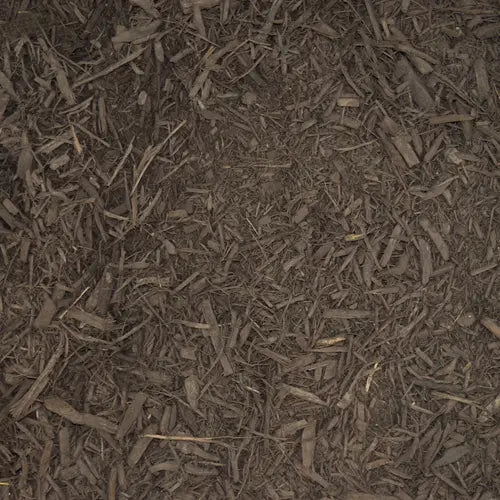
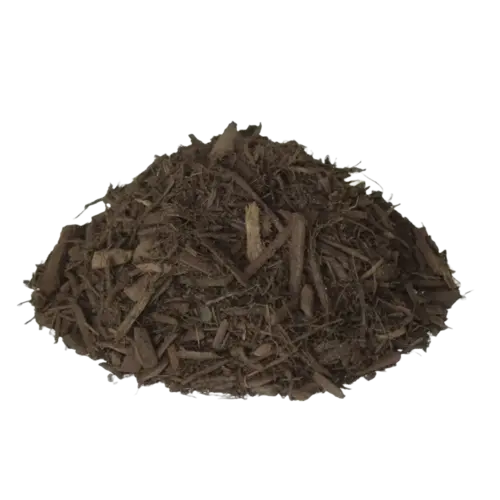
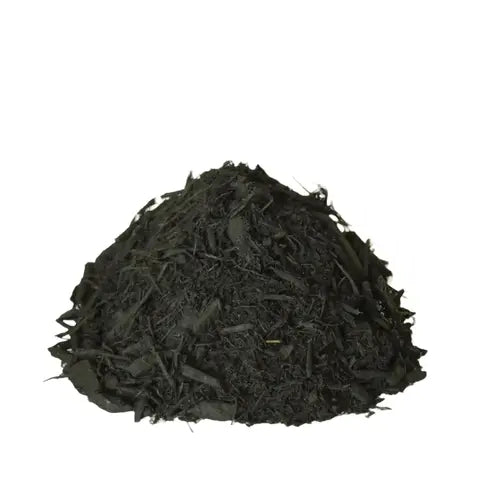
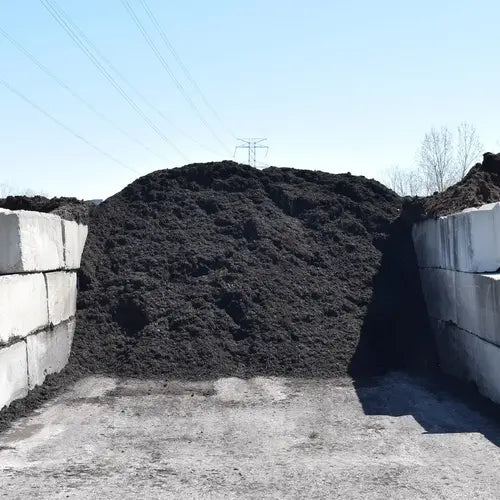
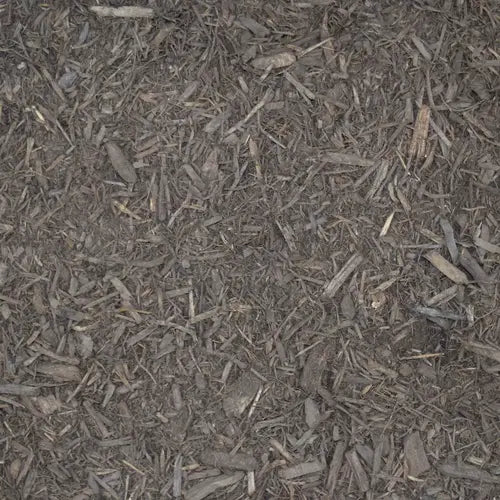
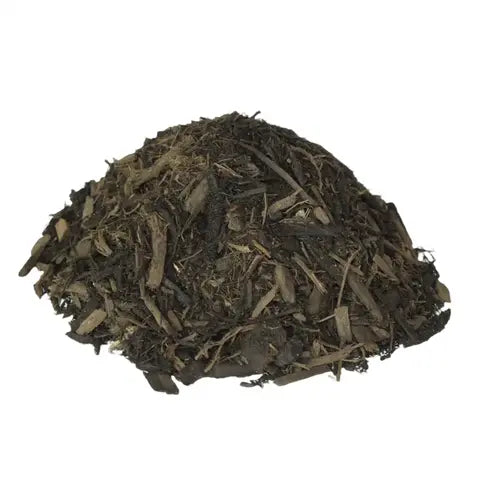
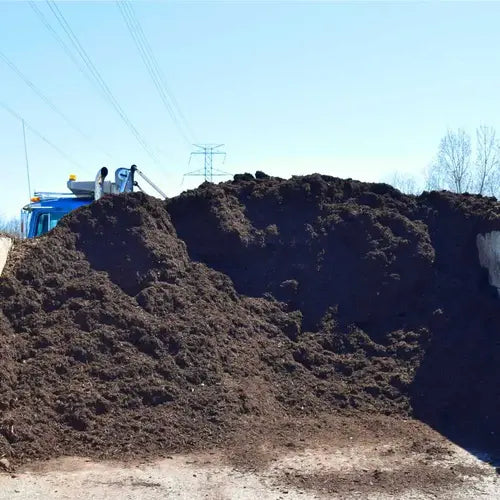
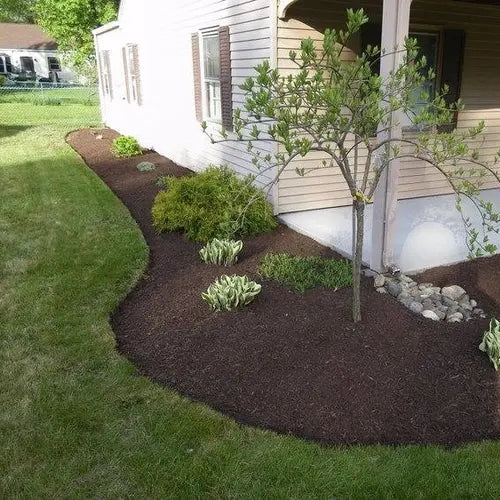
Great experience! Easy to order, they delivered promptly and were very respectful of the property! Ordered the triple shredded brown mulch and it was EXACTLY what I wanted. Very clean product too, no garbage or filler. Already put these guys in my calendar to order from next y...
Tell us what you're looking for
Thanks! We received your request.
Something went wrong. Please try again.
How Much Material Do I Need?
Apply 3 inches for established beds and 2 inches for tight areas around shallow rooted plants like azaleas and rhododendrons. Never exceed 4 inches, since our sandy loam already drains well and deeper layers just harbor voles and shed rain.
Use our free mulch calculator
What is a yard?
A yard is approximately 27 cubic feet. As a general guideline, one yard of material can cover an area of about 100-160 square feet at a 2-3 inch depth.
Great experience! Easy to order, they delivered promptly and were very respectful of the property! Ordered the triple shredded brown mulch and it was EXACTLY what I wanted. Very clean product too, no garbage or filler. Already put these guys in my calendar to order from next y...
How Much Material Do I Need?
Apply 3 inches for established beds and 2 inches for tight areas around shallow rooted plants like azaleas and rhododendrons. Never exceed 4 inches, since our sandy loam already drains well and deeper layers just harbor voles and shed rain.
Use our free mulch calculator
What is a yard?
A yard is approximately 27 cubic feet. As a general guideline, one yard of material can cover an area of about 100-160 square feet at a 2-3 inch depth.
Great experience! Easy to order, they delivered promptly and were very respectful of the property! Ordered the triple shredded brown mulch and it w...
Read full review
Great experience! Easy to order, they delivered promptly and were very respectful of the property! Ordered the triple shredded brown mulch and it was EXACTLY what I wanted. Very clean product too, no garbage or filler. Already put these guys in my calendar to order from next year! Keep up the good work.
Break your yard into simple rectangles and circles, measure each in feet, then multiply length by width for square footage. For curved island beds, measure the widest point in two directions and multiply, which slightly overestimates and gives you a helpful cushion. One cubic yard covers roughly 108 square feet at 3 inches deep, the standard depth for Saratoga Springs beds.
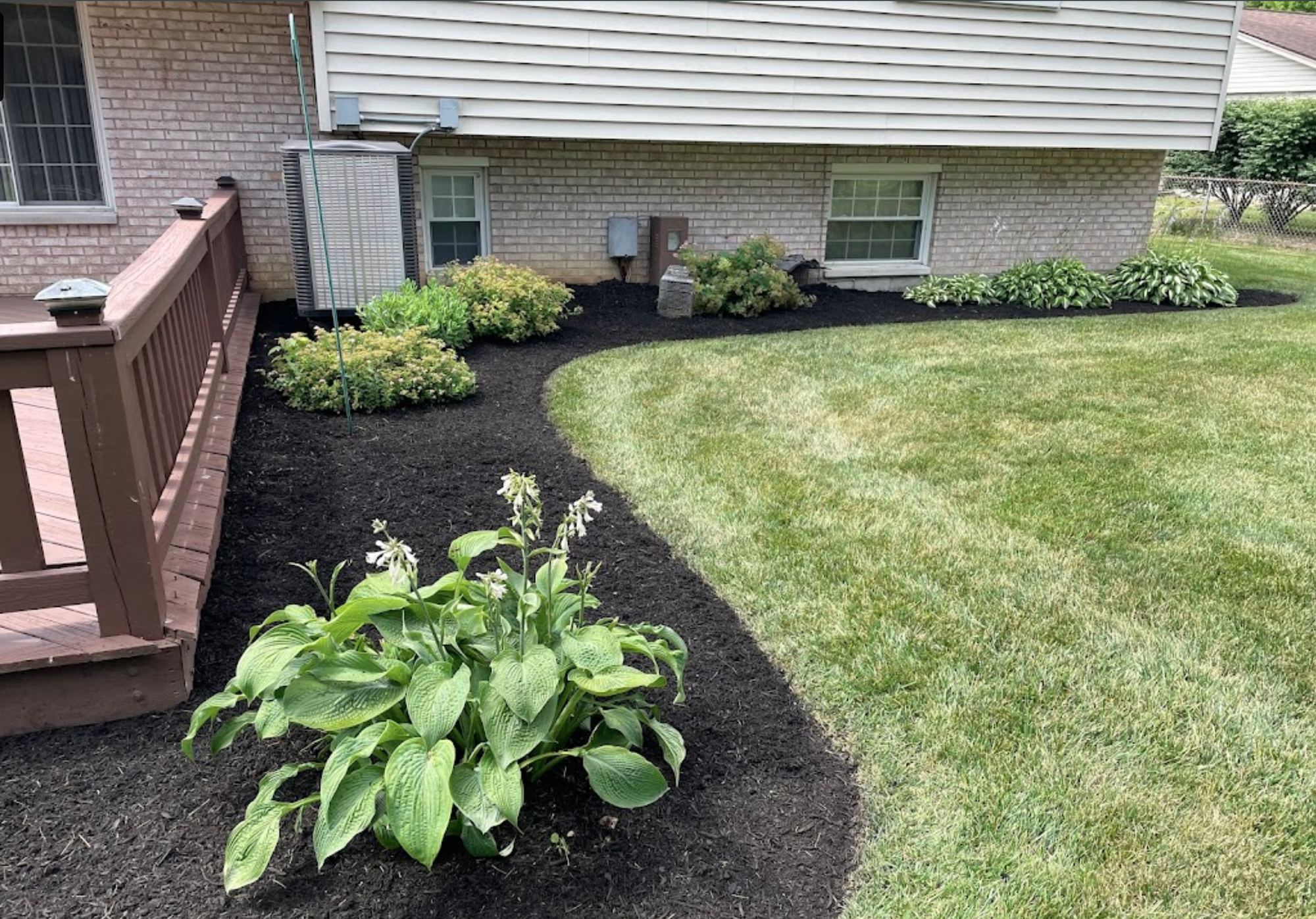
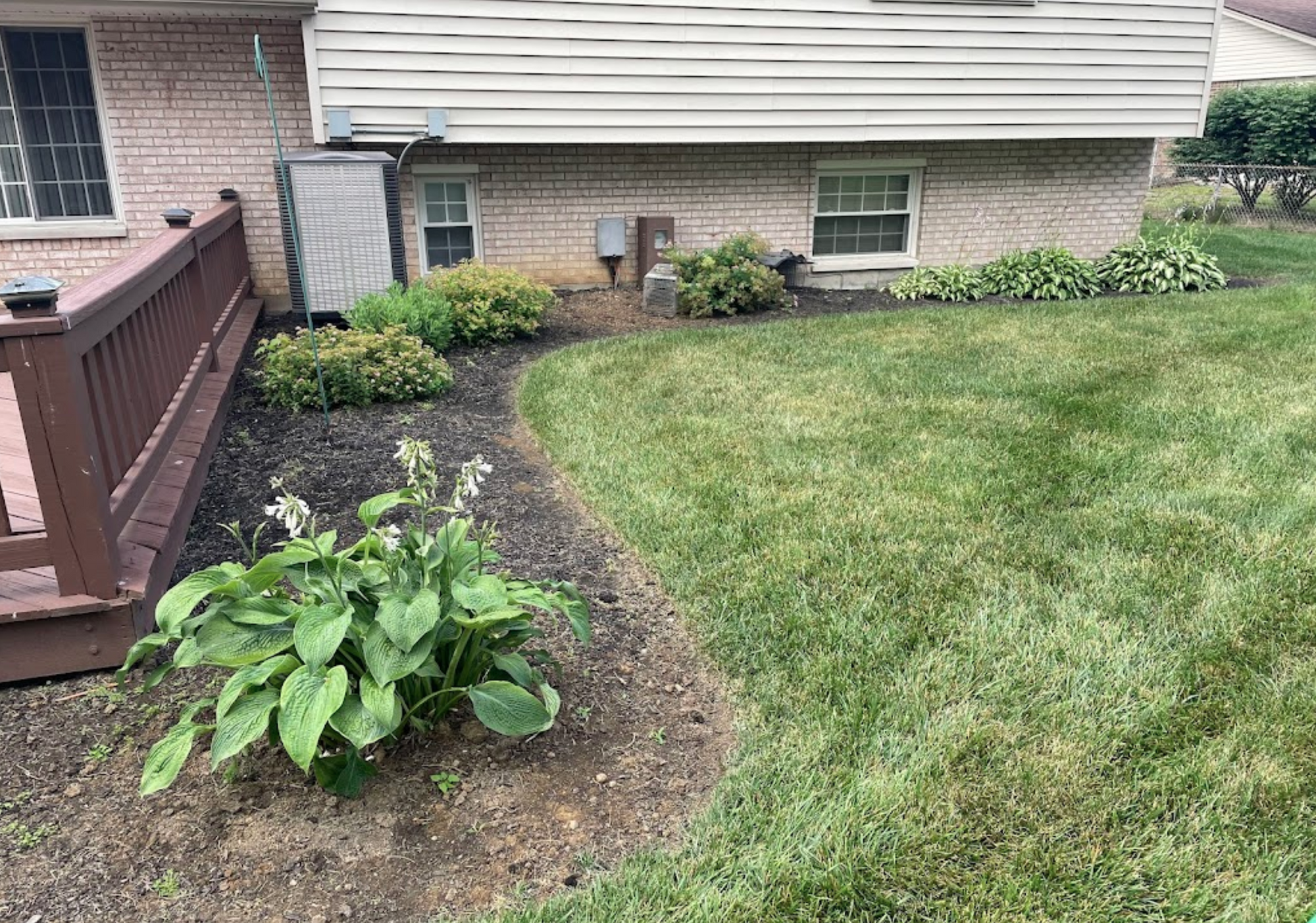
Mulch vs. No Mulch: The Difference
Saratoga Springs delivers 41 inches of rain a year plus a long, snow covered winter, and that combination of moisture and freeze and thaw cycling breaks organic mulch down noticeably faster than in drier climates. Natural hardwood mulch here typically loses its color within a single season and thins by roughly a third each year as it composts into the soil. Dyed and non fading mulches hold their color through the full growing season, from the May 10 last frost to the September 30 first frost, but they still decompose at the bottom of the layer.
Before
After
Best Mulch Choice for Saratoga Springs Lawns
Most yards in the Saratoga Springs area sit on type of soil. The sandy loam across most Saratoga Springs neighborhoods drains fast and holds very little organic matter, which means plant beds dry out quickly and nutrients leach downward after every heavy rain. Beds built in that soil often show midsummer stress even when the plants are perfectly hardy for Zone 5b.
Hardwood Mulch
Shredded hardwood mulch is the best long term fix for sandy loam because it decomposes slowly at the soil interface and steadily adds the organic matter that binds sand particles and holds water. After two or three seasons of hardwood mulch, Saratoga Springs beds noticeably retain moisture longer and require less supplemental feeding.
Complete Your Outdoor Mulch Project
Pair your mulch with a few yards of screened topsoil or compost worked into the bed first, since the organic matter is what our fast draining sandy loam is really missing. Add steel or natural stone edging to keep mulch from washing into the lawn during heavy spring rain.
Service area
Areas we deliver mulch in Saratoga Springs, New York
Edge before you mulch, not after. Cut a clean 3 to 4 inch deep trench along every bed line with a spade in early May, angling the cut so the bed side is vertical and the lawn side slopes away. That trench catches mulch during the heavy thunderstorm downpours common here in June and July, and it stops creeping bluegrass and quackgrass from marching into the bed. A crisp edge makes 3 yards of mulch look like a professional job.
Mulch Mound Pro Tip
Fight the crust. Hardwood mulch in Saratoga Springs often develops a matted fungal crust by the second summer, and water runs off it instead of soaking into the sandy loam below. Every spring take a cultivator or mulch fork and scratch the entire surface to break that layer up and expose fresh material. You will restore color without buying more mulch, and rainfall will actually reach your root zones again.
Mulch Mound Pro Tip
Mind the slope. Plenty of Saratoga Springs properties sit on gentle glacial rises, and fine shredded mulch floats away on those grades during spring melt. On any bed with noticeable pitch, use a coarser shredded hardwood or a bark nugget that knits together and stays put. On steeper sections, install a low stone check line partway down the slope so runoff slows before it reaches the bottom of the bed.
Frequently Asked Questions
Click a question to see the answer
Answer
When is the right time to mulch in Saratoga Springs?
Wait until the soil has genuinely warmed, usually mid to late May after the May 10 average last frost. Mulching too early over cold, wet spring soil keeps root zones chilly and slows perennials that are just breaking dormancy. If you want an early tidy up, rake and edge in April and lay the mulch a few weeks later.
Answer
How much mulch do I need for a typical Saratoga Springs foundation bed?
A common bed running 30 feet along the front of a house at 4 feet deep is 120 square feet, which needs about 1.1 cubic yards at 3 inches. Most homes here need 3 to 6 yards to cover the front beds, a side border, and a few tree rings. Measure each bed separately and add the totals, since irregular curved beds are easy to underestimate.
Answer
Will mulch help my sandy loam hold water through an August dry spell?
Yes, and that is one of the biggest wins here. Saratoga Springs sandy loam sheds moisture quickly, and a 3 inch hardwood layer cuts surface evaporation dramatically while shading the soil during hot afternoons. Over a few seasons the bottom of the mulch layer breaks down into the top few inches of soil and adds organic matter that improves water holding on its own.
Answer
Does mulch attract the voles and mice that tunnel under our snowpack?
Mulch itself does not attract them, but deep mulch piled against trunks gives them cover to chew bark under winter snow. Keep mulch pulled back 3 to 4 inches from the base of every tree and shrub so the bark stays exposed and dry. That single habit prevents most vole girdling damage seen on young trees around town.
Answer
How often will I need to refresh mulch with our rainfall and winters?
With 41 inches of annual rain and a full freeze and thaw cycle, hardwood mulch here typically needs a 1 to 1.5 inch top dress every year and a full refresh every three years. Do not simply pile new mulch on top each spring, or you will build a water shedding crust. Rake and fluff the existing layer first, then add only enough to return to 3 inches.
Answer
Can I mulch right before winter to protect my perennials?
Yes, but timing matters. Wait until the ground has actually frozen, usually well after the September 30 first frost and often into late November, then add an extra inch or two over perennial crowns. Mulching before the ground freezes invites rodents to nest in the warm layer, and the goal is to keep soil frozen and stable rather than to keep it warm.
Answer
Is dyed mulch safe to use around my vegetable garden beds?
Most quality dyed mulch uses iron oxide or carbon based colorants that are not a concern in ornamental beds. For edible beds we still recommend natural undyed hardwood or an aged bark, since it breaks down cleanly into the sandy loam and feeds soil biology. Save the dyed black and brown blends for front foundation beds where color retention through a long Saratoga summer matters most.
The Unique Landscape of Saratoga Springs
Saratoga Springs sits in USDA Zone 5b at about 305 feet of elevation, where winter lows regularly dip below zero and the ground goes through repeated freeze and thaw cycles from late November into April. Mulch is the layer that keeps that heaving from lifting perennials, young shrubs, and newly planted hydrangeas right out of the ground. The sandy loam common across the Spa City drains quickly, which is a blessing during the wet stretches of a 41 inch rainfall year but a liability during the dry, hot spells that hit in late July and August. A three inch blanket of hardwood mulch slows evaporation from that fast draining soil and buys your beds several extra days between waterings. Mulch also suppresses the weed pressure that explodes once the last frost passes around May 10 and beds warm up fast in full sun.