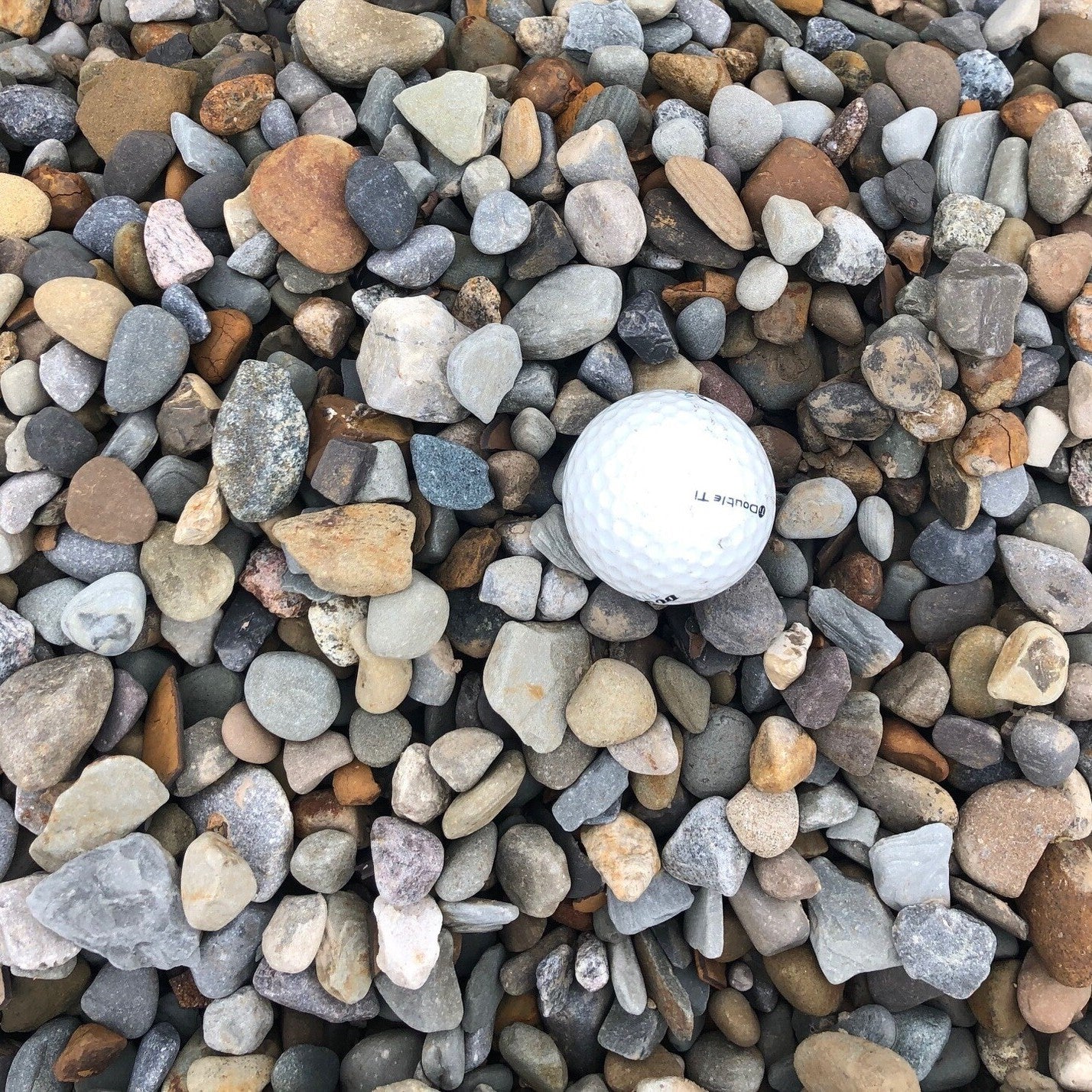
Number 57 crushed stone, angular limestone graded to about three quarters of an inch. The standard driveway, base and drainage gravel, it locks together under traffic and drains fast.
I contacted Mulch Mound for #57 river rocks and it was easy and fast to get a delivery right before the holiday weekend. Stone was delivered as promised and place exactly where I asked. Excellent service! I will be ordering mulch next!
Tell us what you're looking for
Thanks! We received your request.
Something went wrong. Please try again.
How Much Material Do I Need?
One cubic yard of stone covers roughly 160 square feet at two inches deep or about 108 square feet at three inches. Drainage trenches and driveway base need considerably more, so figure four to six inches of depth for anything carrying water or vehicle weight.
Use our free gravel calculator
What is a Yard?
A yard is approximately 27 cubic feet. As a general guideline, one yard of material can cover an area of about 100-160 square feet at a 2-3 inch depth.
We can't take orders for this right now. Tell us what you need and we'll get back to you.
What do you need?
Thanks! We received your request.
Something went wrong. Please try again.
Hand-picked local yards
4,000+ regional deliveries
Dedicated support
Why order through Mulch Mound
The best local , without the guesswork.
We hand-pick and partner with the best yards in your region, keep only the ones our buyers rate well, and back each load with our guarantee.
Mulch Mound Guarantee
If your isn't the quantity or quality you ordered, we'll make it right.
About this stone
Number 57 crushed stone, angular limestone graded to about three quarters of an inch. The standard driveway, base and drainage gravel, it locks together under traffic and drains fast.
I contacted Mulch Mound for #57 river rocks and it was easy and fast to get a delivery right before the holiday weekend. Stone was delivered as promised and place exactly where I asked. Excellent service! I will be ordering mulch next!
How Much Material Do I Need?
One cubic yard of stone covers roughly 160 square feet at two inches deep or about 108 square feet at three inches. Drainage trenches and driveway base need considerably more, so figure four to six inches of depth for anything carrying water or vehicle weight.
Use our free gravel calculator
What is a Yard?
A yard is approximately 27 cubic feet. As a general guideline, one yard of material can cover an area of about 100-160 square feet at a 2-3 inch depth.
I contacted Mulch Mound for #57 river rocks and it was easy and fast to get a delivery right before the holiday weekend. Stone was delivered as pro...
Read full review
I contacted Mulch Mound for #57 river rocks and it was easy and fast to get a delivery right before the holiday weekend. Stone was delivered as promised and place exactly where I asked. Excellent service! I will be ordering mulch next!
Measure length and width in feet, then account for depth in inches, keeping in mind that stone is sold by weight or volume and covers less ground per yard than mulch. For an irregular dry creek or curved bed, break the shape into rectangles and add them up. Stone does not settle much, so ordering five percent extra is plenty.
Complete Your Outdoor Stone Project
Add geotextile fabric and steel or aluminum edging to keep stone from migrating into your fescue during Somerset's heavy spring rains, and pick up a few yards of mulch for the shaded beds where stone would cook the roots.
Grade before you gravel. Somerset lots almost always have enough natural fall to move water if you use it, so establish a slope of at least a quarter inch per foot away from structures before a single stone goes down. People who skip this end up with a nice looking gravel area that holds standing water after every storm, and in silt loam that standing water turns the base to soup within a season.
Mulch Mound Pro Tip
For a dry creek bed to look like it belongs in Pulaski County, mimic what you see along the creeks feeding Lake Cumberland. Vary your stone sizes rather than using one uniform grade, bury the larger rocks a third of the way into the ground so they look settled instead of scattered, and let the channel curve. Straight lines of same size rock read as a drainage ditch, not a landscape feature.
Mulch Mound Pro Tip
Compact crushed limestone in layers of no more than three inches at a time, and dampen it lightly as you go. The fines in dense grade stone need moisture to lock the angular pieces together, which is what gives a Somerset driveway or walkway its hard, stable surface. Dumping six inches at once and rolling it leaves loose material underneath that ruts the first time a delivery truck or heavy rain works on it.
The Unique Landscape of Somerset
Water management is the defining landscape challenge in Somerset, where 53 inches of annual rain lands on rolling terrain at 974 feet with silt loam that saturates quickly. Stone is how you handle the water that mulch and soil cannot. Gravel driveways, French drains, dry creek beds, and downspout aprons all move runoff away from foundations before it can undermine them or push into a basement. Stone also solves the permanence problem in Somerset's climate, because decorative rock does not decompose in our humid summers the way organic mulch does, which makes it ideal for hot south facing strips, drip lines, and areas you do not want to redo every year. And since limestone is the local bedrock, crushed stone here compacts and locks up beautifully underfoot.
Frequently Asked Questions
Click a question to see the answer
Answer
What size gravel works best for a driveway in Somerset?
Build in layers. Start with four to six inches of larger base rock, then top with two to three inches of dense grade crushed limestone, which contains fines that lock together and shed water. Loose round river rock will not stay put on the grades common around Somerset and will migrate downhill after every heavy rain.
Answer
How do I stop water from pooling against my foundation?
Run downspout extensions at least six feet out, then dig a shallow trench lined with fabric and filled with number 57 washed stone to carry water toward the low side of the lot. With Somerset's 53 inches of yearly rain and silt loam that saturates fast, moving water away from the house is far more effective than trying to get it to soak in near the foundation.
Answer
How much stone do I need for a dry creek bed?
For a typical dry creek fifteen feet long and three feet wide with stone about four inches deep, plan on roughly three quarters of a cubic yard of river rock plus a few larger accent boulders. Somerset dry creeks should be wider than they look necessary, since our storms can drop two inches in an hour and a narrow channel just overflows.
Answer
Will stone mulch make my beds too hot for plants?
It can in full sun. Light colored limestone reflects heat and Somerset summers regularly run into the upper 80s and low 90s with high humidity. Use stone in beds with heat tolerant plants like juniper, yucca, sedum, and ornamental grass, and stick with hardwood mulch for hydrangeas, azaleas, and hostas that need cooler roots.
Answer
Does crushed limestone change my soil pH?
Slowly, yes. Limestone fines dissolve over years and nudge pH upward, which matters if you have acid loving plants nearby. Many Somerset soils already sit near neutral because of our limestone bedrock, so keep crushed limestone away from blueberry patches, azaleas, and rhododendrons and use river rock or granite there instead.
Answer
Do I need landscape fabric under stone?
Under drainage stone, yes, use a permeable geotextile so silt loam fines do not migrate up and clog the voids. Under decorative stone in beds, fabric helps for the first few years but eventually silt and leaf litter build a layer on top that weeds root into. Plan on occasional cleanup regardless.
Answer
How thick should decorative stone be spread in a bed?
Two to three inches is right for most Somerset beds. Less than that and you see fabric or bare soil through it, more and the stone shifts underfoot. For larger river rock in the three to five inch range you need at least one full layer of stone, which usually works out closer to four inches of depth.