


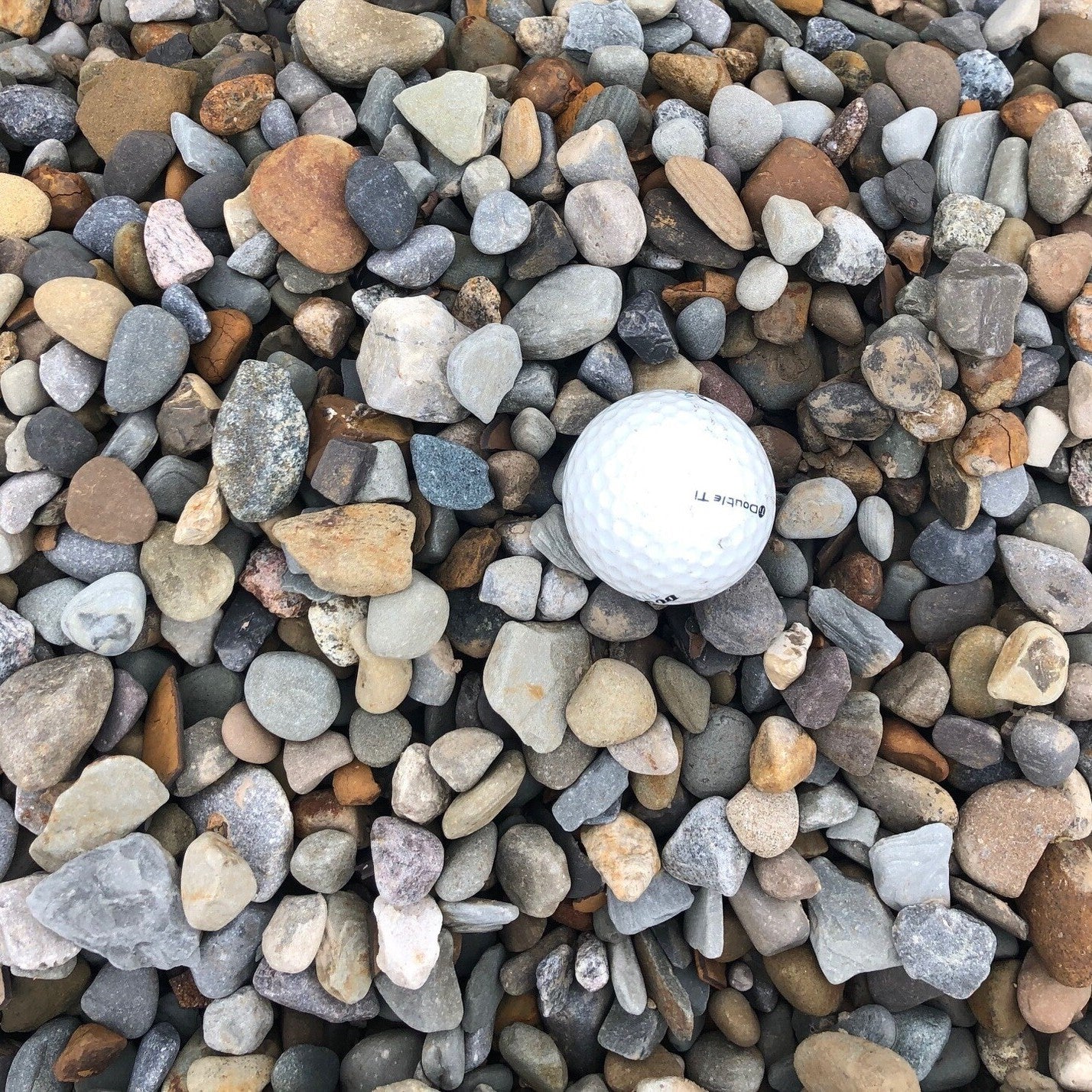

The driver nailed it on putting the gravel I ordered in front of my trailer and between the sidewalk. Very satisfied with how my flowerbeds look now.
About this stone
Number 57 crushed stone, angular limestone graded to about three quarters of an inch. The standard driveway, base and drainage gravel, it locks together under traffic and drains fast.
The driver nailed it on putting the gravel I ordered in front of my trailer and between the sidewalk. Very satisfied with how my flowerbeds look now.
Tell us what you're looking for
Thanks! We received your request.
Something went wrong. Please try again.
How Much Material Do I Need?
How Much Material Do I Need?
Use 2 inches for decorative ground cover, 3 to 4 inches for pathways and drainage beds, and 6 inches of compacted base under patios and driveways. One cubic yard covers about 160 square feet at 2 inches deep.
Use our free gravel calculator
What is a Yard?
What is a Yard?
FAQs
FAQs
Southfield Gravel Delivery
Southfield Gravel Delivery
Regular price
$133.00
per
Yard
Regular price
Sale price
$133.00
Unit price
per
Shipping calculated at checkout.
Minimum of 3 Yard
Couldn't load pickup availability
Not currently available
We can't take orders for this right now. Tell us what you need and we'll get back to you.
Hand-picked local yards
4,000+ regional deliveries
Dedicated support
Why order through Mulch Mound
The best local , without the guesswork.
We hand-pick and partner with the best yards in your region, keep only the ones our buyers rate well, and back each load with our guarantee.
Mulch Mound Guarantee
If your isn't the quantity or quality you ordered, we'll make it right.
About this stone
Number 57 crushed stone, angular limestone graded to about three quarters of an inch. The standard driveway, base and drainage gravel, it locks together under traffic and drains fast.
The driver nailed it on putting the gravel I ordered in front of my trailer and between the sidewalk. Very satisfied with how my flowerbeds look now.
How Much Material Do I Need?
How Much Material Do I Need?
Use 2 inches for decorative ground cover, 3 to 4 inches for pathways and drainage beds, and 6 inches of compacted base under patios and driveways. One cubic yard covers about 160 square feet at 2 inches deep.
Use our free gravel calculator
What is a Yard?
What is a Yard?
FAQs
FAQs
Tell us what you're looking for
Thanks! We received your request.
Something went wrong. Please try again.
How It Works
Getting started is easy — just follow these simple steps
1
Choose your stone
Make sure you adjust the quantity to your home's needs. You can use our calculator to estimate how much you'll need.
2
Select your delivery date
Select a delivery date you'd like for the product to be dropped off at your home
3
Sit back and wait
Sit back, wait, and let us work our magic to make sure the highest quality product is delivered to your driveway.

Placing an order online was so easy. Delivery was on time. When the driver realized we had a newly poured driveway they erred on the side of cautio...
Read full review
Placing an order online was so easy. Delivery was on time. When the driver realized we had a newly poured driveway they erred on the side of caution and opted not ti drive in it. The company even sent me a message explaining that call. Would recommend!

Online ordering was really simple and I liked the transparent pricing.
Need Help Calculating How Much Gravel You Need?
Use our NEW Trace from Satellite tool to get an estimate for your project based on an aerial view of your property
Try Our CalculatorMeasure length and width in feet, decide on depth, and let the calculator convert to cubic yards or tons. Stone is denser than mulch, so one cubic yard weighs roughly 1.3 to 1.5 tons depending on the product. For irregular Southfield beds and curved drive edges, break the space into rectangles and triangles and total them up.
Complete Your Outdoor Stone Project
Round out the job with landscape fabric, steel or paver edging to hold the stone in place, and a few yards of topsoil or mulch for the planted areas bordering your new stone feature.

Mulch Mound Pro Tip
Install solid edging before you spread a single shovel of stone. Southfield's clay loam is soft and wet in April, so loose stone sinks into it and migrates outward every year until your gravel bed has crept two feet into the lawn. Steel edging or a concrete paver soldier course set on compacted base holds the line and keeps rocks out of the mower deck.
Mulch Mound Pro Tip
Extend downspout discharge onto stone, not onto turf. Southfield roofs shed a lot of water during the intense spring storms that deliver much of our 33 inches, and clay soil cannot take it. A 3 foot by 6 foot pad of river rock at each outfall spreads the flow, prevents the eroded trench you see beside so many houses here, and keeps water from tracking back to the basement wall.
Mulch Mound Pro Tip
Compact in lifts if you are building a base. Dump 6 inches of 21AA on Southfield clay and run a plate compactor over it once and only the top 2 inches actually consolidate. Spread in 2 to 3 inch layers, dampen each one lightly, and compact between layers. That discipline is the single biggest reason some patios here survive fifteen winters flat while neighbors' patios ripple after three.
The Unique Landscape of Southfield
Stone solves the problems mulch cannot in Southfield, and most of those problems trace back to water moving across clay. Because clay loam absorbs rain slowly, downspout outfalls, side yards, and low corners stay soggy for days after a storm, and gravel or river rock gives that water somewhere to go while staying walkable. Decorative stone also holds its position on the sloped drive aprons and swale edges found throughout the city instead of floating away like bark does. In Zone 6a, stone shrugs off the freeze and thaw punishment that wrecks organic materials between October and May. It never needs annual replacement, which matters on a property where you are already remulching planting beds every spring. For driveways, walkway bases, and dry creek beds, crushed limestone and pea gravel are simply the more durable choice against Southfield's wet springs and hard winters.