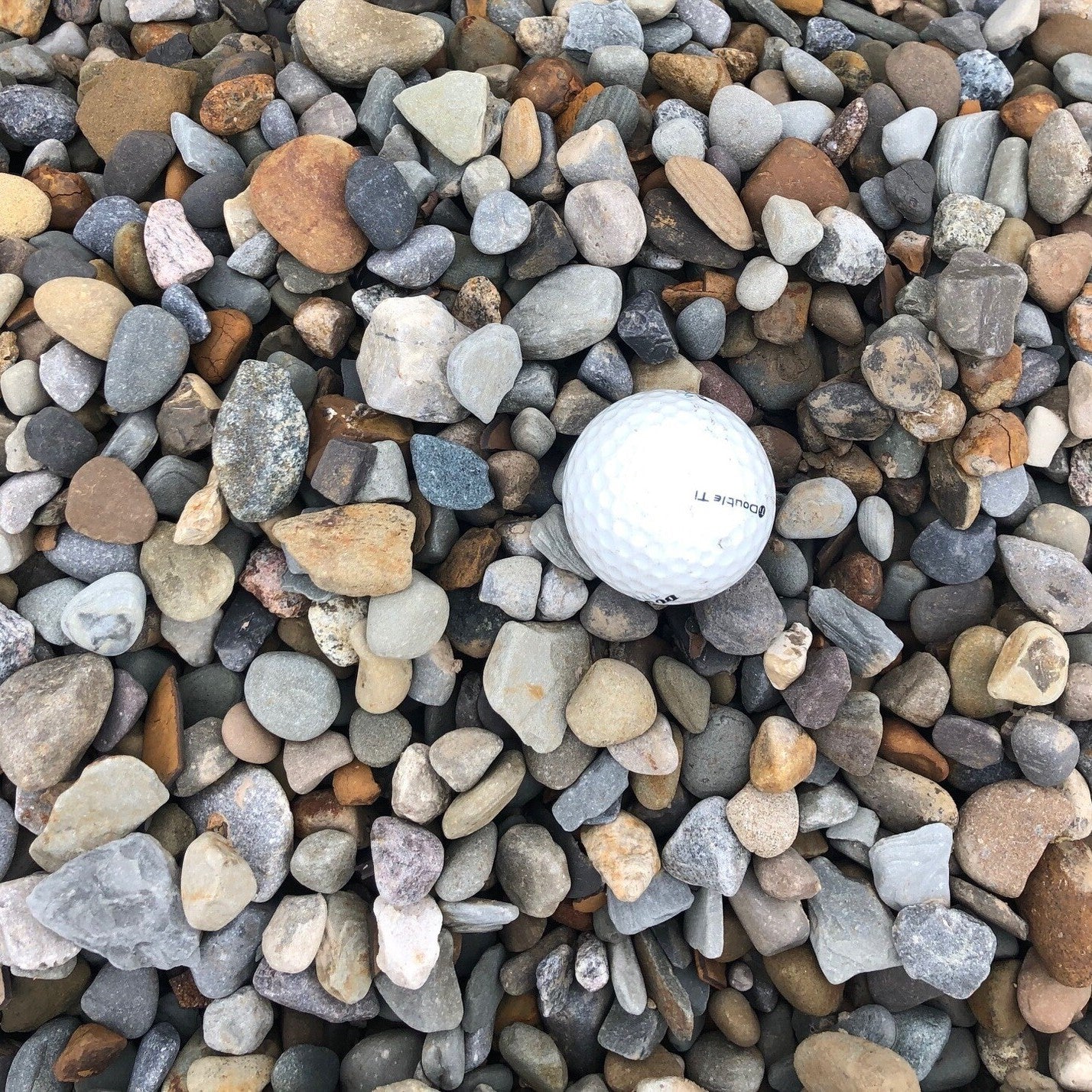
Number 57 crushed stone, angular limestone graded to about three quarters of an inch. The standard driveway, base and drainage gravel, it locks together under traffic and drains fast.
My experience with Mulch Mound was great and super easy. I ordered two yards of screened topsoil and was able to get it delivered within 2 days. They came in my requested time frame (afternoon) and dropped it off where I asked on my driveway. The topsoil was exactly what was a...
Tell us what you're looking for
Thanks! We received your request.
Something went wrong. Please try again.
How Much Material Do I Need?
Two inches is enough for a decorative bed over quality fabric, while walkways, driveways, and dry creek beds need three to four inches to stay stable on sandy ground. Deeper is rarely necessary except in drainage trenches.
Use our free gravel calculator
What is a Yard?
A yard is approximately 27 cubic feet. As a general guideline, one yard of material can cover an area of about 100-160 square feet at a 2-3 inch depth.
We can't take orders for this right now. Tell us what you need and we'll get back to you.
What do you need?
Thanks! We received your request.
Something went wrong. Please try again.
Hand-picked local yards
4,000+ regional deliveries
Dedicated support
Why order through Mulch Mound
The best local , without the guesswork.
We hand-pick and partner with the best yards in your region, keep only the ones our buyers rate well, and back each load with our guarantee.
Mulch Mound Guarantee
If your isn't the quantity or quality you ordered, we'll make it right.
About this stone
Number 57 crushed stone, angular limestone graded to about three quarters of an inch. The standard driveway, base and drainage gravel, it locks together under traffic and drains fast.
My experience with Mulch Mound was great and super easy. I ordered two yards of screened topsoil and was able to get it delivered within 2 days. They came in my requested time frame (afternoon) and dropped it off where I asked on my driveway. The topsoil was exactly what was a...
How Much Material Do I Need?
Two inches is enough for a decorative bed over quality fabric, while walkways, driveways, and dry creek beds need three to four inches to stay stable on sandy ground. Deeper is rarely necessary except in drainage trenches.
Use our free gravel calculator
What is a Yard?
A yard is approximately 27 cubic feet. As a general guideline, one yard of material can cover an area of about 100-160 square feet at a 2-3 inch depth.
My experience with Mulch Mound was great and super easy. I ordered two yards of screened topsoil and was able to get it delivered within 2 days. Th...
Read full review
My experience with Mulch Mound was great and super easy. I ordered two yards of screened topsoil and was able to get it delivered within 2 days. They came in my requested time frame (afternoon) and dropped it off where I asked on my driveway. The topsoil was exactly what was advertised, clean with no rocks or other debris. The price was reasonable. I plan to use them again in a couple weeks to order compost for my garden beds.
Measure the area in square feet, then choose a depth of two to three inches for decorative beds or three to four inches for paths and drainage areas. Remember that stone is sold by volume but delivered by weight, and a cubic yard of river rock runs around 2,500 pounds. Order a little extra for the settling that happens after the first few big St. Petersburg downpours.
Complete Your Outdoor Stone Project
Add heavy duty landscape fabric and metal or paver edging to keep stone from migrating into the lawn, and pick up base material if you are building a path or drive. Larger accent boulders finish a dry creek bed nicely.
Do not skimp on fabric. The thin plastic sheeting sold at big box stores tears within a season and lets St. Petersburg sand mix up into your stone, turning clean white rock dirty gray. Use a woven professional grade fabric, overlap seams by at least six inches, and pin it every couple of feet with landscape staples. The extra cost up front saves you from redoing the entire area in three years.
Mulch Mound Pro Tip
Design for water, not just looks. Because so much of this city sits within a few feet of sea level, every stone area should have a deliberate low point and a route for runoff. Grade the base to fall away from your foundation before a single rock goes down, and consider burying perforated pipe under gravel in spots that stay wet. Stone installed on flat, poorly graded ground just becomes a decorative puddle.
Mulch Mound Pro Tip
Rinse it once or twice a year. Salt spray, pollen, and fine sand build up in rock beds along the bay and Gulf side of St. Petersburg, dulling white marble and shell within a season. A firm spray with a hose nozzle, working in small sections, restores the brightness and flushes debris down between the stones where it decomposes out of sight. Do this before the summer rains rather than after and the beds look sharp all year.
The Unique Landscape of St. Petersburg
Stone earns its keep in St. Petersburg because it does not decompose in heat and humidity that chew through organic mulch in under a year. On a peninsula that gets 51 inches of rain, mostly in intense summer bursts, gravel and river rock give water somewhere to go instead of pooling against a slab or carving channels through sand. Local favorites like white marble chip and shell also bounce Gulf coast sunlight instead of absorbing it, which keeps hardscape areas noticeably cooler underfoot than dark material. Because the sand underneath shifts easily, stone laid over quality fabric provides a stable surface for walkways, dry creek beds, and utility paths that would rut in bare soil. And with no frost heave to worry about in Zone 10a, a properly installed stone area here can hold its shape for many years with little more than an occasional rake.
Frequently Asked Questions
Click a question to see the answer
Answer
Does stone get too hot to walk on in St. Pete summers?
Dark stone absolutely does, and dark granite or lava rock can be uncomfortable barefoot by late morning in July. Light colored options such as white marble chip, shell, and light limestone reflect much more sunlight and stay considerably cooler. Those lighter choices are also the traditional look along Florida's Gulf coast, so they fit right in.
Answer
Will stone help with the standing water in my yard?
It can when it is part of an actual drainage plan. A gravel filled French drain or a river rock dry creek bed gives storm runoff a defined path away from the house, which matters on the low, flat lots common in St. Petersburg. Stone spread flat on top of compacted soil without a drainage route underneath just sits in the same puddle.
Answer
Does stone sink into sandy soil over time?
Yes, if you skip the base. Loose sand lets individual stones work downward every time it rains, and within a year or two you are looking at half buried rock. Lay commercial grade woven landscape fabric over a compacted base first, then two to three inches of stone. Solid edging keeps everything contained during heavy rain.
Answer
Do weeds still grow through rock in Florida?
They do, because our year round growing season means seeds blow in and germinate in any organic debris that collects between stones. The fabric stops weeds from below, but you still need to blow out leaves and clippings a few times a year. Keeping the stone clean is the single most effective weed control for St. Petersburg rock beds.
Answer
How much stone do I need for a driveway border or path?
A path 3 feet wide and 40 feet long is 120 square feet, which takes about one cubic yard at three inches deep. Most decorative borders and small beds land between half a yard and two yards. Measure length times width, pick your depth, and let the calculator convert it for you.
Answer
Is shell a good option here instead of gravel?
Shell is a classic St. Petersburg choice, inexpensive and locally appropriate, and it packs down into a firm surface for driveways and paths. Keep in mind that it is alkaline and will raise soil pH over time, so avoid using it around gardenias, ixora, or other acid loving plants. For pathways and utility areas it is hard to beat.
Answer
Can I use stone right against my foundation?
Yes, and many local homeowners prefer it there because stone does not hold moisture against block and stucco the way wood mulch can. Keep the stone below the weep holes and slab edge so water can still escape, and maintain a slight slope away from the house. It also cuts down on the mulch refreshing you would otherwise do every year in this climate.
Answer
Is crush and run the same as crusher run?
Same idea, different name. Crush and run refers to crushed stone blended with stone dust that compacts into a firm base for driveways and walkways. For St Petersburg's heavy summer rain, our Crushed Stone #57 drains better underfoot since the fines are washed out, so water moves through instead of pooling.
Answer
Is there a stone yard near St. Petersburg?
Hauling crushed stone from a stone yard to build a drainage bed that keeps summer downpours away from your slab is a heavy, messy trip, but Mulch Mound brings it to your driveway instead. We are not a stone yard or a quarry, so there is nothing to visit in St. Petersburg. Just order online and we drop it where you need it.