


I needed 3 yards of top soil and that's what I got! Right on time and right where I asked it to be placed (Order# 2041).
About this sand
Washed and finely screened masonry sand for mortar, paver joints, and pool bases. Consistent grain, ready to screed.
I needed 3 yards of top soil and that's what I got! Right on time and right where I asked it to be placed (Order# 2041).
Tell us what you're looking for
Thanks! We received your request.
Something went wrong. Please try again.
How Much Sand Do I Need?
How Much Sand Do I Need?
One cubic yard of mason sand covers about 324 square feet at a 1 inch depth, so a small patio joint job or a mortar batch for a chimney repair rarely needs more than a partial yard. For paver joints most crews only need a thin topping, while mortar mixing depends on your batch ratio rather than square footage. If you are unsure, tell us the square footage and rough depth and we can help size the order before it ships.
Use our free sand calculator
What is a Yard?
What is a Yard?
FAQs
FAQs
Tahlequah Sand Delivery
Tahlequah Sand Delivery
Regular price
$74.00
per
Yard
Regular price
Sale price
$74.00
Unit price
per
Shipping calculated at checkout.
Minimum of 3 Yard
Couldn't load pickup availability
Not currently available
We can't take orders for this right now. Tell us what you need and we'll get back to you.
Hand-picked local yards
4,000+ regional deliveries
Dedicated support
Why order through Mulch Mound
The best local sand, without the guesswork.
We hand-pick and partner with the best yards in your region, keep only the ones our buyers rate well, and back each load with our guarantee.
Mulch Mound Guarantee
If your sand isn't the quantity or quality you ordered, we'll make it right.
About this sand
Washed and finely screened masonry sand for mortar, paver joints, and pool bases. Consistent grain, ready to screed.
I needed 3 yards of top soil and that's what I got! Right on time and right where I asked it to be placed (Order# 2041).
How Much Sand Do I Need?
How Much Sand Do I Need?
One cubic yard of mason sand covers about 324 square feet at a 1 inch depth, so a small patio joint job or a mortar batch for a chimney repair rarely needs more than a partial yard. For paver joints most crews only need a thin topping, while mortar mixing depends on your batch ratio rather than square footage. If you are unsure, tell us the square footage and rough depth and we can help size the order before it ships.
Use our free sand calculator
What is a Yard?
What is a Yard?
FAQs
FAQs
Tell us what you're looking for
Thanks! We received your request.
Something went wrong. Please try again.

How It Works
Getting started is easy — just follow these simple steps
1
Choose your quantity
Adjust the quantity to match your project. One cubic yard covers about 100 to 160 square feet at a 2 to 3 inch depth.
2
Select your delivery date
Select a delivery date you'd like for the product to be dropped off at your home
3
Sit back and wait
Sit back, wait, and let us work our magic to make sure the highest quality product is delivered to your driveway.

We had a great experience with mulch mound! Our mulch arrived when we requested. The delivery fee was so reasonable. We’ll use them again for sure!

Complete Your Outdoor Project
Mason sand is usually the finishing step after base gravel and pavers are already down, so most orders pair with crushed base stone delivered earlier in the job. Some crews are switching paver joint fill to chip stone since it resists washout and does not pump the way sand can under repeated freeze thaw. If mortar work is the goal, portland cement and lime are the usual companions, sourced separately.


Service area
Areas we deliver sand in Tahlequah, Oklahoma
Mulch Mound Pro Tip
Tahlequah's freeze thaw swings between the Apr 5 last frost and Oct 26 first frost stress paver joints more than people expect. Straight mason sand in joints can wash out or settle after a hard winter, which is why a lot of local crews are moving to compacted chip stone for exterior joints and saving mason sand for mortar work and indoor or covered applications where washout is not a factor.
Mulch Mound Pro Tip
A common mistake on pool base work is skipping compaction and just raking the sand smooth. Sand that looks level but is not compacted will settle unevenly once the liner and water load go on, leaving low spots. Water lightly and tamp in stages, checking with a screed board, rather than trying to hand rake a 2 inch layer flat in one pass.
Mulch Mound Pro Tip
Buying mason sand in bulk cubic yards instead of bagged sand from a hardware store cuts down on both cost per yard and the number of trips needed for a mortar heavy job like a fireplace rebuild or a full patio. If your project also needs base gravel, ask about scheduling both deliveries close together so your crew is not waiting on material mid job.
Working With Sand in Tahlequah
Tahlequah sits on silt loam that holds moisture and turns greasy after a spring downpour, which is exactly why builders here reach for a clean, washed sand instead of trying to doctor native soil for anything structural. Masons working on additions to homes near downtown or out toward the Cherokee National Capitol area count on mason sand for consistent mortar joints, since local soil is too fine and inconsistent to substitute. Pool installers use it to true up a base before liner or shell placement. With hardscape season running spring through fall here, this is the sand that shows up on job sites doing mortar and joint work, not yard grading.
Masonry vs Fill Sand
Masonry sand is washed and finely screened, the right choice for mortar work, paver joints, and sandboxes. Fill sand is coarser and less processed, better suited to leveling, bedding pipe, and filling low spots.
Bedding and Leveling
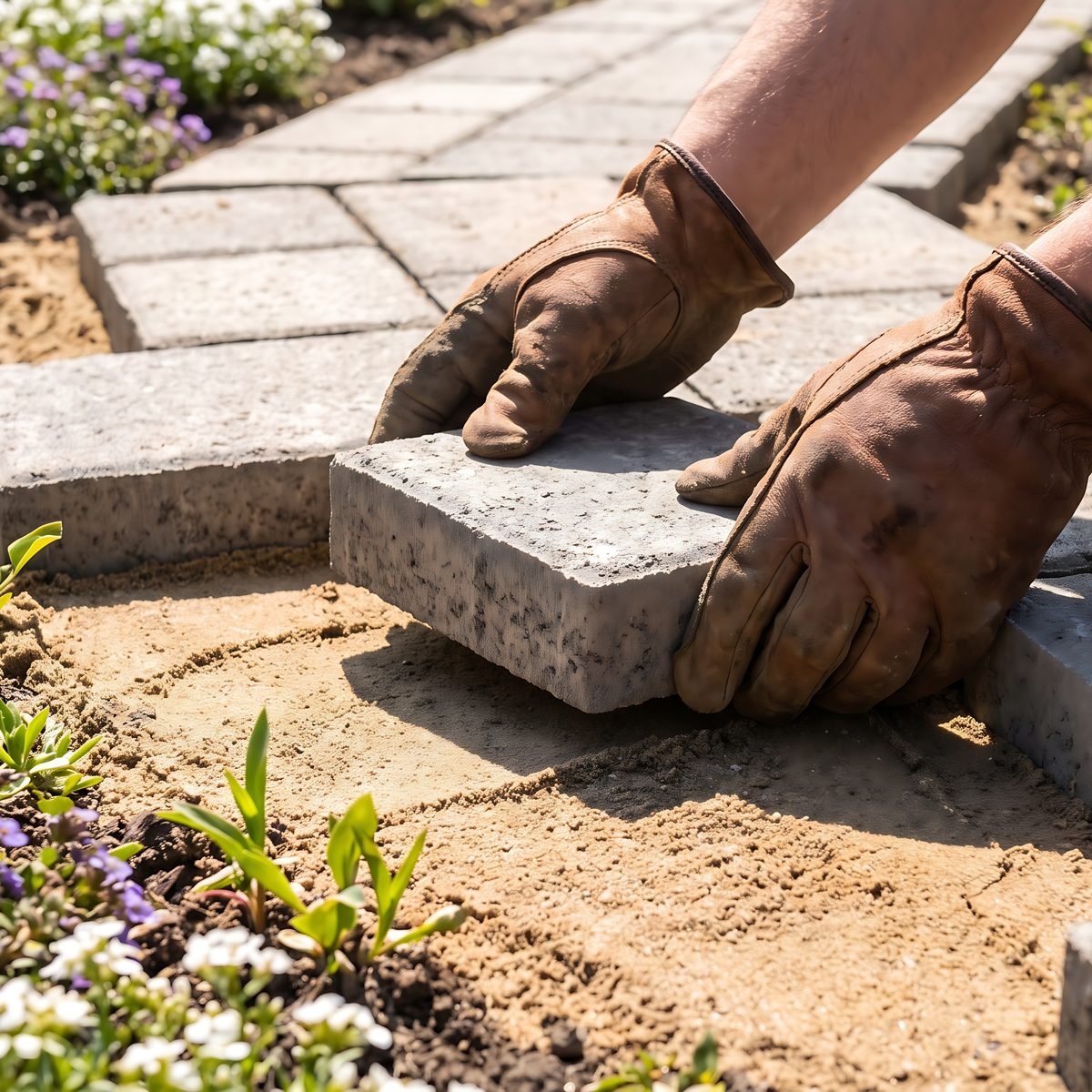
For pavers, screed a 1 inch sand bed over a compacted base rather than using sand to fix deep grade problems. A thin, even bed locks pavers in place. A thick one shifts underfoot.
Working With Moisture
Slightly damp sand spreads, screeds, and compacts far more easily than bone dry sand, which just flows back into your screed lines. Lightly wetting the pile before you work it saves real effort.