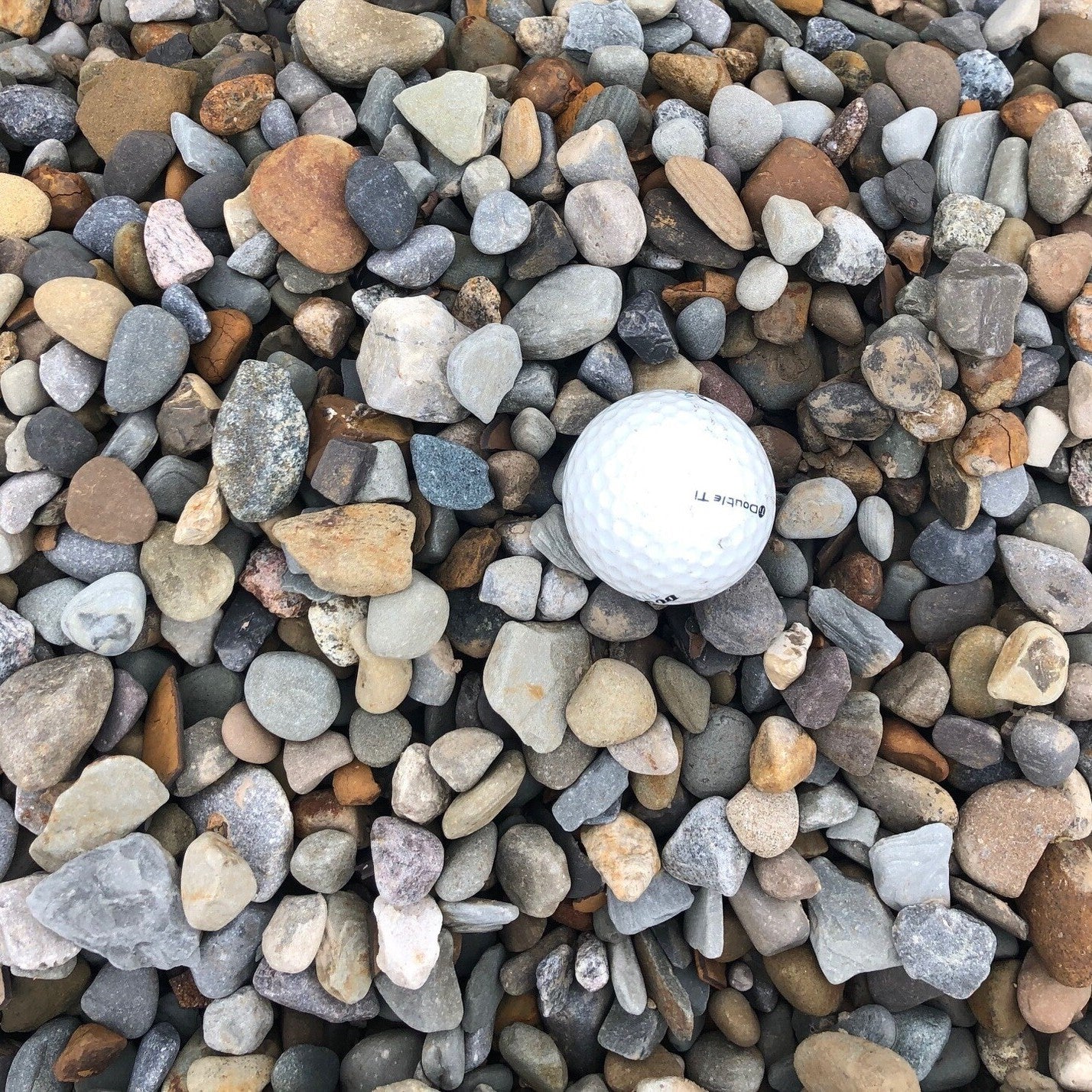
About this stone

#8 washed gravel: small angular crushed stone perfect for drainage, French drains, and concrete bases.

Mulch Mound delivered a yard of pea gravel to us. Delivery was on time, driver was friendly and hit a bullseye on the “tarp target”. We used the pea gravel (which was diameter as specified) to fill several muskrat holes around our pond. I would definitely recommend Mulch Mo...

Two to three inches is right for decorative stone in Tahlequah beds, enough to hide the fabric without burying plant crowns. Driveways, parking pads, and dry creek beds need four to six inches to hold up under our rainfall and soft silt loam base.
Use our free stone calculator

A yard is approximately 27 cubic feet. As a general guideline, one yard of material can cover an area of about 100-160 square feet at a 2-3 inch depth.

Tahlequah Stone Delivery

Tahlequah Stone Delivery

4.7
137 reviews
Regular price $101.00 per Yard
Regular price Sale price $101.00
Sale Sold out
Shipping calculated at checkout.
Type
Size
Hand-picked local yards
4,000+ regional deliveries
Dedicated support
Why order through Mulch Mound

The best local , without the guesswork.

We hand-pick and partner with the best yards in your region, keep only the ones our buyers rate well, and back each load with our guarantee.

Mulch Mound Guarantee

If your isn't the quantity or quality you ordered, we'll make it right.

About this stone

#8 washed gravel: small angular crushed stone perfect for drainage, French drains, and concrete bases.

Mulch Mound delivered a yard of pea gravel to us. Delivery was on time, driver was friendly and hit a bullseye on the “tarp target”. We used the pea gravel (which was diameter as specified) to fill several muskrat holes around our pond. I would definitely recommend Mulch Mo...

Two to three inches is right for decorative stone in Tahlequah beds, enough to hide the fabric without burying plant crowns. Driveways, parking pads, and dry creek beds need four to six inches to hold up under our rainfall and soft silt loam base.
Use our free stone calculator

A yard is approximately 27 cubic feet. As a general guideline, one yard of material can cover an area of about 100-160 square feet at a 2-3 inch depth.

View full details

How It Works

Getting started is easy — just follow these simple steps

1

Choose your stone

Make sure you adjust the quantity to your home's needs. You can use our calculator to estimate how much you'll need.

2

Select your delivery date

Select a delivery date you'd like for the product to be dropped off at your home

3

Sit back and wait

Sit back, wait, and let us work our magic to make sure the highest quality product is delivered to your driveway.

From The Mouths of Tahlequah Folks

4.7
out of 5 based on 137 reviews
Google Reviews

Need Help Calculating How Much Stone & Gravel You Need?

Use our NEW Trace from Satellite tool to get an estimate for your project based on an aerial view of your property

Try Our Calculator
📍

Measure your area in feet and pick a realistic depth, usually two to three inches for decorative beds and four or more for driveways. Stone is sold by weight as well as volume, so remember that one cubic yard of gravel weighs roughly 2,500 pounds. Round up, because coming up short on a stone project means paying a second delivery fee.

Complete Your Outdoor Stone Project

Add heavy duty landscape fabric and steel or paver edging to keep stone from sinking into the silt loam or spilling onto the lawn. If you are building a dry creek, a few larger boulders set as accents make the channel look natural rather than engineered.

Map of the stone delivery area around Tahlequah, Oklahoma

Service area

Areas we deliver stone and gravel in Tahlequah, Oklahoma

Mulch Mound Pro Tip

Always compact your base before spreading stone. Tahlequah silt loam looks solid when dry, but the first saturating rain turns an uncompacted base to pudding and your new gravel disappears into it. Rent a plate compactor, run it over the graded subgrade in two directions, then add stone in two inch lifts, compacting between each. It doubles the life of a driveway or patio base.

Mulch Mound Pro Tip

Design your dry creek bed to follow the water, not your eye. Walk the yard during the next Tahlequah downpour and mark where runoff actually travels, because it rarely matches where you think it should go. Build the channel along that natural path, make it wider and shallower than feels necessary, and it will handle a two inch storm without overtopping onto the lawn.

Mulch Mound Pro Tip

Use woven landscape fabric rather than the thin spun plastic sold in rolls at big box stores. In our humid climate with 50 inches of annual rain, the cheap stuff tears within two seasons and lets stone sink into the silt loam. Woven fabric drains freely, resists puncture from rock edges, and will still be doing its job a decade later. Overlap seams by at least six inches and pin every three feet.

The Unique Landscape of Tahlequah

With 50 inches of rain a year running off the rolling terrain around Tahlequah, water management is the number one landscape challenge on most properties. Decorative and functional stone gives that water somewhere to go, whether it is a dry creek bed channeling runoff away from a foundation or river rock stabilizing a slope that keeps washing out. Stone also solves the problem organic mulch cannot in high traffic and wet zones, since it does not float away, does not decompose, and does not need annual replacement. Our silt loam is prone to erosion once vegetation is removed, and a gravel base under a walkway or patio locks that surface down for good. In a climate with a long Zone 7a growing season and heavy humidity, stone beds along the north side of a house also stay cleaner and drier than mulch beds do.

Frequently Asked Questions

Click a question to see the answer

Answer

What size stone should I use for a dry creek bed?

Mix sizes for a natural look and real function. Use 3 to 8 inch river rock in the channel bottom where water moves fastest and 1 to 2 inch gravel along the edges. Tahlequah storms can push a lot of water at once, so undersized rock will simply relocate downhill.

Answer

Will gravel keep weeds out of my beds?

It slows them considerably, but nothing stops weeds entirely here. Our humid summers and 50 inches of rain mean windblown seed will germinate in the dust that settles between stones. Use a quality woven fabric underneath and plan on spot treating a few times during our long April to October growing season.

Answer

How thick should gravel be on a driveway in Tahlequah?

Four to six inches of crushed limestone over a compacted base is the standard. Silt loam is soft when saturated, and with our rainfall a thinner layer will pump mud up through the rock within the first wet spring.

Answer

Does stone make the ground around my house hotter?

Yes, light colored gravel reflects heat and dark stone absorbs it, which raises soil temperature noticeably during a 100 degree Tahlequah August. Keep stone away from heat sensitive plants like hydrangeas and use it in areas with hardy shrubs, ornamental grasses, or no plantings at all.

Answer

Can I put stone over the mulch already in my beds?

We do not recommend it. Existing mulch will keep decomposing underneath, and the stone will settle unevenly into the void. Rake the old mulch out, level the silt loam, lay fabric, then set your stone for a surface that stays put.

Answer

What stone works best for a walkway that gets muddy?

Crushed limestone screenings compact into a firm surface that sheds water, unlike round river rock that shifts underfoot. On the low spots common in older Tahlequah yards, put down a three inch base of larger gravel first, then two inches of screenings on top.

Answer

How often does stone need to be replaced?

Stone does not break down, so you are mostly topping off what has settled into the silt loam or washed downhill. Most Tahlequah homeowners add a fresh partial load every four or five years, far less often than the annual top off that mulch requires.