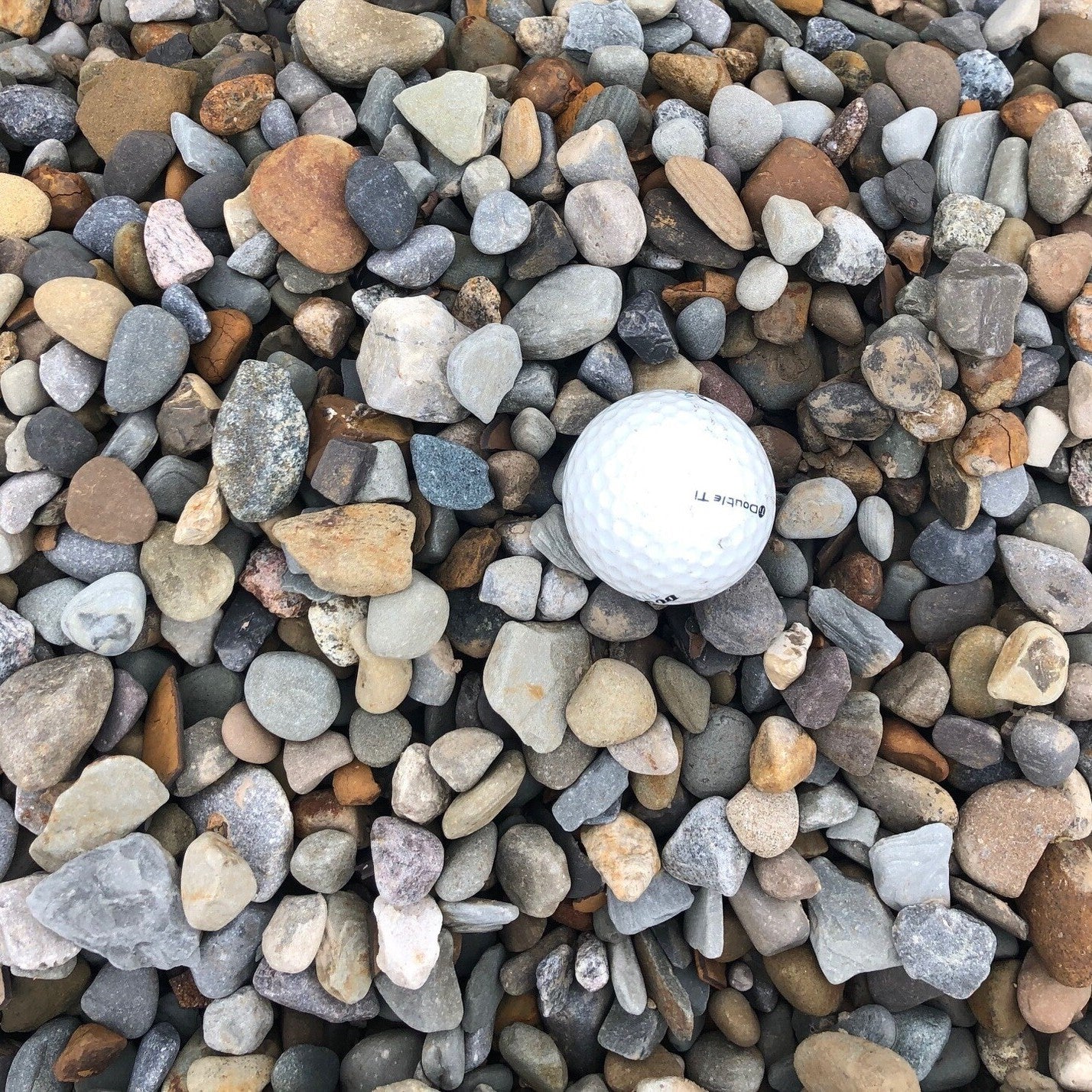
Number 57 crushed stone, angular limestone graded to about three quarters of an inch. The standard driveway, base and drainage gravel, it locks together under traffic and drains fast.
I used Mulch Mound to have 3 cubic yards of garden soil delivered. The process was easy and I love that I didn't have to call anyone. I placed my order online, picked my delivery date, laid out my tarp and the dirt was delivered. My delivery had to be pushed back, but I was ke...
Tell us what you're looking for
Thanks! We received your request.
Something went wrong. Please try again.
How Much Material Do I Need?
For decorative ground cover in planting beds, apply stone at 2 to 3 inches deep for weed suppression and a clean finished appearance. Drainage applications like dry creek beds and erosion control channels in Texarkana need a minimum of 4 inches of larger-diameter stone to stay functional during heavy rain events.
Use our free gravel calculator
What is a Yard?
A yard is approximately 27 cubic feet. As a general guideline, one yard of material can cover an area of about 100-160 square feet at a 2-3 inch depth.
We can't take orders for this right now. Tell us what you need and we'll get back to you.
What do you need?
Thanks! We received your request.
Something went wrong. Please try again.
Hand-picked local yards
4,000+ regional deliveries
Dedicated support
Why order through Mulch Mound
The best local , without the guesswork.
We hand-pick and partner with the best yards in your region, keep only the ones our buyers rate well, and back each load with our guarantee.
Mulch Mound Guarantee
If your isn't the quantity or quality you ordered, we'll make it right.
About this stone
Number 57 crushed stone, angular limestone graded to about three quarters of an inch. The standard driveway, base and drainage gravel, it locks together under traffic and drains fast.
I used Mulch Mound to have 3 cubic yards of garden soil delivered. The process was easy and I love that I didn't have to call anyone. I placed my order online, picked my delivery date, laid out my tarp and the dirt was delivered. My delivery had to be pushed back, but I was ke...
How Much Material Do I Need?
For decorative ground cover in planting beds, apply stone at 2 to 3 inches deep for weed suppression and a clean finished appearance. Drainage applications like dry creek beds and erosion control channels in Texarkana need a minimum of 4 inches of larger-diameter stone to stay functional during heavy rain events.
Use our free gravel calculator
What is a Yard?
A yard is approximately 27 cubic feet. As a general guideline, one yard of material can cover an area of about 100-160 square feet at a 2-3 inch depth.
I used Mulch Mound to have 3 cubic yards of garden soil delivered. The process was easy and I love that I didn't have to call anyone. I placed my o...
Read full review
I used Mulch Mound to have 3 cubic yards of garden soil delivered. The process was easy and I love that I didn't have to call anyone. I placed my order online, picked my delivery date, laid out my tarp and the dirt was delivered. My delivery had to be pushed back, but I was kept informed via text, which was great. So why not 5 stars? The description of garden soil on the website is "A balanced mix of topsoil and organic amendments ready for raised beds, flower gardens, and new planting areas. Good drainage, solid nutrients, easy to work with." What I got was more like fill dirt. It had a lot of gravel, a lot of clay, and random trash mixed in. I didn't test the soil to see if it actually had "amendments" because I already have compost and alpaca manure ready to add, but if I'd known the quality of the dirt was going to be the same as the bagged dirt I bought last year, I probably would have gotten 2 yards of top soil and a yard of leaf compost for better quality, especially since the leaf compost is cheaper. Photo of my mountain of dirt and just some of the trash I found in it.
Really appreciate the care and follow thru that this company had with our order. A hiccup came up but they were quick to respond and address all co...
Read full review
Really appreciate the care and follow thru that this company had with our order. A hiccup came up but they were quick to respond and address all concerns, which made our garden day a success! Thank you for your prompt care.
Measure your project area in feet, multiply length by width to get square footage, then decide on application depth in inches. Divide square footage by 100 and multiply by the depth in inches, then divide by 3.24 to get cubic yards. Stone is heavier than mulch or soil, so ordering close to your actual calculated need rather than significantly over is a good practice since any excess is harder to move by hand.
Complete Your Outdoor Stone Project
Stone beds look best with crisp borders, so consider pairing your gravel or rock delivery with steel or aluminum edging to define the transition between stone and turf. If you are replacing a mulched area with stone, a fresh layer of garden soil or compost tilled into the bed before laying weed barrier gives any remaining plants a better root environment under the new stone surface.
Before placing stone in a Texarkana planting bed, water the area thoroughly and let it dry for a day or two to see where natural drainage patterns and low spots are. Texarkana's summer storms arrive fast and drop a lot of rain quickly, so identifying where water moves through a bed before you lock in stone placement lets you adjust the grade or slope slightly. A little pre-planning prevents stone from migrating or pooling water in spots that will be difficult to fix once material is spread.
Mulch Mound Pro Tip
Light-colored gravel and stone can significantly raise the surface temperature of a bed during Texarkana's summer months, sometimes reaching temperatures that stress shallow-rooted plants nearby. If your stone installation borders heat-sensitive perennials or shrubs, choose a medium-toned natural river rock that absorbs less radiant heat than white or cream-colored options. This small color choice can make a real difference in plant health during the weeks when Texarkana temperatures regularly climb into the mid and upper 90s.
Mulch Mound Pro Tip
For Texarkana homeowners installing stone pathways, compact the soil base firmly before adding gravel and consider laying a thin sand bed beneath the stone for a stable, level surface. Texarkana's clay subsoil pockets can shift slightly through the wet and dry cycles of spring and summer, and a compacted base with a sand leveling layer prevents the uneven settling that makes pathways look neglected after a year or two. This extra step adds less than an hour to the project and extends the life of the installation significantly.
The Unique Landscape of Texarkana
Decorative stone and gravel are increasingly popular across Texarkana landscapes because they hold up through the region's unpredictable weather in ways that organic materials cannot match. Unlike mulch, stone does not decompose in Texarkana's heat and humidity, meaning a well-installed stone bed looks sharp year after year with minimal effort. The area's 48 inches of annual rainfall also makes stone a practical erosion control solution for slopes, drainage channels, and areas where water concentrates during heavy summer storms. Texarkana's growing zone 8b produces vigorous weed growth through most of the year, and a thick layer of gravel or crushed stone over a quality weed barrier dramatically reduces the maintenance burden compared to bare soil beds. Stone also absorbs and radiates heat, which can extend the growing season slightly around raised planters and bed borders in the shoulder months on either side of Texarkana's November to March cooler period. Whether you are looking for a low-maintenance ground cover, a clean driveway topping, or a naturalistic dry creek bed to manage drainage, bulk stone delivered by the cubic yard is one of the most cost-effective landscaping investments available in the Texarkana area.
Frequently Asked Questions
Click a question to see the answer
Answer
What size gravel works best for a dry creek bed to handle runoff in my Texarkana backyard?
For a functional dry creek bed in Texarkana, river rock in the 2 to 4 inch range is the most common choice because it is large enough to stay in place during the fast-moving water that heavy summer storms can send through a drainage channel. Smaller pea gravel tends to migrate out of the channel with significant flow. A mix of larger and mid-size stones looks natural and ensures the bed functions during even heavy rainfall events.
Answer
Will stone around my foundation help with the drainage issues that Texarkana's clay pockets create?
A 12 to 18 inch band of crushed granite or gravel along a foundation creates a fast-draining buffer that pulls surface water away from the structure quickly, which is important in spots where Texarkana's subsurface clay pockets slow percolation. This strip also keeps mulch away from the foundation, which reduces both moisture retention against the structure and termite-friendly habitat. Make sure the grade still slopes away from the house so water moves outward rather than pooling in the gravel band.
Answer
I want to do a low-maintenance front bed with stone instead of mulch. What do I put down first?
Start with a quality commercial-grade landscape fabric or weed barrier pinned firmly to the soil surface, then apply your stone on top at a depth of 2 to 3 inches. In Texarkana's warm growing season, weeds that find any gaps in the fabric will push through aggressively, so overlap the barrier seams by at least 6 inches and pin edges securely. River pebble or crushed granite in a neutral color tends to complement the brick and stone home exteriors common throughout the Texarkana area.
Answer
How much does a bulk stone order typically cover for a standard pathway in Texarkana?
A pathway that is 3 feet wide and 20 feet long, topped with 2 inches of pea gravel, requires about a third of a cubic yard of material. For longer or wider paths, the calculator on our site handles the math quickly. Texarkana's summer foot traffic is high from April through October, so applying stone at 2 to 3 inches ensures the path stays comfortable underfoot and does not wear down to bare dirt by midsummer.
Answer
Is there a stone that holds up especially well in Texarkana's summer heat without fading?
Natural stone does not fade the way dyed mulch or synthetic materials can under Texarkana's intense summer sun, which is one of the main reasons homeowners here choose it for permanent installations. Granite gravel, river rock, and limestone all maintain their color and texture through years of heat exposure with no treatment needed. Lighter-colored stones like tan or white pea gravel do reflect heat and can create noticeably warm microclimates in tight spaces, so consider darker or mid-tone options in areas where you want to minimize heat buildup.
Answer
Can I use bulk gravel to top my driveway near Texarkana and how much would I need?
Crushed gravel is a very common driveway surface throughout the Texarkana area, especially for longer rural driveways where asphalt is cost-prohibitive. For a standard two-car width driveway of about 12 feet wide and 40 feet long topped with 4 inches of crushed stone, you would need roughly 6 to 7 cubic yards of material. Crushed limestone and recycled concrete are popular options locally because they compact well and hold up through the wet spring season.
Answer
My kids play in the backyard a lot. Is there a stone type safe for a play area in Texarkana?
Pea gravel in the three-eighths inch size is the most widely used stone for residential play areas because the smooth, rounded edges are gentle on bare feet and hands. For Texarkana backyards, apply it at a 3 to 4 inch depth to provide cushioning and drainage during rainy periods. Avoid angular crushed stone or large-diameter river rock in play areas since sharp edges and heavy stones create injury risks for active kids.
Answer
Is crush and run the same as crusher run?
Crush and run and crusher run refer to the same product, a mix of crushed stone and stone dust that compacts into a firm base for driveways and paver projects. With Texarkana's 48 inches of annual rainfall, we deliver Crushed Stone #57 instead, since its washed, fines free structure drains freely and holds up well on slopes and in drainage areas.