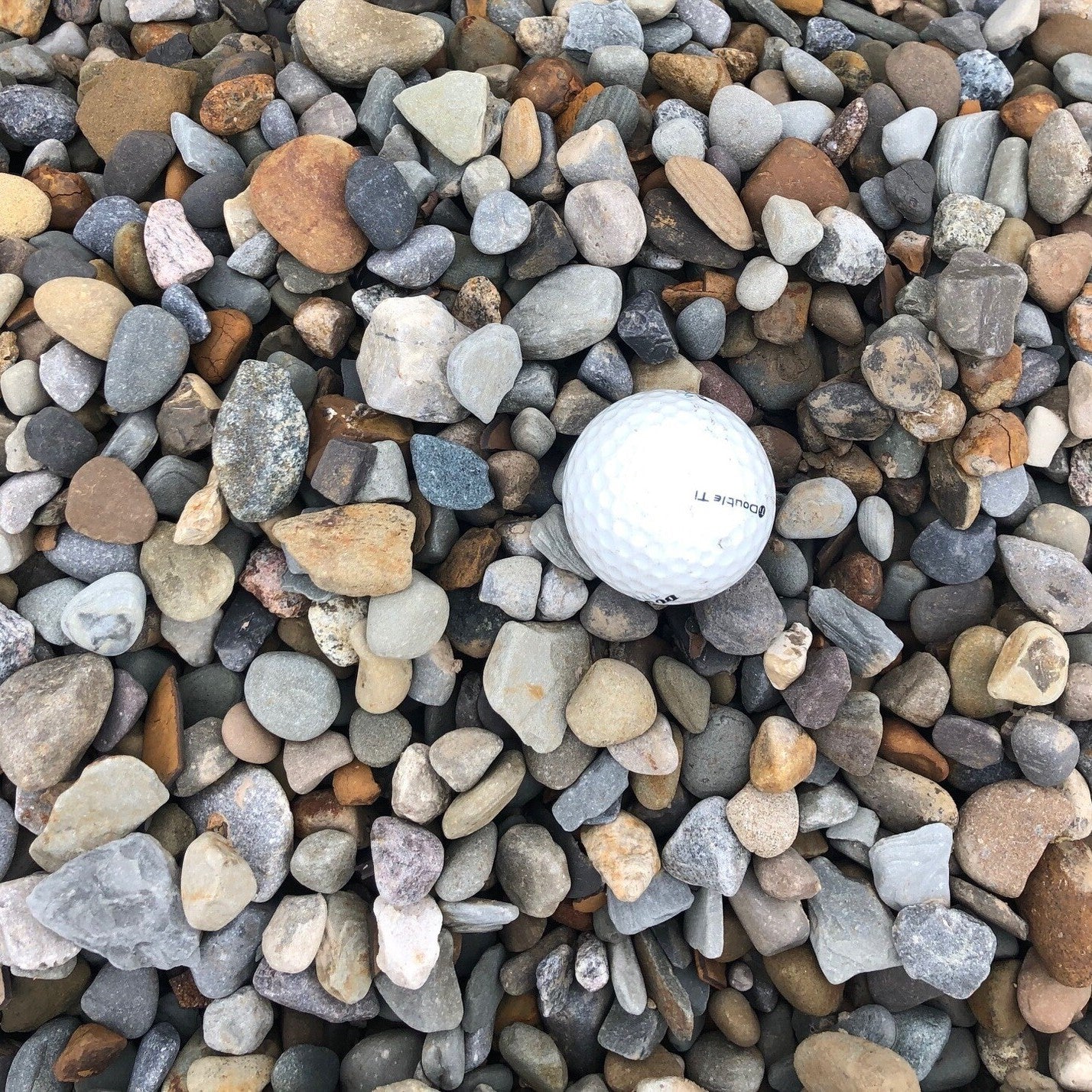
Number 57 crushed stone, angular limestone graded to about three quarters of an inch. The standard driveway, base and drainage gravel, it locks together under traffic and drains fast.
I contacted Mulch Mound for #57 river rocks and it was easy and fast to get a delivery right before the holiday weekend. Stone was delivered as promised and place exactly where I asked. Excellent service! I will be ordering mulch next!
Tell us what you're looking for
Thanks! We received your request.
Something went wrong. Please try again.
How Much Material Do I Need?
Most decorative stone applications in Traverse City landscapes work well at a 2-inch depth, which is enough to suppress weeds and provide visual coverage without needing excessive material. Functional applications like drainage channels or driveway surfaces typically need 3 to 4 inches for adequate performance.
Use our free gravel calculator
What is a Yard?
A yard is approximately 27 cubic feet. As a general guideline, one yard of material can cover an area of about 100-160 square feet at a 2-3 inch depth.
We can't take orders for this right now. Tell us what you need and we'll get back to you.
What do you need?
Thanks! We received your request.
Something went wrong. Please try again.
Hand-picked local yards
4,000+ regional deliveries
Dedicated support
Why order through Mulch Mound
The best local , without the guesswork.
We hand-pick and partner with the best yards in your region, keep only the ones our buyers rate well, and back each load with our guarantee.
Mulch Mound Guarantee
If your isn't the quantity or quality you ordered, we'll make it right.
About this stone
Number 57 crushed stone, angular limestone graded to about three quarters of an inch. The standard driveway, base and drainage gravel, it locks together under traffic and drains fast.
I contacted Mulch Mound for #57 river rocks and it was easy and fast to get a delivery right before the holiday weekend. Stone was delivered as promised and place exactly where I asked. Excellent service! I will be ordering mulch next!
How Much Material Do I Need?
Most decorative stone applications in Traverse City landscapes work well at a 2-inch depth, which is enough to suppress weeds and provide visual coverage without needing excessive material. Functional applications like drainage channels or driveway surfaces typically need 3 to 4 inches for adequate performance.
Use our free gravel calculator
What is a Yard?
A yard is approximately 27 cubic feet. As a general guideline, one yard of material can cover an area of about 100-160 square feet at a 2-3 inch depth.
I contacted Mulch Mound for #57 river rocks and it was easy and fast to get a delivery right before the holiday weekend. Stone was delivered as pro...
Read full review
I contacted Mulch Mound for #57 river rocks and it was easy and fast to get a delivery right before the holiday weekend. Stone was delivered as promised and place exactly where I asked. Excellent service! I will be ordering mulch next!
Stone is measured in cubic yards but because it is much denser than mulch, even a small area can require a meaningful amount of material. Measure your area in square feet, decide on your desired depth in inches, and use our calculator to get your cubic yard estimate before ordering. For irregular areas like curved garden borders or organic-shaped paths, break the space into simple rectangular sections, calculate each one, and add them together.
Complete Your Outdoor Stone Project
Installing landscape fabric beneath your stone will dramatically reduce weed pressure and keep your native sandy soil from mixing up into the gravel over time. If you are also working on nearby planting beds, consider adding mulch and garden soil to your order for a complete project delivery.
Traverse City gets significant snowfall most winters and if you are using stone along walkways or near your front entrance, choose a rounded gravel or smooth river rock rather than sharp crushed stone in those areas. Sharp crushed stone can be picked up by snow shovels and scatter across hard surfaces, creating a mess and potential hazards. Rounded stone tends to stay put even when a shovel blade passes over it during winter cleanup.
Mulch Mound Pro Tip
If you are using stone around downspout outlets to manage roof runoff, size matters more than most homeowners realize. A spread of river rock at least 3 feet in diameter around each downspout exit point is the minimum needed to absorb the energy of water flow and prevent erosion into your sandy soil. During Traverse City's heavier spring rain events, an undersized splash area will quickly wash away and leave a muddy divot that defeats the whole purpose.
Mulch Mound Pro Tip
For anyone planting a new landscape bed and considering stone as a ground cover, lay your landscape fabric and stone before winter if possible, even if your plants go in next spring. The stone layer will help moderate soil temperature through freeze-thaw cycles and give you a clean, established look right from your first planting day in late May. Starting with the bones of your design in place makes spring planting faster and more organized.
The Unique Landscape of Traverse City
Stone is one of the most durable and low-maintenance landscaping choices available to Traverse City homeowners, and it holds up exceptionally well against our freeze-thaw cycles, heavy snowfall, and the erosion that comes with 34 inches of annual precipitation. Unlike organic mulch, stone does not break down or require seasonal replacement, making it a smart long-term investment in a climate that can be hard on organic materials. Sandy soil in the Traverse City area actually pairs well with stone in drainage-focused applications because the combination allows water to move freely and prevents puddling. From decorative gravel in low-maintenance garden beds to crushed limestone paths and river rock drainage channels, stone fills functional and aesthetic roles across all types of residential landscapes in our area. The natural colors of locally sourced stone also complement the earthy tones of northern Michigan's landscape throughout every season.
Frequently Asked Questions
Click a question to see the answer
Answer
We get a lot of freeze-thaw cycles in Traverse City. Does stone hold up better than mulch in those conditions?
Stone is far more resistant to freeze-thaw damage than any organic material. While mulch can heave, compress, and decompose through our October through April freeze-thaw season, stone stays in place and maintains its function year after year. In areas that experience repeated frost cycles like exposed north-facing beds or low spots near downspouts, stone is almost always the better long-term choice for Traverse City properties.
Answer
I want to put gravel around my foundation to help with drainage. What size stone works best for that?
For foundation drainage in Traverse City homes, a washed crushed stone in the half-inch to three-quarter-inch range is typically recommended because it allows water to flow freely without compacting or migrating into your foundation plantings. Pea gravel works well too but it can roll and shift more easily. Either way, pairing the stone with a landscape fabric barrier helps keep your sandy native soil from mixing in and reducing drainage over time.
Answer
Can I use stone as a mulch substitute in my flower beds to cut down on maintenance?
Stone works well as a mulch alternative in beds with established shrubs and ornamental grasses, which are common in Traverse City landscapes. The trade-off is that stone does not add organic matter to your sandy soil the way mulch does, so your plants will rely more heavily on fertilization over time. Stone also absorbs and radiates heat, which can be beneficial in spring for warming soil earlier but may stress plants in a hot west or south-facing bed in July.
Answer
What is the best stone to use for a gravel driveway or parking area up here?
Crushed limestone or crushed gravel in the three-quarter-inch range is the standard choice for driveways in the Traverse City area. It compacts well, holds up under vehicle traffic, and drains effectively. Avoid rounded pea gravel for driveways because it rolls underfoot and under tires, creating a slippery and frustrating surface. Topped with a finer quarter-inch chip layer, a crushed stone driveway can look sharp and perform reliably through our harsh winters.
Answer
I have a low wet area in my backyard that stays soggy after rain. Would river rock help?
River rock is an excellent solution for wet low spots in Traverse City yards, especially when paired with a properly graded drainage channel. Laying a bed of river rock in a naturally low area allows surface water to collect and slowly percolate rather than sitting in muddy puddles. Because our sandy soil already drains reasonably well once water gets moving, even a shallow river rock channel can solve most minor drainage problems without major excavation.
Answer
How much stone do I need for a simple garden path? I have never ordered in bulk before.
For a garden path 2 feet wide and 20 feet long with a 2-inch depth, you need roughly half a cubic yard of gravel. That might sound like a small amount but remember that stone is dense and a cubic yard of it weighs close to 3,000 pounds depending on the type. Ordering by the cubic yard in bulk is still far more cost-effective than buying bags, and for most Traverse City yard paths you will likely find you need between half and one and a half cubic yards.
Answer
Will stone get too hot in summer to walk on barefoot near our patio area?
Darker stones like black or charcoal gravel can get uncomfortably hot in direct sun during July and August, which are the warmest months in Traverse City. Lighter-colored options like pea gravel, tan crushed limestone, or white marble chip stay noticeably cooler underfoot and reflect heat rather than absorbing it. For patio surrounds or areas near pool decks where bare feet are common, always choose a light-colored stone to keep the surface comfortable during peak summer temperatures.