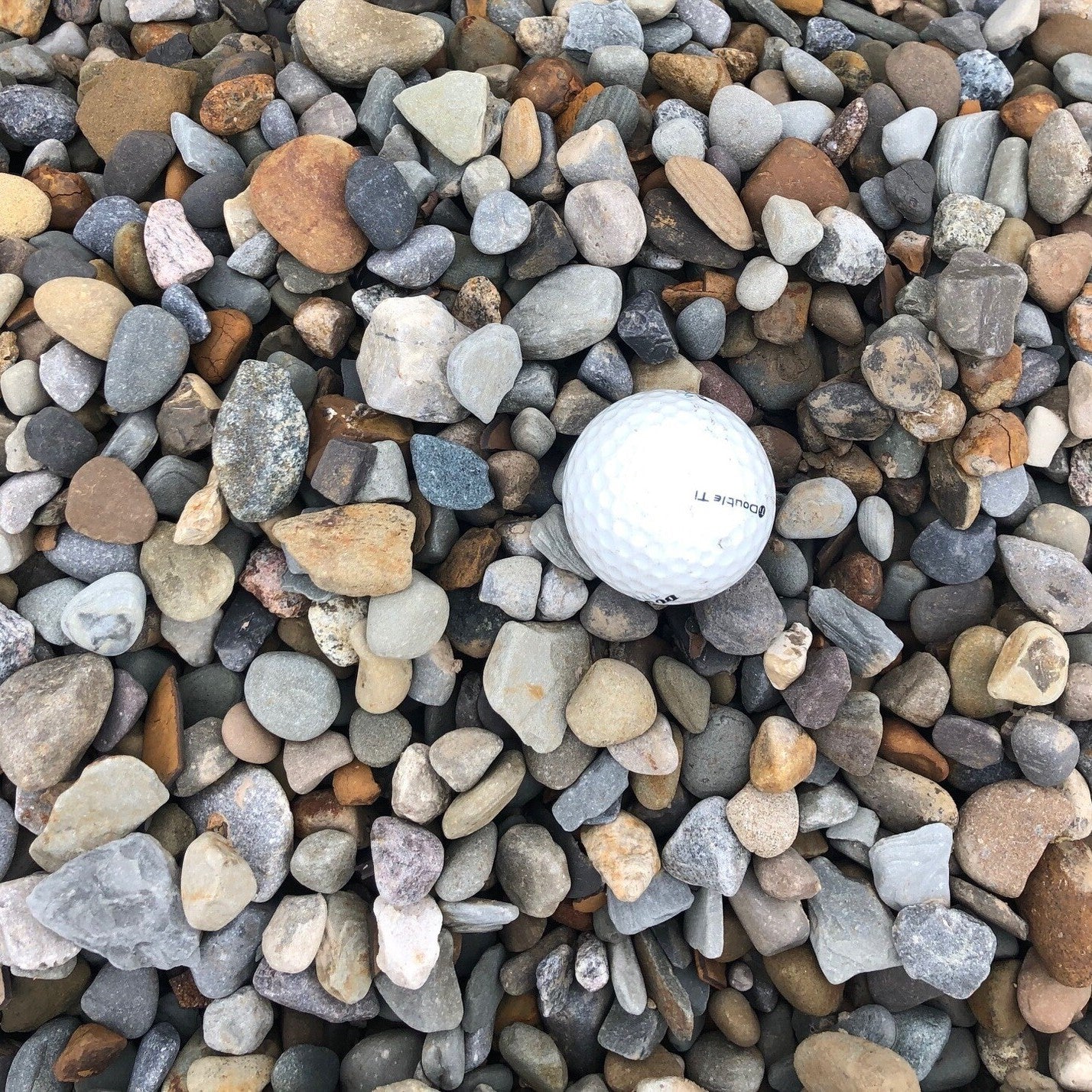
Number 57 crushed stone, angular limestone graded to about three quarters of an inch. The standard driveway, base and drainage gravel, it locks together under traffic and drains fast.
I contacted Mulch Mound for #57 river rocks and it was easy and fast to get a delivery right before the holiday weekend. Stone was delivered as promised and place exactly where I asked. Excellent service! I will be ordering mulch next!
Tell us what you're looking for
Thanks! We received your request.
Something went wrong. Please try again.
How Much Material Do I Need?
For standard ground cover in Victorville, plan for 2 to 3 inches of stone depth over landscape fabric for a finished look that resists weed growth and surface erosion. Dry creek beds and drainage features need 4 to 6 inches of larger river rock to function properly during desert rain events.
Use our free gravel calculator
What is a Yard?
A yard is approximately 27 cubic feet. As a general guideline, one yard of material can cover an area of about 100-160 square feet at a 2-3 inch depth.
We can't take orders for this right now. Tell us what you need and we'll get back to you.
What do you need?
Thanks! We received your request.
Something went wrong. Please try again.
Hand-picked local yards
4,000+ regional deliveries
Dedicated support
Why order through Mulch Mound
The best local , without the guesswork.
We hand-pick and partner with the best yards in your region, keep only the ones our buyers rate well, and back each load with our guarantee.
Mulch Mound Guarantee
If your isn't the quantity or quality you ordered, we'll make it right.
About this stone
Number 57 crushed stone, angular limestone graded to about three quarters of an inch. The standard driveway, base and drainage gravel, it locks together under traffic and drains fast.
I contacted Mulch Mound for #57 river rocks and it was easy and fast to get a delivery right before the holiday weekend. Stone was delivered as promised and place exactly where I asked. Excellent service! I will be ordering mulch next!
How Much Material Do I Need?
For standard ground cover in Victorville, plan for 2 to 3 inches of stone depth over landscape fabric for a finished look that resists weed growth and surface erosion. Dry creek beds and drainage features need 4 to 6 inches of larger river rock to function properly during desert rain events.
Use our free gravel calculator
What is a Yard?
A yard is approximately 27 cubic feet. As a general guideline, one yard of material can cover an area of about 100-160 square feet at a 2-3 inch depth.
I contacted Mulch Mound for #57 river rocks and it was easy and fast to get a delivery right before the holiday weekend. Stone was delivered as pro...
Read full review
I contacted Mulch Mound for #57 river rocks and it was easy and fast to get a delivery right before the holiday weekend. Stone was delivered as promised and place exactly where I asked. Excellent service! I will be ordering mulch next!
Measure the length and width of the area you want to cover in feet and multiply them together to get your total square footage. Enter that number and your desired depth in inches into our stone calculator to get an accurate cubic yard estimate. Because stone is heavier and harder to move than mulch, it is worth being very precise with your measurements to avoid ordering significantly more than you need.
Complete Your Outdoor Stone Project
Pairing your stone installation with a quality edging material and a layer of soil amendment in any remaining planting pockets creates a clean, finished landscape that functions well in Victorville's demanding climate. Browse our soil products to fill in any planting areas before your stone delivery arrives so both projects can be completed in a single push.
Before your stone is delivered, take the time to grade and level the area you are covering. Victorville's sandy loam base can be shaped easily with a rake and tamper, and getting a flat, smooth surface before you lay landscape fabric and stone makes the finished product look far more professional. Any low spots left under the stone will show up as depressions after the first rain or heavy foot traffic, which are much harder to fix once the stone is in place.
Mulch Mound Pro Tip
Choose a stone color that reflects rather than absorbs Victorville's intense desert sunlight. Light tan, cream, and buff-toned decomposed granite and gravel products keep ground temperatures significantly lower than dark grey or black lava rock, which can push surface temperatures well above 150 degrees on summer afternoons. A cooler ground surface means less heat radiating back toward your home's foundation and a more comfortable yard for people and pets during the long Victor Valley summer.
Mulch Mound Pro Tip
Install a sturdy metal or plastic edging border around all stone areas before you spread the material. Victorville's occasional strong wind events and the natural flow of sandy loam soil can cause stone to migrate out of its intended area over time, especially along the edges of paths and planting beds. A 4-inch buried edging strip creates a clean boundary that keeps your stone where it belongs and gives your landscape a crisp, maintained appearance year after year without constant raking and resetting.
The Unique Landscape of Victorville
Decorative and functional stone is one of the most practical landscape materials available to Victorville homeowners because it requires virtually zero ongoing maintenance in an environment where water is extremely scarce and temperatures are extreme. At just 5 inches of rainfall per year and summer highs that regularly exceed 100 degrees, stone-based landscaping outperforms turf and organic ground covers in nearly every measurable way for a large portion of the property. Decomposed granite, river rock, and crushed stone also align beautifully with the natural desert aesthetic of the Victor Valley, creating landscapes that feel intentional and connected to the surrounding Mojave terrain. At nearly 3,000 feet of elevation, Victorville also experiences stronger UV exposure than lower-elevation communities, and stone retains its appearance under that UV intensity while organic materials fade and degrade. Stone pathways, dry creek beds, and ground cover areas also help manage the occasional intense rainfall events that can erode bare sandy loam soil very quickly in the high desert. Whether you are replacing a lawn, creating a water-wise landscape, or installing a drainage feature, bulk stone is one of the best long-term investments you can make in a Victorville property.
Frequently Asked Questions
Click a question to see the answer
Answer
What type of stone works best for replacing my dead lawn in Victorville?
Decomposed granite is the most popular choice for lawn replacement in Victorville because it compacts into a stable, walkable surface that looks natural in the high desert setting. Three-eighths inch crushed gravel is another excellent option if you want a slightly more decorative look with good drainage. Both materials stay cool enough to walk on barefoot in the early morning and hold up beautifully against the UV exposure and wind conditions of the Victor Valley.
Answer
How deep should I lay decorative stone in my Victorville yard?
For ground cover applications in Victorville, plan on a depth of 2 to 3 inches of stone over landscape fabric. A 2-inch layer is sufficient for foot traffic areas and decorative beds, but going to 3 inches provides better weed suppression and gives the surface a richer, fuller appearance. In dry creek beds or drainage swales, use larger river rock and go deeper, 4 to 6 inches, to handle the occasional intense runoff that comes with high desert rain events.
Answer
Will the stone get too hot in the summer and burn my dogs' paws?
This is a real concern in Victorville where summer ground temperatures can be significantly higher than the air temperature. Lighter-colored stones like tan decomposed granite, cream gravel, or white river rock absorb less heat than darker materials and are a better choice for pet-friendly yards. Shaded areas stay cooler, so designing stone surfaces under the canopy of a desert tree or shade structure helps create comfortable zones for pets even on the hottest Victor Valley afternoons.
Answer
Do I need landscape fabric under my stone, or can I just lay it directly on the ground?
In Victorville, landscape fabric under stone is strongly recommended because it creates a barrier that prevents the sandy loam native soil from mixing up into your stone layer over time. Without it, wind and foot traffic gradually work the fine sandy soil particles upward through your stone, creating a muddy, weedy mess after just a season or two. Use a high-quality woven geotextile fabric rather than the thin plastic sheeting sold at hardware stores, as the woven type allows water to drain through while still blocking weeds and soil migration.
Answer
Is decomposed granite or river rock better for a dry creek bed in my Victorville backyard?
For a dry creek bed, river rock is the superior choice because the rounded, larger stones mimic the look of a natural desert wash and have the mass to stay in place during the brief but sometimes heavy rain events that hit the Victor Valley. River rock in the 2 to 4 inch size range is ideal for the creek bed itself, while smaller cobbles or one-half inch gravel on the margins creates a natural transition to your surrounding landscape. Decomposed granite works better as a flat surface material rather than in a drainage channel where water movement can shift it.
Answer
How many cubic yards of stone do I need to cover my front yard in Victorville?
For a 500 square foot front yard area with a 2-inch stone depth, you would need approximately 3 cubic yards of material. Measure the total square footage of the area you want to cover and use our calculator to enter the square footage and your desired depth to get the exact cubic yard number. It is always worth ordering about 10 percent extra to account for edges, irregular shapes, and areas where you may want a slightly thicker layer.
Answer
Can I use stone around my desert plants like Joshua trees and native shrubs?
Stone is actually one of the best ground cover choices around native Victorville plants like Joshua trees, creosote, and desert willow because it closely replicates their natural rocky habitat. Using natural-toned decomposed granite or small gravel around desert plants allows water to percolate directly to roots during irrigation or rain while reflecting some heat and suppressing weeds. Avoid piling rock directly against the base or trunk of any plant, and leave a few inches of clearance so air can circulate around the crown.
Answer
Is there a stone yard near Victorville?
Replacing a thirsty front lawn with a low maintenance stone landscape is a common project in Victorville, where summers top 100 degrees and rain is scarce. The crushed stone for it arrives at your driveway, so there is no trip to a stone yard or hauling from a quarry. Just order online by the cubic yard.