About this compost

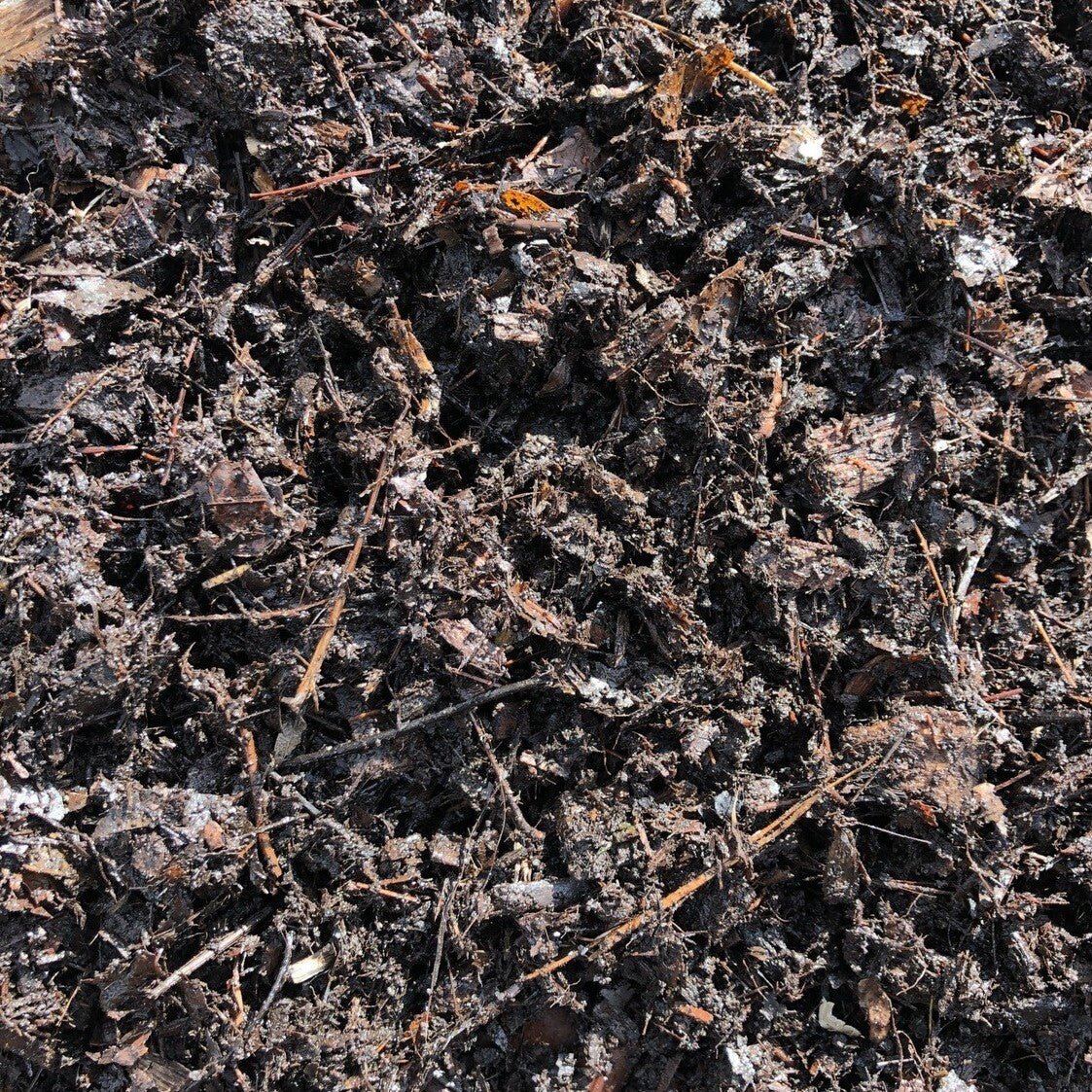
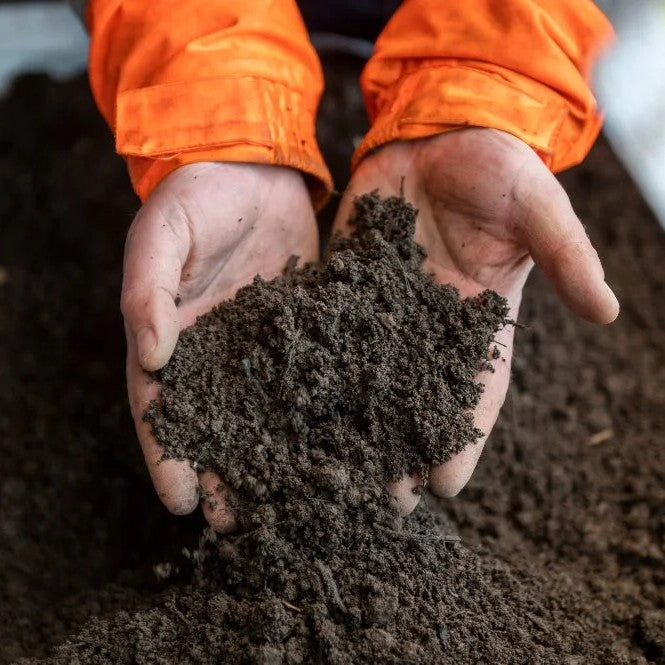
Finished screened compost, fully broken down and ready to work into beds. The general purpose choice for building soil that holds water and feeds roots.

One of the easiest customer service experiences I've had in a long time! Mulch Mound made it so simple. After putting it off for a while, I looked at the weather and knew I needed to get to mulching ASAP before the rain came if I didn't want to wait another week. I put my orde...

One cubic yard of compost covers about 324 square feet at a 1 inch depth, which is the right thickness for topdressing an established lawn. If you are tilling into a new bed at 2 to 3 inches, plan on roughly a third to half that coverage per yard, so a 300 square foot bed at 2 inches needs close to a yard and a half. Sold by the cubic yard, it pays to measure the actual bed or lawn area first rather than guess.

A yard is approximately 27 cubic feet. As a general guideline, one yard of material can cover an area of about 100-160 square feet at a 2-3 inch depth.

Worcester Compost Delivery

Worcester Compost Delivery

4.7
137 reviews
Regular price $60.00 per Yard
Regular price Sale price $60.00
Sale Sold out
Shipping calculated at checkout.
Type
Size
Hand-picked local yards
4,000+ regional deliveries
Dedicated support
Why order through Mulch Mound

The best local compost, without the guesswork.

We hand-pick and partner with the best yards in your region, keep only the ones our buyers rate well, and back each load with our guarantee.

Mulch Mound Guarantee

If your compost isn't the quantity or quality you ordered, we'll make it right.

About this compost

Finished screened compost, fully broken down and ready to work into beds. The general purpose choice for building soil that holds water and feeds roots.

One of the easiest customer service experiences I've had in a long time! Mulch Mound made it so simple. After putting it off for a while, I looked at the weather and knew I needed to get to mulching ASAP before the rain came if I didn't want to wait another week. I put my orde...

One cubic yard of compost covers about 324 square feet at a 1 inch depth, which is the right thickness for topdressing an established lawn. If you are tilling into a new bed at 2 to 3 inches, plan on roughly a third to half that coverage per yard, so a 300 square foot bed at 2 inches needs close to a yard and a half. Sold by the cubic yard, it pays to measure the actual bed or lawn area first rather than guess.

A yard is approximately 27 cubic feet. As a general guideline, one yard of material can cover an area of about 100-160 square feet at a 2-3 inch depth.

View full details

How It Works

Getting started is easy — just follow these simple steps

1

Choose your quantity

Adjust the quantity to match your project. One cubic yard covers about 100 to 160 square feet at a 2 to 3 inch depth.

2

Select your delivery date

Select a delivery date you'd like for the product to be dropped off at your home

3

Sit back and wait

Sit back, wait, and let us work our magic to make sure the highest quality product is delivered to your driveway.

From The Mouths of Worcester Folks

4.7
out of 5 based on 137 reviews
Google Reviews

Complete Your Outdoor Project

Compost pairs well with a topsoil blend when you are building a new bed from scratch in Worcester's silty loam, since straight compost alone is too rich to plant into. For lawns, many people follow topdressing with an overseed while the compost is still fresh. If you are mulching after amending, a bark or wood mulch on top holds moisture through the summer stretch before frost returns in October.

Mulch Mound Pro Tip

Finished compost should smell like earth, not sour or ammonia sharp. If a load smells off, it was not fully cured and can actually burn tender roots or lock up nitrogen temporarily. When you spread it in Worcester's clay-leaning silty loam, work it into the top few inches with a rake or tiller rather than leaving it sitting on the surface, which lets rain wash nutrients off before they reach the root zone.

Mulch Mound Pro Tip

The biggest mistake people make with compost is piling it on thick thinking more equals better results. At depths past 3 inches in a bed, or more than an inch on a lawn, compost can actually smother roots and tie up nitrogen as it continues to break down. Stick to the thin side and repeat yearly rather than dumping a heavy layer once and hoping it solves years of poor soil in one shot.

Mulch Mound Pro Tip

If you are amending a full bed, blending compost with existing silty loam rather than replacing it outright saves material and keeps drainage consistent with the rest of your yard. Order enough for the whole project in one delivery instead of buying small bags repeatedly, since a bulk cubic yard delivery costs less per unit and means one clean job instead of a dozen trips hauling bags in a trunk.

Building Better Soil in Worcester

Worcester sits at 480 feet with a silty loam base that drains reasonably well but can pack down hard after a wet spring or a dry August. Compost worked into that soil loosens structure and feeds the microbial life that silty loam needs to stay workable. With a zone 6a growing season bookended by an April 30 last frost and an October 10 first frost, there are two real windows here, spring bed prep before planting and fall top dressing before the ground locks up. People building new beds near Union Station and the surrounding older lots often find compost is what finally gets tired soil productive again.

What Finished Compost Is

Finished compost is organic matter that has fully broken down into a dark, crumbly material with an earthy smell. It feeds soil life, improves structure, and helps beds hold water without staying soggy.

How Much to Apply

Work 1 to 2 inches into new beds, or topdress lawns with a quarter to half inch and rake it in. More is not better. Too thick a layer can smother roots instead of feeding them.

When to Apply

Spring and fall are both good windows. Spring applications feed the growing season ahead, and fall applications break down over winter so beds are ready at first thaw.

Frequently Asked Questions

Click a question to see the answer

Answer

Is this compost finished or will it still smell and heat up in my yard?

It is finished and stable, meaning it has already gone through the hot composting phase and cooled down. It should smell earthy, not sour. Finished compost is safe to work into beds or spread on lawns right away without burning plants, unlike fresh or half composted material.

Answer

How much compost do I need for a 500 square foot garden bed?

At the recommended 2 to 3 inch till-in depth for beds, 500 square feet needs roughly 3 to 4.5 cubic yards. If you are only topdressing at 1 inch instead, that same area needs about 1.5 cubic yards, since coverage is 324 square feet per yard at that depth.

Answer

Should I put compost down in spring or fall in Worcester?

Both work, and it depends on your project. Spring compost before the April 30 last frost gets beds ready for planting season. Fall application after summer heat but before the October 10 frost lets nutrients settle into the soil over winter, which is especially useful for lawns going into next year's growing season.

Answer

Where will the compost pile be placed and do I need to be home?

The driver places the load wherever you specify at checkout, typically a driveway or other flat, accessible surface. You do not need to be home, but the area should be clear and reachable by truck beforehand so the delivery goes smoothly without delays.

Answer

Should I get compost or topsoil for a new garden bed?

For a brand new bed, a blend of both usually works best, topsoil for volume and structure, compost for nutrients and microbial life. Straight compost alone is often too rich and can hold too much moisture on its own in silty loam, so mixing it with topsoil gives better long-term results than either alone.

More delivery around Worcester, Massachusetts

All Worcester, Massachusetts landscape supply
