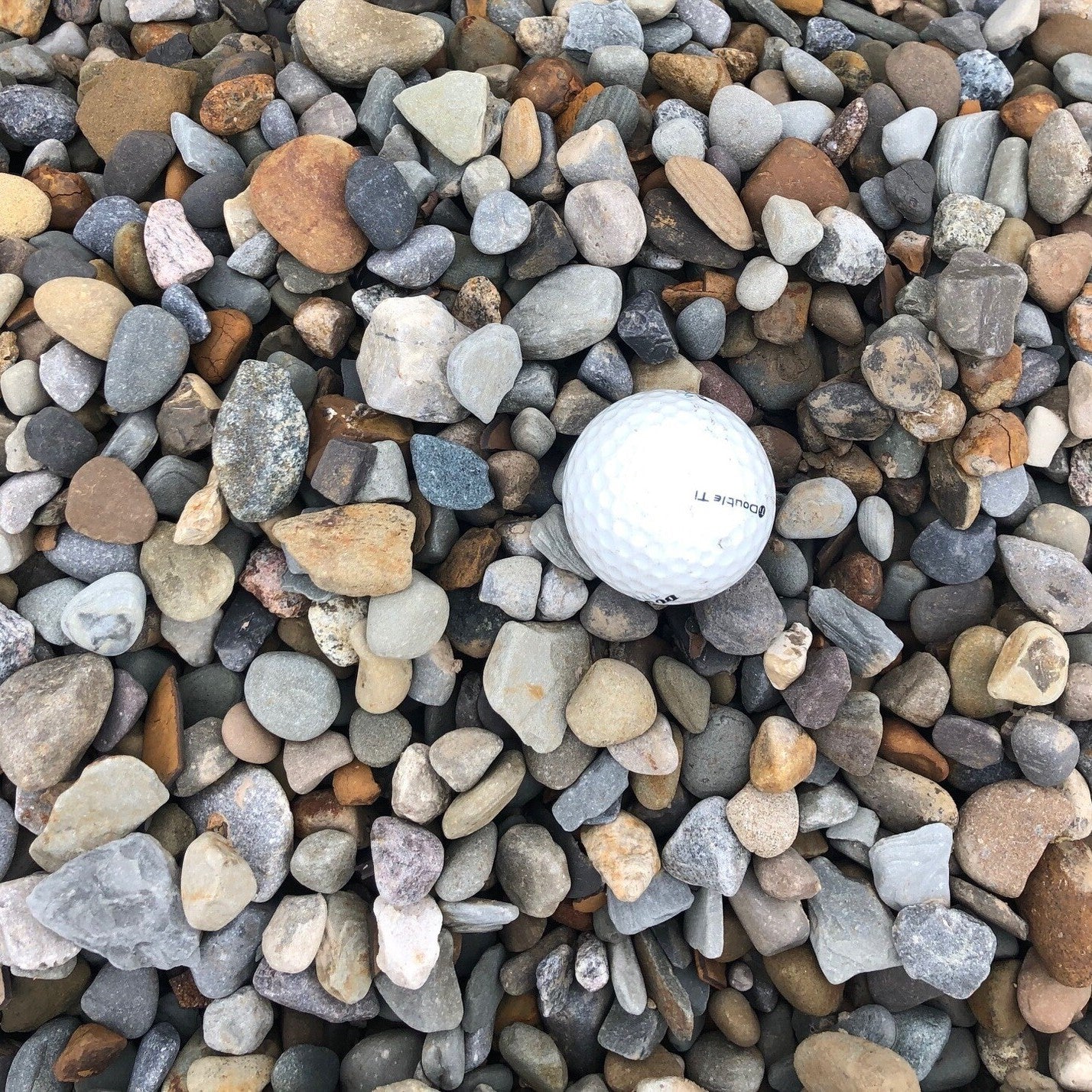
Number 57 crushed stone, angular limestone graded to about three quarters of an inch. The standard driveway, base and drainage gravel, it locks together under traffic and drains fast.
I used Mulch Mound to have 3 cubic yards of garden soil delivered. The process was easy and I love that I didn't have to call anyone. I placed my order online, picked my delivery date, laid out my tarp and the dirt was delivered. My delivery had to be pushed back, but I was ke...
Tell us what you're looking for
Thanks! We received your request.
Something went wrong. Please try again.
How Much Material Do I Need?
Decorative rock beds look right at two to three inches deep, while walkways and drainage trenches need three to four inches to stay stable on our soft silt loam base. Driveways call for a minimum of four inches of compacted crushed stone.
Use our free gravel calculator
What is a Yard?
A yard is approximately 27 cubic feet. As a general guideline, one yard of material can cover an area of about 100-160 square feet at a 2-3 inch depth.
We can't take orders for this right now. Tell us what you need and we'll get back to you.
What do you need?
Thanks! We received your request.
Something went wrong. Please try again.
Hand-picked local yards
4,000+ regional deliveries
Dedicated support
Why order through Mulch Mound
The best local , without the guesswork.
We hand-pick and partner with the best yards in your region, keep only the ones our buyers rate well, and back each load with our guarantee.
Mulch Mound Guarantee
If your isn't the quantity or quality you ordered, we'll make it right.
About this stone
Number 57 crushed stone, angular limestone graded to about three quarters of an inch. The standard driveway, base and drainage gravel, it locks together under traffic and drains fast.
I used Mulch Mound to have 3 cubic yards of garden soil delivered. The process was easy and I love that I didn't have to call anyone. I placed my order online, picked my delivery date, laid out my tarp and the dirt was delivered. My delivery had to be pushed back, but I was ke...
How Much Material Do I Need?
Decorative rock beds look right at two to three inches deep, while walkways and drainage trenches need three to four inches to stay stable on our soft silt loam base. Driveways call for a minimum of four inches of compacted crushed stone.
Use our free gravel calculator
What is a Yard?
A yard is approximately 27 cubic feet. As a general guideline, one yard of material can cover an area of about 100-160 square feet at a 2-3 inch depth.
I used Mulch Mound to have 3 cubic yards of garden soil delivered. The process was easy and I love that I didn't have to call anyone. I placed my o...
Read full review
I used Mulch Mound to have 3 cubic yards of garden soil delivered. The process was easy and I love that I didn't have to call anyone. I placed my order online, picked my delivery date, laid out my tarp and the dirt was delivered. My delivery had to be pushed back, but I was kept informed via text, which was great. So why not 5 stars? The description of garden soil on the website is "A balanced mix of topsoil and organic amendments ready for raised beds, flower gardens, and new planting areas. Good drainage, solid nutrients, easy to work with." What I got was more like fill dirt. It had a lot of gravel, a lot of clay, and random trash mixed in. I didn't test the soil to see if it actually had "amendments" because I already have compost and alpaca manure ready to add, but if I'd known the quality of the dirt was going to be the same as the bagged dirt I bought last year, I probably would have gotten 2 yards of top soil and a yard of leaf compost for better quality, especially since the leaf compost is cheaper. Photo of my mountain of dirt and just some of the trash I found in it.
Measure the length and width of the area in feet, multiply for square footage, then multiply by your depth in feet and divide by 27 for cubic yards. For a two inch decorative layer, one yard covers about 160 square feet. Alexandria drainage trenches are easier to figure by length, since a hundred foot trench one foot wide and one foot deep needs roughly four yards.
Complete Your Outdoor Stone Project
Add heavy duty landscape fabric to keep Alexandria silt from working up into the voids, plus steel or paver edging so rock does not migrate into the lawn during heavy rain.
Always put fabric under stone in Alexandria, even though we tell people to skip it under mulch. The reason is the silt loam. Under repeated saturation and foot traffic, fine wet soil pumps upward into the gaps between rocks, and within a few seasons your clean gravel path turns into a mud and stone mix. A quality woven fabric, not the thin nonwoven type, keeps the two layers separated for a decade or more.
Mulch Mound Pro Tip
Give every stone bed a hard edge. On flat Alexandria lots, sheet flow during a heavy downpour spreads gravel out across turf, where it wrecks mower blades and looks messy. Steel edging set flush or a course of concrete pavers sunk two inches into the soil contains the rock and gives you a clean mow line. Set the edge slightly proud of the gravel surface so it acts as a small dam.
Mulch Mound Pro Tip
Match the stone to the water. Slow drips from a roof valley only need pea gravel, but the concentrated discharge from a full gutter run during a central Louisiana thunderstorm will move anything under three inches in diameter. Look at where water actually flows during the next big rain, mark the channels with flags, and size your rock to the volume you see rather than guessing on a dry day.
The Unique Landscape of Alexandria
Where 59 inches of annual rain meets flat 79 foot terrain and fine silt loam, stone becomes a practical tool rather than just decoration. Alexandria yards commonly develop washout channels along downspouts, gate lines, and driveway edges where moving water strips soil away every spring. Gravel and river rock hold their position, let water infiltrate rather than run, and never break down the way mulch does in our warm humid climate. Stone also solves the mud problem that plagues shaded side yards under live oaks and pines where turf refuses to grow. And because it does not decompose, stone stays put through a growing season that runs from March 8 all the way to November 12 without needing a yearly refresh.
Frequently Asked Questions
Click a question to see the answer
Answer
What size gravel works best for a French drain in Alexandria?
Washed number 57 limestone is the standard choice because the roughly three quarter inch stones create large void spaces that move water fast, which matters when a single central Louisiana thunderstorm can drop two or three inches. Wrap the trench and pipe in filter fabric first, since our fine silt loam will migrate into the voids and clog the drain within a few years if you skip it.
Answer
Will gravel help with the muddy path along the side of my house?
Yes, and it is one of the most common fixes we deliver for in Alexandria. Excavate three or four inches, lay heavy landscape fabric to keep the silt loam from pumping up through, then fill with crushed limestone that locks together underfoot. Pea gravel looks nice but rolls and scatters, so on a working path the angular crushed stone is a better long term choice.
Answer
Does stone mulch make my beds hotter in the summer?
It does. Light colored gravel reflects heat and dark stone absorbs it, and either way a rock bed can run considerably warmer than a mulched one on a 97 degree Alexandria July afternoon. Use stone around heat tolerant plants like yucca, agave, rosemary, and ornamental grasses, and keep it away from azaleas, hydrangeas, and other shallow rooted shade plants.
Answer
How much does a yard of stone weigh and can my driveway take it?
Most crushed limestone and river rock runs between 2,400 and 2,800 pounds per cubic yard, so a ten yard load is well over twelve tons on the truck. Older Alexandria driveways and any concrete over a soft, wet silt loam base can crack under that weight, so if you have any doubt we can split the order into smaller loads or dump at the street.
Answer
Do weeds grow through rock beds here?
Eventually, yes. Our humidity and nine month growing season mean airborne seed and windblown silt settle into the gravel and create a seed bed on top of it within two or three years. Blowing debris out with a leaf blower each spring and spot treating keeps it manageable, and installing fabric underneath at least stops weeds from coming up from below.
Answer
What can I put around my downspouts to stop the erosion?
A splash pad of three to six inch river rock set in a shallow basin dissipates the energy of the water before it hits the soil. Given Alexandria's rainfall intensity, extend the rock at least three to four feet out from the downspout and slope it away from the foundation. Anything smaller than three inch stone tends to get pushed downhill during a hard storm.
Answer
Can I use limestone gravel near my acid loving plants?
Be careful with it. Crushed limestone slowly raises soil pH as rain dissolves it, and with 59 inches falling on Alexandria annually that leaching happens faster here than in dry climates. Around azaleas, camellias, gardenias, and blueberries, use river rock or granite instead, or keep the limestone confined to a fabric lined path well away from the root zones.