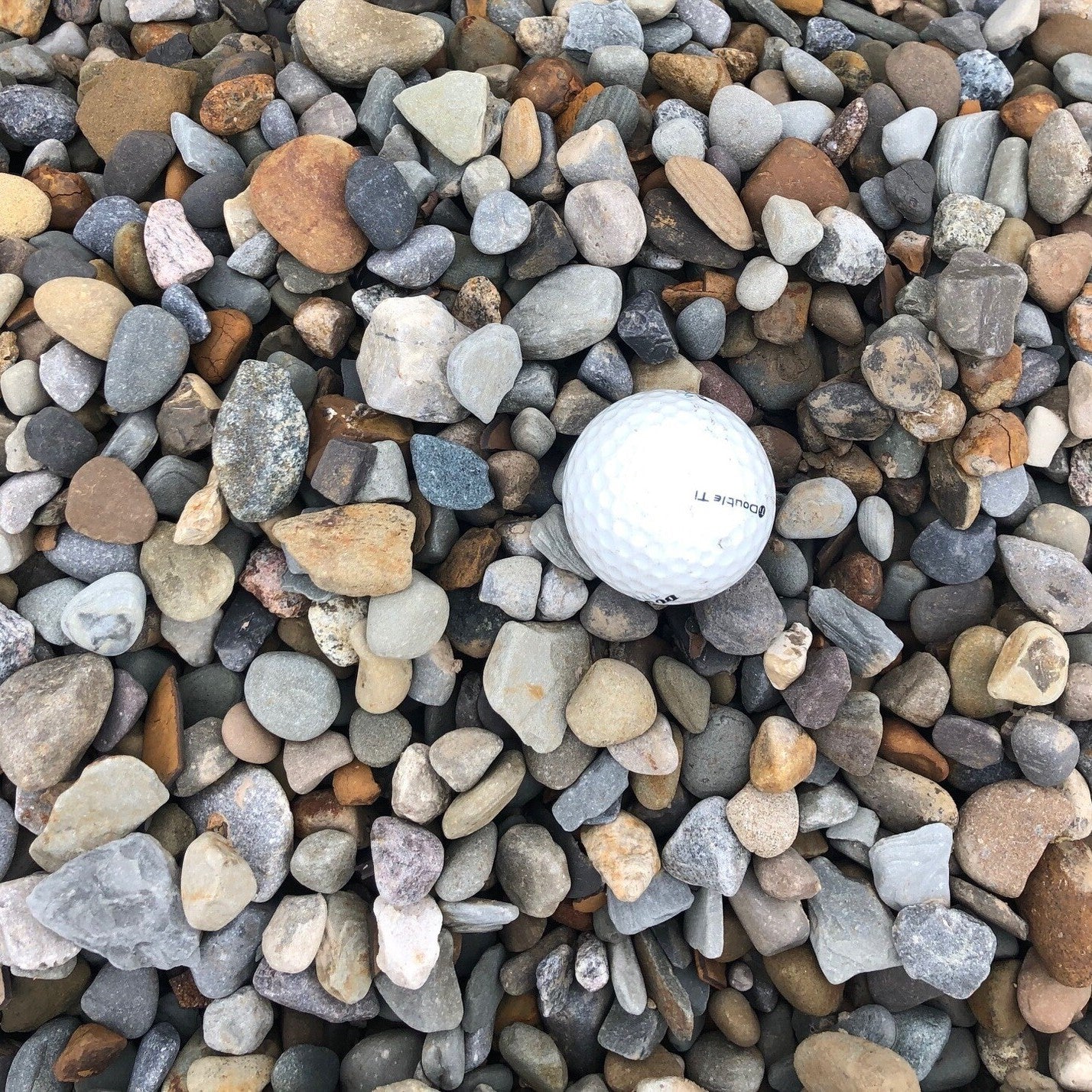
Number 57 crushed stone, angular limestone graded to about three quarters of an inch. The standard driveway, base and drainage gravel, it locks together under traffic and drains fast.
My experience with Mulch Mound was great and super easy. I ordered two yards of screened topsoil and was able to get it delivered within 2 days. They came in my requested time frame (afternoon) and dropped it off where I asked on my driveway. The topsoil was exactly what was a...
Tell us what you're looking for
Thanks! We received your request.
Something went wrong. Please try again.
How Much Material Do I Need?
Spread decorative gravel 2 to 3 inches deep for ground cover and 3 to 4 inches in high traffic paths or drainage areas. One ton covers roughly 100 square feet at 2 inches.
Use our free gravel calculator
What is a Yard?
A yard is approximately 27 cubic feet. As a general guideline, one yard of material can cover an area of about 100-160 square feet at a 2-3 inch depth.
We can't take orders for this right now. Tell us what you need and we'll get back to you.
What do you need?
Thanks! We received your request.
Something went wrong. Please try again.
Hand-picked local yards
4,000+ regional deliveries
Dedicated support
Why order through Mulch Mound
The best local , without the guesswork.
We hand-pick and partner with the best yards in your region, keep only the ones our buyers rate well, and back each load with our guarantee.
Mulch Mound Guarantee
If your isn't the quantity or quality you ordered, we'll make it right.
About this stone
Number 57 crushed stone, angular limestone graded to about three quarters of an inch. The standard driveway, base and drainage gravel, it locks together under traffic and drains fast.
My experience with Mulch Mound was great and super easy. I ordered two yards of screened topsoil and was able to get it delivered within 2 days. They came in my requested time frame (afternoon) and dropped it off where I asked on my driveway. The topsoil was exactly what was a...
How Much Material Do I Need?
Spread decorative gravel 2 to 3 inches deep for ground cover and 3 to 4 inches in high traffic paths or drainage areas. One ton covers roughly 100 square feet at 2 inches.
Use our free gravel calculator
What is a Yard?
A yard is approximately 27 cubic feet. As a general guideline, one yard of material can cover an area of about 100-160 square feet at a 2-3 inch depth.
My experience with Mulch Mound was great and super easy. I ordered two yards of screened topsoil and was able to get it delivered within 2 days. Th...
Read full review
My experience with Mulch Mound was great and super easy. I ordered two yards of screened topsoil and was able to get it delivered within 2 days. They came in my requested time frame (afternoon) and dropped it off where I asked on my driveway. The topsoil was exactly what was advertised, clean with no rocks or other debris. The price was reasonable. I plan to use them again in a couple weeks to order compost for my garden beds.
Sketch your yard and break it into rectangles, then measure each one in feet and add the square footages together. Subtract the driveway, walkways, patio, and any planting beds that will not get rock. Enter that net square footage with your target depth, and remember stone is sold by weight, so the calculator converts to tons rather than yards.
Complete Your Outdoor Stone Project
Add woven landscape fabric and steel or bender board edging to keep your stone crisp and contained, and pick up a few yards of mulch for the planting islands where living plants need moisture retention.
Order about 10 percent more stone than your calculation says you need. Rock settles into the sandy loam beneath it during the first few irrigation cycles and monsoon storms, and thin spots always appear where you did not expect them. Running short means a second delivery fee and a possible color mismatch, since natural stone varies between quarry batches. The extra half ton sitting in a corner is cheap insurance and useful for touch ups later.
Mulch Mound Pro Tip
Kill existing Bermuda grass completely before laying rock. It is the most persistent weed in Bullhead City yards, spreading by underground rhizomes that will find gaps in fabric and push up through 3 inches of gravel. Treat it, wait for regrowth, and treat again over several weeks before you install anything. Rushing this step is the single most common reason homeowners end up tearing out and redoing a rock yard.
Mulch Mound Pro Tip
Leave generous unrocked openings around trees and large shrubs. Gravel packed right up to a trunk traps heat against the bark and makes it nearly impossible to add compost or check emitter function later. Ring each tree with a 3 to 4 foot mulched basin instead. The plant stays cooler, water soaks in where the roots actually are, and your irrigation runs shorter, which matters when you are watering through a 5 inch rainfall year.
The Unique Landscape of Bullhead City
Decorative rock is the backbone of Bullhead City landscaping for good reason, because it needs no water, does not blow away in valley winds, and does not break down under the UV load we get at 925 feet in the Mohave Valley. With about 5 inches of annual rainfall, xeriscaped yards using stone are both the practical and the water responsible choice, and they are what most HOAs in the area expect. Stone also handles the intense sun far better than any organic material, holding its color through decade after decade of 115 degree summers. Over sandy loam, a properly installed rock layer stabilizes the surface, prevents the wind erosion and dust that plague open lots, and keeps monsoon runoff from carving channels through your yard. The upfront investment is higher than mulch, but a stone yard installed correctly here will outlast the house.
Frequently Asked Questions
Click a question to see the answer
Answer
How thick does the rock layer need to be to actually block weeds?
Two inches minimum, and 3 inches is better in Bullhead City where wind and foot traffic constantly thin the coverage. Anything under 2 inches lets enough light through for summer annual weeds and stray Bermuda grass to push up. Depth is far more effective than fabric alone for keeping a rock yard clean.
Answer
What size rock works best for a typical yard here?
Half inch to three quarter inch screened gravel or decomposed granite is the standard for large yard areas in Bullhead City because it stays put in wind and is comfortable to walk on. Save 1 to 3 inch river rock for accents, drip lines, and drainage paths where you want visual contrast and better runoff handling.
Answer
Does rock make my yard hotter?
It does absorb and re radiate heat, which is why placement matters. Keep large expanses of rock away from west facing windows and patios where you spend evening time, and use lighter colored gravel there instead of dark basalt or black lava. Shade trees over rock areas cut that reflected heat noticeably during Bullhead City summer afternoons.
Answer
Will monsoon runoff wash my gravel into the street?
It can if your yard slopes toward the curb and you have used small, round rock. Bullhead City gets most of its rain in short intense July and August storms. Use angular crushed gravel, which locks together, on any slope, and install a header or bender board at the sidewalk edge. For real drainage channels, step up to 2 to 4 inch rock that will not move.
Answer
Should I put landscape fabric under stone?
Under rock, yes, unlike under mulch. Fabric keeps gravel from sinking into loose sandy loam, which is a genuine problem in Bullhead City where the native soil offers little support. Use a quality woven fabric rather than the thin plastic type, overlap seams by 6 inches, and pin it well before your delivery arrives.
Answer
How many tons of rock will I need for my front yard?
One ton of gravel covers roughly 100 square feet at 2 inches deep or about 70 square feet at 3 inches. A typical Bullhead City front yard of 1,200 square feet at 2 inches deep needs about 12 tons. Measure your actual coverage area and subtract driveway, walkway, and planting islands before ordering.
Answer
Can I put new rock right on top of my old, dirty gravel?
You can, but you will get better results by raking out the old layer, removing accumulated dust and debris, and laying fresh fabric first. Years of blowing Mohave Valley dust settles between the stones and creates a soil layer that weeds happily grow in. Skipping the cleanup usually means the weed problem returns within a season.